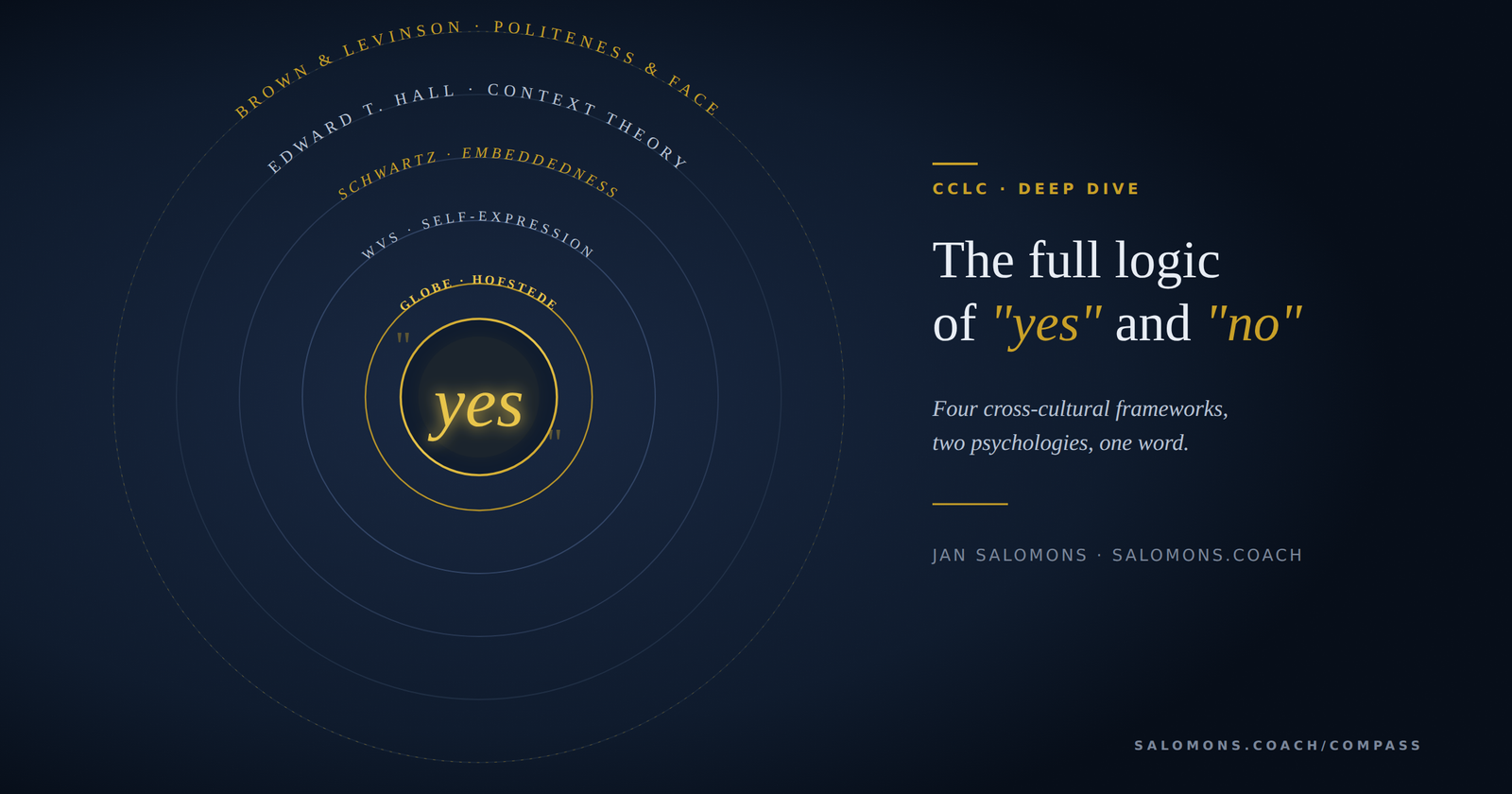
A yes from Beijing and a yes from Amsterdam can come out of the same mouth in the same meeting and mean radically different things. A reference-grade walk through the four cross-cultural frameworks — Hofstede, GLOBE, WVS, Schwartz — and the two psychological theories underneath that explain why.
Wanneer vier van je twaalf teamleden mogelijk ontslagen kunnen worden — maar niets is nog officieel — wordt leiderschap iets anders. Het wordt de kunst om mensen bij elkaar te houden in onzekerheid. Dit artikel biedt zes praktische principes voor leidinggeven tijdens het wachten: met eerlijkheid, focus, differentiatie en het soort standvastigheid dat mensen zich nog lang zullen herinneren nadat de beslissing is genomen.
Most cross-cultural leadership problems don’t look like cultural problems, until they cost you performance. Misaligned expectations around trust, feedback, hierarchy, and decision-making silently undermine teams, delay results, and create friction that leaders misread as personality or competence issues. The Cross-Cultural Leadership Compass translates decades of academic research, including Hofstede’s Cultural Dimensions, GLOBE Study, World Values Survey, and Schwartz Theory of Basic Values, into precise, actionable leadership insights. Instead of generic awareness, it gives you a data-backed map of where cultural gaps actually impact your role, your team, and your results.
Every leader who crosses a cultural boundary carries two operating systems at once. One was installed in childhood. The other was acquired through years of professional adaptation. The real skill — the one that separates effective cross-cultural leaders from merely well-travelled ones — is knowing which system is running at any given moment, and whether it is serving the situation.
The Cross-Cultural Leadership Compass is built around exactly this challenge. It integrates four validated academic frameworks — Hofstede, GLOBE, the World Values Survey, and Schwartz — and translates the data into eleven specific leadership dimensions where cultural gaps play out in practice. This post unpacks each one.
De meeste crossculturele kaders vertellen je hoe culturen verschillen. De GLOBE-studie vertelt je wat voor soort leider elke cultuur daadwerkelijk bereid is te volgen. Dit is wat het betekent voor je leiderschap - en hoe het Cross-Cultural Leadership Compass de GLOBE-studie naast drie andere kaders toepast.
Hofstede is het meest geciteerde raamwerk in crosscultureel management. Op zichzelf is het echter ook onvolledig. In dit artikel wordt Hofstede vergeleken met drie andere belangrijke onderzoeksprogramma's - GLOBE, Trompenaars en Hall -, wordt gezocht naar punten van overeenkomst tussen alle vier en wordt die consensus vertaald in zeven principes voor leidinggevend management die worden ondersteund door vijf decennia van onafhankelijk bewijs.
Managen in verschillende culturen is geen kwestie van bewustzijn, maar van precisie.
Dit handboek voor leidinggevenden vertaalt de zes culturele dimensies van Hofstede in concrete leiderschapsacties, zodat u kunt anticiperen op wrijvingen, uw aanpak kunt aanpassen en effectief leiding kunt geven over de grenzen heen.
Most senior leaders don't derail because they lack intelligence or drive. They derail because they stopped learning — and didn't notice until the damage was done. In this article, executive coach Jan Salomons explores the neuroscience behind why behavioral change is so hard, the five warning signs that a leader's learning agility is eroding, and what the research really says about what separates leaders who keep growing from those who quietly plateau. Drawing on decades of evidence from Korn Ferry, the Center for Creative Leadership, and the neuroscience of neuroplasticity, this is a practical, behavior-focused guide to one of the most critical — and most overlooked — leadership competencies of our time. If you have ever caught yourself relying...
De uitdrukking “niet strategisch genoeg” is een van de meest gebruikte etiketten wanneer leiders tegen een onzichtbaar carrièreplafond aanlopen. Maar in leidinggevende teams verbergt het vaak een dieper probleem - onduidelijke verwachtingen, machtsdynamiek of een lage psychologische veiligheid. Alvorens het individu te ontwikkelen, moeten leiders eerst het systeem onderzoeken dat het label heeft voortgebracht.
De meeste interculturele raamwerken vertellen je hoe culturen verschillen op het werk. De World Values Survey onthult iets diepers: waar mensen fundamenteel in geloven dat ze ervoor werken, of ze standaardvertrouwen verlenen aan instellingen of dat het persoonlijk verdiend moet worden, en of autonomie of zekerheid hun meer basale professionele motivatie is. Dit zijn de waarden die generaties nodig hebben om te verschuiven — en de waarden die onder druk weer opduiken, zelfs na een decennium van aanpassing.