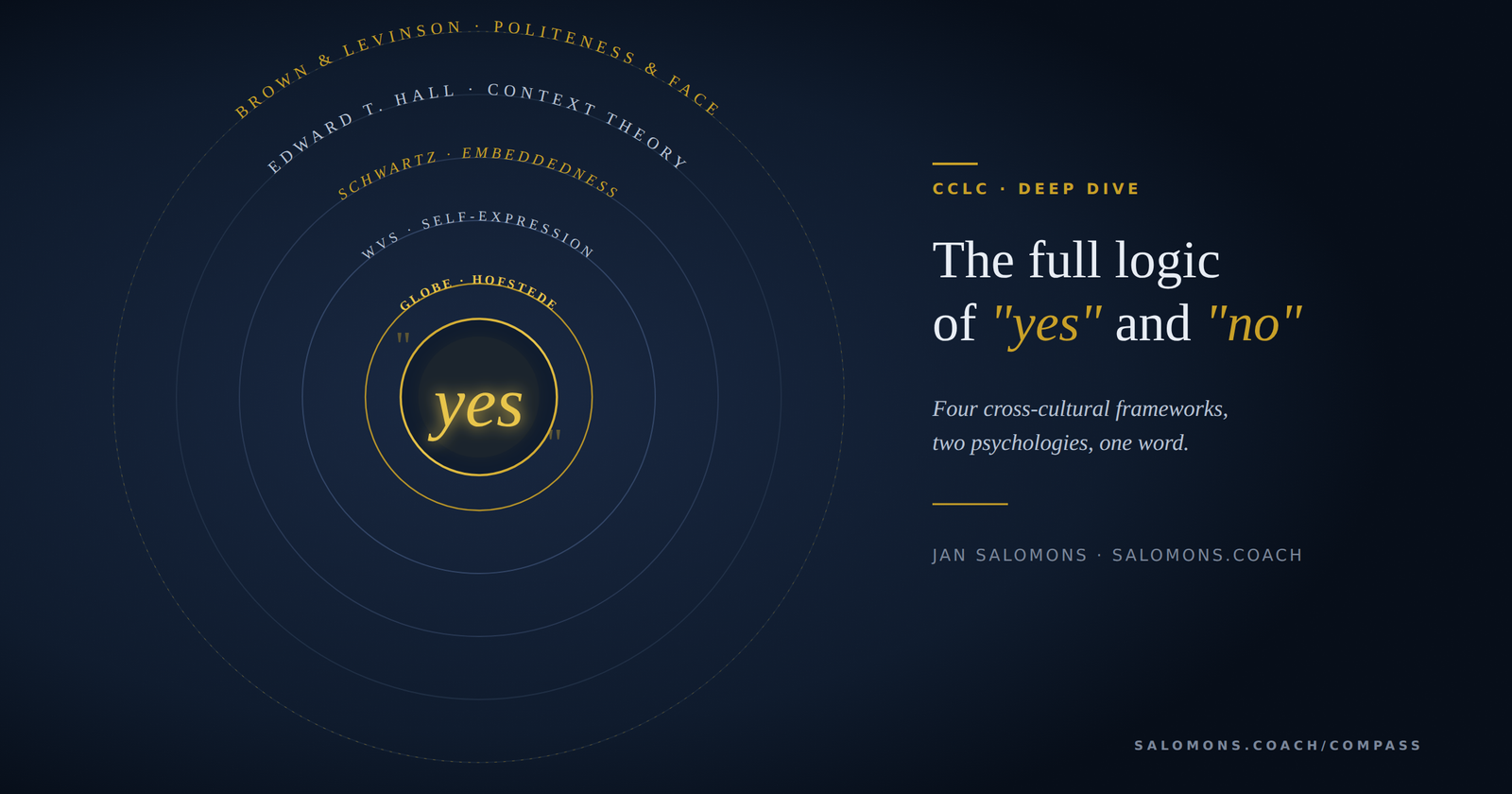
A yes from Beijing and a yes from Amsterdam can come out of the same mouth in the same meeting and mean radically different things. A reference-grade walk through the four cross-cultural frameworks — Hofstede, GLOBE, WVS, Schwartz — and the two psychological theories underneath that explain why.
If you have downloaded the Cross-Cultural Leadership Compass, this article provides the knowledge how to use the report as your compass to navigate the cross-cultural map. I you want to download an example report, click here. Cross-cultural leadership reports are
Most cross-cultural leadership problems don’t look like cultural problems, until they cost you performance. Misaligned expectations around trust, feedback, hierarchy, and decision-making silently undermine teams, delay results, and create friction that leaders misread as personality or competence issues. The Cross-Cultural Leadership Compass translates decades of academic research, including Hofstede’s Cultural Dimensions, GLOBE Study, World Values Survey, and Schwartz Theory of Basic Values, into precise, actionable leadership insights. Instead of generic awareness, it gives you a data-backed map of where cultural gaps actually impact your role, your team, and your results.
Every leader who crosses a cultural boundary carries two operating systems at once. One was installed in childhood. The other was acquired through years of professional adaptation. The real skill — the one that separates effective cross-cultural leaders from merely well-travelled ones — is knowing which system is running at any given moment, and whether it is serving the situation.
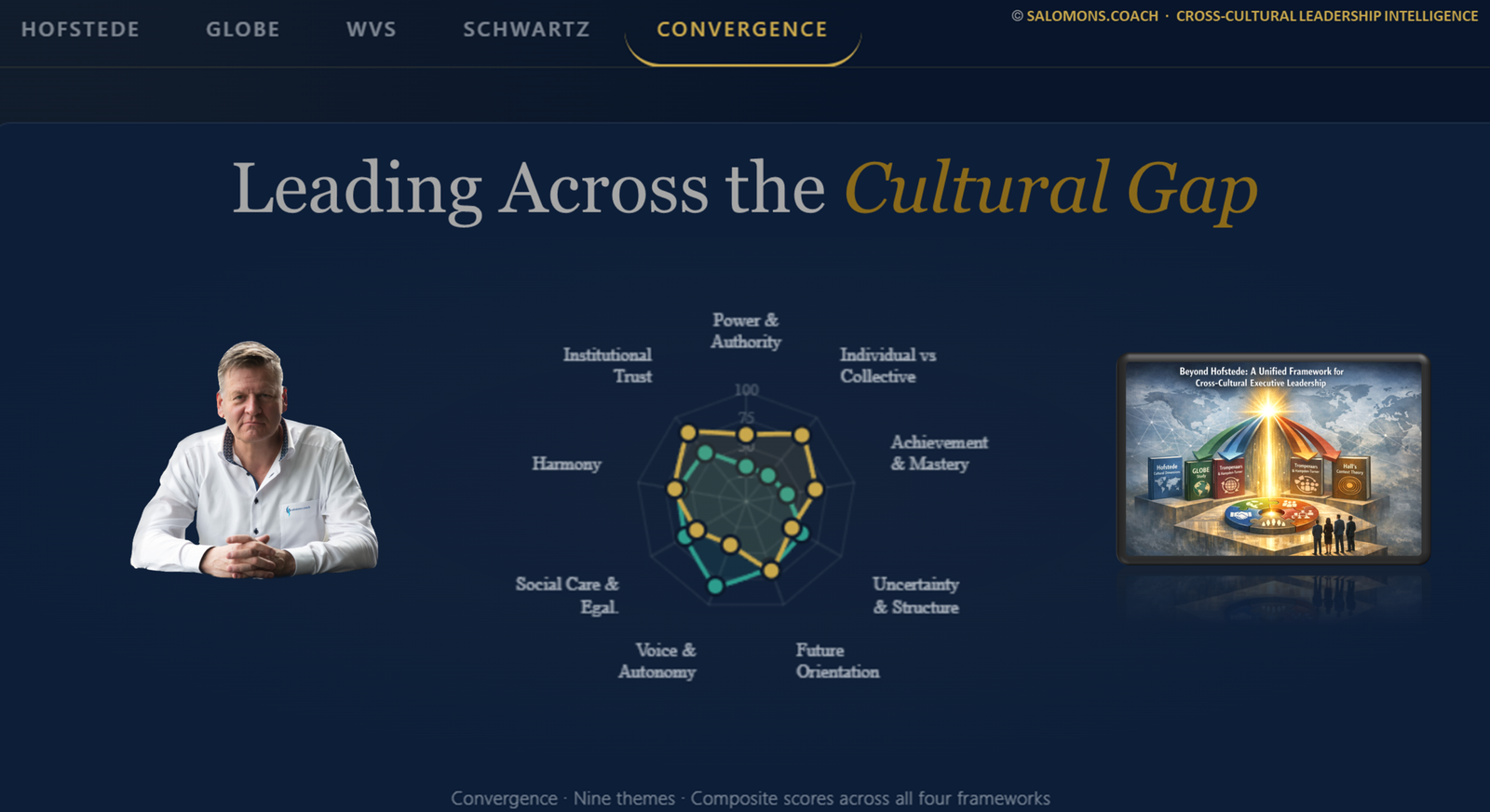
The Cross-Cultural Leadership Compass is built around exactly this challenge. It integrates four validated academic frameworks — Hofstede, GLOBE, the World Values Survey, and Schwartz — and translates the data into eleven specific leadership dimensions where cultural gaps play out in practice. This post unpacks each one.
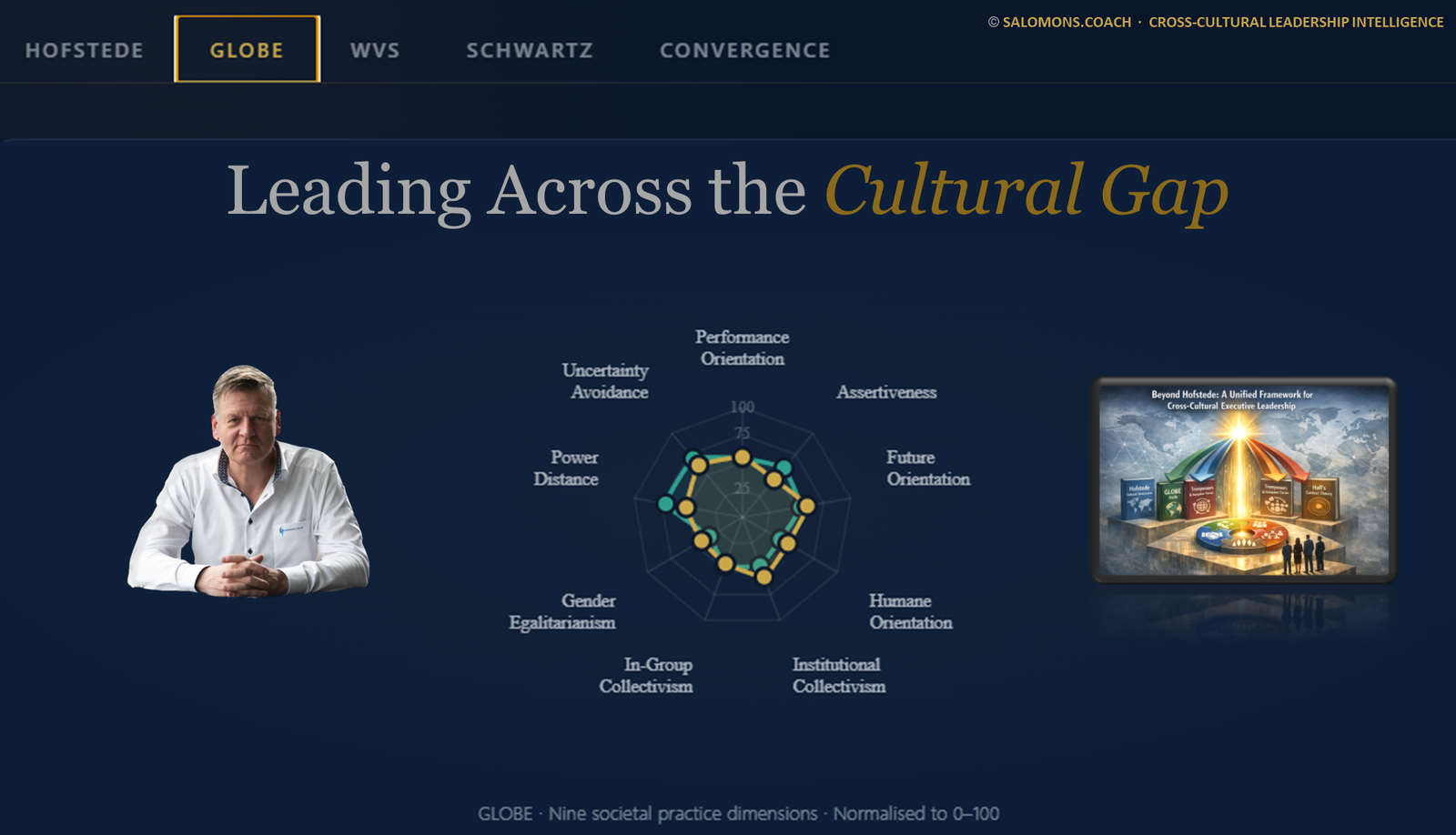
De meeste crossculturele kaders vertellen je hoe culturen verschillen. De GLOBE-studie vertelt je wat voor soort leider elke cultuur daadwerkelijk bereid is te volgen. Dit is wat het betekent voor je leiderschap - en hoe het Cross-Cultural Leadership Compass de GLOBE-studie naast drie andere kaders toepast.
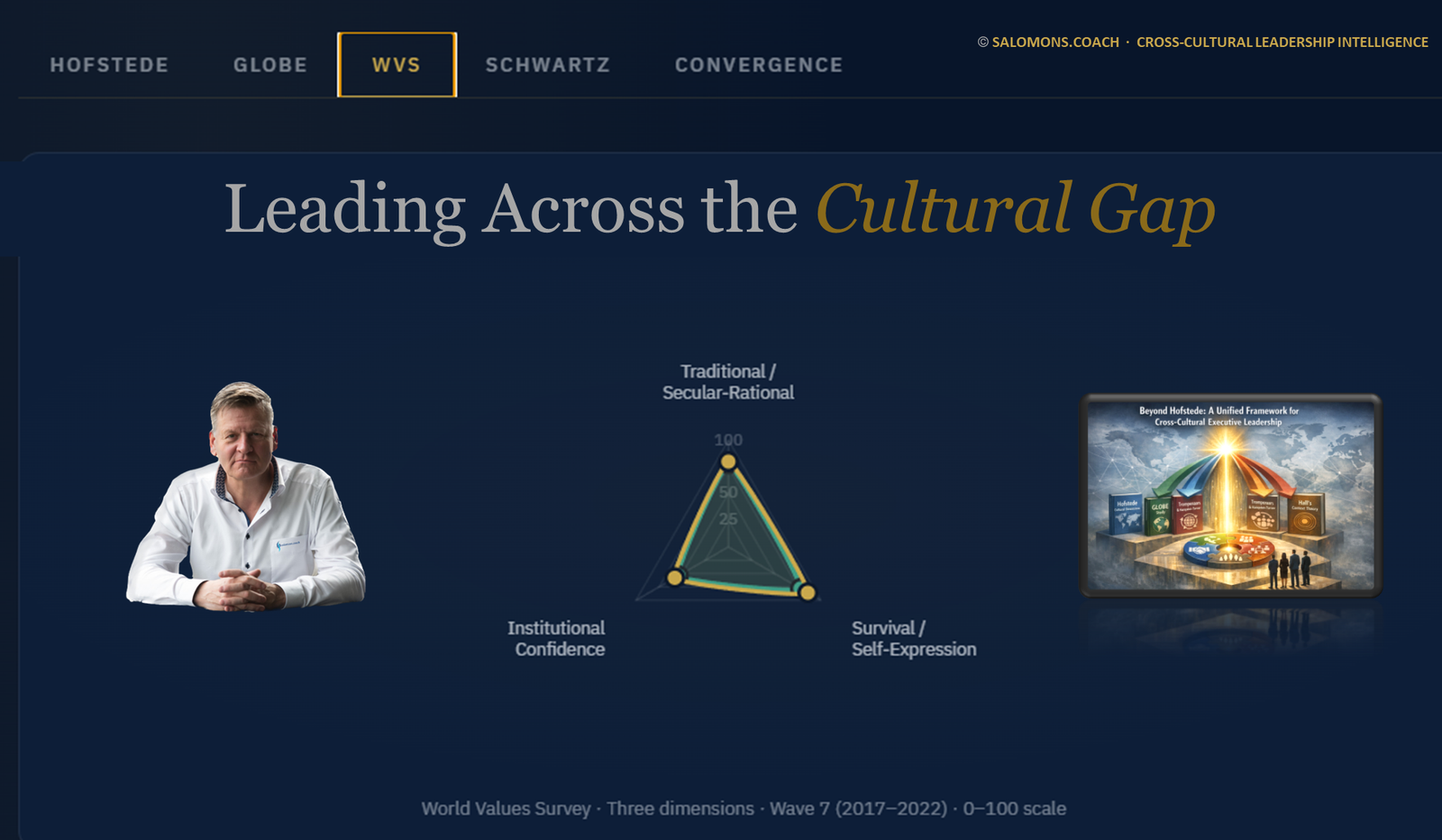
De meeste interculturele raamwerken vertellen je hoe culturen verschillen op het werk. De World Values Survey onthult iets diepers: waar mensen fundamenteel in geloven dat ze ervoor werken, of ze standaardvertrouwen verlenen aan instellingen of dat het persoonlijk verdiend moet worden, en of autonomie of zekerheid hun meer basale professionele motivatie is. Dit zijn de waarden die generaties nodig hebben om te verschuiven — en de waarden die onder druk weer opduiken, zelfs na een decennium van aanpassing.
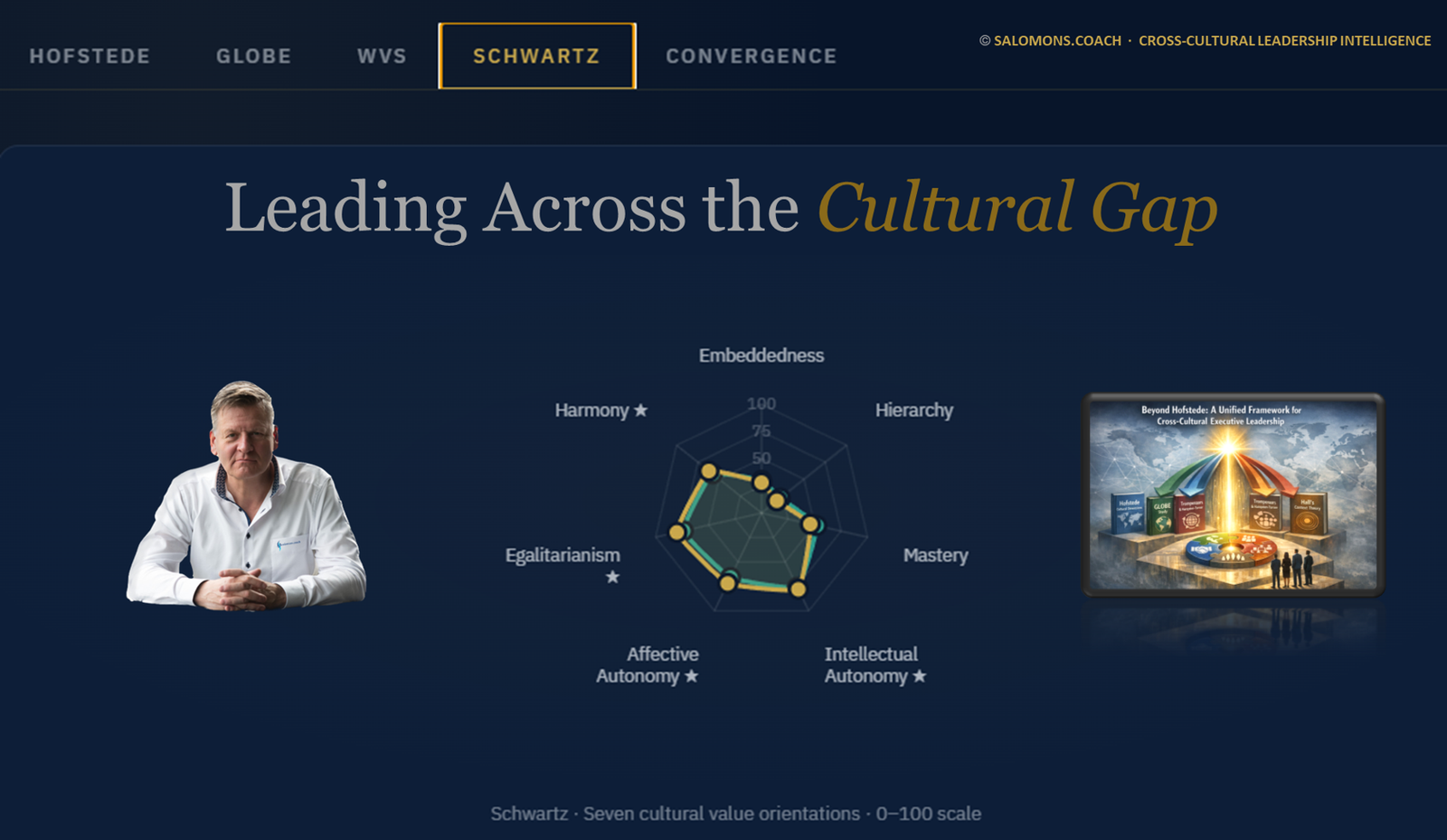
Elk intercultureel kader heeft blinde vlekken. Schwartz meet vier culturele dimensies die geen equivalent hebben in Hofstede of GLOBE. Als je zonder deze werkt, mis je een aanzienlijk deel van het interculturele beeld — en in sommige combinaties, de meest operationeel significante lacunes in de gehele analyse.
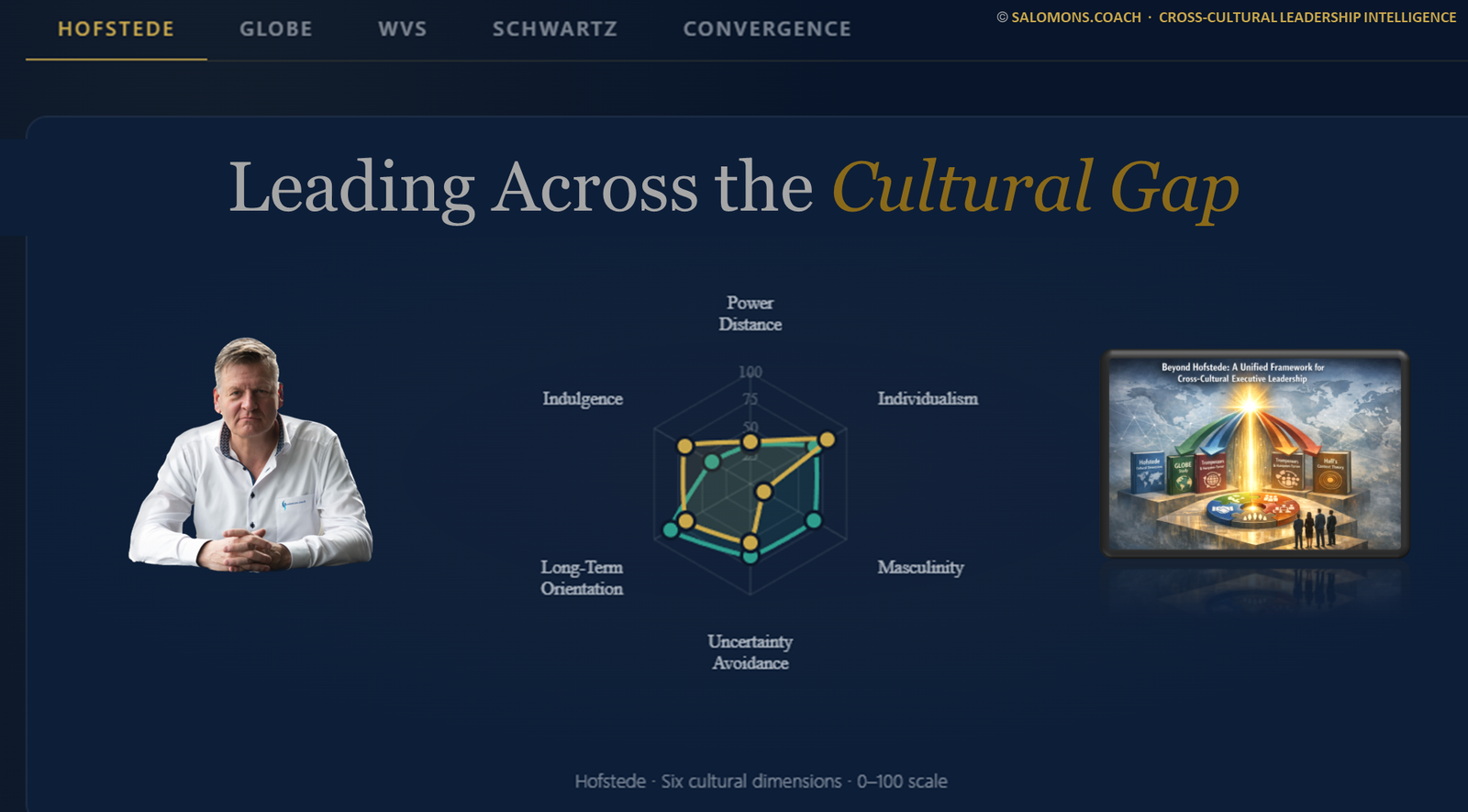
Geert Hofstede spent decades researching one question: do people from different countries think and behave differently in professional contexts in ways that are systematic, measurable, and predictable? His answer — developed through surveys of over 100,000 IBM employees across more than 50 countries — was an unambiguous yes.
The result is the most widely cited framework in cross-cultural management research. Six dimensions. Numerical scores for over 90 countries. But knowing the framework exists and knowing how to use it are different things. This post explains what Hofstede's six dimensions actually measure — and how the Cross-Cultural Leadership Compass translates them into specific, situational leadership guidance.
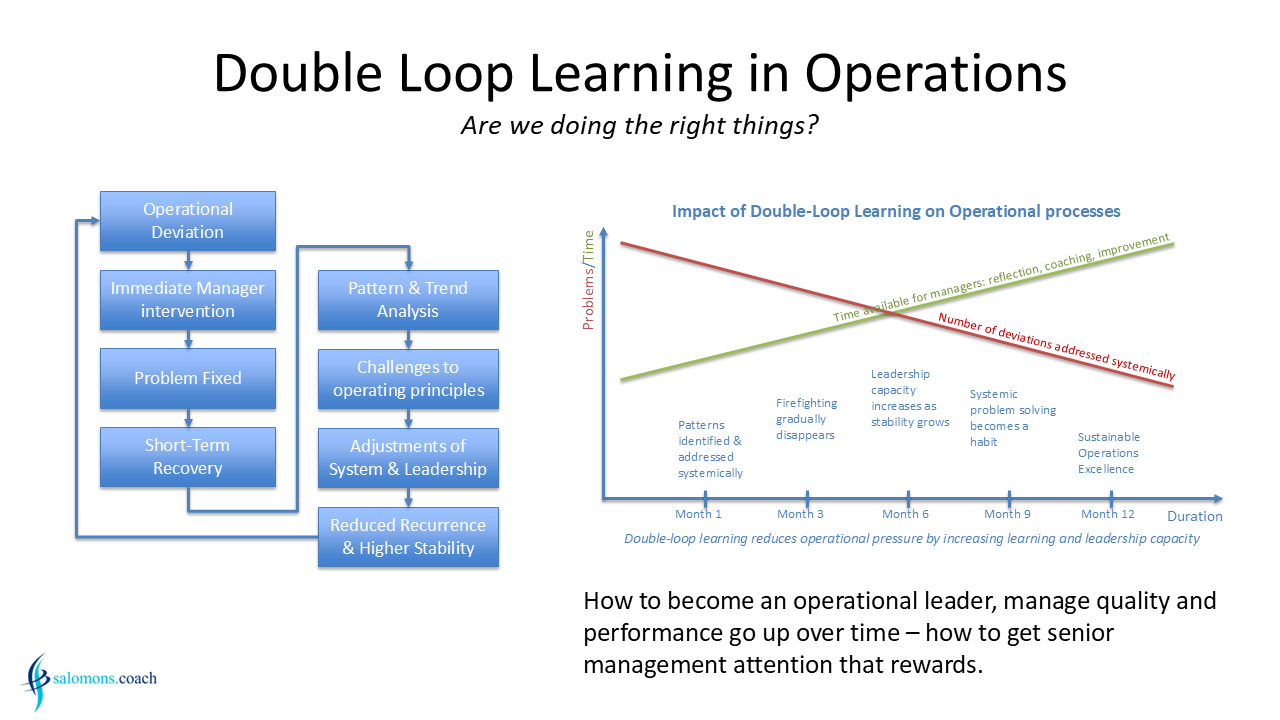
Brand blussen is rationeel, maar het houdt organisaties gevangen.
Onder druk handelen leiders op basis van wat zichtbaar en dringend is en lossen ze problemen op om de activiteiten gaande te houden. Maar dit gedrag verhindert leren, versterkt brandjes blussen en verbruikt leiderschapscapaciteit. Duurzame prestaties vereisen een verschuiving van het oplossen van de problemen van vandaag naar het herontwerpen van het systeem dat ze creëert.
Heb je moeite met een nieuwe baas? Je bent niet de enige. Dit artikel legt de psychologie achter leiderschapsovergangen uit, waarom je hersenen zo reageren en welke praktische stappen je kunnen helpen om weer duidelijkheid en vertrouwen te creëren, vooral in operationele omgevingen waar veel druk heerst.