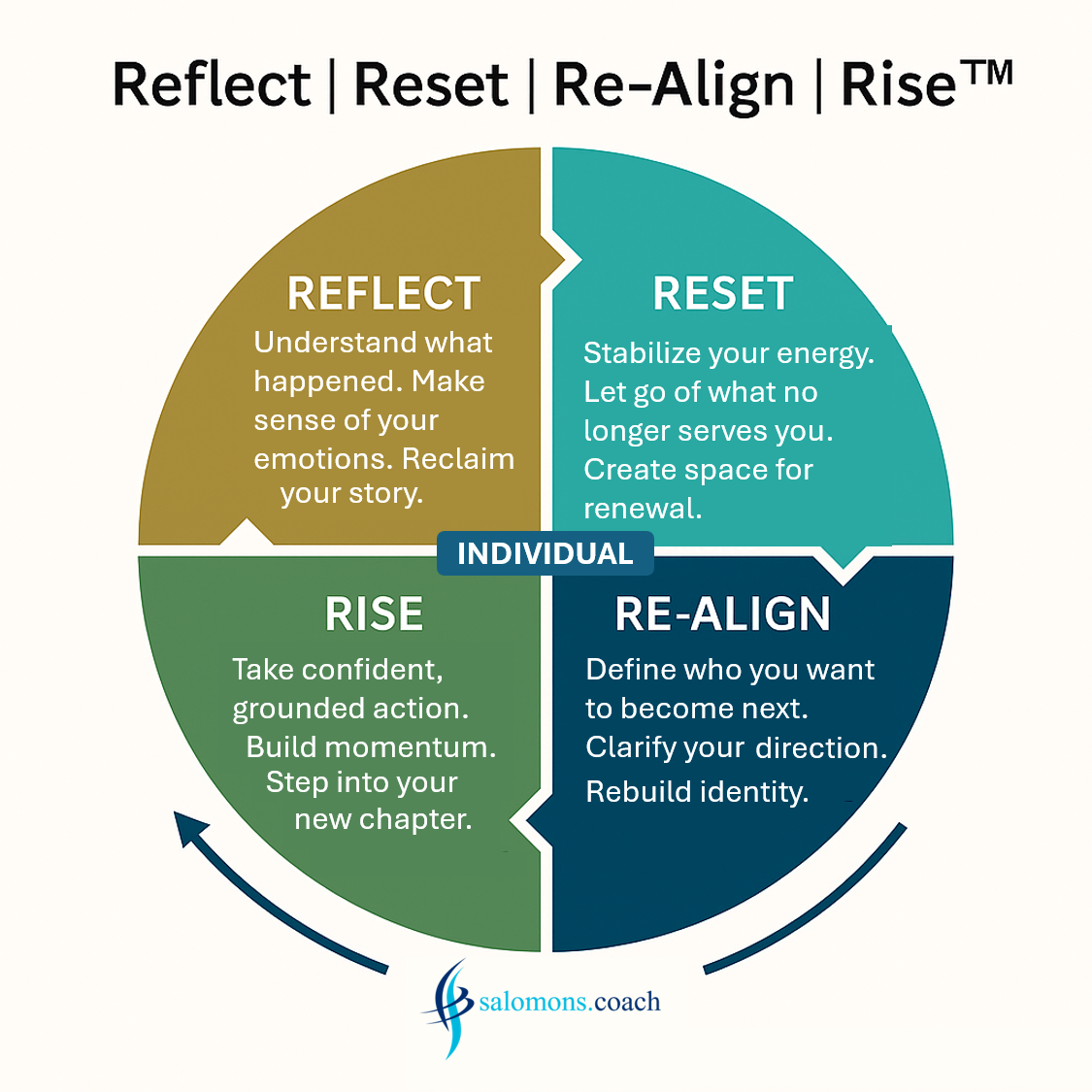
Redundancy is often treated as a quick transition, but the real determining factor in someone’s recovery is time. The pace at which a person can move through the inner journey of Reflect–Reset–Re-Align–Rise™ depends on financial pressure, VSO terms, WW timelines, emotional impact, and life circumstances. When the process is rushed, unresolved phases return later as stress, confusion, or poor career choices. When people are given time, clarity grows, confidence returns, and their next step becomes intentional rather than reactive. Time isn’t a delay—it’s the space where healing and identity reconstruction take place.
Ontslag in Nederland is juridisch gestructureerd maar psychologisch ontwrichtend. Zelfs met sterke bescherming en het VSO-proces ervaren werknemers identiteitsverlies, onzekerheid en emotionele turbulentie. Leiders onderschatten vaak deze impact - en het effect op degenen die blijven. Onderzoek toont aan dat gestructureerde overgangsondersteuning de resultaten aanzienlijk verbetert. Het 4R Model-Reflect, Reset, Re-Align, Rise helpt mensen te stabiliseren, hun identiteit opnieuw op te bouwen en met duidelijkheid en vertrouwen de arbeidsmarkt weer te betreden. Nederlandse organisaties schakelen steeds vaker externe coaches in tijdens de VSO-periode om vertrekkende managers te ondersteunen en het vertrouwen, welzijn en de bedrijfscontinuïteit te behouden. Ontslag is geen einde - het is een keerpunt.
Most teams don’t fail because they don’t work hard — they fail because they work too fast, too isolated, and without reflection.
When every team focuses on solving its own problems, sub-optimization becomes inevitable. Each quick fix triggers side effects elsewhere, creating a vicious cycle of ad-hoc problem-solving that drains energy and weakens performance.
Research on High-Performing Teams shows that real success depends on trust, shared purpose, and systemic alignment — not more speed.
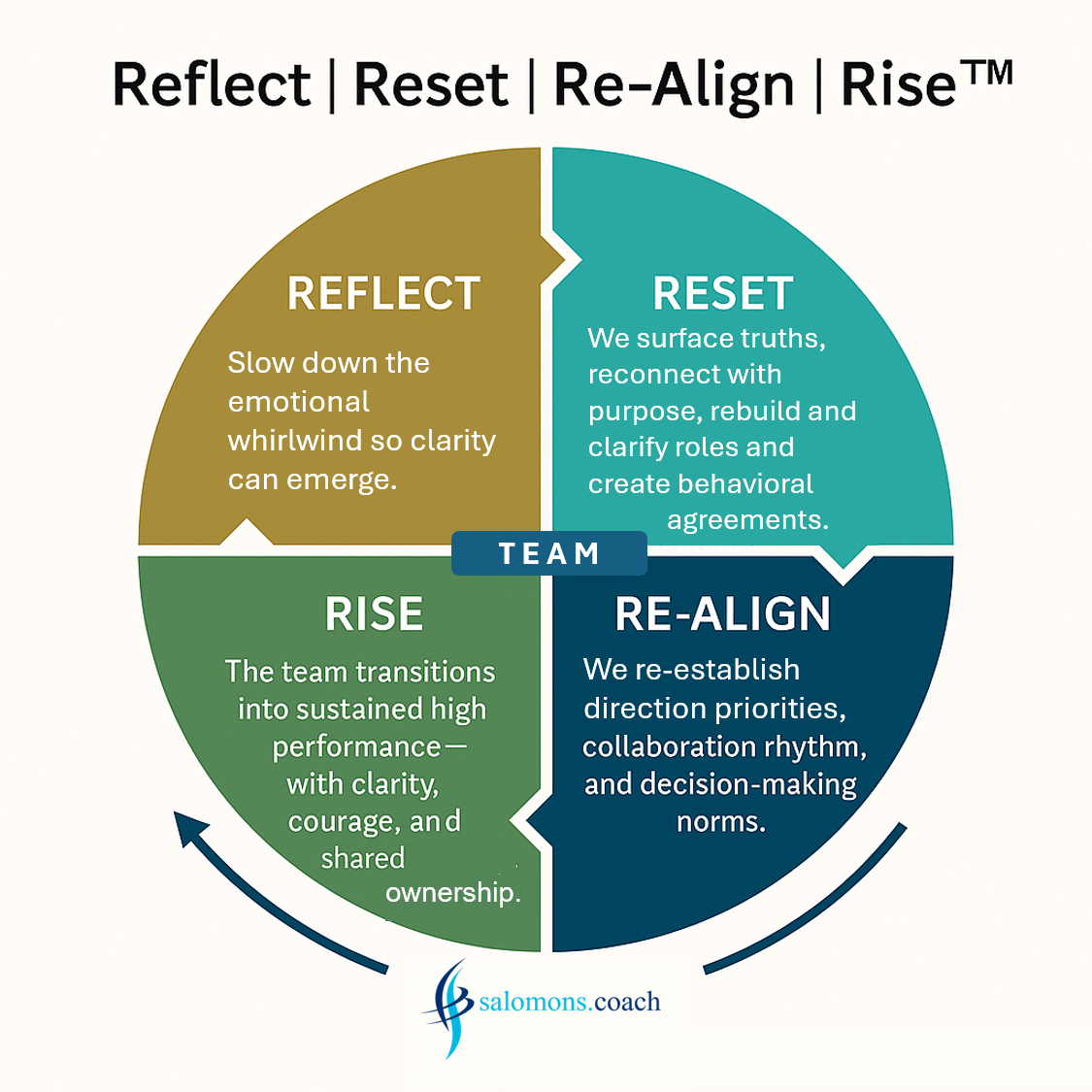
Breaking that cycle starts when leaders and teams slow down long enough to Reflect, Reset, Re-Align, and Rise™ — together.
In a VUCA world, the leaders and professionals who thrive are not the ones with the most experience — but the ones with the best learning habits. Inspired by Daniel H. Pink’s science-based insights, this article explores eight powerful habits that sharpen thinking, build resilience, and accelerate growth. Whether you’re leading in uncertainty or navigating a career transition after redundancy, these habits — combined with my 4R Model (Reflect > Reset > Re-Align > Rise™) — provide a practical roadmap to stay adaptive, confident, and future-ready.
Redundancy in the Netherlands is often misunderstood as a personal failure, while in reality it is a legally structured process with strong employee protections. This article explains your rights, the procedures employers must follow, and the timeframes involved — from UWV approval and notice periods to reassignment obligations, dismissal bans, transition payments and WW benefits. With clarity and compassion, it guides you through what the law requires, what you can expect, and how to move forward confidently in your next career chapter.
The 4R Model—Reflect, Reset, Re-Align, Rise™—emerged from more than 35 years of leading and coaching in complex, high-pressure environments, combined with solid foundations in transition theory, emotional intelligence, identity work, and psychological safety. Supported by globally respected research (including HBR), the model provides a clear, humane framework that helps people navigate redundancy, burnout, and major career shifts. Instead of treating change as a purely logistical process, 4R guides the deeper psychological journey: understanding what’s happening internally, letting go of old identities, rebuilding direction, and rising with confidence and sustainable momentum. It turns disruption into structured growth.