The EU Pay Transparency Directive shifts the burden of proof onto the employer. A pay difference will now require an objective, documented justification, or a correction. "She negotiated harder when she joined" is not a defence. "He's been here longer" might be — if your tenure logic is documented.
The leaders who navigate this well will be the ones who do the work before the questions arrive. Conversation by conversation, fairness becomes a leadership problem.
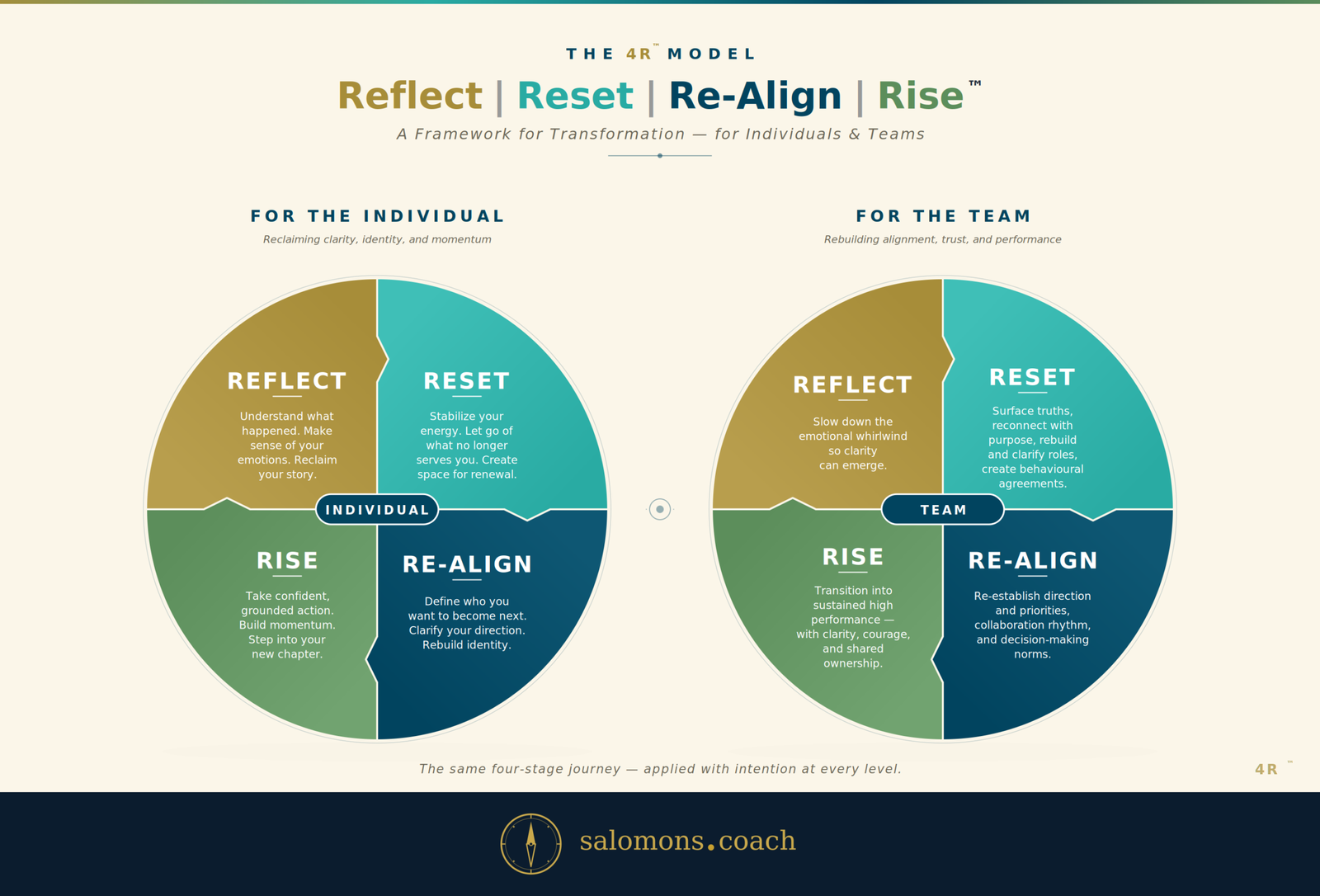
Setbacks demand action. Reflection demands stillness. The first stage of the 4R™ Model asks you to do the harder thing — stay with what happened long enough to make sense of it. Why Reflect is the foundation every transformation is built on.
Wanneer vier van je twaalf teamleden mogelijk ontslagen kunnen worden — maar niets is nog officieel — wordt leiderschap iets anders. Het wordt de kunst om mensen bij elkaar te houden in onzekerheid. Dit artikel biedt zes praktische principes voor leidinggeven tijdens het wachten: met eerlijkheid, focus, differentiatie en het soort standvastigheid dat mensen zich nog lang zullen herinneren nadat de beslissing is genomen.
How does one person actually change the world? Not through grand gestures, but through shifts in thinking and behavior that ripple outward. This article explores the science behind societal change, from evolutionary psychology to systems thinking. It shows how mental models shape behavior, how small choices scale into cultural shifts, and why institutions tend to follow rather than lead. For leaders, the implication is clear: real change starts with how individuals see their role in the system. When enough people act differently, culture moves—and with it, performance, policy, and outcomes.
Most managers have two default tools when they need something to happen: tell people what to do, or escalate to someone who can. Direct communication and the chain of command. Both have their place. But if they are your primary or only tools for getting things done across an organization, you have a problem. Not because they don't work, but because they work less and less the higher you climb and the more complex your environment becomes.
The managers and project managers who consistently get things done are not the ones with the biggest title or the loudest voice. They are the ones who understand that in most modern organisations, influence is the currency that actually moves things. Directives produce...
AI wordt vaak gezien als een technologische uitdaging. In werkelijkheid is het een uitdaging voor het leiderschap. Door de snelheid te verhogen, de transparantie te vergroten en beslissingen vergelijkbaar te maken, legt AI bloot hoe leiders beslissen, waar oordelen worden vermeden en hoe er wordt omgegaan met het afleggen van verantwoording. Dit artikel onderzoekt waarom AI leiders niet vervangt, maar leiderschapsgedrag onthult dat voorheen verborgen was - en waarom geloofwaardigheid in een AI-gedreven wereld minder afhangt van technische expertise en meer van expliciet oordeel en eigenaarschap.
Nu AI wordt ingebed in de besluitvorming van organisaties, moeten niet alle beslissingen worden geautomatiseerd. Sommige keuzes bepalen waarden, vereisen verantwoording en vereisen een menselijk oordeel onder onzekerheid. Dit artikel onderzoekt vijf leiderschapsbeslissingen die AI nooit zou moeten nemen - niet omdat AI incompetent zou zijn, maar omdat de legitimiteit, verantwoordelijkheid en het vertrouwen van leiderschap niet kunnen worden gedelegeerd aan technologie.
Geert Hofstede spent decades researching one question: do people from different countries think and behave differently in professional contexts in ways that are systematic, measurable, and predictable? His answer — developed through surveys of over 100,000 IBM employees across more than 50 countries — was an unambiguous yes.
The result is the most widely cited framework in cross-cultural management research. Six dimensions. Numerical scores for over 90 countries. But knowing the framework exists and knowing how to use it are different things. This post explains what Hofstede's six dimensions actually measure — and how the Cross-Cultural Leadership Compass translates them into specific, situational leadership guidance.
Decennialang hebben organisaties verandering behandeld als iets dat lijnmanagers of projectmanagers kunnen “absorberen” naast hun echte werk. Wanneer verandering niet aanslaat, geven we de uitvoering of weerstand de schuld. Wat we zelden in twijfel trekken is het besturingsmodel achter die aanname. In deze blog wordt onderzocht waarom verandering mislukt als ervan wordt uitgegaan dat ze wordt overgenomen, en wat senior leiders moeten doen om ze weloverwogen tot stand te brengen.
Generatieve AI heeft de behoefte aan expertise niet weggenomen. Het heeft de behoefte aan niet-onderzochte expertise geëlimineerd. In organisaties zijn de meest schadelijke mislukkingen niet langer het gevolg van een gebrek aan technische vaardigheden, maar van een slechte probleemstelling, misplaatste optimalisatie en leiders die snelheid verwarren met inschattingsvermogen. Naarmate AI meer van het uitvoerende “midden” overneemt, verschuift de menselijke waarde naar de grenzen: definiëren wat echt belangrijk is en verantwoordelijkheid nemen voor de gevolgen in de echte wereld. Daarom zijn zogenaamde zachte vaardigheden - kritisch denken, systeembewustzijn, ethisch beoordelingsvermogen en menselijk leiderschap - niet langer optioneel. Het zijn de belangrijkste vaardigheden van het AI-tijdperk geworden.