Hoe de Cross-Cultureel Leiderschapskompasrapport te lezen en toe te passen
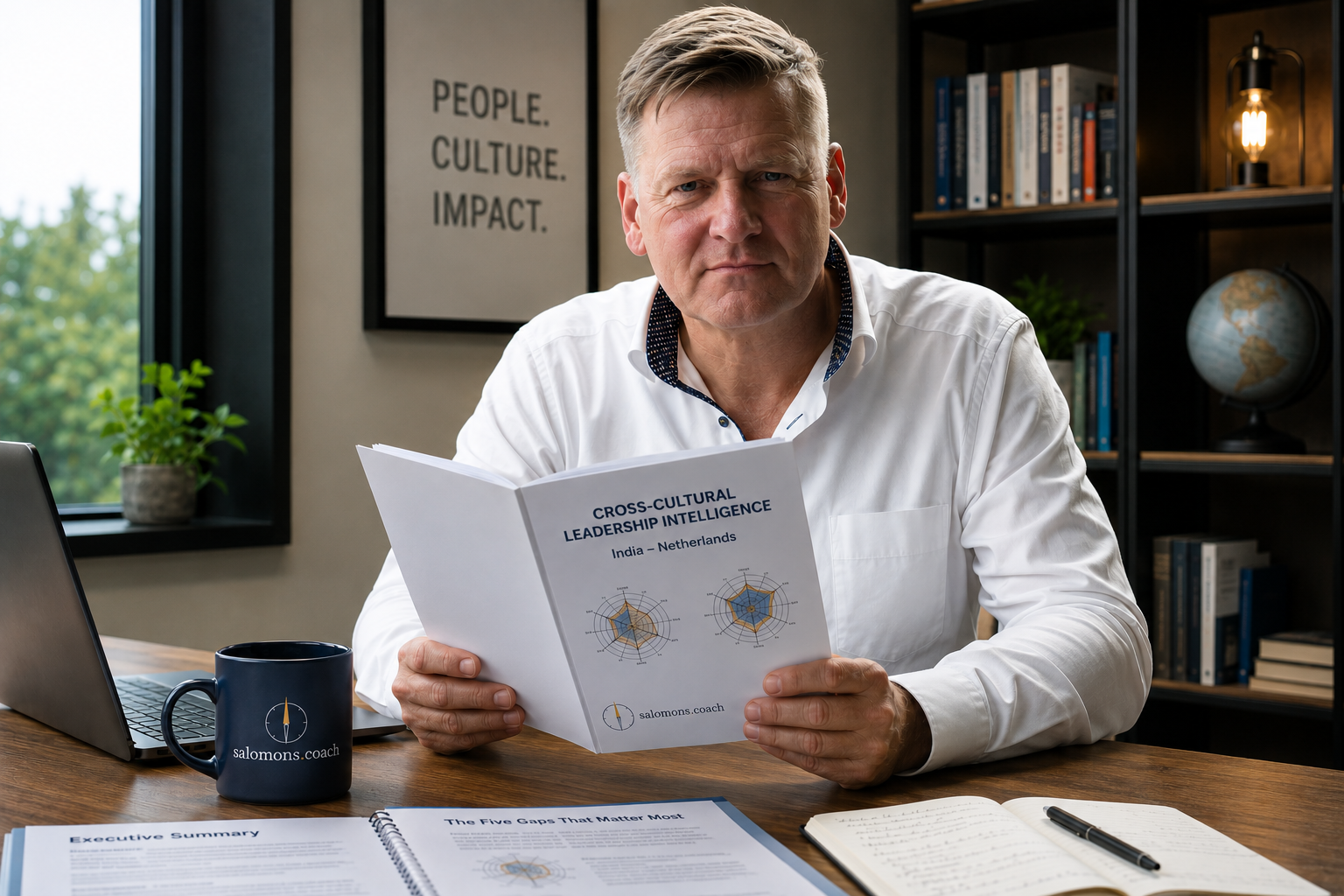
Als je de Cross-Cultural Leadership Compass hebt gedownload, biedt dit artikel de kennis om het rapport als je kompas te gebruiken om de cross-culturele kaart te navigeren. Als je een voorbeeldrapport wilt downloaden, klik dan hier.
Cross-culturele leiderschapsrapporten worden vaak verkeerd begrepen. Sommige mensen lezen ze alsof het persoonlijkheidsbeoordelingen zijn. Anderen behandelen ze als voorspellende hulpmiddelen die elk misverstand, elke spanning of elk gedragsverschil tussen mensen uit verschillende landen kunnen verklaren. Geen van beide interpretaties is correct.
Dit rapport is niet bedoeld om te vertellen wie mensen zijn. Het is bedoeld om u te helpen de culturele besturingssystemen te begrijpen die stilzwijgend van invloed zijn op hoe mensen leiderschap, autoriteit, vertrouwen, communicatie, onenigheid, samenwerking, autonomie en psychologische veiligheid interpreteren. Het onderscheid is enorm belangrijk. Het rapport beschrijft geen vaststaand menselijk gedrag. Het beschrijft culturele waarschijnlijkheidspatronen, afgeleid van decennia aan internationaal onderzoek uit Hofstede, GLOBE, de World Values Survey en Schwartz.
Cultuur beïnvloedt wat mensen als respectvol of respectloos, competent of incompetent, betrouwbaar of bedreigend ervaren. Het grootste deel hiervan gebeurt onder bewuste waarneming. Mensen gaan er over het algemeen van uit dat hun eigen culturele logica “normaal” is en beginnen deze pas op te merken wanneer iemand anders zich anders gedraagt. Daar begint de wrijving vaak. Wat voor de een passend direct aanvoelt, kan voor de ander agressief aanvoelen. Wat voor de een respectvol voorzichtig aanvoelt, kan voor de ander ontwijkend of besluiteloos aanvoelen. Het rapport bestaat om die onzichtbare dynamiek zichtbaar te maken voordat deze destructief wordt.
Het is belangrijk om te begrijpen dat het rapport culturele zwaartekracht beschrijft, geen gedragsmatige bestemming. Nationale gemiddelden zijn geen persoonlijke identiteiten. Het feit dat een cultuur hoger of lager scoort op hiërarchie, individualisme, zelfexpressie of onzekerheidsvermijding, betekent niet dat elk individu uit die cultuur zich op dezelfde manier gedraagt. Mensen worden gevormd door veel meer dan alleen nationaliteit. Persoonlijkheid, opvoeding, opleiding, trauma, organisatiecultuur, leiderschapsvolwassenheid, internationale blootstelling, familiesystemen en professionele ervaringen beïnvloeden allemaal het gedrag. In veel gevallen is de individuele variatie binnen een land groter dan het gemiddelde verschil tussen de landen zelf. Het rapport erkent deze beperking expliciet.
Dit is waarom het rapport nooit gebruikt mag worden om mensen te stereotyperen of individuen te reduceren tot vereenvoudigde culturele labels. Het doel is niet om te concluderen dat “Nederlanders direct zijn”, “Japanners conflicten vermijden” of “Indiërs hiërarchie respecteren”. Dergelijke uitspraken maken de menselijke complexiteit plat tot karikatuur. De raamwerken identificeren tendensen, geen waarheden over elk individu. Volwassen intercultureel leiderschap begint precies waar simplistisch stereotyperen eindigt.
De werkelijke waarde van het rapport komt naar voren wanneer de gegevens operationeel rather than ideologisch worden geïnterpreteerd. De vraag is niet of de ene cultuur beter is dan de andere. De vraag is hoe verschillende culturele systemen professionele verwachtingen en interpretatie van gedrag vormgeven. In de ene cultuur kan de geloofwaardigheid van leiderschap worden opgebouwd door daadkracht en zichtbare autoriteit. In een andere cultuur kan hetzelfde gedrag worden geïnterpreteerd als arrogantie of autoritarisme. In de ene omgeving kan directe onenigheid engagement en intellectuele eerlijkheid signaleren. In een andere kan het het vertrouwen of de sociale harmonie schaden. Geen van beide interpretaties is universeel juist of onjuist. Het zijn producten van verschillende sociale conditionering en historische ontwikkeling.
Een van de belangrijkste principes bij het lezen van het rapport is om aandacht te besteden aan convergentie tussen de kaders. Elk individueel cultuurmodel heeft beperkingen. Hofstede, GLOBE, Schwartz en de World Values Survey onderzoeken cultuur elk door verschillende lenzen en methodologieën. Echter, wanneer meerdere kaders onafhankelijk van elkaar naar dezelfde gedragsmatige conclusie wijzen, wordt het vertrouwensniveau aanzienlijk sterker. Wanneer hiërarchie, autonomie, zelfexpressie of collectivisme herhaaldelijk voorkomen in verschillende kaders, wordt het steeds waarschijnlijker dat deze dynamieken de culturele omgeving op betekenisvolle wijze beïnvloeden. Daarom identificeert het rapport herhaaldelijk “signalen van convergentie met hoog betrouwbaarheidsniveau”.”
Tegelijkertijd wordt cultuur het meest zichtbaar onder druk. Veel professionals geloven dat ze zich volledig hebben aangepast aan een andere cultuur totdat stress, conflict, onzekerheid of uitputting het systeem binnendringt. Onder druk vervallen mensen vaak terug naar hun vroegste culturele conditionering. Directheid voelt plotseling bedreigend. Consensus voelt plotseling inefficiënt. Hiërarchie voelt plotseling controlerend. Autonomie voelt plotseling isolerend. Dit is een van de redenen waarom interculturele wrijving vaak verergert tijdens organisatorische veranderingen, leiderschapsovergangen, crisissituaties of psychologisch onveilige omgevingen. Het rapport erkent deze dynamiek correct in de interpretatieve secties.
Dit is ook waarom het rapport nooit een rechtvaardiging mag worden voor schadelijk gedrag. Culturele verklaring is geen morele vrijspraak. “Directe cultuur” is geen excuus voor disrespect. “Hiërarchische cultuur” rechtvaardigt geen misbruik van autoriteit. “Consensuscultuur” neemt de verantwoordelijkheid niet weg. De kaders helpen verklaren waarom gedrag optreedt en hoe het wordt geïnterpreteerd, maar ze vervangen geen ethisch leiderschap, emotionele volwassenheid of menselijke fatsoen.
Misschien wel het meest delicate evenwicht in intercultureel leiderschap is de relatie tussen aanpassing en authenticiteit. Veel professionals die een andere cultuur betreden, maken de fout te geloven dat ze iemand anders moeten worden om te slagen. Ze beginnen communicatiestijlen, gedragsrituelen, humor, lichaamstaal of vormen van directheid te kopiëren die niet echt bij hen horen. Soms leidt dit tijdelijk tot meer acceptatie. Vaak leidt het tot uitputting, kunstmatigheid en interne fragmentatie.
Gezonde aanpassing is geen imitatie. Het is bewust gedragsflexibiliteit. Het betekent begrijpen hoe je gedrag wordt geïnterpreteerd in een ander cultureel systeem en waar nodig aanpassen zonder je diepere identiteit op te geven. Je kunt aanpassen hoe je vergaderingen structureert, hoe je feedback geeft, hoe direct je ideeën uitdaagt, hoe je beslissingen communiceert, of hoe je stakeholders beheert. Maar aanpassing mag nooit vereisen dat je integriteit, emotionele authenticiteit, menselijkheid of zelfrespect opgeeft.
De sterkste cross-culturele leiders zijn niet degenen die zichzelf het meest effectief uitwissen. Het zijn degenen die het breedste gedragsbereik ontwikkelen en tegelijkertijd psychologisch gegrond blijven in wie ze zijn. Ze begrijpen wanneer ze zich moeten aanpassen, wanneer ze verschillen openlijk moeten uitleggen, wanneer ze hun eigen stijl bewust moeten behouden en wanneer ze moeten overbruggen tussen systemen in plaats van er volledig in te assimileren.
Dit is belangrijk omdat authenticiteit zelf een grote rol speelt bij het opbouwen van vertrouwen, ongeacht de culturele achtergrond. Mensen vertrouwen zelden langdurig op perfecte nabootsing. Ze vertrouwen op kalme zelfbewustzijn, consistentie, openheid en congruentie tussen woorden en gedrag. In veel internationale omgevingen worden professionals die respectvol verbonden blijven met hun eigen identiteit, terwijl ze ook culturele intelligentie tonen, juist geloofwaardiger, niet minder.
Het rapport moet daarom niet worden gelezen als een instructieboek om “Nederlandser”, “Amerikaanser”, “Japanser”, of “Indienser” te worden. Het moet worden gelezen als een instrument voor strategisch bewustzijn dat uw vermogen vergroot om met complexiteit om te gaan zonder uzelf erin te verliezen.
Uiteindelijk is de hoogste vorm van intercultureel leiderschap niet alleen aanpassing. Het is bewuste integratie. Het is het vermogen om je eigen culturele conditionering te begrijpen en tegelijkertijd de legitimiteit van die van een ander te erkennen. Het is het vermogen om gedragspatronen te observeren zonder meteen te oordelen. Het is het vermogen om het oneens te zijn zonder te dehumaniseren, om je aan te passen zonder te verdwijnen, en om te leiden zonder ervan uit te gaan dat je eigen culturele logica universeel correct is.
Dat is het diepere doel van dit rapport. Het gaat niet louter om het vermijden van misverstanden. Het gaat om het vergroten van bewustzijn, het versterken van leiderschapseffectiviteit, het beschermen van psychologische veiligheid en het mogelijk maken dat mensen met fundamenteel verschillende achtergronden met meer intelligentie, empathie en duidelijkheid samenwerken.
Het rapport zelf is niet het antwoord. Het is een kompas om de interculturele kaart te doorkruisen. En zoals elke kaart, hangt de waarde ervan volledig af van hoe bewust, ethisch en menselijk deze wordt gebruikt. Goede navigatie!

Dit vind je misschien ook leuk

ADHD Leiderschap Video's