De Vijf-Minuten Reset: Hoe één studie van Stanford mijn coaching veranderde
Een gerandomiseerde proef uit 2023 zette vier ademhalingstechnieken tegen elkaar af. De winnaar kost vijf minuten per dag. Hier is wat ik ervan heb geleerd en hoe ik het in mijn coachingpraktijk heb geïntegreerd.
De meeste mensen die ik coach, verzetten zich niet tegen het idee dat stress hen schaadt. Ze verzetten zich tegen de tijdsinvestering die nodig is om er iets aan te doen.
- “Ik voeg geen yogales toe aan mijn agenda.”
- “Ik heb meditatie geprobeerd. Het werkte niet.”
- “Wanneer moet ik dit doen?”
Dit zijn redelijke bezwaren. Het meeste advies om stress te beheersen gaat er stilzwijgend van uit dat er tijd beschikbaar is, dat consistentie gemakkelijk is, dat de oefening zelf niet hoeft te concurreren op effectiviteit met de dertig andere zaken die op een bepaalde dag aandacht opeisen. Voor leidinggevenden gelden geen van deze aannames.
Vervolgens publiceerde een team van Stanford in januari 2023 een studie die de discussie veranderde. De techniek die ze testten kost vijf minuten per dag. Het presteerde beter dan drie andere benaderingen, waaronder mindfulnessmeditatie, op de belangrijkste meetwaarden onder druk: stemming, angst, hartslag in rust en ademhalingsritme.
De techniek heet cyclisch zuchten. Hieronder staat het onderzoek, het resultaat, waarom beide belangrijk zijn, en hoe ik het in mijn coachingpraktijk heb verwerkt.
De studie
Het onderzoek werd geleid door neurobioloog Andrew Huberman, psychiater David Spiegel en hoofdonderzoeker Melis Yilmaz Balban aan de Stanford School of Medicine. Het artikel – Korte, gestructureerde ademhalingsoefeningen verbeteren de stemming en verminderen de fysiologische arousal – verscheen in Cell Reports Medicine in januari 2023, open access voor iedereen die het direct wil lezen: link naar artikel.
Het ontwerp was doelbewust rigoureus. Honderdeölf vrijwilligers werden willekeurig toegewezen aan een van de vier protocollen, die elk dezelfde inspanning vereisten: vijf minuten per dag, gedurende één maand. Voor en na elke sessie, evenals gedurende de volledige dertig dagen, volgden de onderzoekers de stemming (met behulp van de Positive and Negative Affect Schedule), angst (met behulp van de State Anxiety Inventory), ademhalingsfrequentie, hartslag en hartslagvariabiliteit.
Wat dit onderzoek onderscheidt van de meeste ademhalingsonderzoeken, is de opzet van de vergelijking. De meeste studies vergelijken een techniek met nietsdoen, wat je vertelt of de techniek helpt, maar niet of het helpt meer dan andere redelijke alternatieven. Dit proces gaf antwoord op de moeilijkere vraag.
De vier voorwaarden
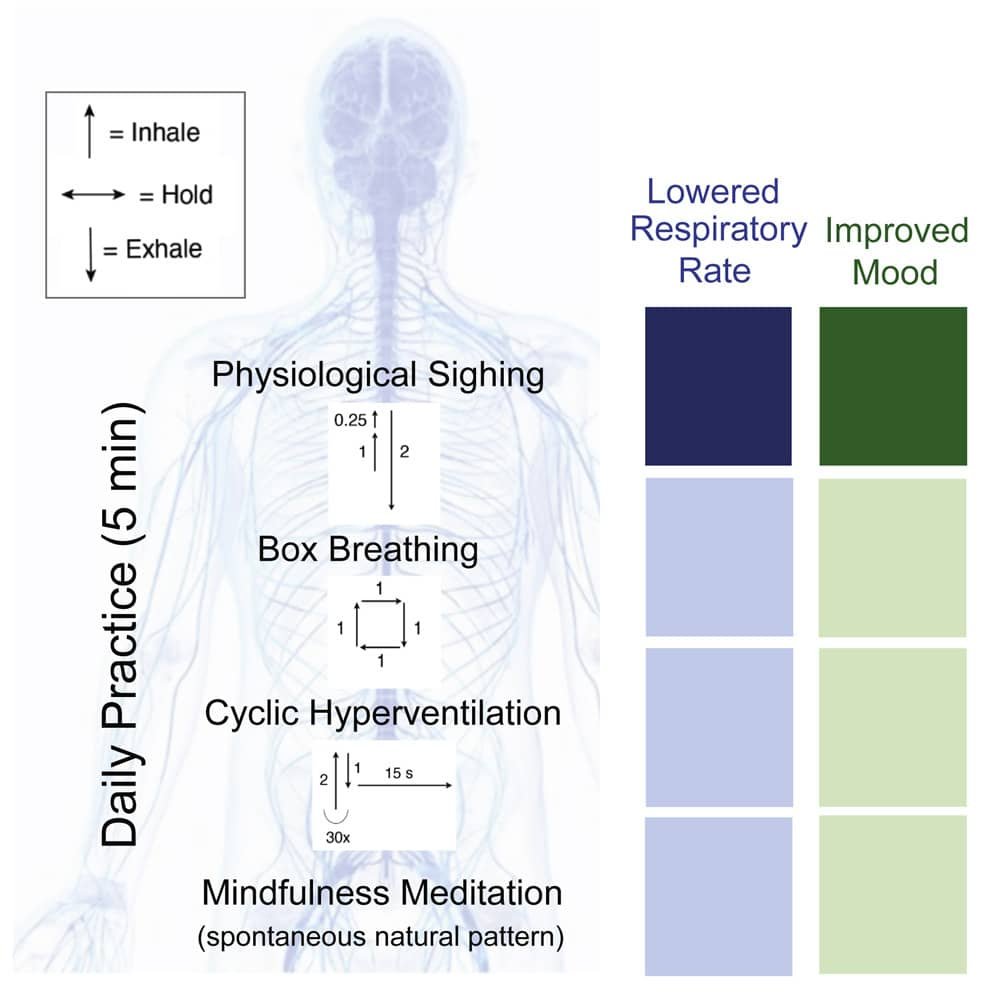
Elke deelnemer volgde gedurende de volledige maand één van de vier protocollen:
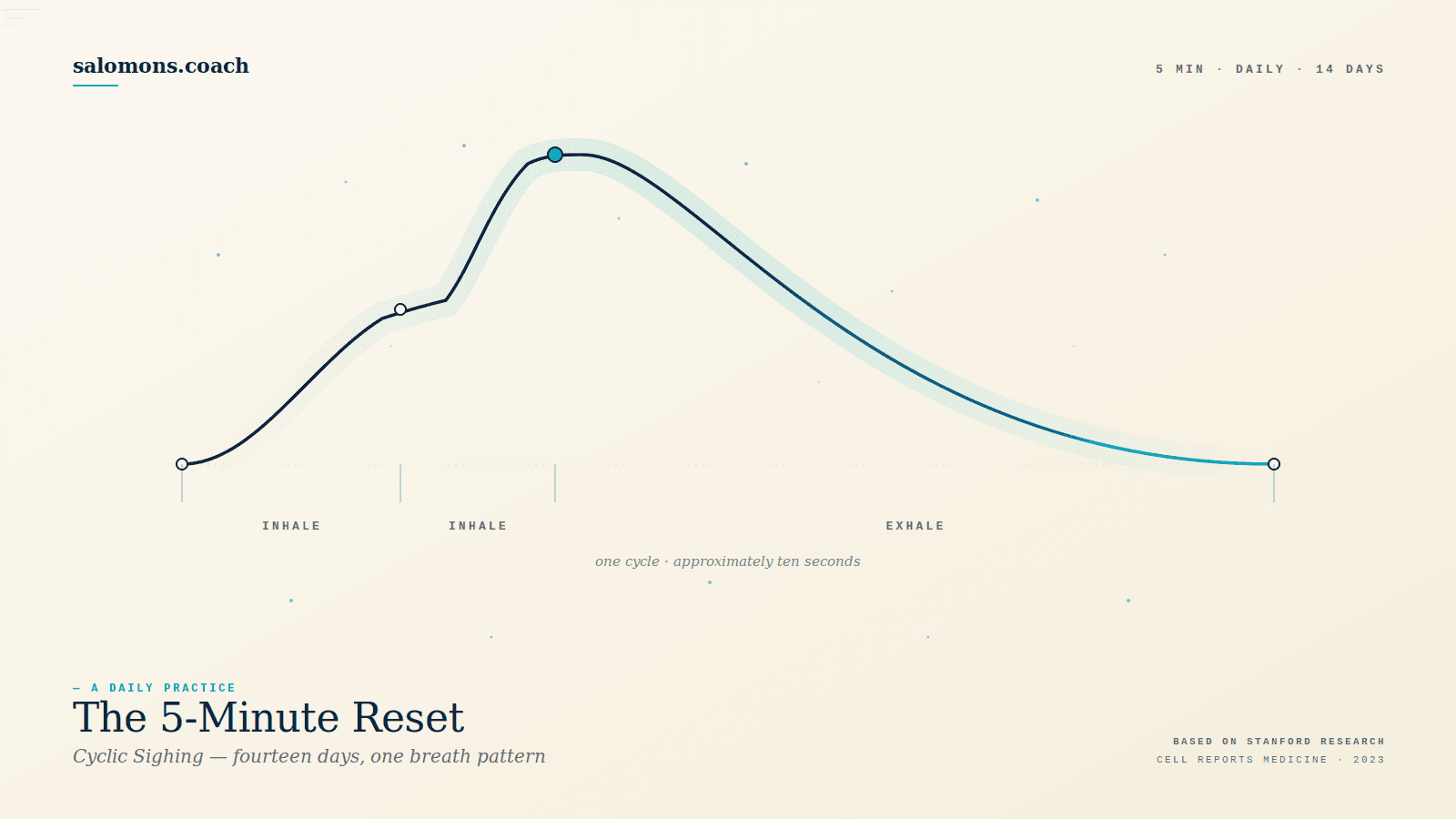
1.Cyclisch zuchten. Een lange, langzame uitademing focus. Adem halverwege door je neus in, neem nog een tweede korte navulademhaling om je longen volledig te vullen, en adem dan langzaam uit door je mond – de uitademing langer dan de inademingen. Herhaal dit vijf minuten.
2. Boxademhaling. Gelijke tijdsduren voor inademen, adempauze, uitademen en tweede adempauze. Bekend bij iedereen die meditatietraining, militaire ademhaling of veel sportprestatieprotocollen heeft gevolgd.
3. Cyclische hyperventilatie met retentie. Langere inhalaties dan exhalaties, met adempauzes. Losjes geïnspireerd op protocollen in de stijl van Wim Hof, ontworpen om alertheid te vergroten in plaats van kalmte.
4. Mindfulness meditatie. Een niet-gecontroleerde vergelijking: passief observeren van de ademhaling, zonder enige poging om het ritme te veranderen. De actieve controleconditie.
Zelfde vijf minuten. Zelfde dertig dagen. Zelfde meetprotocol. Ander ademhalingspatroon.
Wat won, en met hoeveel
Het belangrijkste bevinding was duidelijk. Cyclisch zuchten, de oefening gericht op de uitademing, leverde de grootste verbeteringen in stemming en de grootste verminderingen in fysiologische arousal op. De effecten hielden een volle maand aan, wat suggereert dat de oefening iets trainde in plaats van eenmalige verlichting bood.
Een paar specifieke resultaten de moeite waard om te weten:
- Alle drie de ademwerkingsgroepen presteerden beter dan mindfulness meditatie wat betreft stemmingverbetering. De handeling van bewust controleren ademhaling genereerde meer positieve affecten dan passief ernaar kijken.
- Cyclisch zuchten verminderde de rustademhalingsfrequentie van deelnemers gedurende de dertig dagen — een teken dat de oefening de basisfysiologie veranderde, en niet alleen op dat moment kalmte opwekte.
- Ook de hartslag en hartslagvariabiliteit verschoven in gunstige richtingen, met name in de groep die cyclisch zuchtte.
- Het effect leek zich op te stapelen. Mensen die de hele maand consistenter trainden, zagen grotere verbeteringen.
De mindfulnesvergelijking is het deel dat de meeste mensen missen als ze over dit onderzoek horen. Mindfulnessmeditatie mislukte niet. Het verloor simpelweg van iets specifiekers. Beide groepen zagen stemmingsverbeteringen; de ademhalingsoefeningen-groepen zagen grotere.
Waarom dit resultaat ertoe doet
Stressonderzoek staat vol met technieken die, tot op zekere hoogte, bij bepaalde populaties en onder bepaalde omstandigheden werken. Wat ontbrak, was een rigoureuze directe vergelijking: wat moet een manager daadwerkelijk doen als hij maar vijf minuten heeft?
Deze studie beantwoordt die vraag voor het eerst met een juiste methodologie. Gerandomiseerd gecontroleerd onderzoek, actieve vergelijkingscondities, aanhoudende meting, mainstream peer-reviewed publicatie. Die combinatie is zeldzaam in ademhalingsonderzoek, dat historisch gedomineerd werd door kleinere studies met zwakkere onderzoeksdesigns.
Het mechanisme is ook redelijk goed begrepen. De lange uitademing activeert het parasympathische zenuwstelsel: de rem van het lichaam. De dubbele inademing lijkt gedeeltelijk ingestorte alveoli in de longen weer te openen, wat een efficiëntere uitwisseling van zuurstof en kooldioxide mogelijk maakt. De combinatie zorgt binnen enkele seconden voor een meetbare verschuiving naar fysiologische kalmte, en dagelijkse beoefening lijkt de basislijn over weken te verlagen.
Waarom het aanslaat bij leidinggevenden
Wanneer ik deze techniek introduceer bij een coachee, krijg ik andere vragen dan toen ik meditatie introduceerde. Ze zijn eerder operationeel dan filosofisch:
- “Hoe onthoud ik dat ik het moet doen?”
- “Kan ik het doen tussen vergaderingen door?”
- “Wat moet ik mijn team vertellen over de deur die vijf minuten gesloten is?”
Dit zijn de juiste vragen. Ze betekenen dat de techniek de lat heeft gehaald die de meeste stressinterventies niet halen: hij past in een werkdag in plaats van ertegenin te gaan. Vijf minuten. Geen apparatuur. Geen locatievereisten. Geen kussen, geen app, geen speciale kleding. De drempel is zo laag dat de weerstand gaat over het inplannen, niet over identiteit.
Er is ook een geloofwaardigheidsvoordeel. Wanneer een leidinggevende mij vertelt dat hij sceptisch is over welzijnspraktijken, kan ik hem een peer-reviewed artikel van Stanford overhandigen. Dat sluit de zaak niet altijd af, maar het verandert het register van het gesprek. We discussiëren niet langer over de vraag of zelfzorg de moeite waard is. We bespreken de implementatie.
Hoe gebruik ik dit in coaching
Ik introduceer Zelden een techniek koud. Tegen de tijd dat cyclisch zuchten ter sprake komt in een coachingsgesprek, heeft de coachee me meestal, in welke vorm dan ook, verteld dat hun zenuwstelsel te heet loopt, zoals ratelende gedachten om 23.00 uur, het onvermogen om volledig op te gaan in familietijd na het werk, het gevoel dat hun lont korter is geworden in het afgelopen kwartaal.
Als dat patroon duidelijk is, beschrijf ik de studie in duidelijke bewoordingen: Stanford, 2023, vijf minuten per dag, verslaat meditatie in een gerandomiseerde trial. Dan beschrijf ik de techniek. Daarna noem ik de omvang van de toewijding. Twee weken consistente oefening is genoeg om te weten of het een plaats in hun dag heeft verdiend. Zo niet, dan laten we het vallen en proberen we iets anders.
Wat ik nuttig vind als coach is dat de oefening ons iets concreets geeft om mee te werken tussen coachingsessies. Het levert observeerbare data op, zoals voelt de coachee zich na vijf minuten kalmer dan aan het begin, op een schaal van één tot tien? Werkt het beter in de ochtend, tussen vergaderingen, of voor het slapengaan? Welke momenten bereikte het als eerste? Dit zijn coachbare vragen op een manier waarop “ben je minder gestrest?” dat meestal niet is.
Het 14-daagse programma
Om het oefenen makkelijker vol te houden, heb ik een gestructureerd programma gebouwd in Quenza, het coachingsplatform dat ik met cliënten gebruik. Het loopt veertien dagen. Elke dag komt er een korte prompt binnen, waarin de coachee wordt gevraagd vijf minuten aan de oefening te besteden en hun voor/na te noteren op een eenvoudige schaal.
Het programma kent drie mijlpalen: Dag 1, Dag 7 en Dag 14, die het werk afbakenen, een tussentijdse reflectie uitnodigen en afsluiten met een integratie-uitnodiging: van de veertien dagen, wat verraste je, en waar in je week verdient deze techniek een vaste plek? De andere dagen zijn bewust licht. Het gaat om consistentie, niet om intensiteit.
Ik heb het opgezet als een veertiendaags programma in plaats van dertig omdat de aandacht van leidinggevenden voor nieuwe praktijken korter is dan het oorspronkelijke ontwerp van de studie. Twee weken is voldoende om te weten of de techniek bij iemands leven past. Coachees die het nuttig vinden, gaan zelfstandig door; degenen die dat niet vinden, stoppen. Beide uitkomsten zijn nuttige informatie.
Een afsluitende gedachte
Het meeste ademhalingsadvies dat online circuleert doet grote beloftes en biedt weinig bewijs. De literatuur over cyclisch zuchten is het tegenovergestelde: een rustig, rigoureus resultaat, bescheiden vermeld, verborgen in een vakpublicatie die de meeste mensen nooit zullen lezen. De techniek zelf is bijna beschamend eenvoudig.
Die combinatie, rigoureus bewijs, eenvoudige praktijk, lage tijdsbesteding, is zeldzaam. Als ik het vind, bouw ik coaching daaromheen. Het 14-daagse programma is de meest directe toepassing die ik van deze specifieke bevinding heb gevonden, en de reactie van coachees die het voltooien is consequenter dan op enige andere stressgerelateerde interventie die ik heb aangeboden.
Als je nieuwsgierig genoeg bent om het te proberen, wijs ik je graag naar zowel de originele Stanford-paper als het gestructureerde programma. Beide worden aangeboden.
Het hierboven genoemde document: Balban, M.Y., Neri, E., Kogon, M.M., Weed, L., Nouriani, B., Jo, B., Holl, G., Zeitzer, J.M., Spiegel, D., & Huberman, A.D. (2023). “Korte gestructureerde ademhalingsoefeningen verbeteren de stemming en verminderen fysiologische opwinding.” Cell Reports Medicine, Vol. 4, Issue 1. DOI: 10.1016/j.xcrm.2022.100895.