Doe de vraag!
En waarom capabele mensen geen hulp vragen, en hoe een team leert om dat wel te doen
TDe snelste manier om een zware last te verlichten, is door iemand om hulp te vragen. Het is ook de actie die de meest capabele mensen in een team koste wat kost willen vermijden. Hier is hoe ik een workshop organiseer die vragen van een privé-erkenning verandert in een gedeelde, geoefende vaardigheid.
Het probleem in de kamer
De teams waarmee ik werk, bestaan meestal uit zelfredzame mensen. Zij zijn degenen die het uitzoeken, die langer blijven, die het ding stilletjes repareren in plaats van het te melden. Ze zijn daar trots op, en dat mogen ze ook zijn, daarom worden ze vertrouwd met lastig werk.
Maar zelfredzaamheid heeft een verborgen instelling die je makkelijk te lang aan laat staan: regelt het alleen. Er dient zich een probleem aan, en de reflex is om het te absorberen, niet om het aan te kaarten. Doe het werk opnieuw in plaats van te vragen waarom het verkeerd terugkwam. Draag de extra omvang in plaats van te zeggen dat deze niet past. Voor mensen die hun identiteit hebben opgebouwd rond het feit dat ze bekwaam zijn, kan het vragen om hulp voelen als een stille toegeving dat ze dat niet zijn, dus doen ze het niet, en de last stapelt zich op waar niemand het kan zien.
Dit is de wrede ironie die ik in bijna elk goed presterend team zie. De enige actie die de druk het snelst zou verlichten, namelijk iemand om hulp vragen, is precies de actie die capabele mensen als laatste redmiddel beschouwen, als ze die al aangrijpen. En omdat iedereen hetzelfde doet, wordt de stilte de norm. Niemand vraagt, dus niemand vraagt, dus de persoon die zinkt, gaat er stilletjes vanuit dat hij de enige is die het moeilijk heeft.
De eerste taak van een goede workshop is om die stilte veilig te doorbreken, om vragen zichtbaar, normaal en goedkoop te maken, voordat de druk de zaak afdwingt.
Wat stress werkelijk is
Het is de moeite waard om precies te zijn over wat we beheersen, want “stress” wordt voor te veel dingen tegelijk gebruikt.
De definitie die ik het nuttigst vind, komt uit het appraisalmodel van Lazarus en Folkman: stress is niet de gebeurtenis zelf, maar de kloof tussen wat er van je gevraagd wordt en de middelen die je denkt te hebben om daaraan te voldoen. Zelfde werklast, twee mensen, verschillende stress, omdat de waargenomen kloof verschilt. De druk leeft in die kloof, niet in de inbox.
Wat ik goed vind aan deze definitie is dat die meteen de hefbomen aanwijst. Als stress een kloof is, dan stressmanagement is gap-closing, en er zijn slechts een paar eerlijke manieren om het te doen: verlaag de vraag, breid je middelen uit, of verander hoe je de situatie leest. Alles wat we coping noemen, is een van die zetten.
En hier is waarom vragen zo belangrijk is: andere mensen zijn een hulpbron. Om hulp vragen is een van de snelste, meest directe manieren om de kant van de middelen in de vergelijking uit te breiden, om de kloof te dichten aan de kant waar de meeste mensen nooit bij stilstaan. Het is vreemd, als je het zo bekijkt, dat dit de stap is waar we ons het hardst tegen verzetten. De meesten van ons werken liever langer door (een trage, dure oplossing) voordat we een berichtje van twee regels sturen om een collega om tien minuten te vragen (een snelle, goedkope oplossing).
Het stressprofiel: een spiegel, geen diagnose
Voorafgaand aan de workshop vult iedereen een korte vragenlijst over stressprofielen in. Hierin wordt in kaart gebracht hoe elke persoon momenteel druk ervaart over negen dimensies, waaronder mindset, belasting, herstel, grenzen, en het onderwerp waar deze post over gaat: contact opnemen, de neiging om dingen alleen te doen versus anderen erbij te betrekken.
Ik formuleer bewust de resultaten als een spiegel, geen diagnose. Het profiel beoordeelt niemand. Het weerspiegelt, in hun eigen antwoorden, naar welke copingsmechanismen ze standaard grijpen en waar hun tekortkoming momenteel ligt. Het onderscheid is alles: een oordeel maakt capabele mensen defensief; een spiegel maakt ze nieuwsgierig.
En het patroon dat terugkomt is opmerkelijk consistent. Sterke teams scoren hoog op actieve coping en een robuuste mindset, ze pakken problemen aan en ze lezen druk als een uitdaging. En de dimensie die keer op keer het laagst scoort, is hulp vragen. Dit zijn mensen die uitstekend zijn in doen en stilletjes allergisch voor vragen. Het zien van dat patroon op één pagina benoemd, voor de hele kamer tegelijk, is meestal het moment waarop het ophoudt een persoonlijke eigenaardigheid te zijn en iets wordt waar het team samen aan kan werken.
Omgaan heeft families, en één blijft stil
Omgaan is niet één ding. Voortbouwend op Carvers onderzoek, valt het uiteen in herkenbare families: het probleem direct aanpakken, het herformuleren, sociale steun inroepen, vermijding, herstel en grenzen beschermen. Gezonde mensen gebruiken een bereik en de beweging op het moment laten aansluiten. Problemen ontstaan wanneer iemand zich op een of twee richt en de rest stil laat vallen.
Voor capabele teams is de familie die als eerste stilvalt de sociale steun, en in de kern betekent dat vragen stellen. Het valt stil om een begrijpelijke reden: vragen stellen draagt een verhaal met zich mee. Als ik goed genoeg was, zou ik het niet nodig hebben. Dat verhaal klopt bijna altijd en is bijna altijd duur. Goed vragen is geen karaktereigenschap die je hebt of niet hebt. Het is een copingmechanisme, en zoals elke vaardigheid wordt het gemakkelijker met oefening.
Dat is precies wat we het geven in een oefening die ik noem Breng het Verzoek.
De Vraag Stellen oefening
Hier is het inzicht waarop de oefening is gebaseerd. Als ik een team vertel dat het antwoord is om “meer op elkaar te leunen”, knikken mensen vaak en doen dan niets, omdat ze in een moderne organisatie verspreid zijn, aan verschillende projecten werken, verschillende belanghebbenden hebben, zelden naast elkaar werken. Het kan aanvoelen alsof er geen “samen” beschikbaar is.
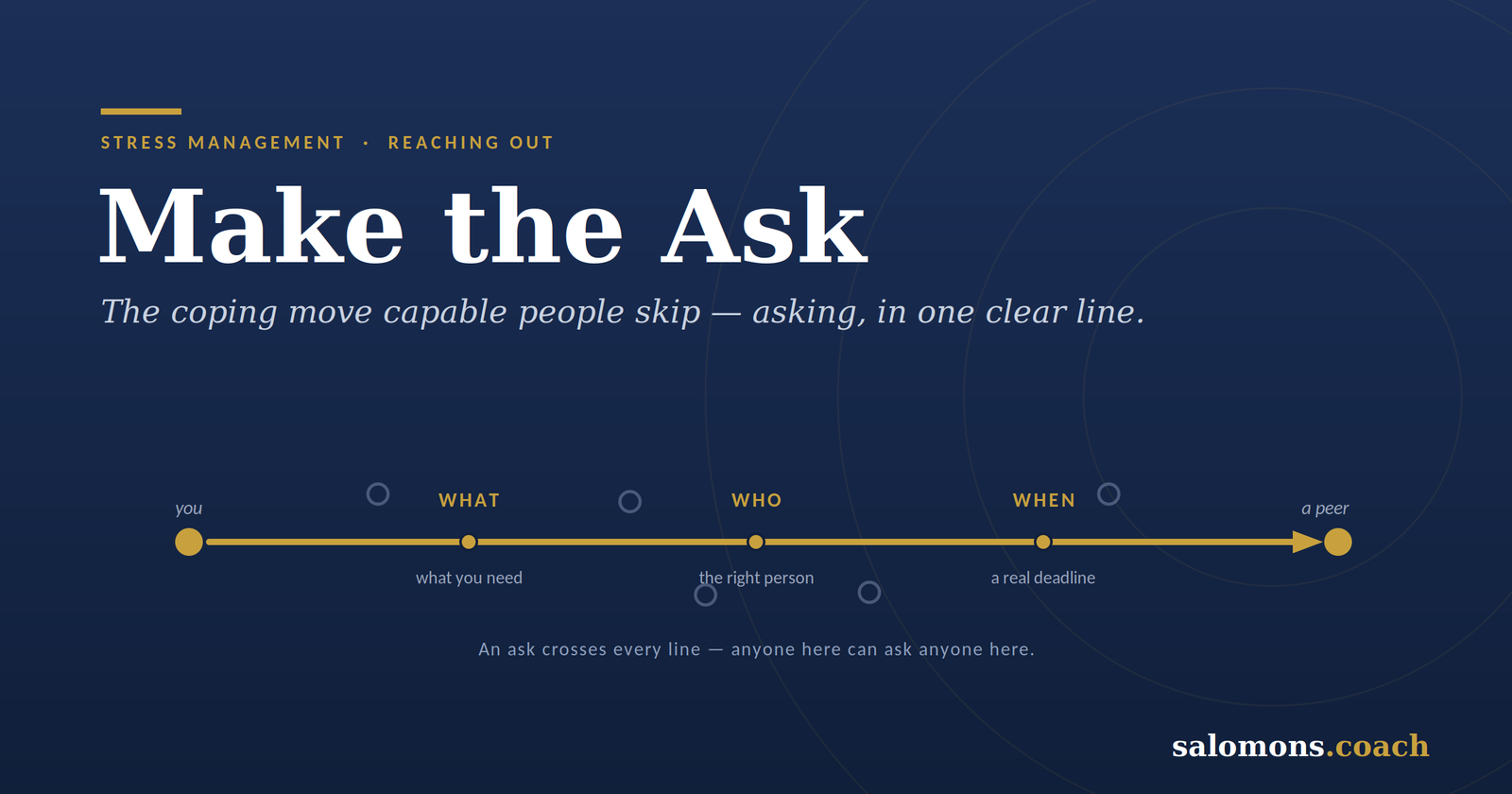
Maar vragen is de enige stap die niet afhankelijk is van samenzitten. Een grens is aan jou om alleen te bewaken, in je eigen context. Een verzoek daarentegen overschrijdt elke grens. Iedereen in de kamer mag iedereen anders vragen, ongeacht in welk project ze zitten, en cruciaal is dat de mensen in die kamer vaak elkaars enige echte rolgenoten zijn. Hun dagelijkse collega's doen ander werk; de enige mensen die echt begrijpen deze het werk zijn degenen ernaast in het atelier. Dat maakt de ruimte zelf een vragend netwerk. De oefening is simpelweg oefenen met het gebruik ervan.
Het duurt ongeveer een half uur.
Eerst, verlaag de kosten hardop. Ik noem de voor de hand liggende waarheid: de meeste kosten van het vragen zitten in je eigen hoofd, niet in de reactie van de ander. De manier om het te verkleinen is door te vragen in het bijzijn van collega's totdat het niet meer als een bekentenis voelt.
Dan iedereen vindt een echte vraag, één actueel ding waar ze oprecht hulp bij kunnen gebruiken, maar waar ze nog niet om gevraagd hebben. Een beslissing waar ze mee worstelen, werk dat ze steeds opnieuw doen, een last die ze in stilte dragen. Dan verscherpen ze het tot één zin:
Ik heb [wat], van [wie], vóór [wanneer].
De eén-zin discipline is belangrijk. Vage verzoeken zijn moeilijk te beantwoorden, wat een groot deel is van waarom ze nooit worden gedaan.
Dan zij werk het in drieën, gedurende enkele minuten door drie rollen roteert:
- De Vragende zegt hun vraag van één zin hardop, voegt slechts één regel context toe, niet meer, en merkt elke neiging tot verontschuldigen of overmatig uitleggen op.
- De Helper reageert echt: biedt iets concreets aan, stelt één verduidelijkende vraag, of zegt eerlijk wat hij wel en niet kan doen.
- De Getuige let op twee dingen, Is het verzoek specifiek gebleven? en Spoor de vrager aan tot excuses, minimalisatie of overmatige rechtvaardiging., en voert deze vriendelijk terug in dertig seconden.
Dat overmatige uitleggen is het bewijs. Het is het geluid van iemand die gelooft dat vragen verdiend moet worden. Het zachtjes benoemen, in een veilige omgeving, is waar de verandering plaatsvindt.
We sluiten af door oogsten wat een vraag gemakkelijk te beantwoorden maakte. De patronen komen uit de ruimte zelf: het is specifiek, het noemt een persoon, het geeft een reële deadline, het laat de verontschuldiging weg en, contra-intuïtief, het maakt het gemakkelijk om nee te zeggen. “Geen druk als het niet lukt” is de zet die de kosten het meest verlaagt, omdat het de vraag goedkoop maakt om te stellen en goedkoop om te weigeren. Elkaars vragen horen doet nog iets anders: het kalibreert stilletjes een gedeeld gevoel van wat normaal is om te vragen. Dan elke persoon commits om één echte vraag die ze die week daadwerkelijk zullen stellen.
De boodschap die ik wil meegeven is deze: Een goede vraag maakt het makkelijk om ja te zeggen, en makkelijk om nee te zeggen. Vragen is geen toegeving dat je het niet redt. Het is een van de meest efficiënte manieren om ermee om te gaan, en de ruimte wordt zowel de standaard ervoor als de stille verantwoordelijkheid die het levend houdt.
(Vragen is de helft van een paar. Het andere, je lijn beschermen en nee zeggen, is de natuurlijke metgezel ervan, en daar heb ik apart over geschreven.)
Breng het naar je team
"Make the Ask" is een oefening in een workshop van een halve dag, ontworpen voor het soort team dat ik aan het begin heb beschreven: capabel, zelfstandig en veel beter in het dragen van last dan in het delen ervan.
In Drie tot vier uur met uw team, wij:
- Breng uw collectieve stressprofiel in kaart over de negen dimensies, zodat het werkelijke patroon zichtbaar en gedeeld wordt
- zoek de een of twee copingbewegingen die je team de meeste hefboomwerking zouden geven, meestal vragen en grenzen stellen
- live, praktische oefeningen uitvoeren zoals 'Make the Ask', zodat mensen vertrekken nadat ze de taak daadwerkelijk hebben uitgevoerd, en niet alleen hebben ingestemd dat het een goed idee is
- zet de kleine normen die levend blijven nadat de kamer leeg is
Het is praktisch, onderbouwd met bewijs en afgestemd op de werkelijke knelpunten van je team, niet op een algemene stresspresentatie. Mensen gaan naar huis met iets dat ze dezelfde week nog kunnen gebruiken.
Als je team sterk, druk is en stilletjes meer draagt dan nodig, laten we het dan hebben over de uitvoering van deze sessie. Boek een gratis gesprek of Neem contact op, en we stellen een workshop samen rond wat uw team echt nodig heeft.