4R Model – Stap 1 – Reflectie
Inleiding: Wetenschap als Fundament van de 4R-aanpak
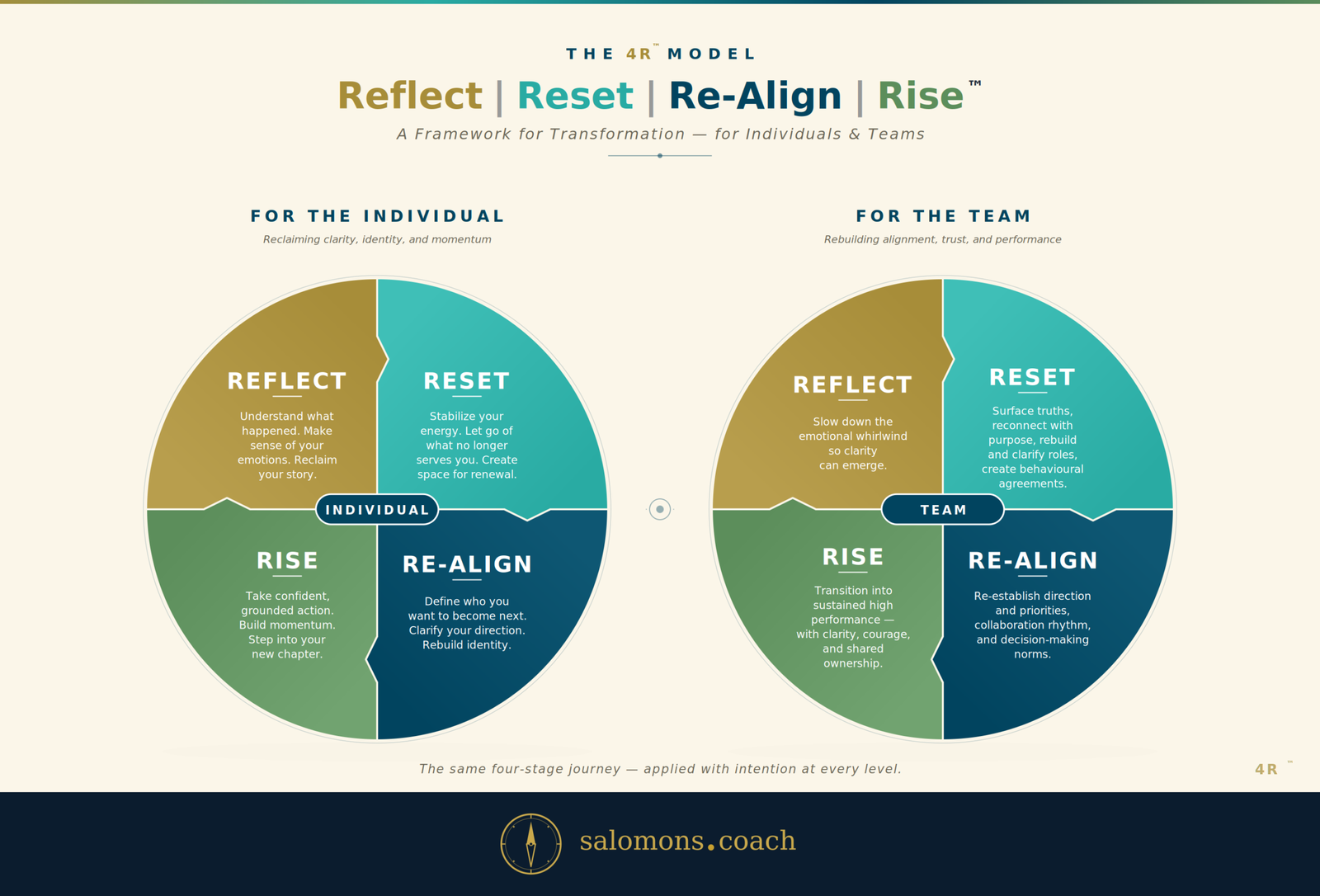
Het 4R-model — Reflecteren, Resetten, Heroriënteren, Opstaan™ — is geen theoretisch construct dat achter een bureau is ontworpen. Het is een distillaat van meer dan twintig jaar praktijkgerichte executive coaching, gecombineerd met een grondige analyse van de relevante wetenschappelijke literatuur. Dit document bundelt vier artikelen, die elk een R van het model verbinden met de sterkste onderzoeksresultaten uit de psychologie, neurowetenschappen en organisatiekunde.
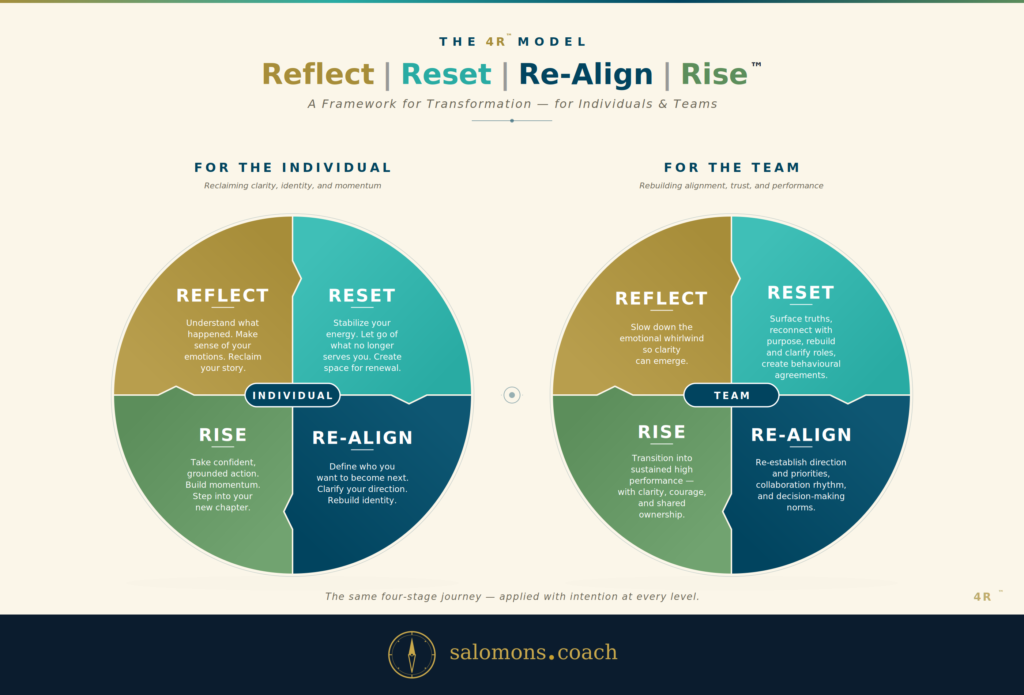
De centrale stelling is dat leiderschap niet alleen door informatie transformeert. Transformatie vereist een sequentieel proces: eerst de moed om eerlijk naar jezelf te kijken (Reflect), dan het loslaten van wat niet langer werkt (Reset), gevolgd door een herpositionering vanuit authentieke waarden (Re-Align), en ten slotte duurzaam hoge prestaties vanuit een vernieuwde fundering (Rise). Elk van deze stappen is empirisch onderbouwd.
De vier artikelen zijn geschreven voor een professioneel publiek: senior leiders, HR-directeuren en collega-coaches die op zoek zijn naar een wetenschappelijk gefundeerde benadering van leiderschapsontwikkeling.
Stap 1: Reflecteer
De Kracht van Zelfreflectie: Waarom Leiders Zichzelf Niet Kennen en Hoe Dat te Veranderen
Het lijkt vanzelfsprekend: wie anderen wil leiden, moet eerst zichzelf kennen. Toch toont onderzoek consequent aan dat zelfbewustzijn bij leiders opmerkelijk onderontwikkeld is – en dat dit meetbare gevolgen heeft voor de prestaties van de organisatie, de kwaliteit van beslissingen en de teamcultuur. De eerste stap van het 4R-model – Reflect – is niet toevallig het fundamentele toegangspunt van het hele transformatieproces.
De zelfbewustzijns kloof: verontrustende cijfers
Tasha Eurich, organisatiepsycholoog en auteur van het baanbrekende Insight (2018), bestudeerde met haar onderzoeksteam meer dan vijfduizend mensen. De bevinding was verbijsterend: slechts 10 tot 15 procent van de volwassenen is echt zelfbewust. Nog zorgwekkender: er is vrijwel geen correlatie tussen hoe zelfbewust mensen zichzelf denken te zijn en hoe zelfbewust ze daadwerkelijk zijn.
| 📚 Eurich, T. (2018) — Inzicht: Waarom we niet zo zelfbewust zijn als we denken. Kwantitatief onderzoek onder meer dan 5.000 deelnemers. Belangrijkste bevinding: 95% van de mensen denkt zelfbewust te zijn, terwijl slechts 10–15% dat daadwerkelijk is. Eurich onderscheidt intern zelfbewustzijn (hoe we onszelf zien) en extern zelfbewustzijn (hoe anderen ons zien) als twee onafhankelijke dimensies, die beide cruciaal zijn voor effectief leiderschap. |
Deze bevinding is des te relevanter voor senior leiders. Naarmate mensen in de hiërarchie stijgen, neemt het aantal mensen dat hen eerlijke feedback geeft significant af. Succes uit het verleden versterkt de bevestigingsbias, en de omgeving past zich aan de percepties van de leider aan in plaats van andersom. De top is paradoxaal genoeg de plek waar zelfbewustzijn het meest nodig is en tegelijkertijd het meest ontbreekt.
De wetenschappelijke basis van reflectie als leerproces
Donald Schon introduceerde in 1983 het concept van de reflectieve professional — de professional die niet alleen vanuit kennis handelt, maar tegelijkertijd van die actie leert door middel van kritische zelfreflectie. Hij maakte een fundamenteel onderscheid tussen reflectie-in-actie (tijdens de handeling) en reflectie-op-actie (nadien, van een afstand).
| 📚 Schon, D.A. (1983) — De Reflectieve Professional: Hoe Professionals Denken in Actie. Baanbrekend werk in de literatuur over professionele ontwikkeling. Schon stelt dat de meest complexe professionele problemen niet alleen met technische kennis kunnen worden opgelost, maar vereisen dat de professional zijn eigen denkproces onderzoekt. Bijzonder relevant voor coaching: de coach faciliteert het schakelen tussen actie en reflectie. |
David Kolb bouwde hierop voort met zijn Theorie van Ervaringsleren (1984), waarbij hij reflectie beschreef als de essentiële schakel tussen ervaring en leren. Zijn leercyclus — concrete ervaring, reflectieve observatie, abstracte conceptualisatie, actieve experimentatie — toont aan dat zonder de reflectiestap ervaringen niet worden omgezet in betekenisvolle kennis. Leiders die van de ene actie naar de andere haasten, leren fundamenteel minder dan hun meer reflectieve collega's.
Metacognitie en de Dunning-Kruger paradox
Flavell (1979) introduceerde het concept van metacognitie: het vermogen om na te denken over je eigen denken. Leiders met een sterke metacognitieve capaciteit herkennen hun eigen blinde vlekken, kennen de grenzen van hun kennis en bevragen regelmatig hun aannames.
Kruger en Dunning (1999) demonstreerden wat er gebeurt als deze capaciteit afwezig is: mensen met een lage competentie in een domein overschatten zichzelf consequent, terwijl hooggekwalificeerde individuen hun vaardigheden onderschatten. Dit effect — dat algemeen bekend is geworden — is bijzonder hardnekkig in leidinggevende posities. De illusie van superieur zelfinzicht correleert negatief met daadwerkelijke effectiviteit.
| 📚 Kruger, J. & Dunning, D. (1999) — Unskilled and Unaware of It (Journal of Personality and Social Psychology). Klassieke studie met vier experimenten. Demonstreert dat cognitieve tekortkomingen niet alleen leiden tot slechte prestaties, maar ook tot het ontbreken van het vermogen om eigen incompetentie te herkennen. Metacognitieve training — de kern van de Reflect-fase — is de meest effectieve interventie. |
Mindfulness als reflectieve praktijk
Onderzoek van Jon Kabat-Zinn naar mindfulness-based stress reduction (MBSR) heeft aangetoond dat systematische aandachtstraining de hersenstructuren die verantwoordelijk zijn voor zelfreflectie en emotieregulatie vergroot — met name de insula en de prefrontale cortex. Langer (2014) koppelt mindfulness in een organisatorische context direct aan betere besluitvorming en hogere leiderschapseffectiviteit.
Hougaard en Carter (Harvard Business Review, 2018) bestudeerden meer dan 35.000 leiders en ontdekten dat bewuste leiders significant hoger scoren op beoordelingen door ondergeschikten op alle dimensies van leiderschapseffectiviteit — inclusief besluitvormingskwaliteit, empathie en strategisch denken.
Coachende implicaties van de Reflectie fase
Wat betekent dit allemaal voor de coachingpraktijk? De onderzoeksliteratuur wijst ondubbelzinnig in één richting: zelfbewustzijn ontwikkelt zich niet spontaan. Het vereist gestructureerde interventies, eerlijke feedback van buitenaf, en een psychologisch veilige context waarin de leider durft te twijfelen aan zijn eigen zelfbeeld.
- Gebruik 360-graden feedbackdata als een spiegel, maar verwerk het in een coachingsgesprek — niet als een rapport.
- Introduceer reflectieroutines: dagelijks of wekelijks journalen, gerichte zelfevaluatievragen na belangrijke beslismomenten.
- Maak blinde vlekken bespreekbaar met de aanpak van Eurich: vraag niet ‘waarom’ maar ‘wat’ — wat wil ik, wat doe ik, wat wil ik veranderen?
- Creëer voorwaarden voor reflectie-in-actie: gestructureerde sessies na belangrijke leiderschapsmomenten.
“De meest succesvolle mensen, evenals de meest succesvolle organisaties, hebben één opvallend gemeenschappelijk kenmerk: ze hebben het vermogen ontwikkeld om zichzelf duidelijk te zien.” — Tasha Eurich, Inzicht (2018)

Dit vind je misschien ook leuk


ADHD Leiderschap Video's