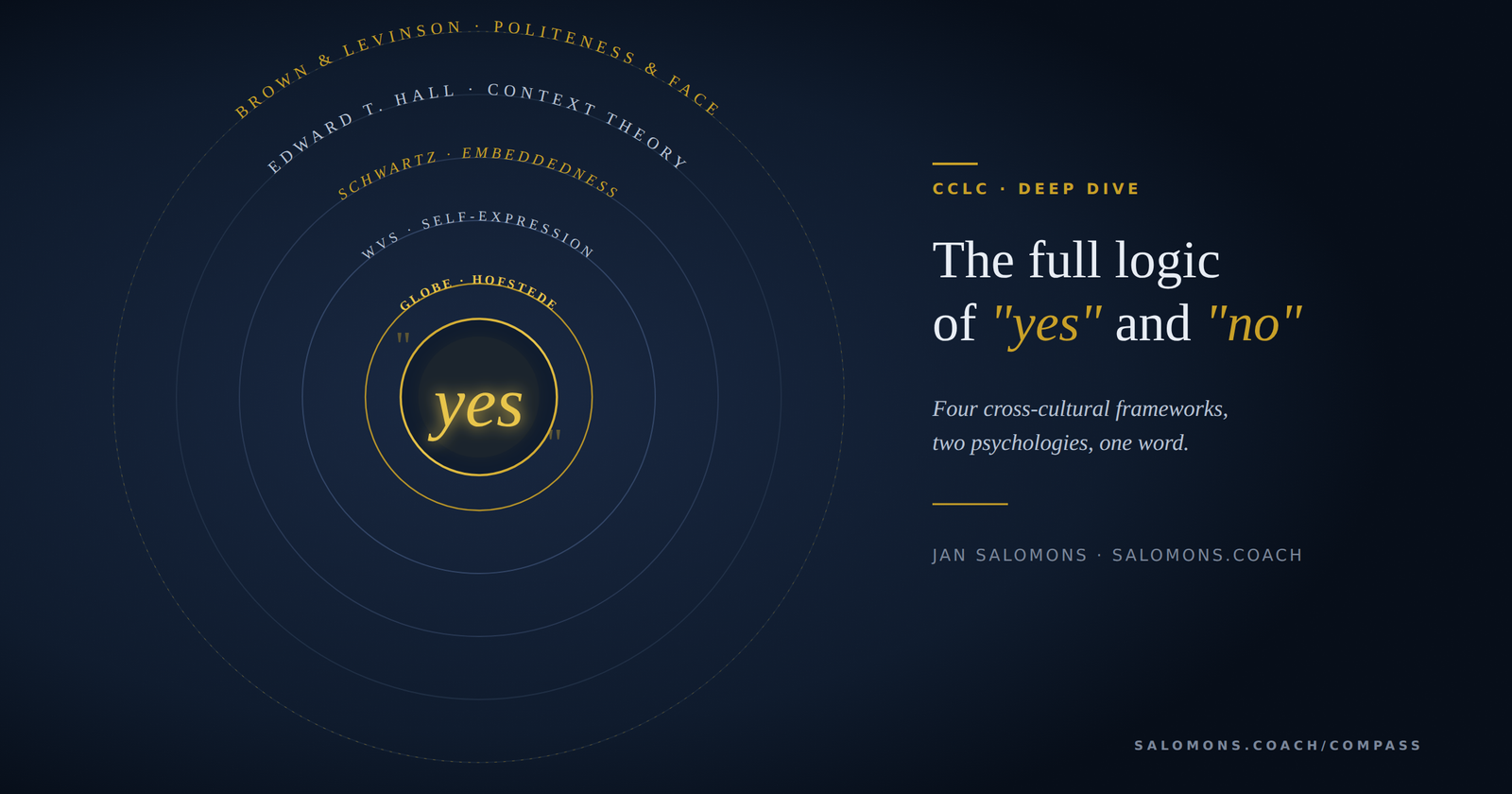
A yes from Beijing and a yes from Amsterdam can come out of the same mouth in the same meeting and mean radically different things. A reference-grade walk through the four cross-cultural frameworks — Hofstede, GLOBE, WVS, Schwartz — and the two psychological theories underneath that explain why.

If you have downloaded the Cross-Cultural Leadership Compass, this article provides the knowledge how to use the report as your compass to navigate the cross-cultural map. I you want to download an example report, click here. Cross-cultural leadership reports are
Most cross-cultural leadership problems don’t look like cultural problems, until they cost you performance. Misaligned expectations around trust, feedback, hierarchy, and decision-making silently undermine teams, delay results, and create friction that leaders misread as personality or competence issues. The Cross-Cultural Leadership Compass translates decades of academic research, including Hofstede’s Cultural Dimensions, GLOBE Study, World Values Survey, and Schwartz Theory of Basic Values, into precise, actionable leadership insights. Instead of generic awareness, it gives you a data-backed map of where cultural gaps actually impact your role, your team, and your results.
Every leader who crosses a cultural boundary carries two operating systems at once. One was installed in childhood. The other was acquired through years of professional adaptation. The real skill — the one that separates effective cross-cultural leaders from merely well-travelled ones — is knowing which system is running at any given moment, and whether it is serving the situation.
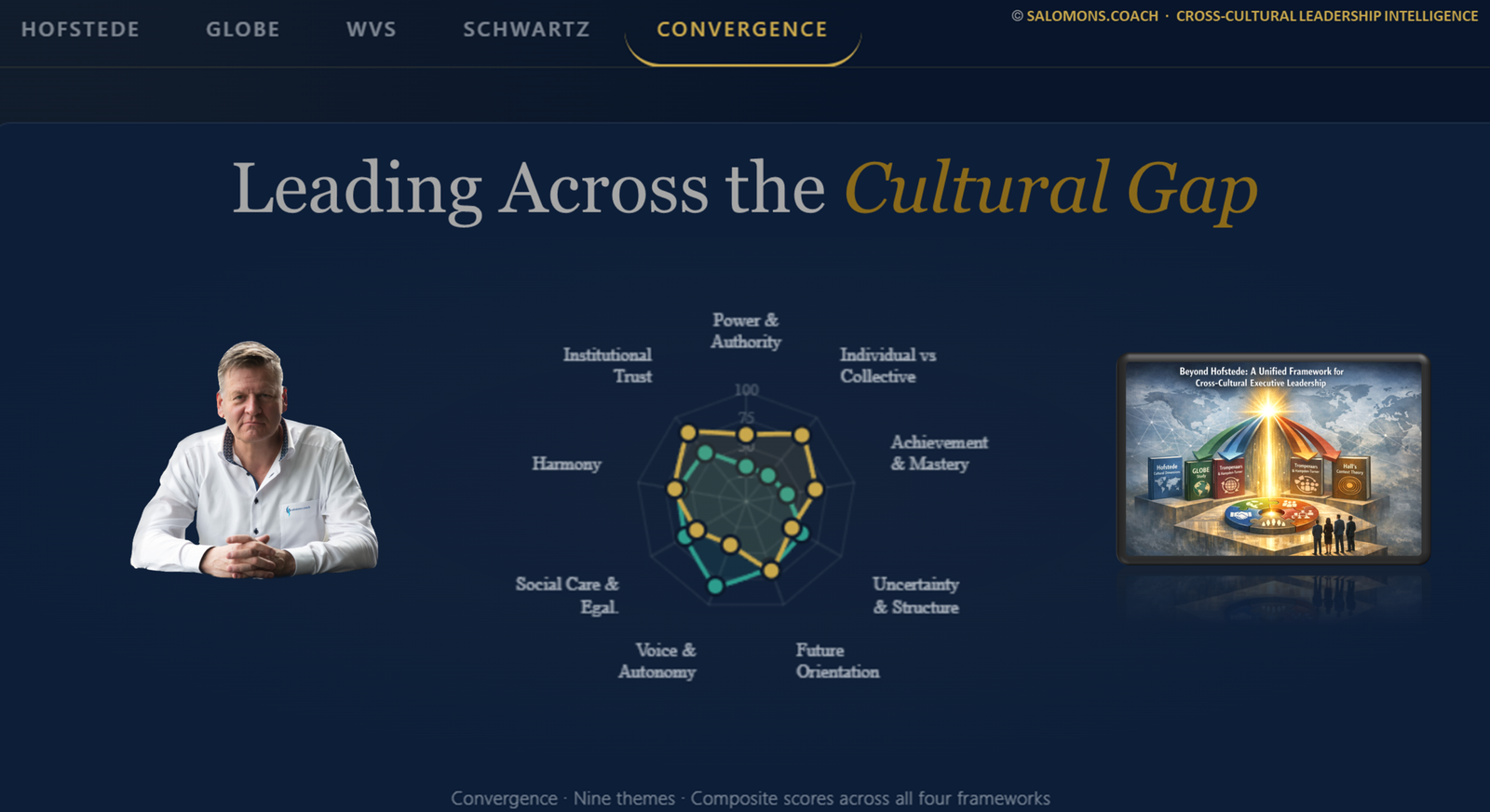
The Cross-Cultural Leadership Compass is built around exactly this challenge. It integrates four validated academic frameworks — Hofstede, GLOBE, the World Values Survey, and Schwartz — and translates the data into eleven specific leadership dimensions where cultural gaps play out in practice. This post unpacks each one.
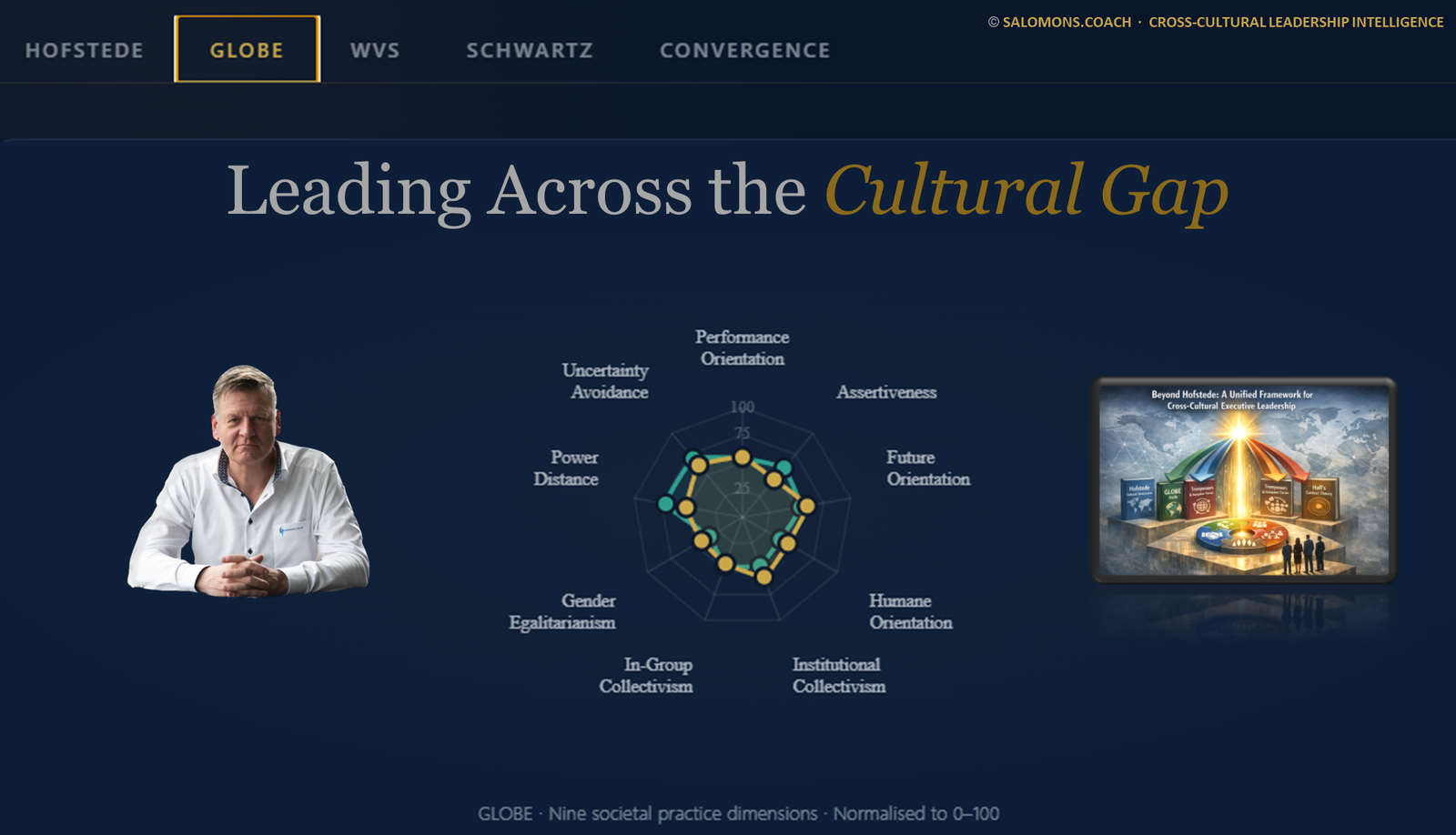
Most cross-cultural frameworks tell you how cultures differ. The GLOBE Study tells you what kind of leader each culture is actually willing to follow. Here is what that means for your leadership — and how the Cross-Cultural Leadership Compass puts GLOBE to work alongside three other frameworks.
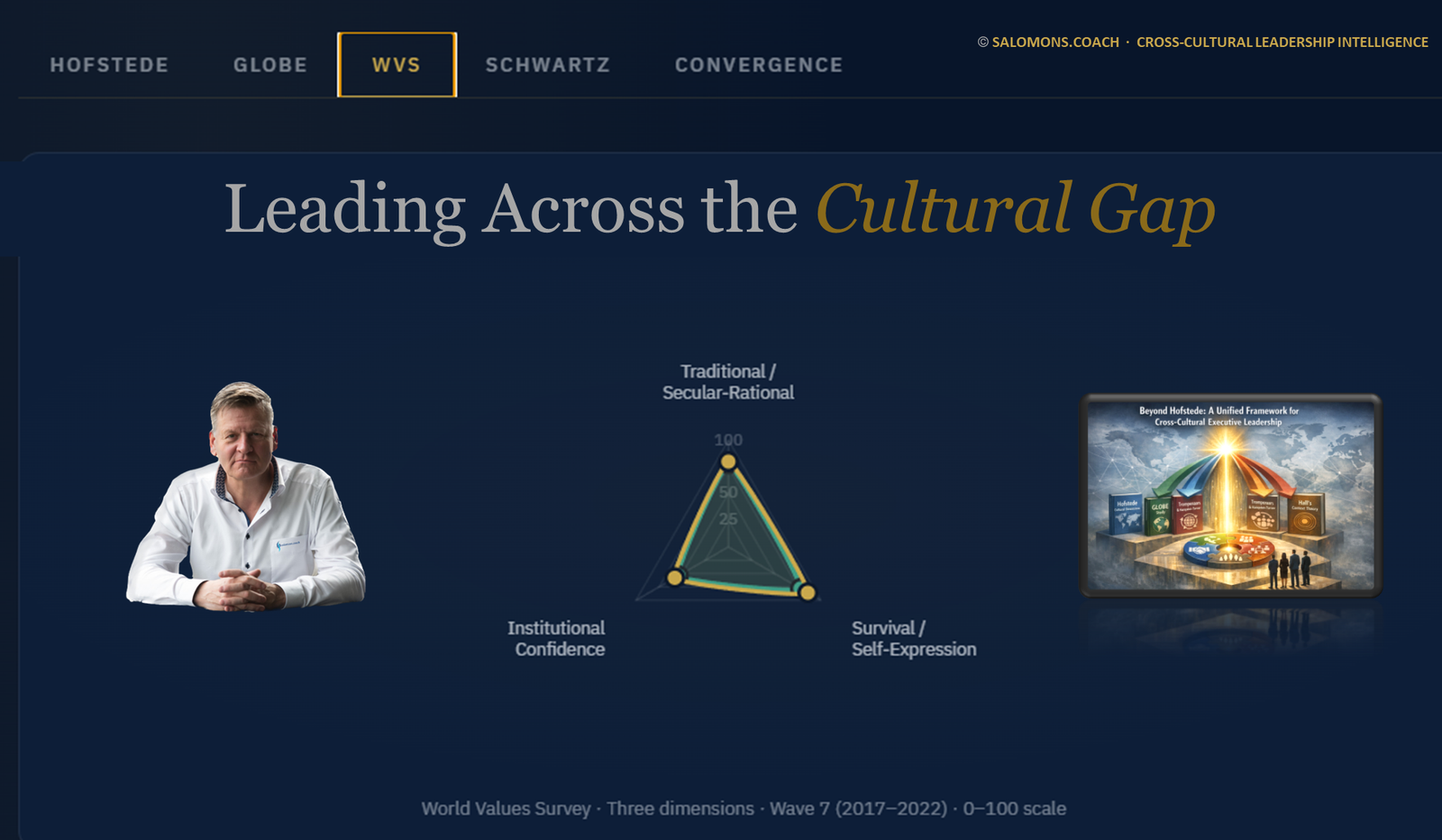
Most cross-cultural frameworks tell you how cultures differ at work. The World Values Survey reveals something deeper: what people fundamentally believe they are working for, whether they extend default trust to institutions or require it to be earned personally, and whether autonomy or security is their more basic professional motivation. These are the values that take generations to shift — and the ones that resurface under pressure even after a decade of adaptation.
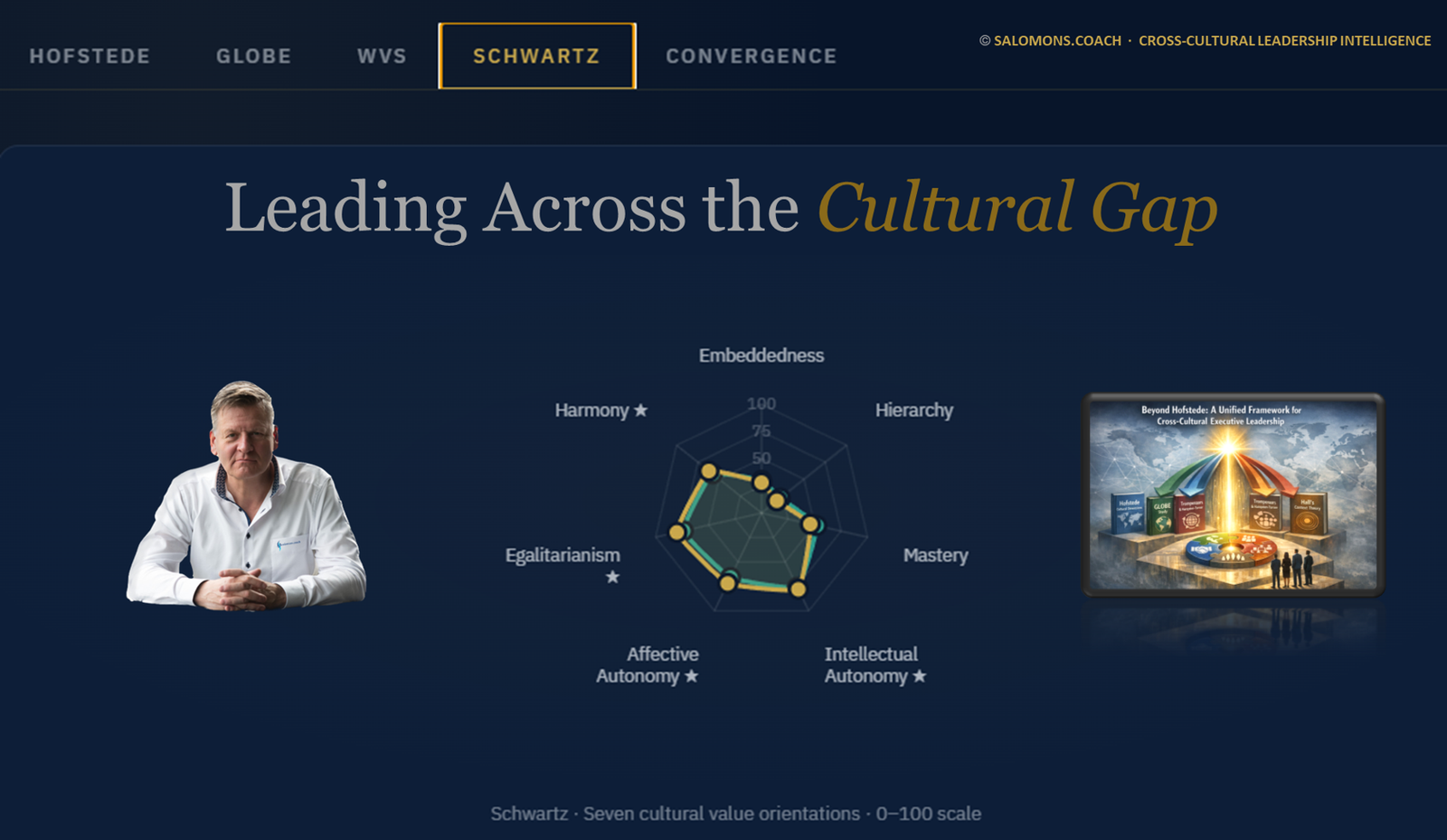
Every cross-cultural framework has blind spots. Schwartz measures four cultural dimensions that have no equivalent in Hofstede or GLOBE. If you are working without them, you are missing a significant portion of the cross-cultural picture — and in some pairings, the most operationally significant gaps in the entire analysis.
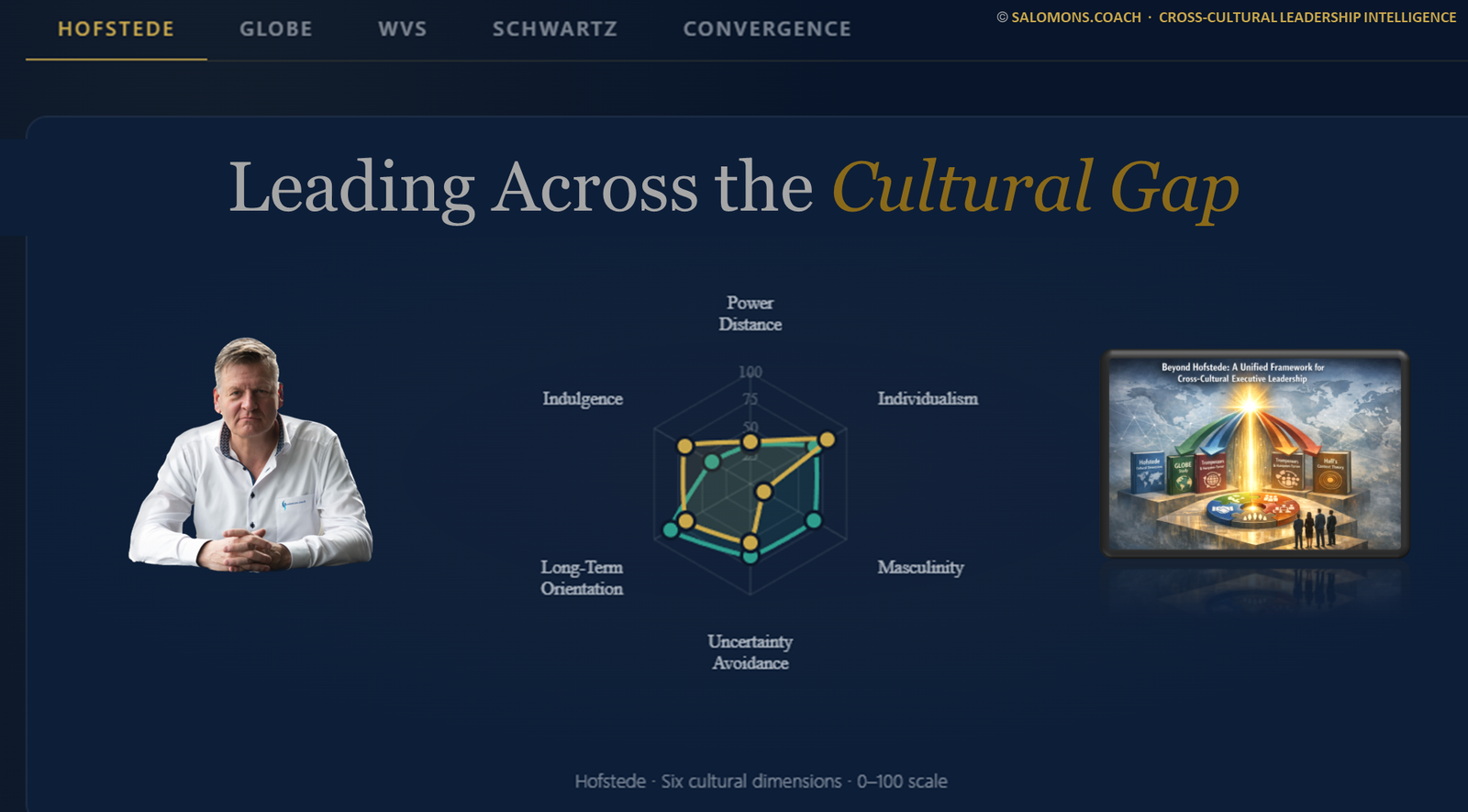
Geert Hofstede spent decades researching one question: do people from different countries think and behave differently in professional contexts in ways that are systematic, measurable, and predictable? His answer — developed through surveys of over 100,000 IBM employees across more than 50 countries — was an unambiguous yes.
The result is the most widely cited framework in cross-cultural management research. Six dimensions. Numerical scores for over 90 countries. But knowing the framework exists and knowing how to use it are different things. This post explains what Hofstede's six dimensions actually measure — and how the Cross-Cultural Leadership Compass translates them into specific, situational leadership guidance.
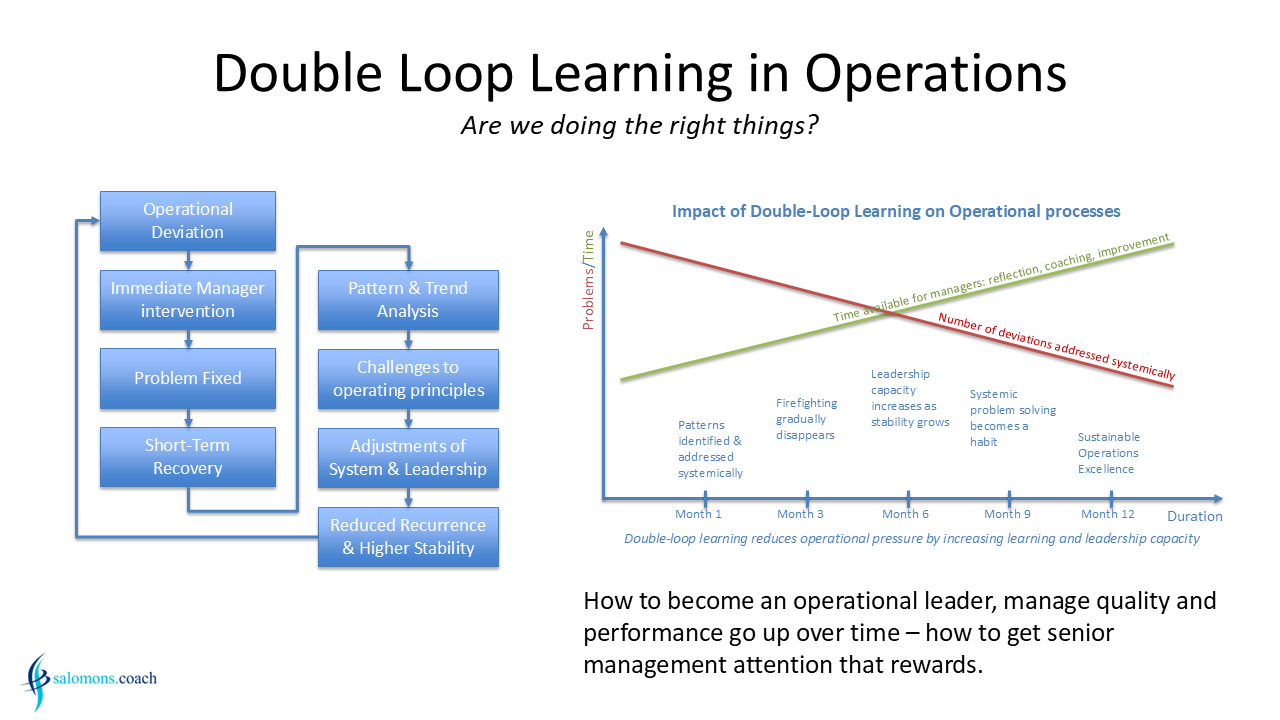
Firefighting is rational, but it traps organizations.
Under pressure, leaders act on what is visible and urgent, fixing problems to keep operations moving. Yet this behavior prevents learning, reinforces firefighting, and consumes leadership capacity. Sustainable performance requires shifting from solving today’s issues to redesigning the system that creates them.
Struggling with a new boss? You’re not alone. This article explains the psychology behind leadership transitions, why your brain reacts the way it does, and what practical steps help you rebuild clarity and trust—especially in high-pressure operational environments.