Hoe creëer je eigenaarschap in organisaties

Samenvatting
Dit artikel bevat (1) een samenvatting, (2) een hoofdstuk over hoe je een leiderschapscultuur opbouwt waarin eigenaarschap een fundamenteel onderdeel is van hoe mensen samenwerken, (3) een praktijkvoorbeeld (casestudy) gebaseerd op een van mijn recente projecten en (4) download . component
Veel organisaties worstelen met eigenaarschap en concluderen dat mensen moeten “opstaan” of hun mentaliteit moeten veranderen. In de praktijk is eigenaarschap zelden een motivatiekwestie. Het is het voorspelbare resultaat van hoe het werk is ontworpen, hoe beslissingen worden genomen en hoe leiderschap zich gedraagt onder druk.
Eigenaarschap breekt af wanneer doelen onduidelijk zijn, verantwoording is losgekoppeld van autoriteit en leiders terugtreden zodra dingen ongemakkelijk worden. In dergelijke omgevingen leidt het vragen naar eigenaarschap eerder tot voorzichtigheid dan tot betrokkenheid.
Sterk eigenaarschap ontstaat wanneer mensen duidelijkheid hebben over wat ze bezitten en waarom het belangrijk is, echte beslissingsbevoegdheid binnen duidelijke grenzen en zichtbare consequenties die beslissingen verbinden met resultaten. Psychologische veiligheid is essentieel; zonder die veiligheid wordt verantwoordelijkheid een persoonlijk risico in plaats van een gedeelde norm.
Leiderschapsgedrag is doorslaggevend. Wat leiders doen op momenten van stress is veel belangrijker dan wat ze zeggen. Consistent gedrag, ondersteund door een duidelijk werkritme en verantwoording door collega's, verandert eigenaarschap van een verwachting in een culturele realiteit.
Eigenaarschap groeit niet omdat mensen er meer om geven. Het groeit omdat het systeem het toelaat, het verwacht en het elke dag versterkt. Organisaties die meer eigenaarschap willen, moeten stoppen met het eisen en beginnen met het ontwerpen ervan.
Casestudy: In een grootschalige, 24/7 operationele omgeving binnen een wereldwijde logistieke organisatie leidde het herontwerpen van duidelijkheid, beslissingsbevoegdheid, leiderschapsgedrag en werkritme tot snellere beslissingen, sterkere verantwoordelijkheid op supervisorniveau en een meetbare vermindering in escalatie naar hoger management.
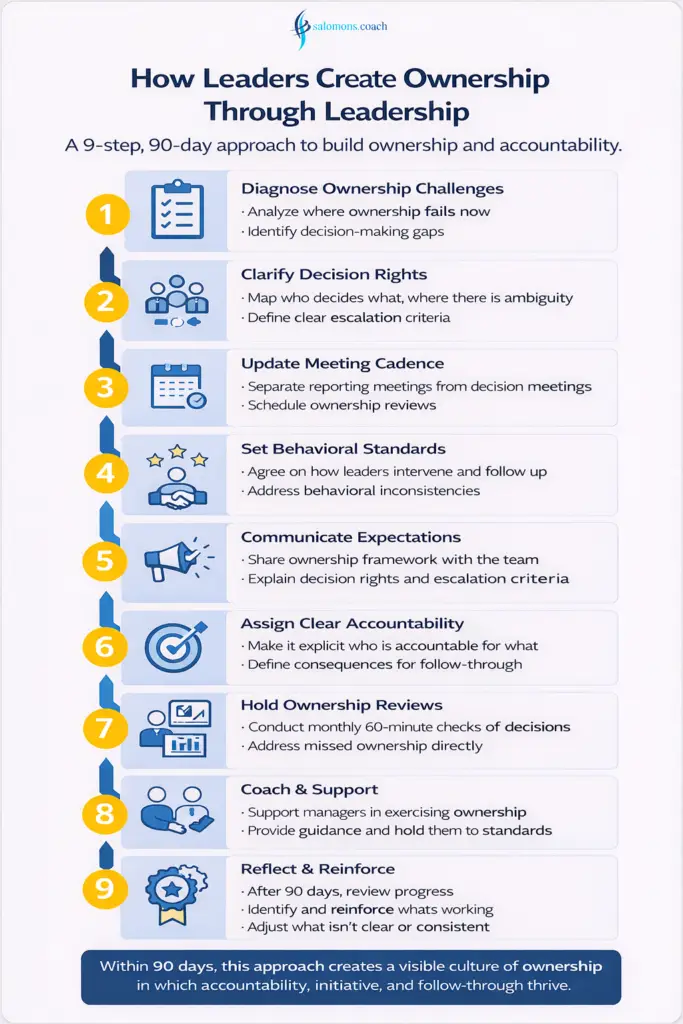
Het raamwerk samengevat in één infographic.
Klik op de infographic om het volledige raamwerk te downloaden, een checklist van 12 pagina's voor leiders.
Waarom eigenaarschap in organisaties ontstaat door ontwerp, niet door slogans
“Mensen moeten meer verantwoordelijkheid nemen.”
Het is een van de meest voorkomende frustraties die ik hoor in organisaties. De opmerking is meestal oprecht. Leiders menen het. Ze willen dat initiatief, verantwoordelijkheid en aansprakelijkheid dieper in de organisatie doordringen. En toch wordt de zin bijna altijd gevolgd door initiatieven die erop gericht zijn de mentaliteit te veranderen.
Dat is precies waar de dingen beginnen te ontsporen.
Eigenaarschap is zelden een mentaliteitsprobleem. In de praktijk is het veel vaker het logische resultaat van hoe een organisatie is ontworpen, hoe leiderschap zich gedraagt en wat dag na dag wordt versterkt. Als het systeem eigenaarschap ontmoedigt, zal geen enkele hoeveelheid aanmoediging, verhalen of culturele slogans dat compenseren.
Als je meer eigenaarschap wilt, stop dan met mensen te vragen “op te stappen” en begin te onderzoeken waar je hen structureel vraagt in te stappen.
Duidelijkheid komt voor commitment
Eigenaarschap kan niet bestaan in een omgeving van ambiguïteit. Mensen kunnen geen verantwoordelijkheid nemen voor resultaten als ze onduidelijk zijn over waar ze eigenlijk verantwoordelijk voor zijn. Ze hebben duidelijkheid nodig over de reikwijdte van hun rol, het doel achter hun werk en de norm waaraan succes zal worden afgemeten.
In veel organisaties zijn doelen gelaagd, prioriteiten verschuiven vaak en verwachtingen blijven impliciet. Het resultaat is geen luiheid of onverschilligheid, maar aarzeling. Mensen vertragen omdat ze niet zeker weten welke afwegingen acceptabel zijn en welke fouten later zullen worden afgestraft.
Eigenaarschap groeit wanneer doelstellingen expliciet, stabiel en betekenisvol genoeg zijn voor mensen om zich er echt aan te committeren. Motivatie volgt op duidelijkheid, niet andersom.
Verantwoording afleggen zonder autoriteit leidt tot terugtrekking
Weinig dingen zijn zo demotiverend als verantwoording moeten afleggen voor resultaten die je niet zinvol kunt beïnvloeden. Toch gebeurt dit elke dag. Mensen worden gevraagd zich resultaten toe te eigenen, terwijl beslissingen gecentraliseerd blijven, escalaties worden aangemoedigd en leiders zich terugtrekken zodra dingen ongemakkelijk worden.
In dergelijke systemen wordt verantwoordelijkheid eerder symbolisch dan reëel.
Echt eigenaarschap vereist dat beslissingsrechten duidelijk zijn en worden gerespecteerd. Mensen moeten weten waar ze geacht worden zelfstandig te beslissen en waar escalatie gepast is. En wat net zo belangrijk is, leiders moeten weerstand bieden aan de drang om beslissingen te negeren omdat dat op dat moment sneller of veiliger voelt.
Wanneer beslissingen routinematig worden teruggedraaid of in twijfel worden getrokken, staan mensen niet op. Ze doen een stap terug. Na verloop van tijd wordt initiatief vervangen door naleving en erodeert het eigenaarschap stilletjes.
Eigendom vereist consequenties, geen bescherming
Eigenaarschap wordt pas echt als mensen de gevolgen van hun keuzes ervaren. Dat betekent geen straf. Het betekent verbinding.
Wanneer teams zien hoe hun beslissingen klanten, collega's en resultaten beïnvloeden, wordt verantwoordelijkheid tastbaar. Leren wordt gegrond in de realiteit in plaats van abstractie. Veel leiders verwijderen deze verbinding echter onbedoeld door teams af te schermen van de impact van hun beslissingen, vaak met goede bedoelingen.
Door dingen stilletjes op te lossen of de gevolgen op een hoger niveau op te vangen, nemen leiders ook de kans weg om te leren. Eigenaarschap groeit wanneer feedback direct, tijdig en duidelijk gekoppeld is aan beslissingen en resultaten, zonder schuld, maar ook zonder redding.
Zonder psychologische veiligheid is eigendom een risico
Niemand neemt verantwoordelijkheid in een onveilige omgeving.
Mensen nemen pas verantwoordelijkheid als ze geloven dat fouten openlijk kunnen worden besproken, dat leren belangrijker is dan het vaststellen van fouten en dat afwijkende meningen worden gezien als een bijdrage in plaats van een verstoring. Psychologische veiligheid is daarom geen zachte culturele ambitie. Het is een harde verantwoordelijkheid van het leiderschap.
Belangrijk is dat veiligheid niet door woorden maar door gedrag wordt gecreëerd. Teams houden nauwlettend in de gaten hoe leiders reageren als er iets fout gaat, als doelen niet worden gehaald of als aannames in twijfel worden getrokken. Deze momenten bepalen of eigenaarschap wordt aangemoedigd of stilletjes wordt afgestraft.
Wat leiders doen is belangrijker dan wat ze zeggen
Organisaties onderschatten vaak hoe snel eigenaarschap verdwijnt wanneer leiderschapsgedrag inconsistent wordt. Onder druk vallen sommige leiders terug op micromanagement, draaien beslissingen terug zonder uitleg, of nemen de eer voor succes terwijl ze de schuld voor mislukking verdelen.
Dit gedrag zendt krachtige signalen uit. Ze leren mensen precies hoeveel eigenaarschap echt wordt verwacht, ongeacht wat er in strategiedocumenten of gemeentevergaderingen staat. Cultuur wordt gevormd in momenten van stress, niet in momenten van afstemming.
Eigenaarschap overleeft alleen als leiders consequent blijven, vooral als dat ongemakkelijk is.
Eigenaarschap leeft in ritme, niet in escalatie
Sterk eigenaarschap ontstaat niet door ad-hocinterventies of escalaties bij problemen. Het wordt ondersteund door een duidelijk werkritme waarin verantwoordelijkheid zichtbaar en normaal wordt.
Regelmatige momenten om de voortgang te bespreken, beslissingen uit te leggen en problemen aan te pakken creëren een gedisciplineerde cadans. In een dergelijk ritme is verantwoording niet persoonlijk of politiek. Het maakt deel uit van hoe het werk gedaan wordt. Het gaat niet om controle, maar om het creëren van voorspelbaarheid en gedeelde verantwoordelijkheid.
Verantwoording door collega's is waar eigenaarschap cultureel wordt
De meest duurzame vorm van eigendom is niet verticaal. Het is horizontaal.
Wanneer collega's elkaar aan afspraken houden, gedrag direct aanspreken en gedeelde normen beschermen, verschuift de verantwoordelijkheid van “de manager” naar “ons”. Op dat moment is eigenaarschap niet langer afhankelijk van hiërarchie of individuele leiders. Het raakt verankerd in de manier waarop mensen samenwerken.
De essentie
Eigenaarschap groeit niet omdat mensen er plotseling meer om geven. Het groeit omdat het systeem het toelaat, het verwacht en het consequent versterkt. Duidelijke doelen. Echt gezag. Zichtbare consequenties. Psychologische veiligheid. Consistent leiderschapsgedrag. Een gedeeld werkritme. Wederzijdse verantwoording.
Stop met vragen om eigenaarschap. Begin ervoor te ontwerpen.
Casestudy uit mijn eigen ervaring: hoe eigenaarschap werd heropgebouwd in een omgeving met grootschalige operaties
In een groot, 24/7 operationeel knooppunt binnen een wereldwijde logistieke organisatie, uitte het senior leiderschap een bekende zorg. Prestatieproblemen werden snel geëscaleerd, supervisors wachtten op leiding en managers hadden het gevoel dat ze voortdurend brandjes bliezen in plaats van leiding te geven. De terugkerende conclusie was dat “mensen niet genoeg verantwoordelijkheid namen”.”
Op het eerste gezicht leek dit een motivatieprobleem. In werkelijkheid was het een ontwerpprobleem.
Het uitgangspunt
De operatie was complex, volumineus en tijdkritisch. Managers en supervisors waren ervaren en toegewijd, maar het eigenaarschap was geleidelijk naar boven verschoven. Beslissingen werden standaard geëscaleerd, de rollen tussen managers en supervisors waren vervaagd en leiderschapsgedrag onder druk was inconsistent geworden.
Supervisors werden verantwoordelijk gehouden voor resultaten die ze niet volledig konden beïnvloeden. Managers stapten terug in operationele details wanneer de prestaties daalden. Het systeem beloonde escalatie en naleving in plaats van verantwoordelijkheid.
Eigendom was aanwezig in de intentie, maar afwezig in de praktijk.
De interventie
Het leiderschapsprogramma begon niet met mindsetsessies of motiverende boodschappen. Het begon met het zichtbaar en concreet maken van eigenaarschap.
Ten eerste werd de duidelijkheid hersteld. Het leiderschapsteam definieerde expliciet wat supervisors toebehoorde, wat managers toebehoorde en waar escalatie werd verwacht of ontmoedigd. Dit werd niet vastgelegd in abstracte rolbeschrijvingen, maar vertaald in dagelijkse operationele beslissingen, dienstritmes en overdrachtsmomenten.
Ten tweede werd de beslissingsbevoegdheid bewust teruggeschroefd. Supervisors kregen expliciete beslissingsruimte binnen duidelijke grenzen en managers verplichtten zich om niet terug te krabbelen tenzij die grenzen werden overschreden. Dit was in het begin ongemakkelijk, vooral onder prestatiedruk, maar het werd consequent versterkt.
Ten derde kwam leiderschapsgedrag centraal te staan. Managers onderzochten hoe hun eigen acties eigenaarschap versterkten of verzwakten. Momenten van micromanagement, stille terzijdestelling of “het snel oplossen” werden aan de oppervlakte gebracht en openlijk besproken. Dit creëerde een gedeelde taal voor eigenaarschap, gebaseerd op gedrag in plaats van intentie.
Ten vierde werd een gedisciplineerd werkritme geïntroduceerd. Er werden regelmatige momenten gecreëerd waarop supervisors verslag uitbrachten over genomen beslissingen, gemaakte afwegingen en bereikte resultaten. Dit waren geen rapportagevergaderingen, maar verantwoordingsgesprekken. Verantwoordelijkheid werd zichtbaar en normaal, in plaats van uitzonderlijk.
Tot slot werd de collegiale verantwoordelijkheid versterkt. Managers hielden elkaar verantwoordelijk om uit de operationele details te blijven. Supervisors werden aangemoedigd om onduidelijke verwachtingen of inconsistent gedrag aan te vechten. Psychologische veiligheid werd niet besproken als concept, maar opgebouwd door herhaald gedrag.
Wat is er veranderd?
Het eigendom verschoof merkbaar binnen enkele maanden.
Supervisors stopten met standaard escaleren en begonnen beslissingen te nemen binnen hun mandaat. Managers besteedden minder tijd aan brandjes blussen en meer tijd aan leiden, coachen en anticiperen. Gesprekken verschoven van “wat ging er mis” naar “wat heb je besloten en waarom”.”
Functioneringsgesprekken werden scherper, maar ook rustiger. Er bereikten minder verrassingen de hogere leiding, niet omdat problemen verdwenen, maar omdat ze eerder en dichter bij het werk werden aangepakt.
Voordelen en gevolgen
De voordelen waren tastbaar. De beslissingssnelheid nam toe. De betrokkenheid van supervisors verbeterde. De leiderschapscapaciteit werd uitgebreid zonder extra lagen of personeel. De operatie werd veerkrachtiger onder druk.
Er waren ook gevolgen. Niet iedereen voelde zich prettig bij de toegenomen verantwoordelijkheid. Sommige supervisors kozen ervoor om uit hun rol te stappen. Sommige managers hadden moeite om de controle los te laten en hadden behoefte aan expliciete feedback op hun gedrag. Eigen verantwoordelijkheid legde hiaten bloot die eerder verborgen waren gebleven door escalatie.
Dat was geen mislukking van het programma. Het was het bewijs dat eigenaarschap echt was geworden.
De belangrijkste les
Eigenaarschap werd niet versterkt door mensen te vragen er meer om te geven. Het werd versterkt door duidelijkheid, autoriteit, leiderschapsgedrag en ritme opnieuw te ontwerpen.
Zodra het systeem veranderde, volgde het gedrag.
Deze casus illustreert de kernboodschap van het artikel: eigenaarschap is niet iets wat je van mensen eist. Het is iets wat je bewust opbouwt door de manier waarop leiderschap zich manifesteert en hoe de organisatie is ontworpen om elke dag te werken.
Het actieplan van 12 weken voor het versterken van eigenaarschap
Voor jullie heb ik een gedetailleerd actieplan gemaakt op hoe leiderschap eigenaarschap in de praktijk kan versterken. Het actieplan bevat:
- Algemene richtlijnen voor leiderschap over hoe je het actieplan kunt toepassen in je dagelijkse leven
- Persoonlijke leiderschapsrichtlijnen (jouw gedrag) die het toepassen van de actielijst het meest effectief maken
- Een 12 weken durend actieplan hoe je meer eigenaarschap kunt creëren
- Een overzicht van hoe succes eruitziet als je het actieplan volgt
- Twee infografieken die dit allemaal samenvatten
- wat is eigendom?
- het actieplan

Dit vind je misschien ook leuk

ADHD Leiderschap Video's