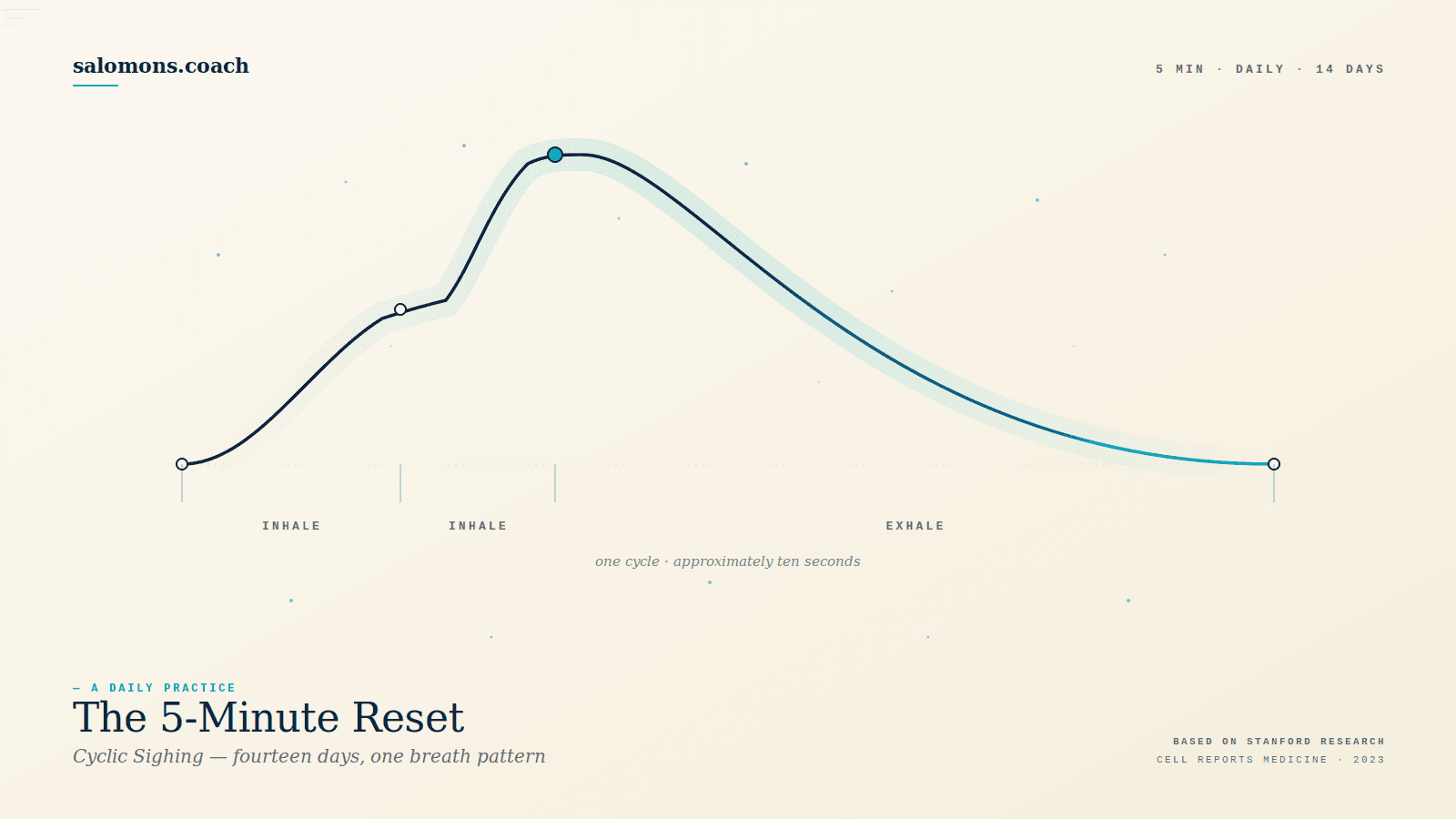
A 2023 randomized trial pitted four breathing techniques against each other. The winner takes five minutes a day. Here's what it taught me and how I built it into my coaching practice.
Most cross-cultural leadership problems don’t look like cultural problems, until they cost you performance. Misaligned expectations around trust, feedback, hierarchy, and decision-making silently undermine teams, delay results, and create friction that leaders misread as personality or competence issues. The Cross-Cultural Leadership Compass translates decades of academic research, including Hofstede’s Cultural Dimensions, GLOBE Study, World Values Survey, and Schwartz Theory of Basic Values, into precise, actionable leadership insights. Instead of generic awareness, it gives you a data-backed map of where cultural gaps actually impact your role, your team, and your results.
Many experienced leaders hesitate when reaching out to their network, not because they lack capability, but because they struggle with how to ask. This article explains why senior professionals often get networking wrong, how to reframe outreach as a leadership act, and how to invite meaningful conversations that lead to real opportunities.
At some point in every serious leadership journey, progress starts to feel hollow. You are delivering, trusted, and influential—yet a deeper question emerges: Is this the life I actually want to be building? This reflection explores leadership, integrity, and what truly endures over time.
After job loss, many CVs become longer — and weaker. This article explains why modern CVs must shift from career history to relevance, and how AI screening has made positioning non-negotiable. Your CV is no longer a record of the past. It is a focused case for why you fit this role, now.
Especially after redundancy, many professionals explain themselves too much — in interviews, CVs, and conversations. But interviews are not about telling your story. They are about positioning. This article shows why “tell me about yourself” is a strategic question — and how to answer it with relevance, not biography.
Many professionals over 45 hear the same reassuring phrases when they lose their job—yet the reality they face in the Dutch labour market is far more complex. This article explores why experienced mid-career professionals struggle not because of capability, but because the hiring system interprets their broad value too narrowly. Based on the 4R Model (Reflect–Reset–Re-Align–Rise™) and real client insights, it reveals the hidden dynamics that shape career transitions and what truly helps professionals rise stronger.
In a world full of noise and pressure, the most courageous leaders are not the loudest ones, but the ones who create space for stillness and honest self-reflection. Like a quiet bridge reflected in calm water, authentic leadership emerges when we stand steady in who we are and dare to look inward. Clarity, integrity, and presence begin not with action, but with awareness.
It’s not mindset. Not your CV. Not networking. It’s time.
We talk about layoffs as if they are linear: job ends > new job starts.
But real life doesn’t work that way.
What determines whether someone recovers well or gets stuck is the amount of time they have to move through the inner journey: Reflect > Reset > Re-Align > Rise™
Redundancy is often treated as a quick transition, but the real determining factor in someone’s recovery is time. The pace at which a person can move through the inner journey of Reflect–Reset–Re-Align–Rise™ depends on financial pressure, VSO terms, WW timelines, emotional impact, and life circumstances. When the process is rushed, unresolved phases return later as stress, confusion, or poor career choices. When people are given time, clarity grows, confidence returns, and their next step becomes intentional rather than reactive. Time isn’t a delay—it’s the space where healing and identity reconstruction take place.