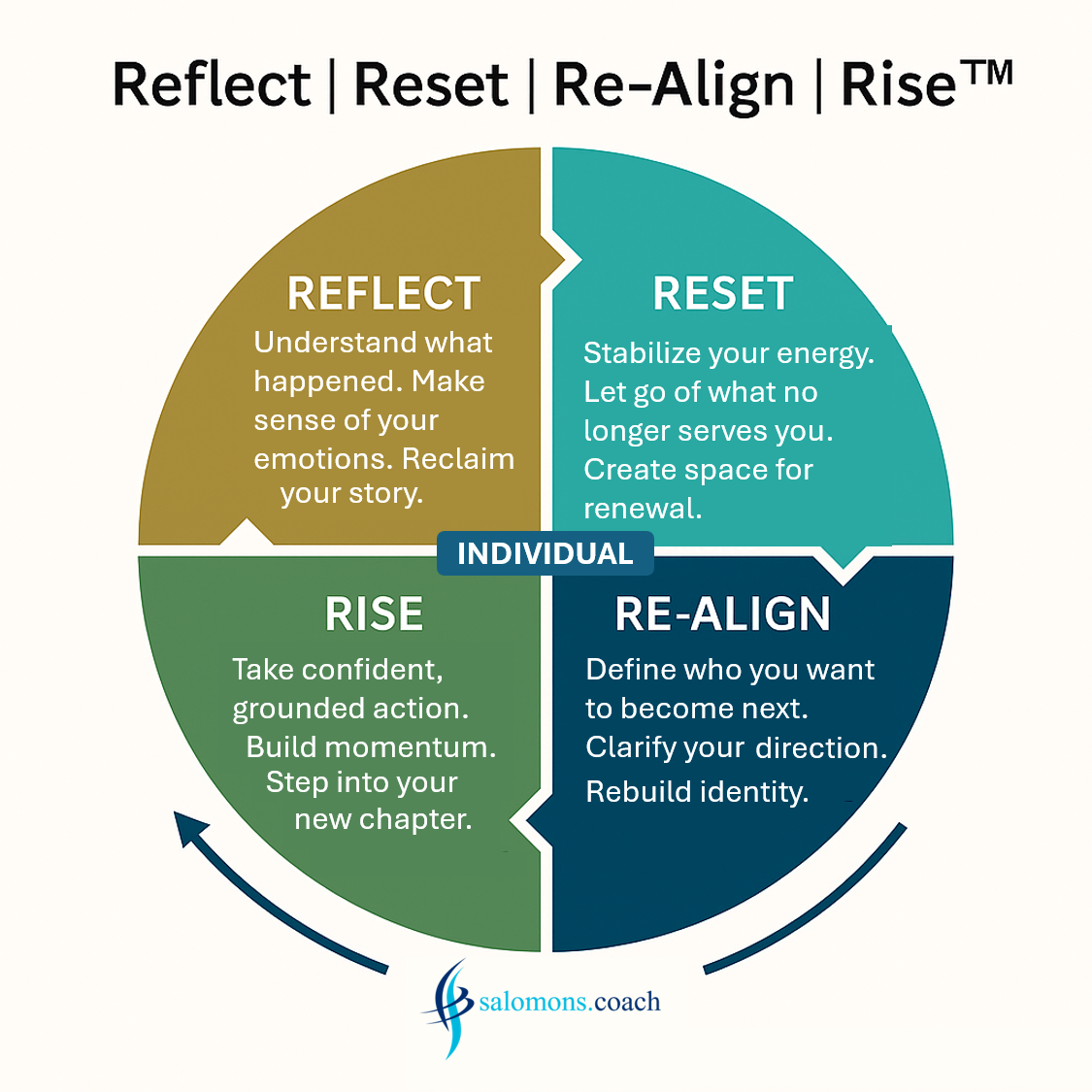
Redundancy in the Netherlands is legally structured yet psychologically disruptive. Even with strong protections and the VSO process, employees experience identity loss, uncertainty and emotional turbulence. Leaders often underestimate this impact—and the effect on those who remain. Research shows that structured transition support significantly improves outcomes. The 4R Model—Reflect, Reset, Re-Align, Rise—helps individuals stabilize, rebuild identity and re-enter the labor market with clarity and confidence. Increasingly, Dutch organizations engage external coaches during the VSO period to support departing managers and sustain trust, well-being and business continuity. Redundancy is not an ending—it is an inflection point.
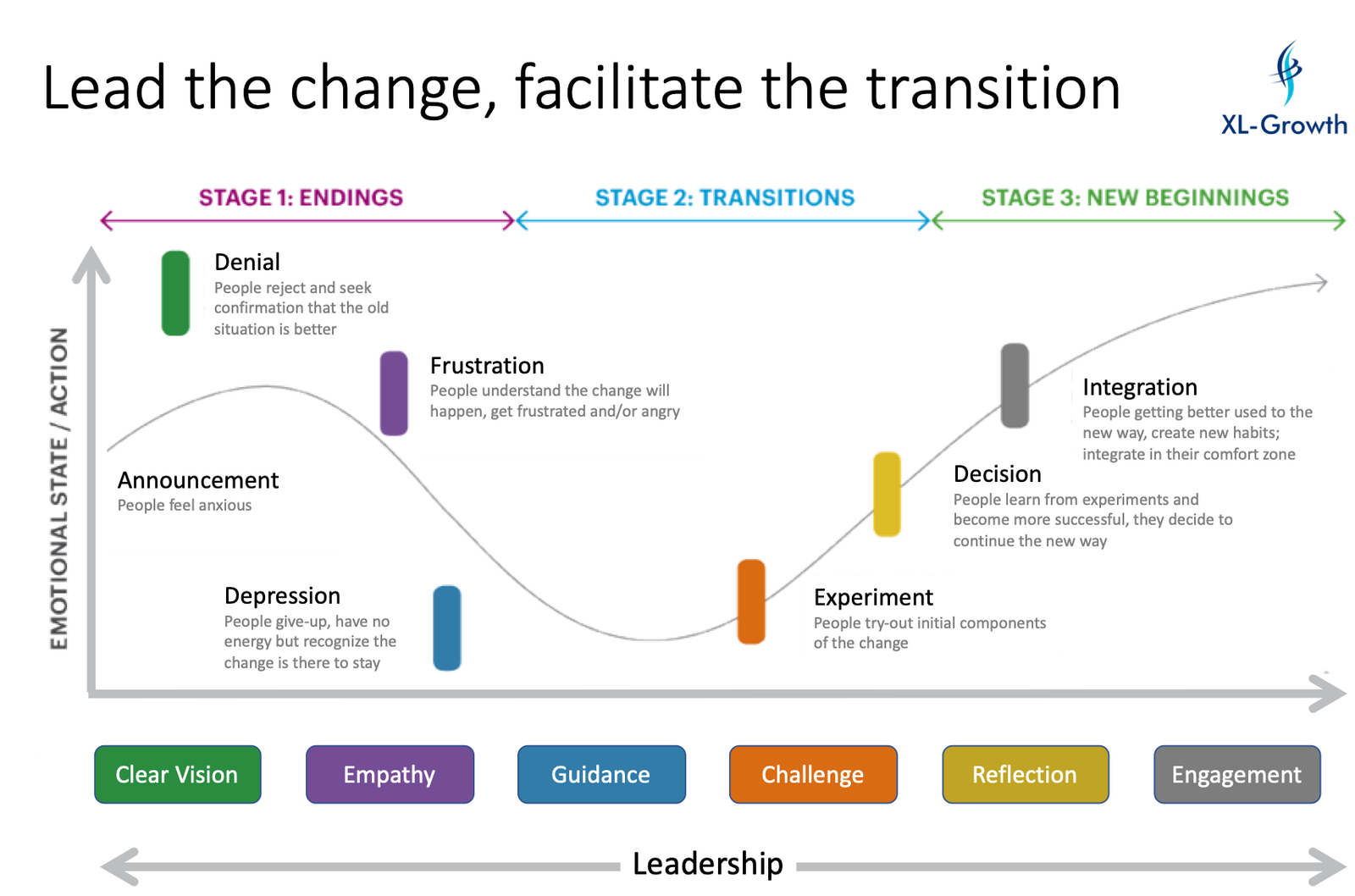
Change doesn’t fail because of poor plans — it fails because people haven’t made the psychological transition. In this article, Jan Salomons explores his formula for successful change, combining shared vision, urgency, leadership, learning, and capacity. Drawing on his decades of experience and his VUCA leadership approach, he explains how leaders can guide teams through endings, transitions, and new beginnings while maintaining trust and connection. Learn why managing change isn’t enough — leading transition is what truly drives sustainable transformation.
In today’s fast-paced world, work easily takes center stage in our identity. Inspired by Simone Stolzoff’s “How to Reclaim Your Life from Work,” this reflection exercise helps you rebalance what truly matters. The Circle of You invites you to visualize how your time and energy are divided — and what your ideal balance would look like. By comparing the two, you’ll see where small, meaningful shifts can begin. Your job should support your life, not define it. This exercise helps leaders and professionals take the first practical step toward balance, well-being, and authentic leadership.
I still remember the moment I lost my cool. The frustration had been building for days, and during a routine meeting with one of my subordinates, I snapped. My words were sharp, my tone unkind, and the look on their face—shock and hurt—was a painful reminder that I’d crossed a line.
As leaders, we often pride ourselves on staying composed, but we’re human, too. That day, I learned the hard way that managing others starts with managing yourself. Emotional outbursts can damage trust and relationships, but they can also be a wake-up call for growth.
If you’ve faced similar challenges, it’s time to take charge of your emotions and lead with resilience. Let me guide you. Explore my coaching services or...
Boosting Your Self-Awareness: Free Online Course (60 Minutes)
Unlock the power of self-awareness to transform your leadership and personal life! In this dynamic course, you’ll discover how self-awareness enhances decision-making, emotional intelligence, and resilience at work, while also fostering stronger relationships, emotional well-being, and authentic living privately. With practical tools and actionable steps, you’ll learn to reflect effectively and create meaningful change in just 60 minutes. Don’t miss this opportunity to invest in yourself—free until 28-Feb-25. Take the first step toward becoming the best version of yourself today!
Enroll Now at salomons.coach
Creating an environment of psychological safety is vital for team trust and collaboration. Leaders can achieve this by modeling vulnerability, encouraging inclusive participation, establishing clear communication norms, implementing structured reflection, providing support, and monitoring team dynamics. Key strategies include sharing personal mistakes, seeking feedback, promoting open dialogue, valuing diverse perspectives, setting respectful interaction expectations, conducting regular debriefs, offering training, and assessing psychological safety. These practices empower team members to express ideas and take risks, fostering a culture of innovation and mutual respect, ultimately enhancing team performance.
This is how a leader can go on a long summer holiday without concerns: it's essential to prepare the organization to operate smoothly in their absence. A structured approach to the activities leaders should undertake.