
A short, curated watch list for leaders who want to understand ADHD, from Russell Barkley on executive function to Jessica McCabe's story of failing at normal. The best videos on the science, the lived experience, and the strengths, with a note on what to watch critically.
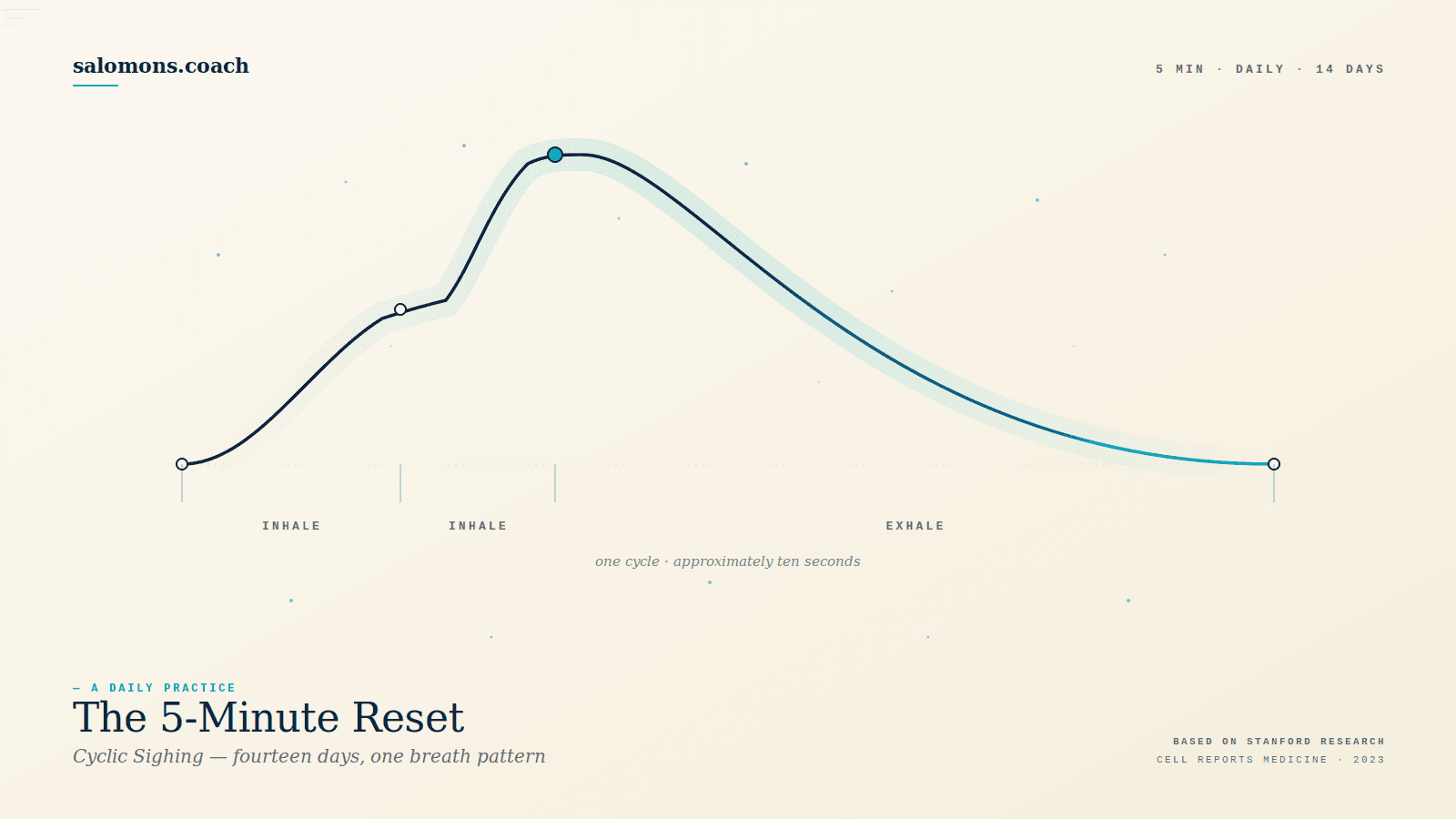
A 2023 randomized trial pitted four breathing techniques against each other. The winner takes five minutes a day. Here's what it taught me and how I built it into my coaching practice.

In high-pressure leadership environments, silence is often mistaken for indecision. Yet the most important insights rarely emerge in the middle of noise. They surface afterwards, when reaction stops and space is created to think.
Drawing from decades of leadership experience and supported by neuroscience, this article explores why silence is not the absence of leadership, but a condition for it. Silence reduces cognitive load, calms the nervous system, activates reflective brain networks, and supports clarity, creativity, and better decision-making.
You will learn what silence actually does to the brain, why different forms of silence serve different purposes, and how long silence needs to last to be effective, from brief pauses between meetings to deeper periods of reflection.
In a world of constant stimulation, silence has become a strategic capability. Not as withdrawal, but as a deliberate leadership discipline, especially when complexity and...

In a world full of noise and pressure, the most courageous leaders are not the loudest ones, but the ones who create space for stillness and honest self-reflection. Like a quiet bridge reflected in calm water, authentic leadership emerges when we stand steady in who we are and dare to look inward. Clarity, integrity, and presence begin not with action, but with awareness.
Purpose isn’t a slogan or a statement — it’s a force that moves you. In this post, Jan Salomons explores the difference between intellectual purpose and deep purpose: the kind that calls you into action even when it’s uncomfortable. Drawing on insights from Frederic Laloux, his coaching practice, and his experience in VUCA leadership, he explains how purpose guides choices, builds trust, and creates focus amid uncertainty. Discover how to sense your true purpose — not from your mind, but from what feels deeply right — and how to lead from it.
Procrastination is a common challenge many face, often leading to stress and decreased productivity. Despite knowing its negative effects, we frequently delay tasks. This behavior is linked to our brain's limbic system, which triggers a "fight, flight, or freeze" response when confronted with stressful tasks, prompting avoidance to alleviate discomfort. To break this cycle, it's essential to address the emotional triggers behind procrastination. Strategies include recognizing these emotional responses, breaking tasks into smaller, manageable steps, setting specific goals and deadlines, and practicing self-compassion. By understanding the emotional and neurological factors contributing to procrastination, we can develop effective strategies to manage it, leading to improved productivity and well-being.