If you have downloaded the Cross-Cultural Leadership Compass, this article provides the knowledge how to use the report as your compass to navigate the cross-cultural map. I you want to download an example report, click here. Cross-cultural leadership reports are
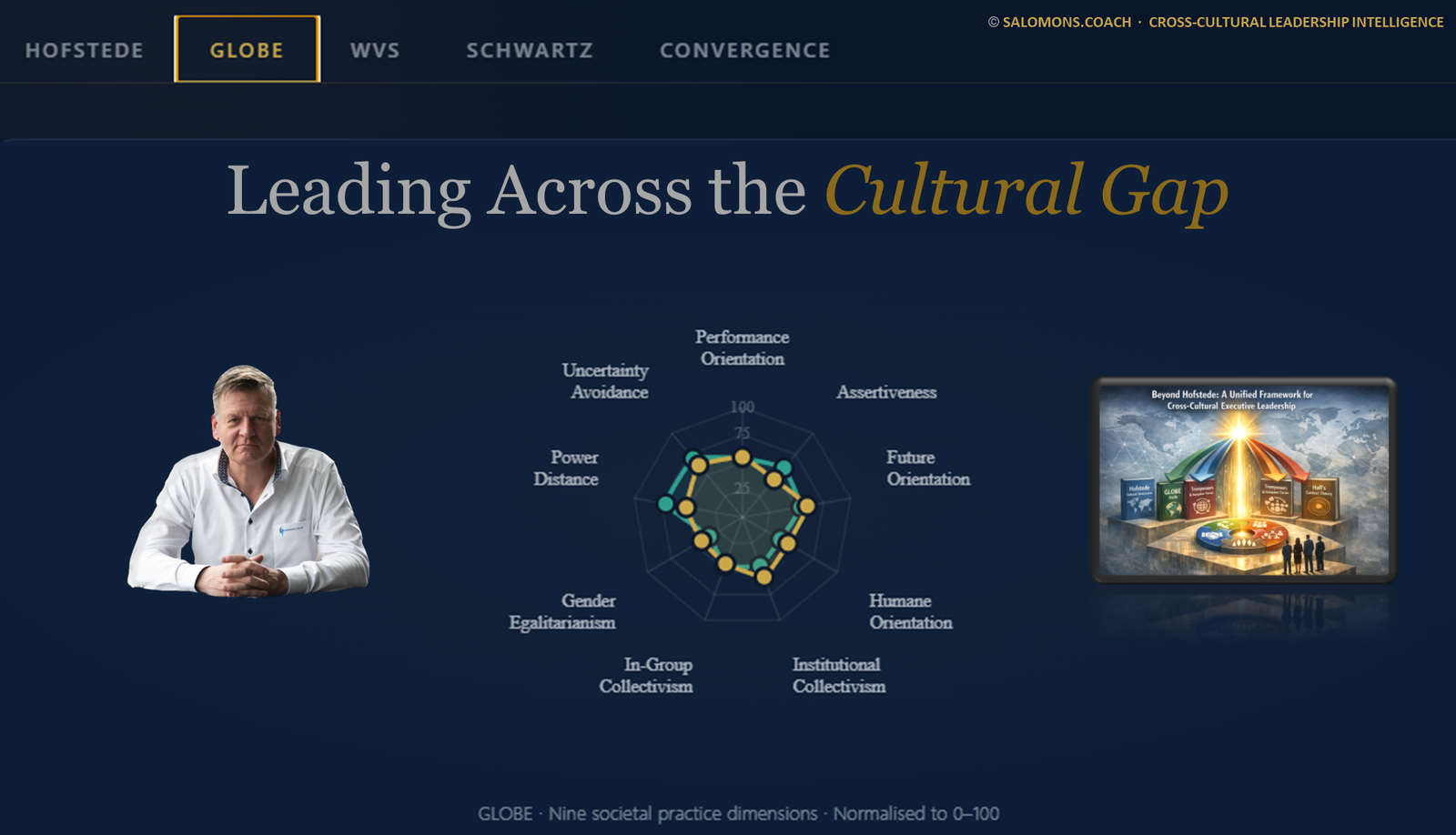
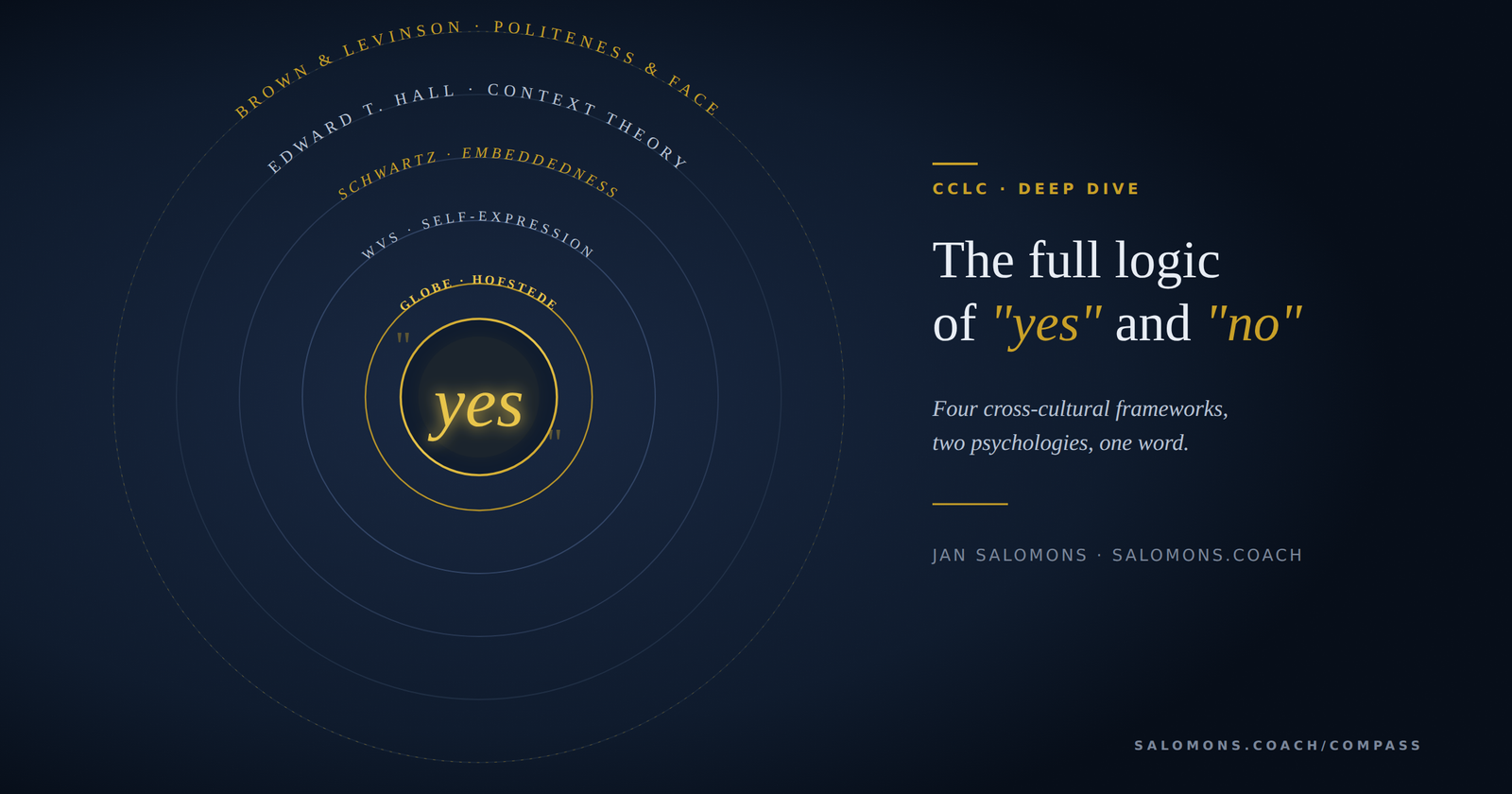
Most cross-cultural frameworks tell you how cultures differ. The GLOBE Study tells you what kind of leader each culture is actually willing to follow. Here is what that means for your leadership — and how the Cross-Cultural Leadership Compass puts GLOBE to work alongside three other frameworks.
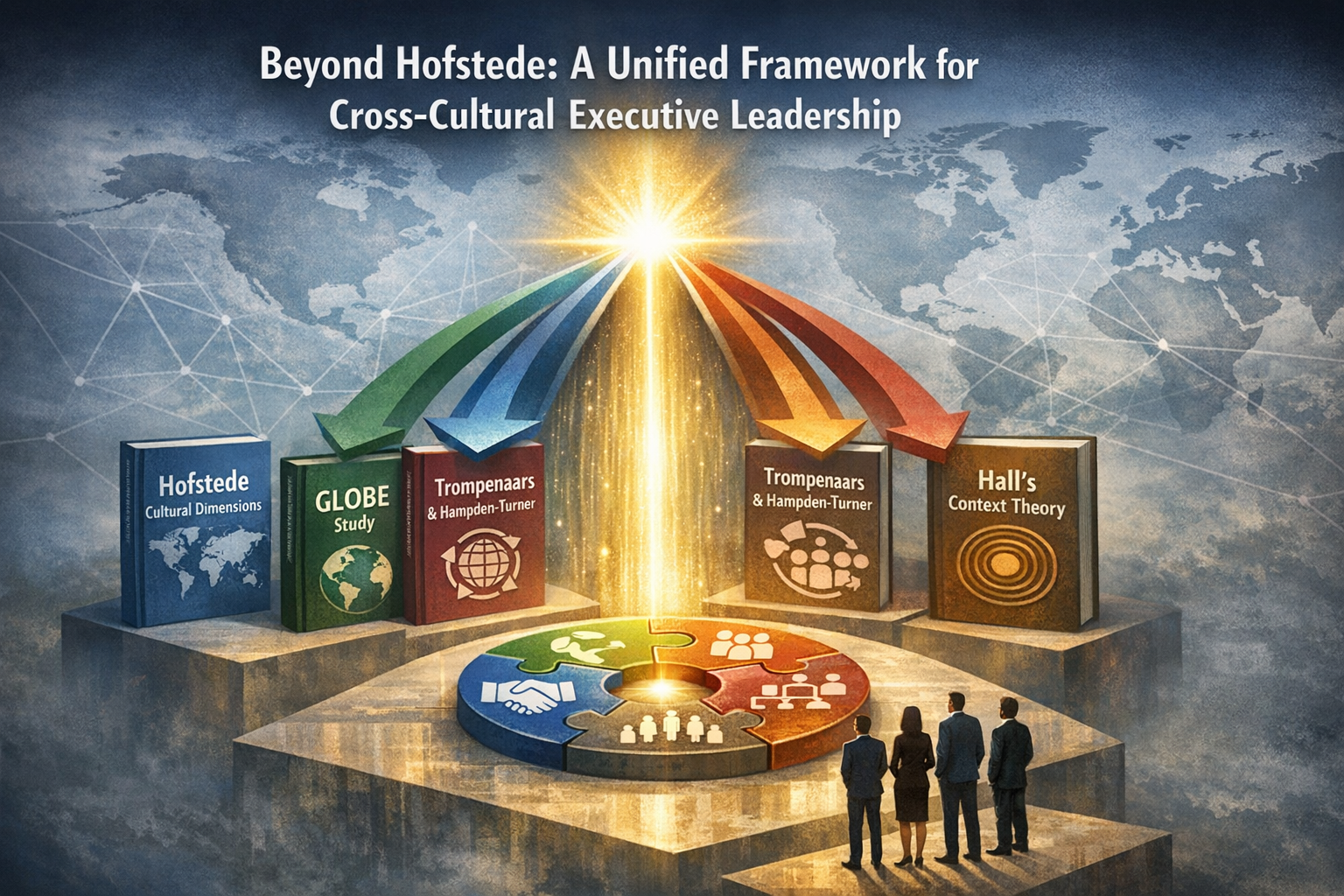
Hofstede is the most cited framework in cross-cultural management. It is also, by itself, incomplete. This article compares Hofstede with three other major research programmes — GLOBE, Trompenaars, and Hall — finds the ground where all four agree, and translates that consensus into seven executive management principles backed by five decades of independent evidence.
Managing across cultures is not about awareness, it is about precision.
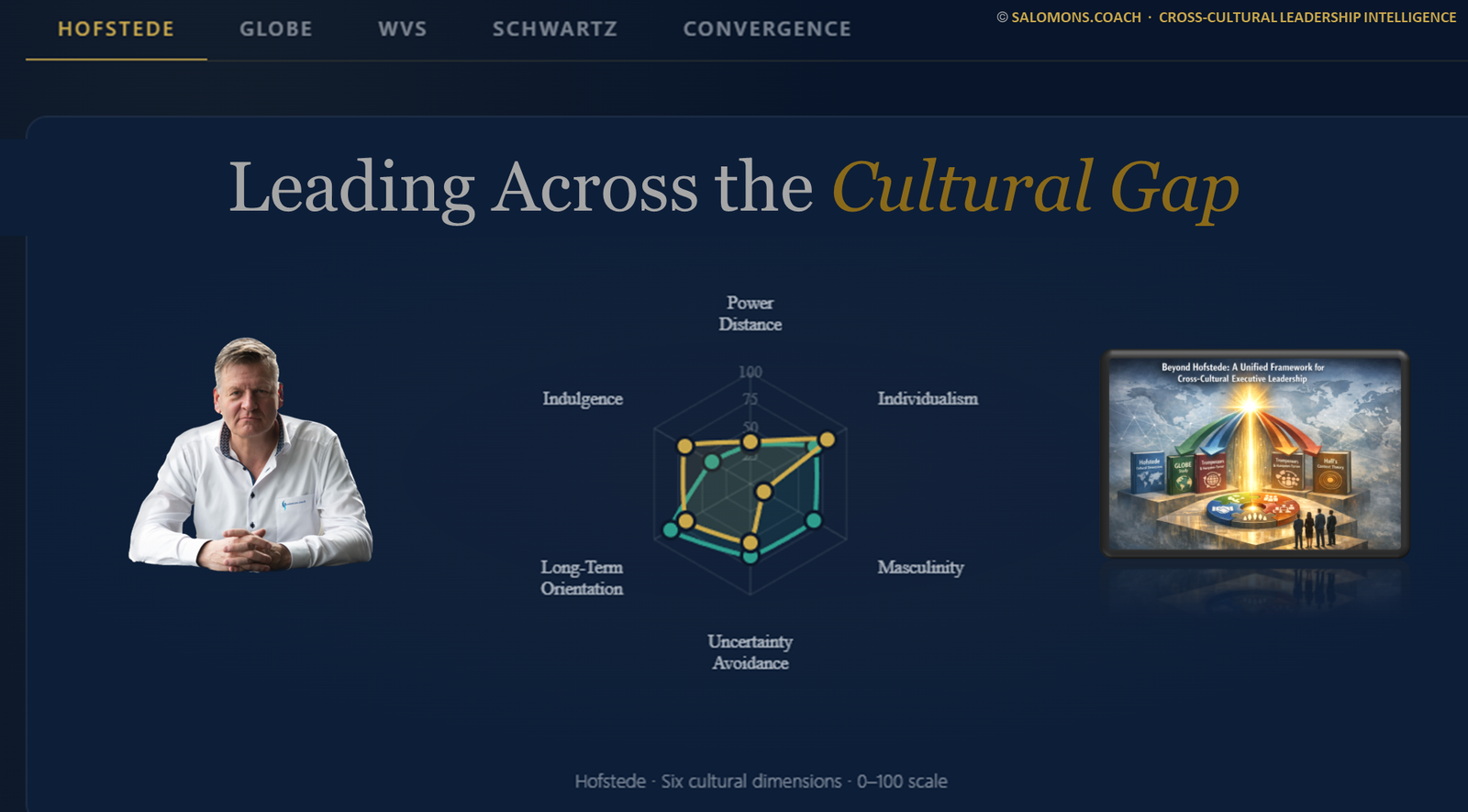
This executive playbook translates Hofstede’s six cultural dimensions into concrete leadership actions, helping you anticipate friction, adapt your approach, and lead effectively across borders.
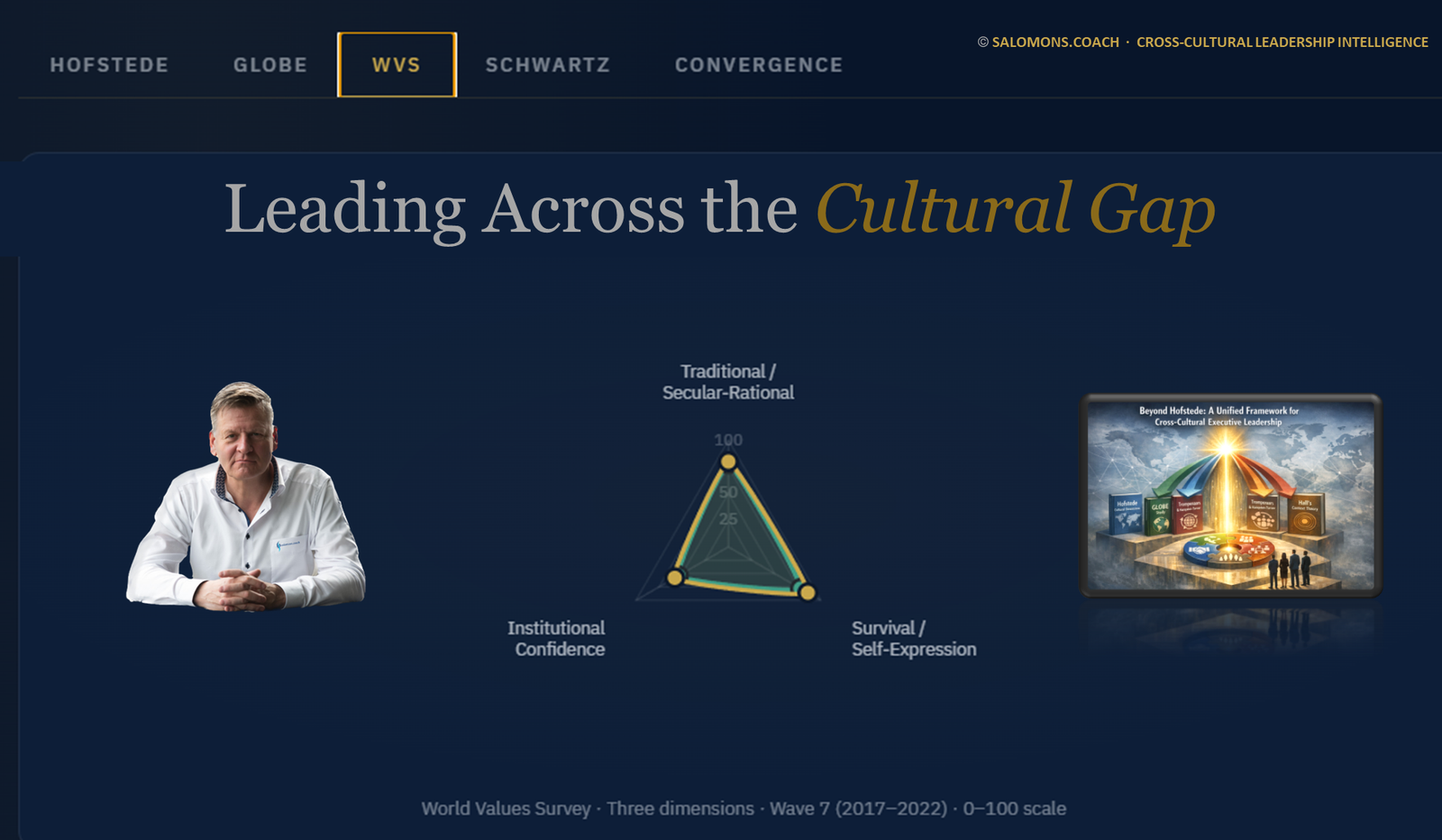
Most cross-cultural frameworks tell you how cultures differ at work. The World Values Survey reveals something deeper: what people fundamentally believe they are working for, whether they extend default trust to institutions or require it to be earned personally, and whether autonomy or security is their more basic professional motivation. These are the values that take generations to shift — and the ones that resurface under pressure even after a decade of adaptation.
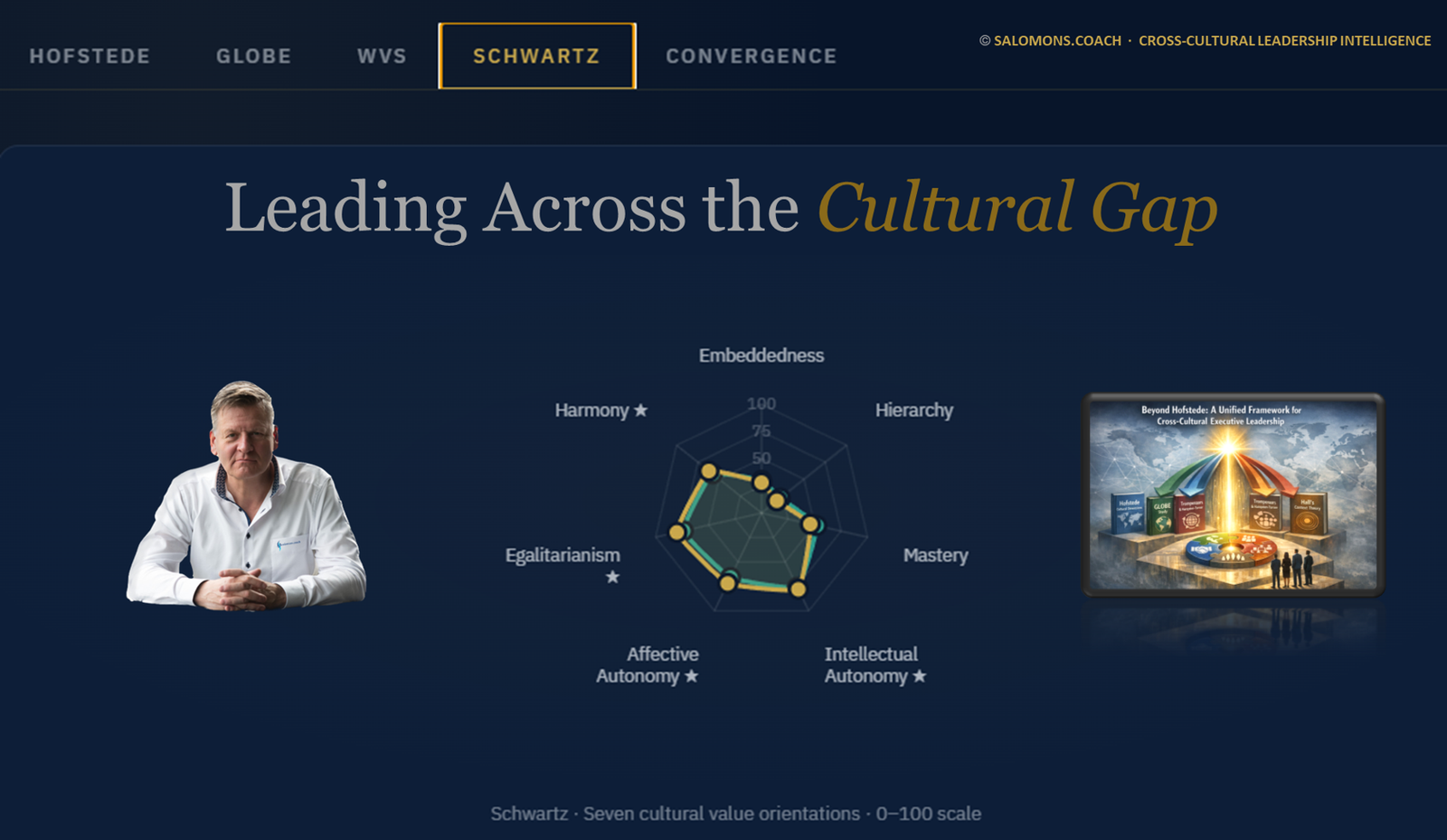
Every cross-cultural framework has blind spots. Schwartz measures four cultural dimensions that have no equivalent in Hofstede or GLOBE. If you are working without them, you are missing a significant portion of the cross-cultural picture — and in some pairings, the most operationally significant gaps in the entire analysis.
Geert Hofstede spent decades researching one question: do people from different countries think and behave differently in professional contexts in ways that are systematic, measurable, and predictable? His answer — developed through surveys of over 100,000 IBM employees across more than 50 countries — was an unambiguous yes.
The result is the most widely cited framework in cross-cultural management research. Six dimensions. Numerical scores for over 90 countries. But knowing the framework exists and knowing how to use it are different things. This post explains what Hofstede's six dimensions actually measure — and how the Cross-Cultural Leadership Compass translates them into specific, situational leadership guidance.