Inheriting an established team means inheriting its habits, unresolved tensions and operating assumptions. When is a reset necessary, and how can a leader avoid damaging performance while rebuilding trust and accountability?
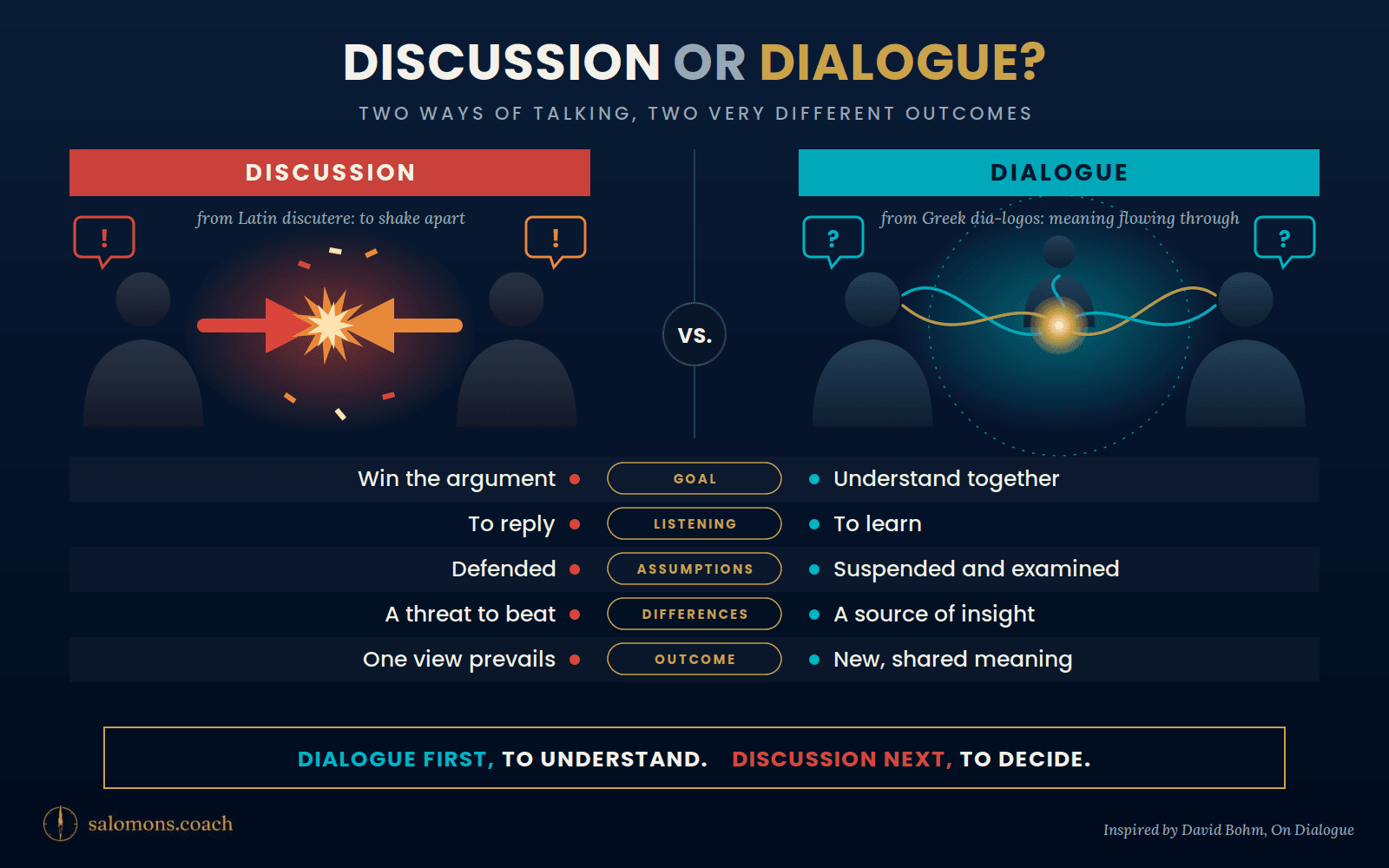
A leadership team that debates robustly can still keep reopening the same decisions. Drawing on a coaching case with a CEO, this post explains the difference between discussion and dialogue, what it costs a team to only discuss, and the practices that help senior leaders think together before they decide. It also shows how team coaching turns dialogue from a clumsy experiment into the way a team works.
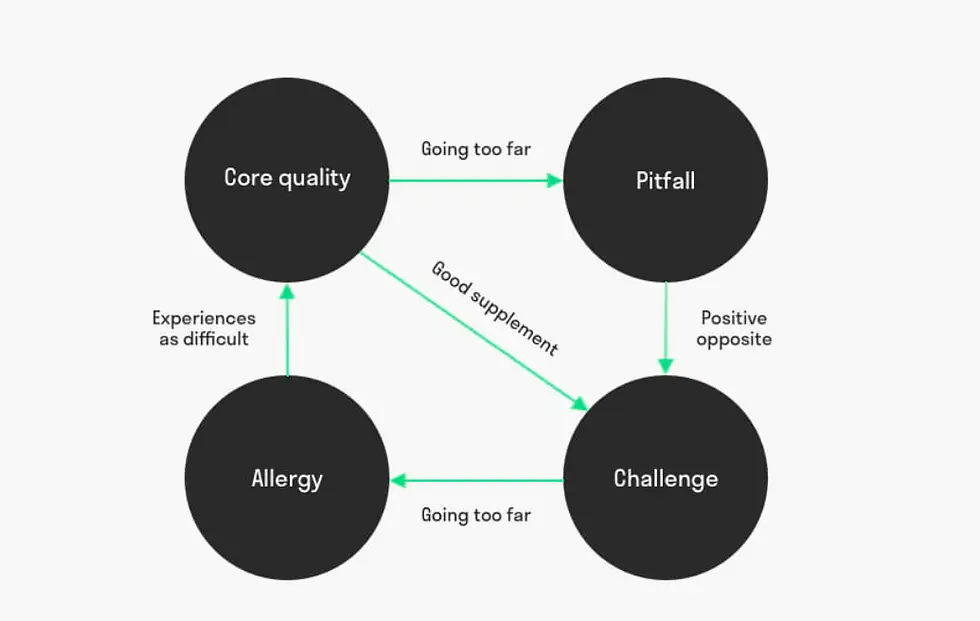
The Core Quadrants by Daniel Ofman are an effective tool for team building, helping teams understand individual dynamics and how to collaborate better. By identifying core qualities, pitfalls, challenges, and allergies, teams gain insights into strengths and areas for growth. For example, one team member’s creativity (core quality) may lead to chaos (pitfall), while another’s structure (core quality) could result in rigidity (pitfall). By discussing complementarities and irritations (allergies), teams learn to value differences and work cohesively. Regular reflection and integration of core quadrants into daily collaboration foster a culture of feedback, problem-solving, and celebrating contributions, strengthening overall team performance.
High-performing teams don’t emerge by accident — they are built through a deliberate sequence of reflection, reset, alignment, and growth. My Reset → Align → Rise framework guides leaders and teams through this journey. We begin by exploring energy, values, and alignment, before surfacing truths and rebuilding the foundations of trust, safety, and purpose. From there, we clarify priorities, roles, collaboration rhythms, and decision-making norms. Finally, the team rises into sustained high performance, powered by clarity, courage, and shared ownership. This is how teams transform drift into direction — and pressure into performance.