“Be authentic” — that’s what organizations, brands and people keep being told. But too often, following that advice can limit us, especially at work, says Herminia Ibarra, professor of organizational behavior. She proposes an expansive way to think about authenticity,
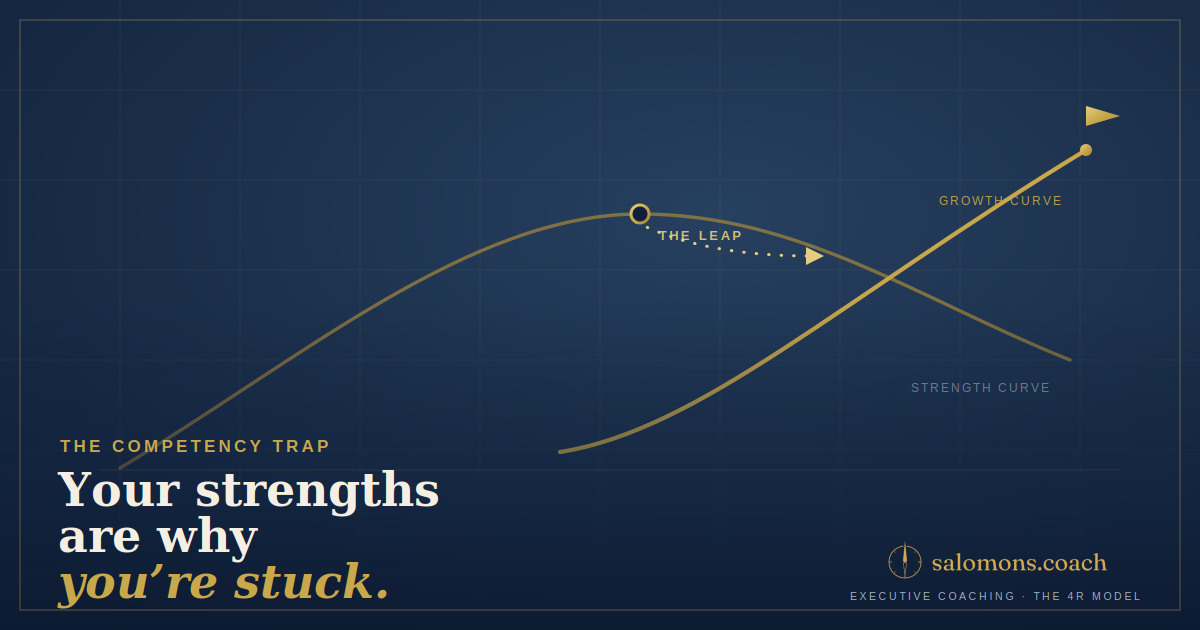
Every senior leader has a signature strength: the thing they're known for, rewarded for, promoted for. It's also, more often than anyone admits, the thing holding them in place. On outsight, endings, and why growth at the top is less about adding a strength than loosening your grip on the one you trust most.
Watching Arthur Brooks’ talk on the science of happiness offers a powerful insight for leaders: happiness isn’t a mood — it’s a disciplined practice that shapes how you lead. Brooks reveals that enjoyment, satisfaction, and meaning form the foundation of true well-being, and only a small part of it depends on circumstances. The rest comes from daily habits rooted in relationships, purpose, and service. For leaders, this is transformative: it shifts happiness from a personal luxury to a strategic imperative. When leaders cultivate happiness intentionally, they strengthen resilience, deepen trust, and create the conditions in which teams can thrive.
Purpose isn’t a slogan or a statement — it’s a force that moves you. In this post, Jan Salomons explores the difference between intellectual purpose and deep purpose: the kind that calls you into action even when it’s uncomfortable. Drawing on insights from Frederic Laloux, his coaching practice, and his experience in VUCA leadership, he explains how purpose guides choices, builds trust, and creates focus amid uncertainty. Discover how to sense your true purpose — not from your mind, but from what feels deeply right — and how to lead from it.
Lara Boyd’s TEDx talk reveals one of the most empowering discoveries in neuroscience: you are constantly shaping your brain. Through your behavior, habits, and even your mistakes, your brain rewires itself. This phenomenon is called neuroplasticity—and it means that change is always possible.
In today’s fast-paced world, work easily takes center stage in our identity. Inspired by Simone Stolzoff’s “How to Reclaim Your Life from Work,” this reflection exercise helps you rebalance what truly matters. The Circle of You invites you to visualize how your time and energy are divided — and what your ideal balance would look like. By comparing the two, you’ll see where small, meaningful shifts can begin. Your job should support your life, not define it. This exercise helps leaders and professionals take the first practical step toward balance, well-being, and authentic leadership.
Between 2010 and 2013, I worked with TU Delft and PhD researcher Gandert van Raemsdonck on pioneering aerodynamic innovations for TNT’s European Road Network. As head of business, process, fleet, and environmental development, I joined a unique coalition of engineers, researchers, and industry partners exploring how airflow, drag, and turbulence could be reduced to make transport cleaner and more efficient. Our side-wings and rear-flow experiments were ahead of their time, and even featured on RTL Nieuws. It was an early lesson in how powerful innovation becomes when diverse minds join forces to shape the future of logistics.
Procrastination is a common challenge many face, often leading to stress and decreased productivity. Despite knowing its negative effects, we frequently delay tasks. This behavior is linked to our brain's limbic system, which triggers a "fight, flight, or freeze" response when confronted with stressful tasks, prompting avoidance to alleviate discomfort. To break this cycle, it's essential to address the emotional triggers behind procrastination. Strategies include recognizing these emotional responses, breaking tasks into smaller, manageable steps, setting specific goals and deadlines, and practicing self-compassion. By understanding the emotional and neurological factors contributing to procrastination, we can develop effective strategies to manage it, leading to improved productivity and well-being.
How Wolves Can Teach Us About Leadership and Change
Did you know that reintroducing wolves to Yellowstone National Park transformed not just the ecosystem but also the rivers themselves? This powerful example of systems thinking reveals how small, strategic changes can cascade through an interconnected system, creating profound and lasting impacts.
In leadership, the same principle applies. Addressing one key area—like improving communication or fostering collaboration—can ripple through a team or organization, unlocking potential and driving sustainable change.
Coaching helps leaders identify these leverage points, empowering them to think systemically and lead strategically. Just as the wolves revitalized Yellowstone, a well-guided leader can create positive transformations that benefit their entire organization.
Are you ready to lead change in a way that truly matters?...
It’s become a trendy managerial acronym: VUCA, short for volatility, uncertainty, complexity, and ambiguity, and a catchall for “Hey, it’s crazy out there!” (HBR). It’s also misleading: VUCA conflates four distinct types of challenges that demand four distinct types of responses. That makes it difficult to know how to approach a challenging situation and easy to use VUCA as a crutch, a way to throw off the hard work of strategy and planning—after all, you can’t prepare for a VUCA world, right? WRONG! in this session I deep-dive on the characteristics of VUCA to provide you more handles on dealing with them. An introduction to create more awareness. A 1 hour web-event to quickly increase your understanding of...