The EU Pay Transparency Directive shifts the burden of proof onto the employer. A pay difference will now require an objective, documented justification, or a correction. "She negotiated harder when she joined" is not a defence. "He's been here longer" might be — if your tenure logic is documented.
The leaders who navigate this well will be the ones who do the work before the questions arrive. Conversation by conversation, fairness becomes a leadership problem.
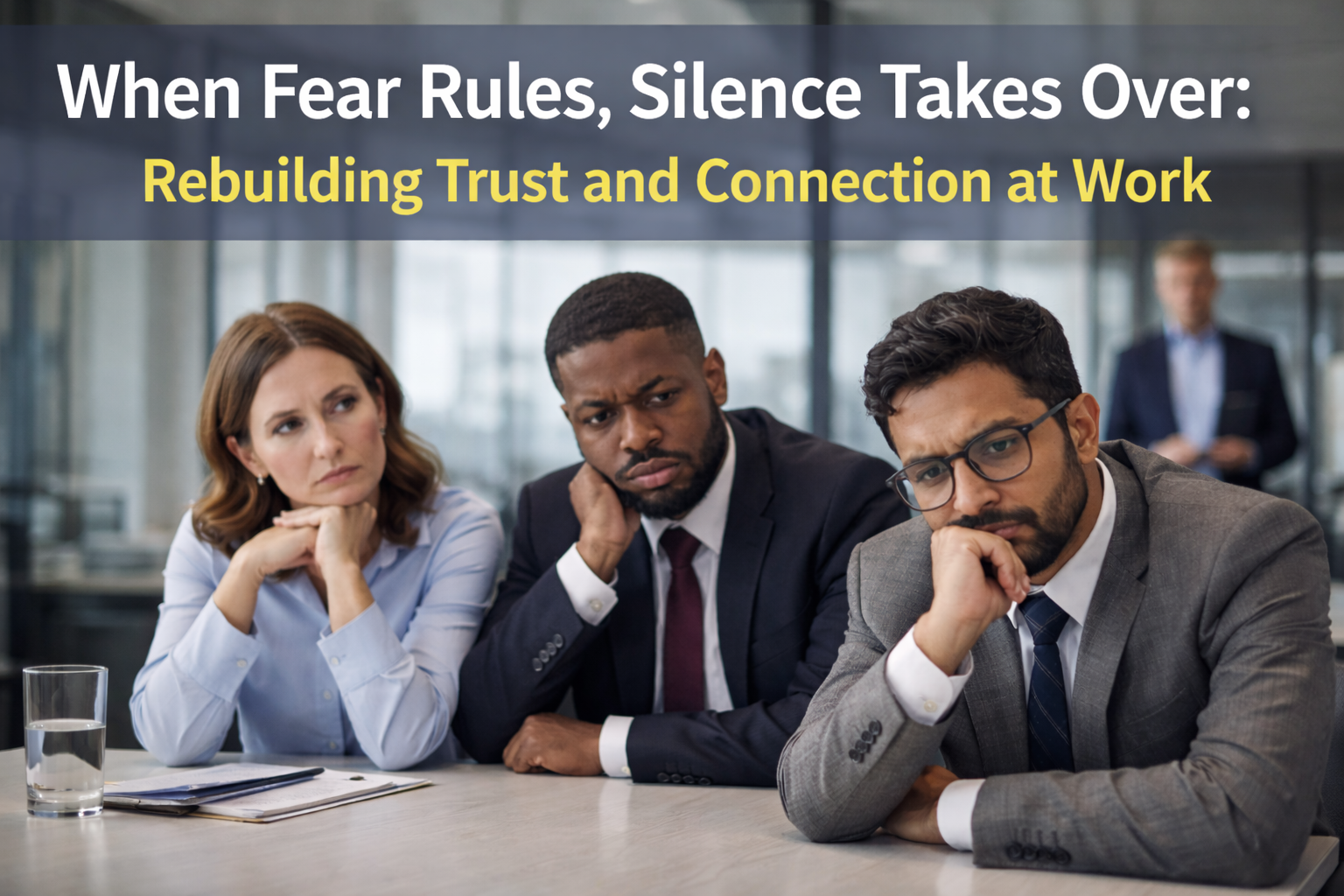
Fear can quietly take over organizations — through silence, control, and pressure — until trust disappears and performance collapses. In this article, Jan Salomons explores how fear-based leadership emerges and what leaders can do to reverse it. He shares five practical ways to rebuild trust, including how to reframe control, invite openness, and restore team rhythm. In a VUCA world, where change and uncertainty trigger anxiety, leaders who recognize and address fear become the real stabilizers of culture. Learn how awareness, consistency, and courage can turn fear into focus and connection.
Miscommunication is a leading cause of workplace inefficiency and conflict, often resulting in misunderstandings, reduced productivity, and increased tension. Studies highlight how poor communication impacts team dynamics, leading to incorrect assumptions and diminished morale. Addressing these challenges requires fostering clarity, active listening, and emotional intelligence to create stronger connections and avoid conflict. Effective communication not only resolves workplace issues but also enhances collaboration and trust, driving both individual and organizational success.
Creating an environment of psychological safety is vital for team trust and collaboration. Leaders can achieve this by modeling vulnerability, encouraging inclusive participation, establishing clear communication norms, implementing structured reflection, providing support, and monitoring team dynamics. Key strategies include sharing personal mistakes, seeking feedback, promoting open dialogue, valuing diverse perspectives, setting respectful interaction expectations, conducting regular debriefs, offering training, and assessing psychological safety. These practices empower team members to express ideas and take risks, fostering a culture of innovation and mutual respect, ultimately enhancing team performance.
I want to be seen and heard, treated fair, flexible when family issues require our attention, etc. We also expect our manager to remember everything we 've said, as well as knowing what is happening in our lives, even to the point the manager will anticipate for events occurring or planned by us.
I was sitting in the meeting with a few senior managers. I could not take away my mind from the high pressure to deliver on our customer expectations, as we were lacking behind on them. At the same time, as
Trust, what can we do without? Nothing to my humble opinion. Many research has been done and even more books are written about trust. Let’s have a look into trust and how this relates to our day-to-day way of working,