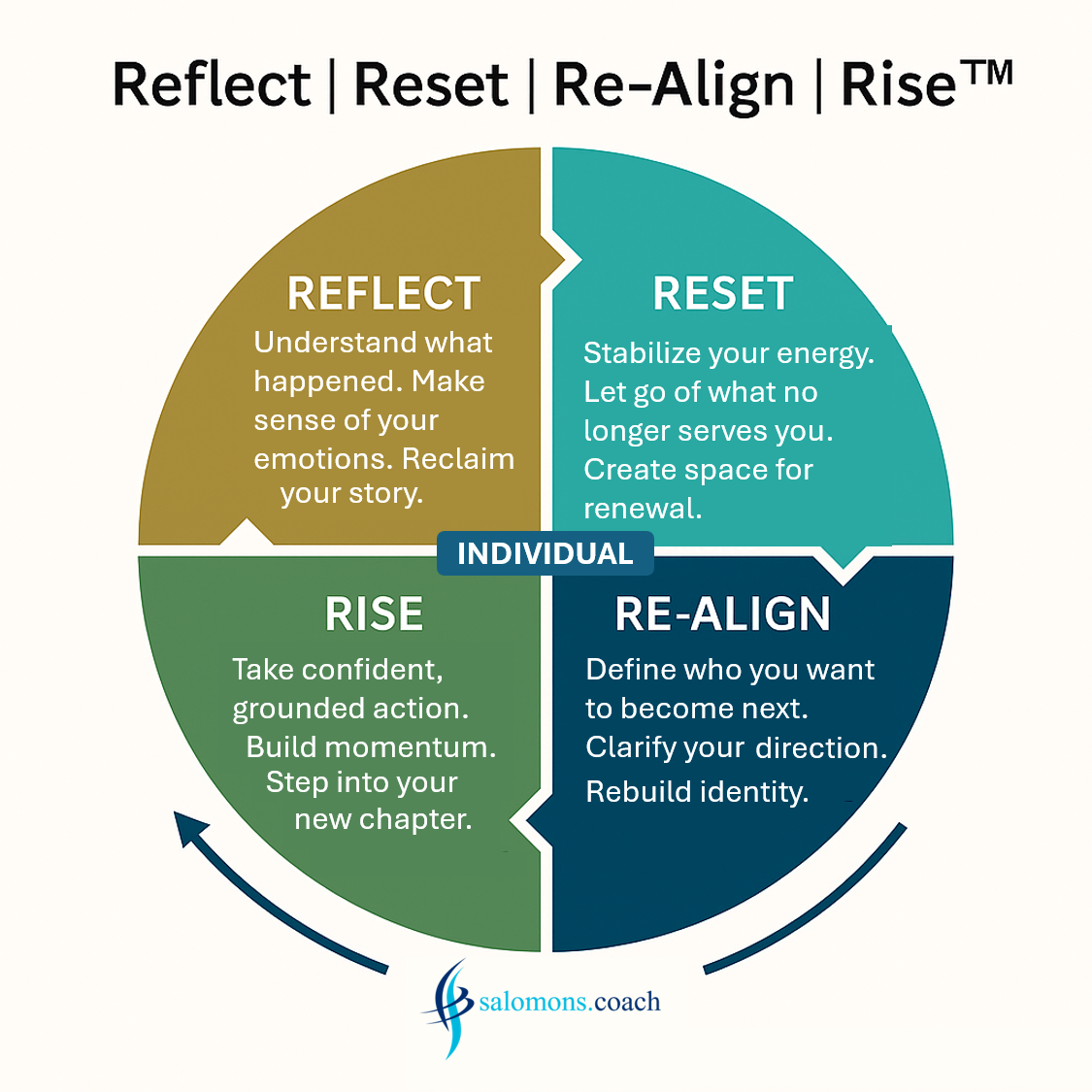
Redundancy is often treated as a quick transition, but the real determining factor in someone’s recovery is time. The pace at which a person can move through the inner journey of Reflect–Reset–Re-Align–Rise™ depends on financial pressure, VSO terms, WW timelines, emotional impact, and life circumstances. When the process is rushed, unresolved phases return later as stress, confusion, or poor...
Redundancy in the Netherlands is often misunderstood as a personal failure, while in reality it is a legally structured process with strong employee protections. This article explains your rights, the procedures employers must follow, and the timeframes involved — from UWV approval and notice periods to reassignment obligations, dismissal bans, transition payments and WW benefits. With clarity and compassion,...
The 4R Model—Reflect, Reset, Re-Align, Rise™—emerged from more than 35 years of leading and coaching in complex, high-pressure environments, combined with solid foundations in transition theory, emotional intelligence, identity work, and psychological safety. Supported by globally respected research (including HBR), the model provides a clear, humane framework that helps people navigate redundancy, burnout, and major career shifts. Instead of...
Strong emotions aren’t the problem — how we frame them is. In today’s volatile and uncertain world, leaders face constant pressure that triggers frustration, fear, or doubt. Reframing helps transform those emotions into clarity, courage, and connection. Instead of reacting, leaders learn to pause, reflect, and uncover the message behind the feeling. In this post, Jan Salomons shares how...
I still remember the moment I lost my cool. The frustration had been building for days, and during a routine meeting with one of my subordinates, I snapped. My words were sharp, my tone unkind, and the look on their face—shock and hurt—was a painful reminder that I’d crossed a line.
As leaders, we often pride ourselves on staying composed,...
Procrastination is a common challenge many face, often leading to stress and decreased productivity. Despite knowing its negative effects, we frequently delay tasks. This behavior is linked to our brain's limbic system, which triggers a "fight, flight, or freeze" response when confronted with stressful tasks, prompting avoidance to alleviate discomfort. To break this cycle, it's essential to address the...