Agile Change

Executive summary
Agile approaches to change emphasise short feedback cycles, visible progress and adaptation based on what teams learn during implementation. These practices can make organisational transitions more responsive than a rigid plan alone.
This article identifies leadership, team performance, disciplined execution and measurement as important elements of agile change. Senior leaders should create clear direction while allowing methods to evolve when evidence changes. The objective is not to introduce more ceremonies or complexity, but to shorten the distance between decisions, results and learning. A successful transition combines adaptability with responsibility for outcomes.
 Implementing change has something to learn from working Agile.
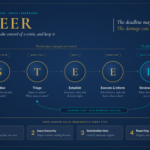
I see 4 distinct differentiators: leadership, team performance, disciplined change execution and measuring from A-Z. Get this right and change (aas well as the personal transition) will be smoother. Here is why:
1. Leadership is better when done together. This is because of true ownership and complementing/developing each other’s abilities and behaviours. The learning from experiences together, adjust, and improving ways of working as well as the overall team processes, always have great results.
2. Eliminate productivity killers. Smoothly sharing experiences with each other, and especially the stakeholders, eliminates silos and brings teams together, helps creating the high performance and productivity. Clear and sometimes self-chosen accountabilities foster deeper ownership and more engaged teams. 3. Differentiate through disciplined execution. Being more agile through setting the example, show how to let-go the old end embrace the new – where and when needed, and to create execution as agreed with the teams. 4. Measure all the way! A critical element, usually missing, is the ability to measure every step in the development, deployment and transition process. Measuring helps identifying (learning) needs, understanding mindset & culture and tracking progress.“Change is not made agile by working faster. It becomes agile when learning changes the next move.”
Jan Salomons

You may also like

New Leader, Existing Team, Team Reset

What Gets Seen, Gets Repeated – Firefighters vs Preventers