salomons.coachsalomons.coach
  • Home
  • About Me
  • Blog
  • Shop
  • Services
  • Testimonials
  • Session Scheduler
  • Contact
  • Change language to Nederlands
Back
  • Home
  • About Me
  • Blog
  • Shop
  • Services
  • Testimonials
  • Session Scheduler
  • Contact
  • Change language to Nederlands
  • Home
  • Blog
  • Blog
  • New Leader, Existing Team, Team Reset

Blog

16 Oct 2026

New Leader, Existing Team, Team Reset

  • By salomons.coach
  • In Blog, Building high-performing leadership teams
Businesswoman standing and presenting to colleagues around a glass-walled conference room table.
Executive summary

A new leader inherits more than a team. They inherit established routines, past successes, unresolved frustrations and expectations that are rarely made explicit. Moving too quickly to impose a new direction can undermine the very trust and experience needed to succeed.

Drawing on a recent two-day leadership offsite I facilitated, this article examines why a deliberate team reset can be essential when leadership changes.

The challenge is one of timing, trust and execution.

Start listening from day one. Once the leader and team have sufficient shared experience—often after six to eight weeks—create space to examine what should be preserved, what needs to change and which unresolved issues are holding the team back. Urgent problems, however, cannot wait.

A successful reset must go beyond honest conversations. It requires psychological safety, clear priorities, explicit working agreements, defined ownership and visible follow-through.

The real test is not what the team agrees during the offsite, but what changes afterwards.

A new leader earns credibility not by demonstrating how quickly they can change a team, but by showing they understand it—and can turn that understanding into collective commitment and better performance.

A new leader cannot afford to postpone the team reset!

Start listening from day one. Bring the team together once there is enough shared experience to make the conversation meaningful.

During a recent two-day leadership offsite I facilitated, one word kept returning: together.

The team wanted clearer direction, sharper priorities and stronger collaboration. Alongside questions about roles and responsibilities were concerns about trust, belonging and whether things would actually change.

These conversations deserve early attention. Without a deliberate reset, unresolved frustrations and familiar habits can shape the new chapter before the team has agreed what that chapter should look like.

Start immediately and choose the right moment

The leader’s responsibility begins on day one. The two-day session does not have to.

Around six to eight weeks is a useful planning window, allowing the manager to meet people individually, observe working relationships and understand the team’s history. Team members also gain experience of the new leader, making their feedback more concrete.

This is a practical recommendation, not a research-established ideal. Michael Watkins’ work on leadership transitions emphasises learning about the situation while building relationships and securing early progress. The pace should reflect the challenges the leader inherits. Watkins and colleagues, IMD

Address urgent conflict or confusion immediately. For the reset itself, seek enough shared experience for an honest discussion, without allowing uncertainty to become an accepted way of working.

Give the past a place

A new manager joins a story already in progress. People bring expertise, achievements and valuable relationships, alongside disappointments and unresolved concerns.

“A new leader inherits a history, not a blank page. Change starts with understanding it.”

Jan Salomons

Asking them simply to “move on” can leave important issues untouched. A reset should help the team distinguish between what deserves preserving and what needs to change:

  • What are we proud of that will help us succeed?
  • What patterns are damaging trust or slowing us down?
  • What needs acknowledgement, repair or a decision?

Structured reflection has a research foundation. Tannenbaum and Cerasoli’s meta-analysis of 46 samples found that properly conducted debriefs improved effectiveness compared with control conditions. This supports making reflection purposeful, although it does not establish that a two-day offsite alone will produce the same results. Tannenbaum and Cerasoli, 2013

The aim is to carry useful experience forward while ending patterns that keep the team stuck.

Make room for the heart as well as the mind

Behind a debate about responsibilities may be a concern about belonging. Behind resistance may be pride in something valuable. Behind silence may be doubt that honesty will be welcomed.

A leader needs to make these concerns discussable.

Amy Edmondson’s research across 51 manufacturing teams found that psychological safety was associated with team learning behaviour. People need confidence that asking questions, admitting uncertainty or raising concerns will not expose them to interpersonal harm. Edmondson, 1999

For the leader, the practical implication is demanding: listen without immediately defending, invite perspectives that challenge your own and respond constructively when someone takes the risk of speaking honestly.

Give quieter members time to reflect. Use individual conversations, written input and smaller groups alongside open discussion. Speaking from the heart should be an invitation, never a requirement to disclose personal feelings.

Every team member needs a credible opportunity to contribute. The leader must also explain which decisions are open to influence and how the input received affects the outcome.

Turn the conversation into commitments

In our session, the desired behaviours were concrete: speak candidly, treat feedback as a gift, ask how to help and support decisions once made.

These intentions need clear working agreements, priorities and responsibilities.

Hackman and Wageman’s theory of team coaching emphasises that coaching depends on appropriate timing and enabling conditions. A productive conversation cannot compensate indefinitely for unclear direction or organisational obstacles. Hackman and Wageman, 2005

Before leaving the room, agree what happens next, who owns it and when progress will be reviewed. Schedule a follow-up, for example four to six weeks later, to examine both delivery and behaviour.

The leader’s credibility grows when people see that speaking openly leads to thoughtful decisions and visible action.

Two days can create the opportunity for a reset. What the leader does before and afterwards determines whether it becomes a different way of working.

Start listening immediately. Make room for every voice. Decide clearly. Follow through.concerns, hopes and convictions people carry, helps the team choose a future it can commit to together.

Slide with title'New Leader, Existing Team, Team Reset' over a dark overlay; group of professionals by windows overlooking sunset; five outlined steps on left; Salomons Coach logo bottom left.
Hero new leader exisiting team team reset

Stepping into an existing management team? Let’s explore what your team needs for a strong new chapter.

Gold clock icon with a single vertical hand at 12 o'clock, circular gold face on black background.Let’s talk

Tags:Leadership transitionspsychological safetyteam coachingTeam reset
  • Share:
salomons.coach
Jan Salomons is a seasoned leader/executive who shares his knowledge and experience as an executive mentor/coach/trainer as well as a transformation and operations excellence expert. He has over 35 years of experience working with senior leaders across more than 55 countries, and is an elected member of the Harvard Business Review Advisory Council.

You may also like

The Ultimate Guide to the Impossible Operating Plan

  • 9 November 2026
  • by salomons.coach
  • in Blog
When an operating plan depends on overtime or deferred work, leaders need to check workload, capacity and who can...
Infographic titled 'What gets seen, gets repeated' showing two columns: left red section 'Visible. Immediate. Reactive.' with a red alert siren, a worker on the phone, factory silhouettes, and a '22:00' breakdown; caption 'IS A HERO.' Right green section 'Invisible. Deliberate. Proactive.' with a worker at a laptop displaying a rising graph and icons labeled 'Identify risk', 'Address causes', 'Prevent failure'; caption 'WEEKS EARLIER – PREVENTION' and 'IS ALMOST INVISIBLE.' Bottom banner reads 'Shift recognition. Reward prevention. Build resilient operations.' and shows salomons.coach.
What Gets Seen, Gets Repeated – Firefighters vs Preventers
26 September 2026
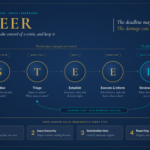
Infographic titled STEER showing five circular steps (S, T, E, E, R) for crisis leadership on a dark blue background. Steps: Stabilise, Triage, Establish, Execute & inform, Review & refine.
Five Steps to Take Immediate Control of a Crisis

24 September 2026
Infographic comparing Discussion (left) and Dialogue (right): clash graphic vs connected waves, with goal-focused comparisons and a shared outcomes section.
Most Leadership Teams Lack Dialogue
22 September 2026

Leave A Reply Cancel reply

Your email address will not be published. Required fields are marked *

This site uses Akismet to reduce spam. Learn how your comment data is processed.

Categories

  • Blog (175)
  • Building high-performing leadership teams (25)
  • Closing leadership capability gaps (24)
  • Improving personal leadership effectiveness (46)
  • Leading across cultures and boundaries (15)
  • Leading through uncertainty and crisis (11)
  • Making better leadership decisions (4)
  • Making change stick (12)
  • Navigating leadership and career transitions (13)
  • Sustaining performance under pressure (15)
  • Turning strategy into operational results (10)
  • Video (16)

Recent Posts

The Ultimate Guide to the Impossible Operating Plan
09Nov,2026
Businesswoman standing and presenting to colleagues around a glass-walled conference room table.
New Leader, Existing Team, Team Reset
16Oct,2026
Infographic titled 'What gets seen, gets repeated' showing two columns: left red section 'Visible. Immediate. Reactive.' with a red alert siren, a worker on the phone, factory silhouettes, and a '22:00' breakdown; caption 'IS A HERO.' Right green section 'Invisible. Deliberate. Proactive.' with a worker at a laptop displaying a rising graph and icons labeled 'Identify risk', 'Address causes', 'Prevent failure'; caption 'WEEKS EARLIER – PREVENTION' and 'IS ALMOST INVISIBLE.' Bottom banner reads 'Shift recognition. Reward prevention. Build resilient operations.' and shows salomons.coach.
What Gets Seen, Gets Repeated – Firefighters vs Preventers
26Sep,2026

Tags

accountability (10) adaptability (5) AI & leadership (5) authenticity (10) Career transitions (11) Change execution (13) Coaching effectiveness (9) Coaching tools (18) communication (17) cross-cultural leadership (15) Cultural frameworks (12) decision making (6) Dialogue & conflict (7) emotional-intelligence (8) executive-coaching (15) Executive judgment (5) Executive presence (7) feedback (6) Focus & priorities (11) Global teams (5) Leadership behaviour (21) leadership development (16) Leadership transitions (5) learning culture (9) Neuroscience & learning (7) Operational excellence (7) Operational governance (5) Organisational culture (15) Organisational transformation (7) Ownership & delegation (6) Performance measurement (7) Personal resilience (10) psychological safety (14) Purpose & values (8) Recovery & wellbeing (7) Redundancy & outplacement (6) Research & evidence (8) self-awareness (43) Stress & coping (10) systems thinking (8) team alignment (6) Team effectiveness (15) trust (7) VUCA & uncertainty (9) Work-life boundaries (4)
All posts - searchable table
Recent videos
the-adhd-watch-list-hero

The Best ADHD Videos for Leaders: Science, Stories, Strategy

In 14 July 2026
No Comment
Female speaker on stage delivering a TEDx talk, with a headset mic and gesturing, while a lower-third bio identifies her as a professor of organizational behaviour.

The Authenticity Paradox | Professor Herminia Ibarra 

Brooks – Harvard – on Happiness

Happiness as a Leadership Strategy

L360 youyrownjourney landing page L360

Find your true purpose

Leadership thinking you can use

The Leadership Compass

For the decisions, conversations and changes you need to lead.

Receive articles grounded in executive experience, coaching and the realities of running an operation.

Read an example article ↗

Newsletter Form

Two short welcome emails in the first week, then articles about every two weeks. Unsubscribe at any time.

Privacy policy

GET IN TOUCH

Salomons.Coach
KvK: 72129131
+31 6 53 89 75 67

jan@salomons.coach

The Netherlands

USEFUL LINKS

  • About
  • Privacy policy
  • Term & Conditions
  • Refund & Returns
  • Payment policy
  • Digital Policy
  • Methodology & Sources

LinkedIn

  • Linkedin

salomons.coach by J.K. Salomons Holding B.V., 2018-2027

Change language to Nederlands