Presentatievaardigheden gaan niet over dia's, maar over leiderschap
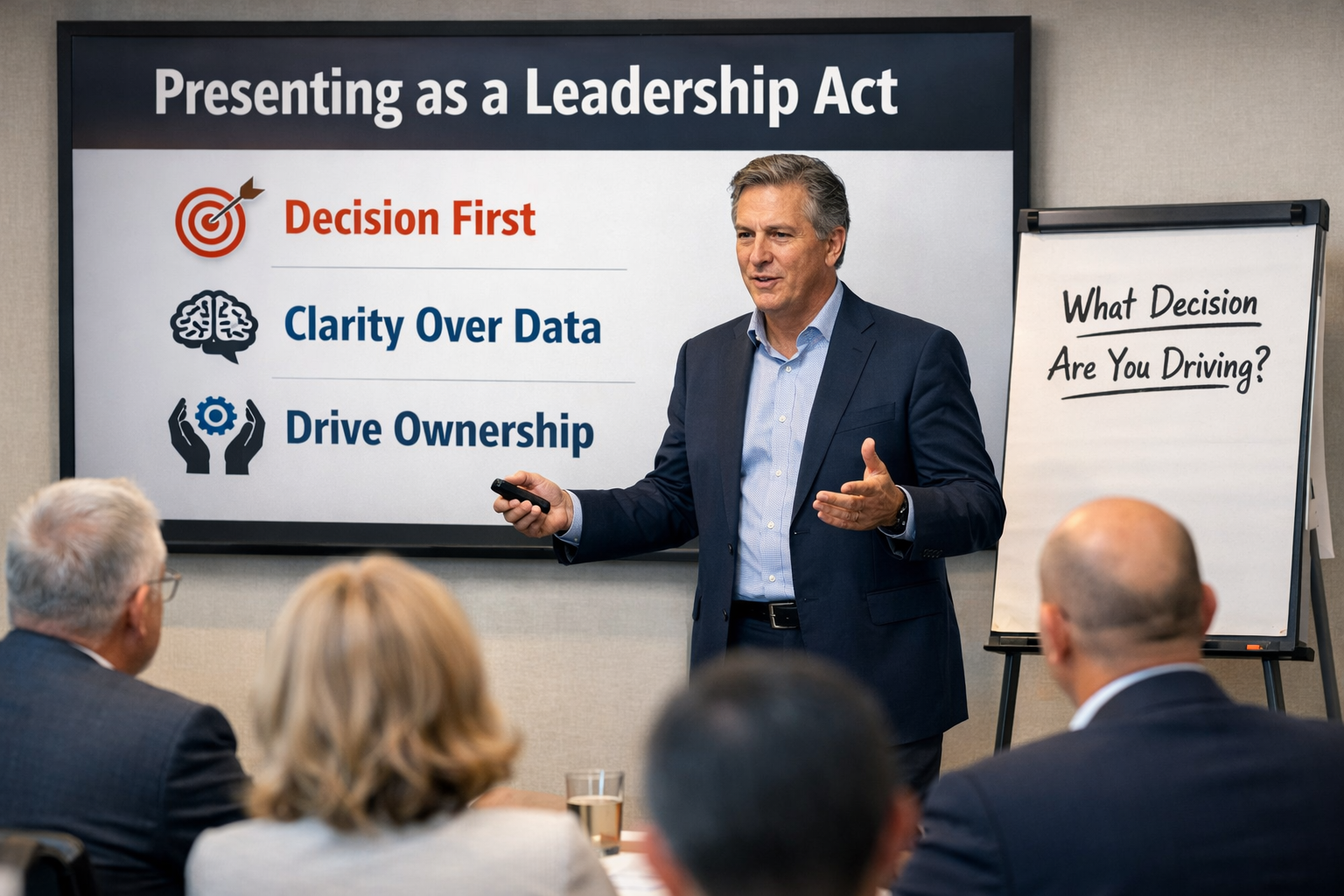
Aan het begin van mijn carrière geloofde ik dat sterke presentaties vooral te maken hadden met voorbereiding: solide analyse, logische structuur en goed ontworpen dia's. Na verloop van tijd - en vooral door jaren van trainen en coachen van senior leiders in verschillende bedrijfstakken en culturen - Ik leerde dat dit geloof onvolledig was.
Presentaties zijn geen communicatievaardigheid.
Ze zijn een leiderschapsgedrag onder druk.
Dit inzicht heeft niet alleen gevormd hoe ik mezelf presenteer, maar ook hoe ik leiderschapstrainingen ontwerp voor senior leiders die regelmatig presenteren - aan uitvoerende teams, besturen en kritische belanghebbenden.
Een moment dat mijn kijk op presenteren veranderde
Vele jaren geleden, maar ik herinner het me nog als de dag van gisteren, gaf ik een presentatie aan een senior leadership team in een zeer operationele, onder tijdsdruk staande omgeving. De organisatie had te maken met volatiliteit, concurrerende prioriteiten en een overvolle beslissingsagenda.
Technisch was de presentatie sterk:
- De analyse was grondig
- De dia's waren schoon
- De logica was verdedigbaar
Toch kwam de zaal nooit op één lijn. De discussie dwaalde af. De vragen vermenigvuldigden zich zonder samen te komen. Op een gegeven moment onderbrak een leidinggevende de discussie en vroeg: “Wat wil je eigenlijk dat we beslissen?”
Die vraag legde iets bloot wat ik nu herhaaldelijk zie, zowel in vergaderingen van leidinggevenden als in trainingsruimtes voor leidinggevenden: presentaties mislukken niet vanwege een zwakke inhoud, maar omdat de intentie van het leiderschap onduidelijk is.
Dit moment werd later het uitgangspunt voor de manier waarop ik leidinggevenden hierop coach, evenals het ontwerpen van trainingsmodules rond presenteren, besluitvorming en eigenaarschap.
Wat het trainen en coachen van senior leiders mij heeft geleerd
In mijn werk met senior leiders, in executive trainingsprogramma's, offsites voor leiderschapsteams en individuele coaching, komt dit patroon steeds terug. Leiders worstelen met presentaties, niet omdat ze niet deskundig zijn, maar omdat:
- Ze proberen volledig te zijn in plaats van besluitvaardig
- Ze laten analyse het oordeel vervangen
- Ze gaan ervan uit dat duidelijkheid “ontstaat” uit informatie
Onderzoek dat consequent wordt weergegeven in Harvard Business Review bevestigt deze observatie: effectieve presentaties zijn beslissingsgestuurd, niet informatiegestuurd.
Daarom begin ik tijdens trainingen met een bedrieglijk eenvoudige oefening: “Schrijf in één zin op welke beslissing, verbintenis of verandering in denken het resultaat moet zijn van je presentatie.”
Voor veel senior leiders is dit moeilijker dan verwacht. En die moeilijkheid is precies waar het leren begint.
Structuur als daad van leiderschap
Een ander terugkerend inzicht uit het trainen van seniorenteams is dit: leiders onderschatten consequent de cognitieve belasting die ze op hun publiek leggen. In bestuurskamers en directieteams:
- Aandacht is gefragmenteerd
- Context wordt verondersteld
- De tijdsdruk is constant
Structuur, zoals herhaaldelijk benadrukt in HBR, is geen formaliteit. Het is een cognitief leiderschapsinstrument.
In training wordt dit tastbaar:
- Presentaties van echte deelnemers herwerken
- Structuur expliciet en zichtbaar maken
- Testen of het publiek de boodschap in 30 seconden kan samenvatten
Sterke leiders leren om:
- Geef aan waar het gesprek naartoe gaat
- Markeer overgangen opzettelijk
- Herhaal de kernboodschap zonder verwatering
Niet omdat mensen onbekwaam zijn, maar omdat leiderschap betekent het gemakkelijker maken om te denken, te beslissen en te handelen.
Autoriteit komt van oordelen, niet van details
Veel senior leiders gaan de training in met de overtuiging dat geloofwaardigheid voortkomt uit het tonen van diepgang: het tonen van de volledige analyse, alle scenario's, elk risico. In de praktijk verzwakt dit vaak het gezag.
Zowel onderzoek als ervaring komen tot hetzelfde inzicht: Autoriteit wordt getoond door oordeel, niet door volume. In trainingsomgevingen wordt dit zichtbaar wanneer leiders worden uitgedaagd om:
- Geef expliciet aan wat het belangrijkst is
- Noem wat minder belangrijk is - en waarom
- Maak afwegingen zichtbaar in plaats van ze te verbergen in dia's
Leren om dingen weglaten, Bewust en transparant is een van de krachtigste verschuivingen die leiders meemaken. Vertrouwen neemt toe, niet af.
Verhalen vertellen als sensemaking, niet als performance
In leiderschapstrainingen wordt storytelling vaak verkeerd begrepen. Het gaat niet om betrokkenheid of vermaak. Verhalen vertellen is, als het goed wordt gebruikt, een sensibiliseringsmechanisme. Korte, relevante ervaringen, vaak operationeel en soms ongemakkelijk, helpen leiders en teams:
- Dubbelzinnigheid interpreteren
- Begrijp de gevolgen
- Abstracte concepten verankeren in de werkelijkheid
Bij het trainen pas ik een eenvoudige regel toe: Als het verhaal niet verandert hoe mensen de kwestie begrijpen, hoort het niet thuis in de presentatie.
Dit verandert storytelling van prestatie naar leiderschapsverantwoordelijkheid.
Uitvoerende aanwezigheid is afstemming
Een andere misvatting die vaak de kop opsteekt in trainingen is executive presence. Aanwezigheid is geen charisma. Het is geen prestatie. Ervaring en onderzoek tonen aan dat aanwezigheid voortkomt uit uitlijning:
- Tussen boodschap en bedoeling
- Tussen woorden en gedrag
- Tussen vertrouwen en openheid
In trainingssessies komt dit vaak naar voren wanneer leiders stoppen met het “geven” van presentaties en beginnen met het denken in de ruimte leiden. Stilte, luisteren en aanpassen worden een deel van de presentatie, geen afleiding ervan.
De ultieme test: eigendom
In alle leiderschapsprogramma's die ik leid, is er één criterium dat sterke presentaties onderscheidt van zwakke: Vergroot deze presentatie het eigendom - of verwatert het?
De beste presentaties:
- Verduidelijken wie de volgende eigenaar is
- Maak beslissingen expliciet
- Sluit ambiguïteit af in plaats van ze te verlengen
Daarom zijn trainingsmodules over presenteren altijd gekoppeld aan:
- Fora voor beslissingen
- Bestuursstructuren
- Opvolging en uitvoeringsdiscipline
Overeenstemming is secundair. Verantwoordelijkheid is het echte resultaat.
Een laatste reflectie
Jaren van training en coaching van senior leiders hebben deze les steeds weer versterkt: Presentatievaardigheden gaan niet over dia's, zelfvertrouwen of techniek. Het gaat om:
- Duidelijke besluitvorming
- Cognitieve discipline
- Oordeelsvorming onder druk
- De bereidheid om leiding te geven in het openbaar
Of, simpel gezegd: Elke presentatie is een leiderschapsmoment, of dat nu je bedoeling is of niet.
En dat is precies waarom presenteren een plaats verdient als een serieus onderwerp leiderschapstraining, geen communicatie achteraf.
Het Executive Presenting Framework
In de loop der jaren heb ik met senior leiders gewerkt en één vraag heeft steeds het verschil gemaakt tussen presentaties die afdrijven en presentaties die leiden. Het gaat niet om structuur, verhalen vertellen of vertrouwen.
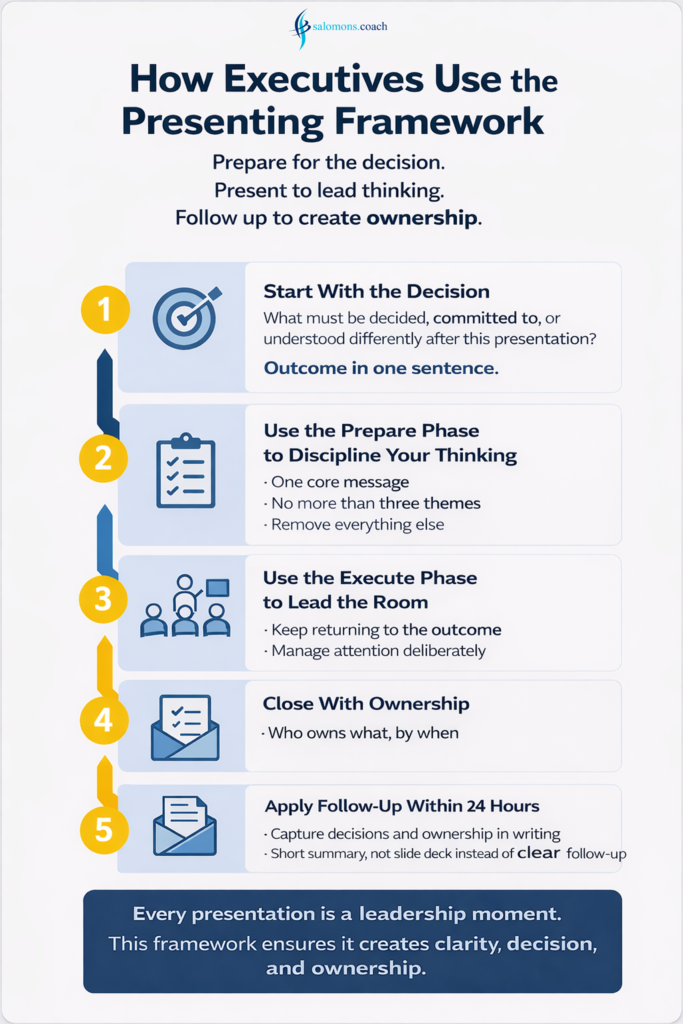
Daarom: begin altijd met de beslissing, niet met de dia's!
Ik heb een raamwerk voor presentaties voor leidinggevenden ontwikkeld, een aanpak in 3 fasen met 14 duidelijke stappen die je moet nemen om je beste presentatie te geven die de resultaten oplevert die je nodig hebt:
1. Voorbereiden: Leid voor je de kamer binnenkomt
2. Uitvoeren: Leid het denken in de kamer
3. Follow-up: Duidelijkheid omzetten in eigenaarschap
Beschikbare bronnen rond het Executive Presenting Framework:
- Het kader - een document van 13 pagina's met het volledige kader en de checklist, met de kritische vragen die je beantwoord moet hebben, om tot de best mogelijke presentatie te komen voor het doel dat je voor ogen hebt.
- Een trainingsprogramma van 4 uur, face-to-face of virtueel, voor maximaal 6 personen tegelijk, waarbij ik jou en een aantal van je collega's door alle 14 stappen van het raamwerk leid, en ieder van jullie je eerste echte killerpresentatie ontwikkelt.
- Een speciale post over het kader van executive presenteren, waarbij meer achtergrond wordt gegeven over niet alleen de stappen, maar ook het waarom van elke stap. Dit zorgt al voor een goed begrip, zodat je de opgedane kennis kunt overdragen voor elke presentatie die je in de toekomst moet geven.

Dit vind je misschien ook leuk

Wat gezien wordt, wordt herhaald – Brandweer versus Preventers
Vijf stappen om onmiddellijk controle over een crisis te krijgen