Efficiency makes an operation look strong. Reliability under the unexpected asks for almost the opposite. Karl Weick's five principles of high-reliability organizations — and what they looked like on a real hub floor.
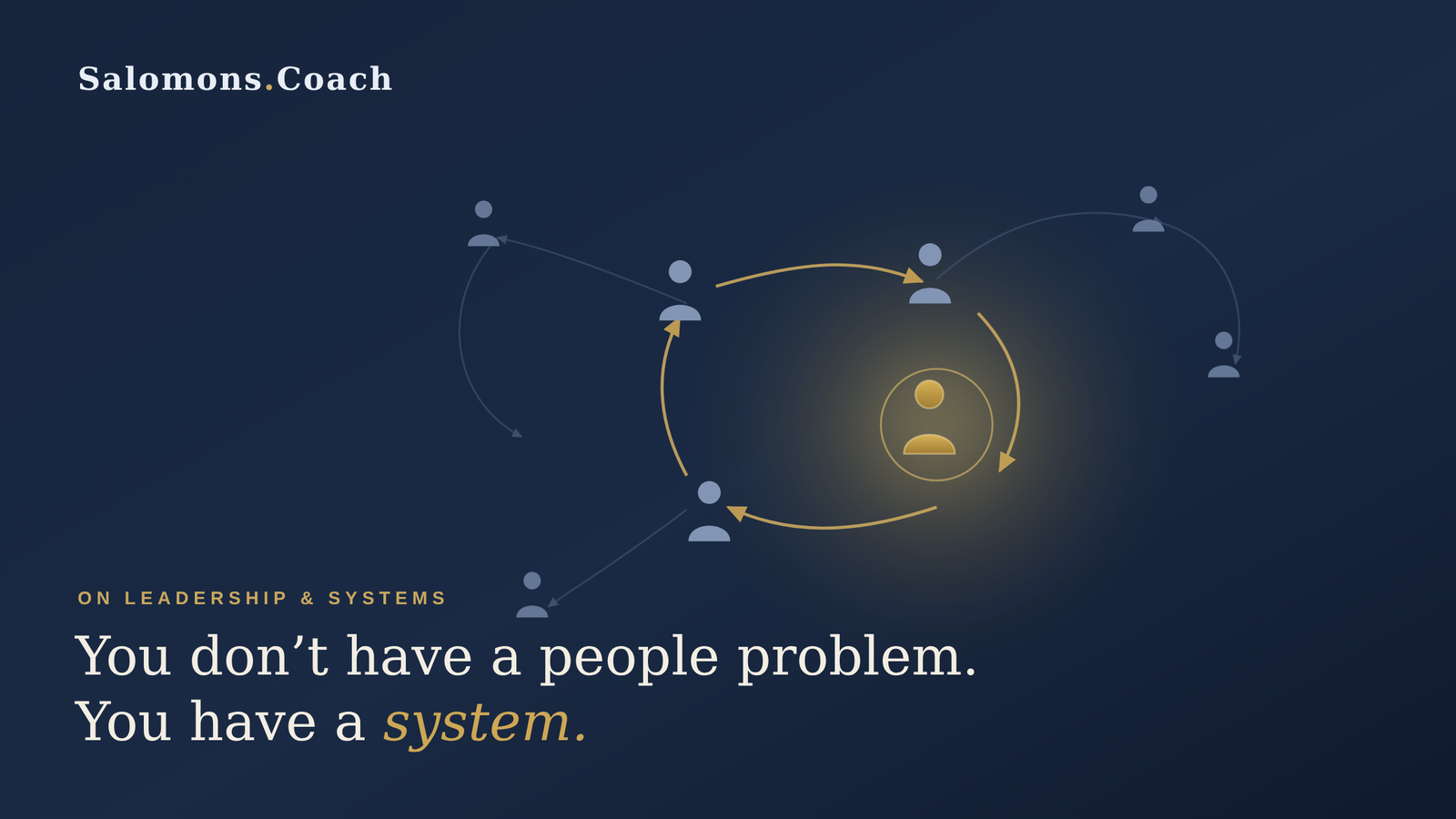
Your team won't take ownership. The same crisis keeps returning. You replaced the problem person and nothing changed. These aren't character flaws — they're the shape of the system you're standing inside. Drawing on three decades in the leadership chair, Jan Salomons on why so much competence produces so little change, and where the shift actually begins.
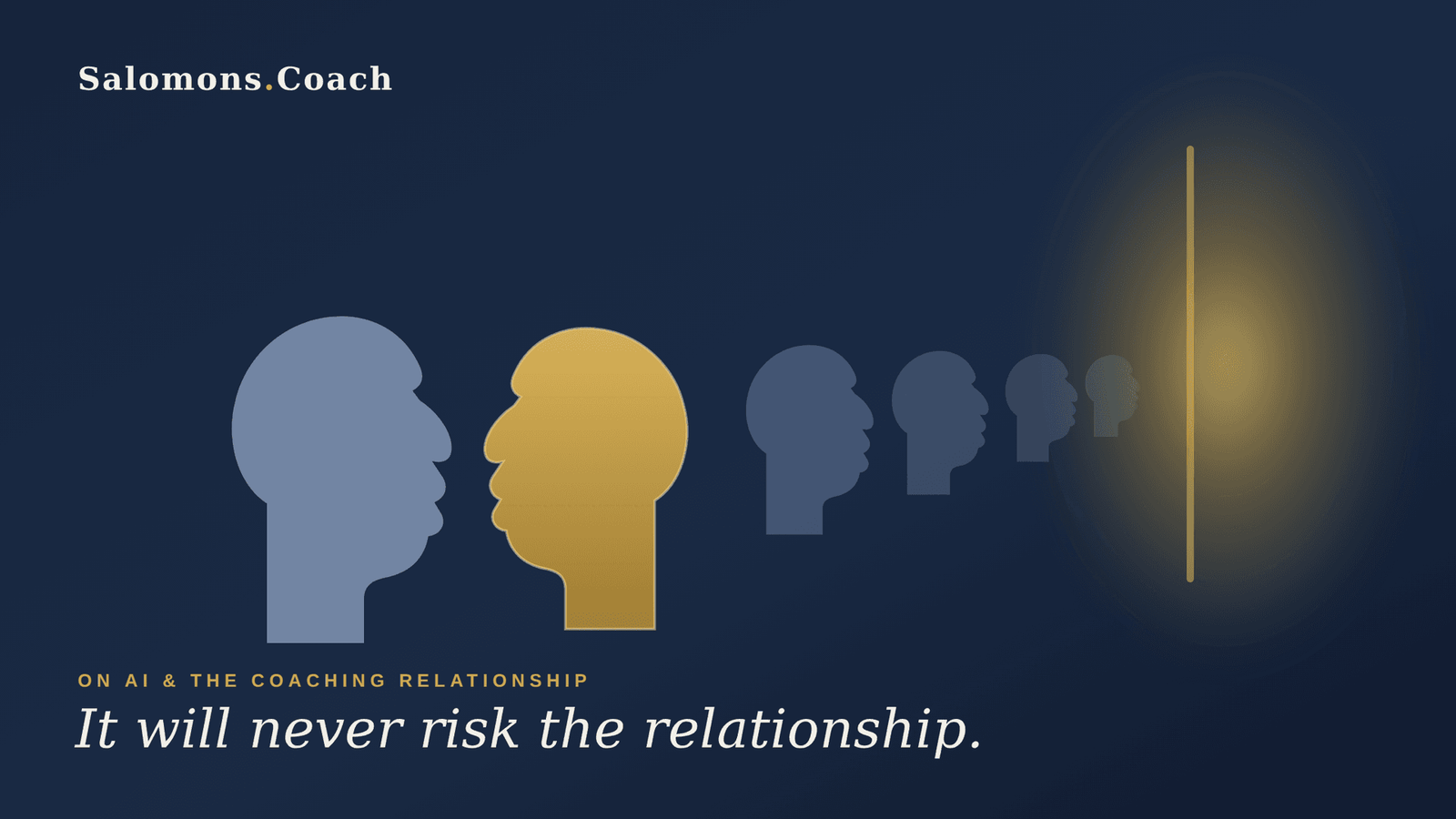
Generative AI is a superb career thought partner — for CVs, interviews, search strategy, and rehearsal. But coaching isn't information. Drawing on systemic and provocative coaching and three decades in the leadership chair, Jan Salomons argues that the deeper work, seeing your system, facing your blind spot, growing past your own comfort, is precisely what an AI built to agree with you can never do.
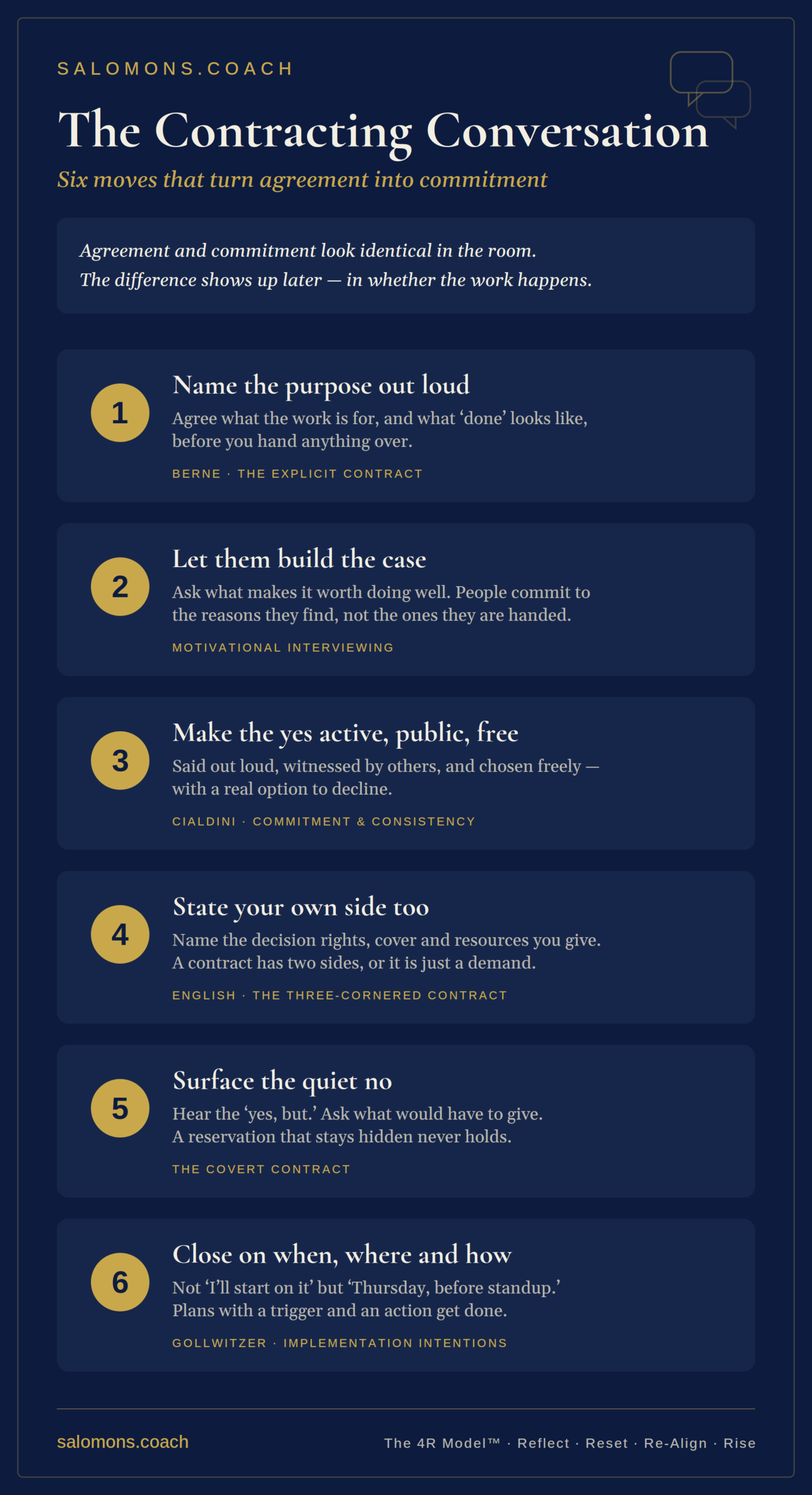
Getting someone to say yes is easy. Getting a yes that survives your absence is the real work of leadership. Six research-backed moves that turn polite agreement into commitment people genuinely own.
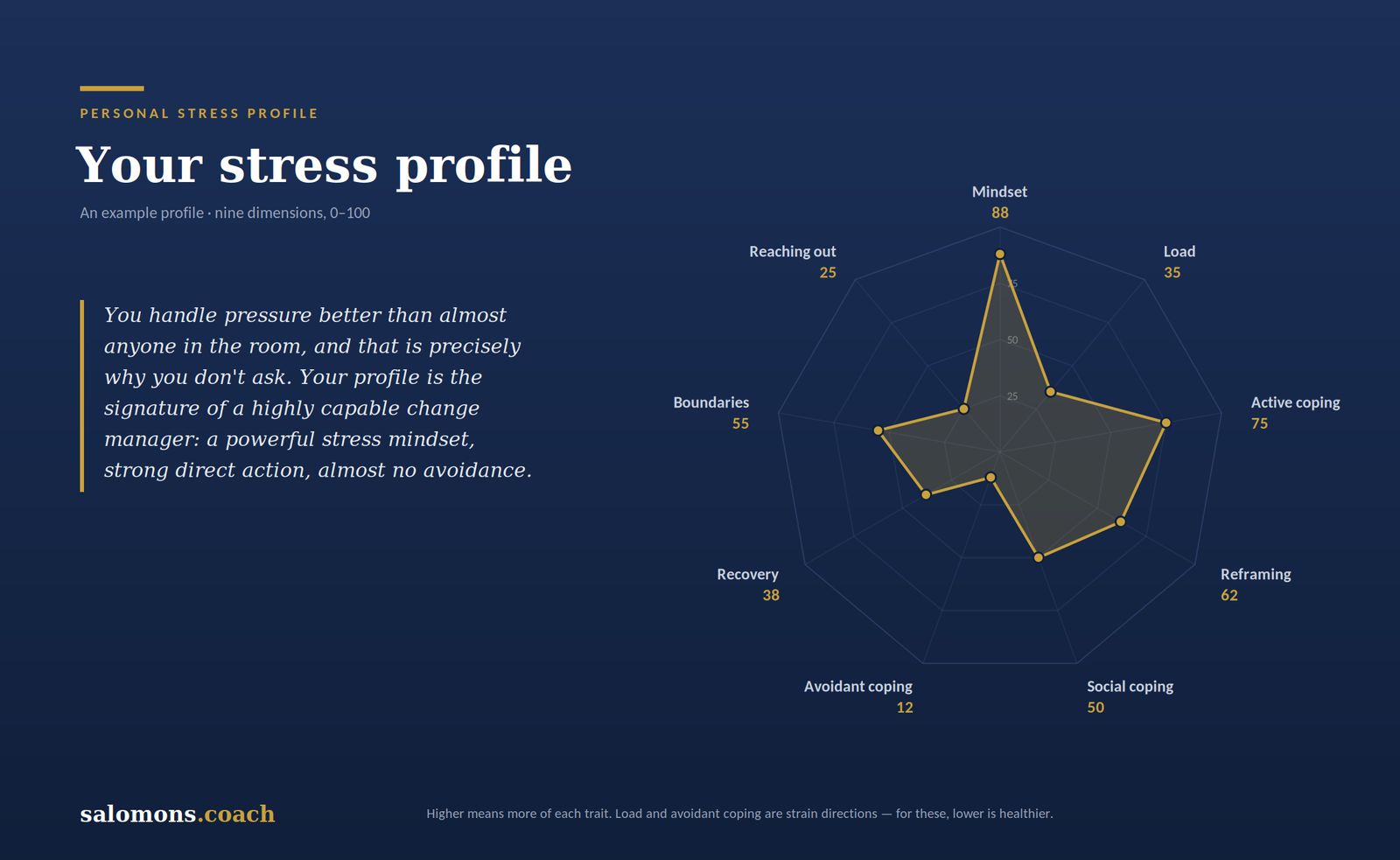
The Personal Stress Coping Profile™ provides a structured mirror of current pressure, coping responses, resilience resources, boundaries and recovery. It creates insight without diagnosing or labelling—and connects personal awareness with the wider team conditions that influence how people cope.
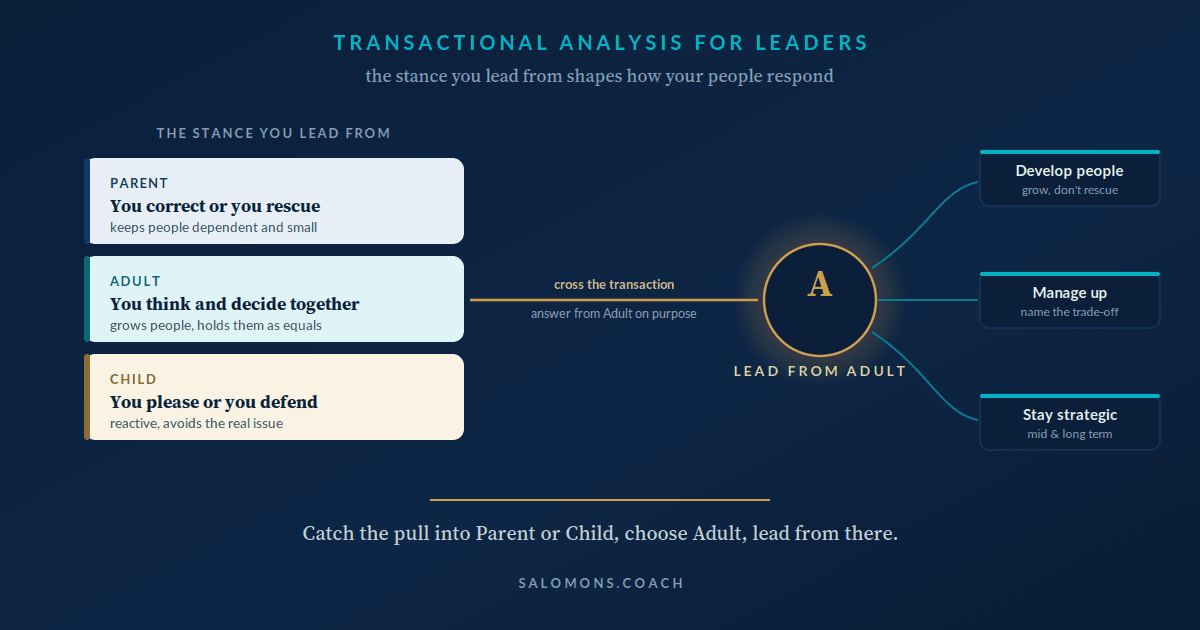
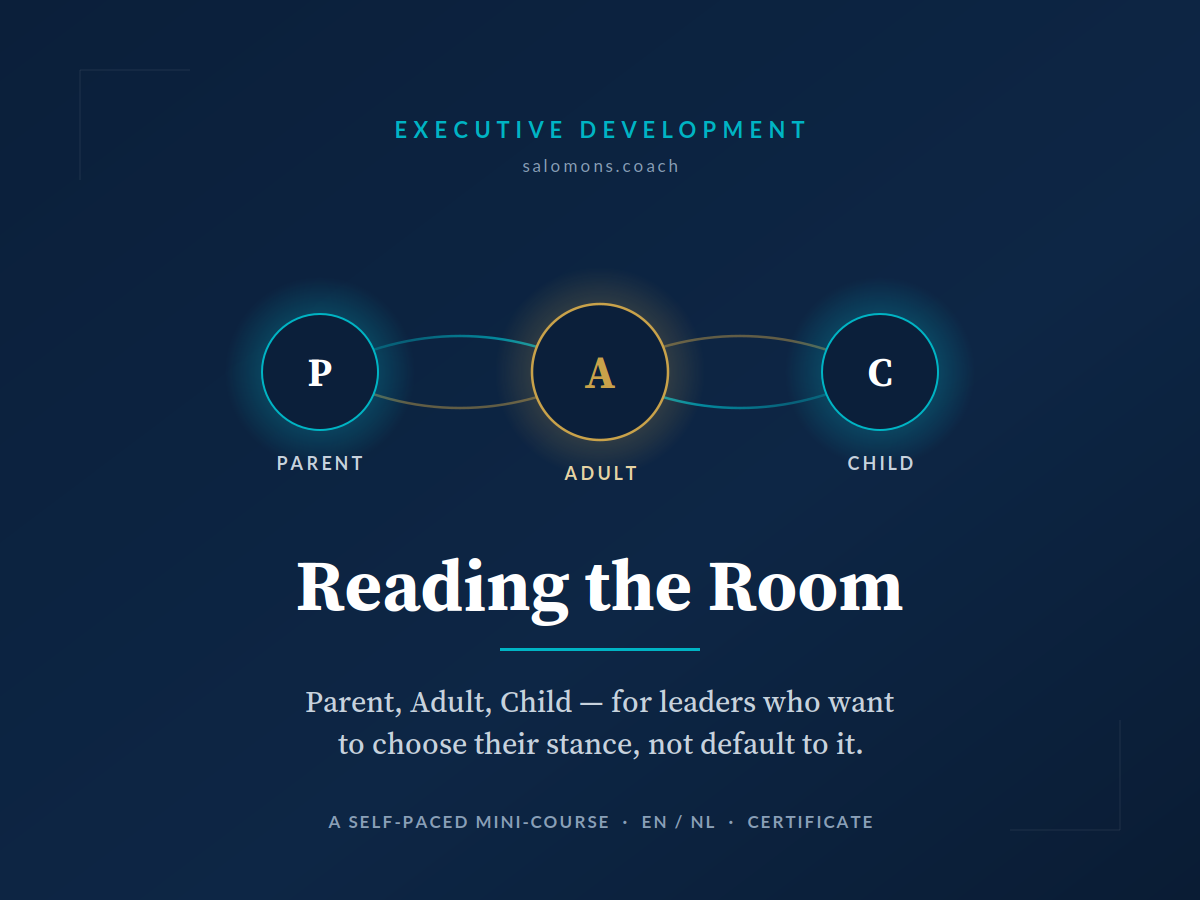
Parent Adult Child leadership explains why the mode you default to — Parent, Adult or Child — quietly shapes whether your people grow or stay dependent.
When four of your twelve team members may be made redundant — but nothing is official yet — leadership becomes something different. It becomes the art of holding people together in uncertainty. This post offers six practical principles for leading through the wait: with honesty, focus, differentiation, and the kind of steadiness that people will remember long after the decision is made.
Most managers have two default tools when they need something to happen: tell people what to do, or escalate to someone who can. Direct communication and the chain of command. Both have their place. But if they are your primary or only tools for getting things done across an organization, you have a problem. Not because they don't work, but because they work less and less the higher you climb and the more complex your environment becomes.
The managers and project managers who consistently get things done are not the ones with the biggest title or the loudest voice. They are the ones who understand that in most modern organisations, influence is the currency that actually moves things. Directives produce...
Most cross-cultural leadership problems don’t look like cultural problems, until they cost you performance. Misaligned expectations around trust, feedback, hierarchy, and decision-making silently undermine teams, delay results, and create friction that leaders misread as personality or competence issues. The Cross-Cultural Leadership Compass translates decades of academic research, including Hofstede’s Cultural Dimensions, GLOBE Study, World Values Survey, and Schwartz Theory of Basic Values, into precise, actionable leadership insights. Instead of generic awareness, it gives you a data-backed map of where cultural gaps actually impact your role, your team, and your results.
Every leader who crosses a cultural boundary carries two operating systems at once. One was installed in childhood. The other was acquired through years of professional adaptation. The real skill — the one that separates effective cross-cultural leaders from merely well-travelled ones — is knowing which system is running at any given moment, and whether it is serving the situation.
The Cross-Cultural Leadership Compass is built around exactly this challenge. It integrates four validated academic frameworks — Hofstede, GLOBE, the World Values Survey, and Schwartz — and translates the data into eleven specific leadership dimensions where cultural gaps play out in practice. This post unpacks each one.