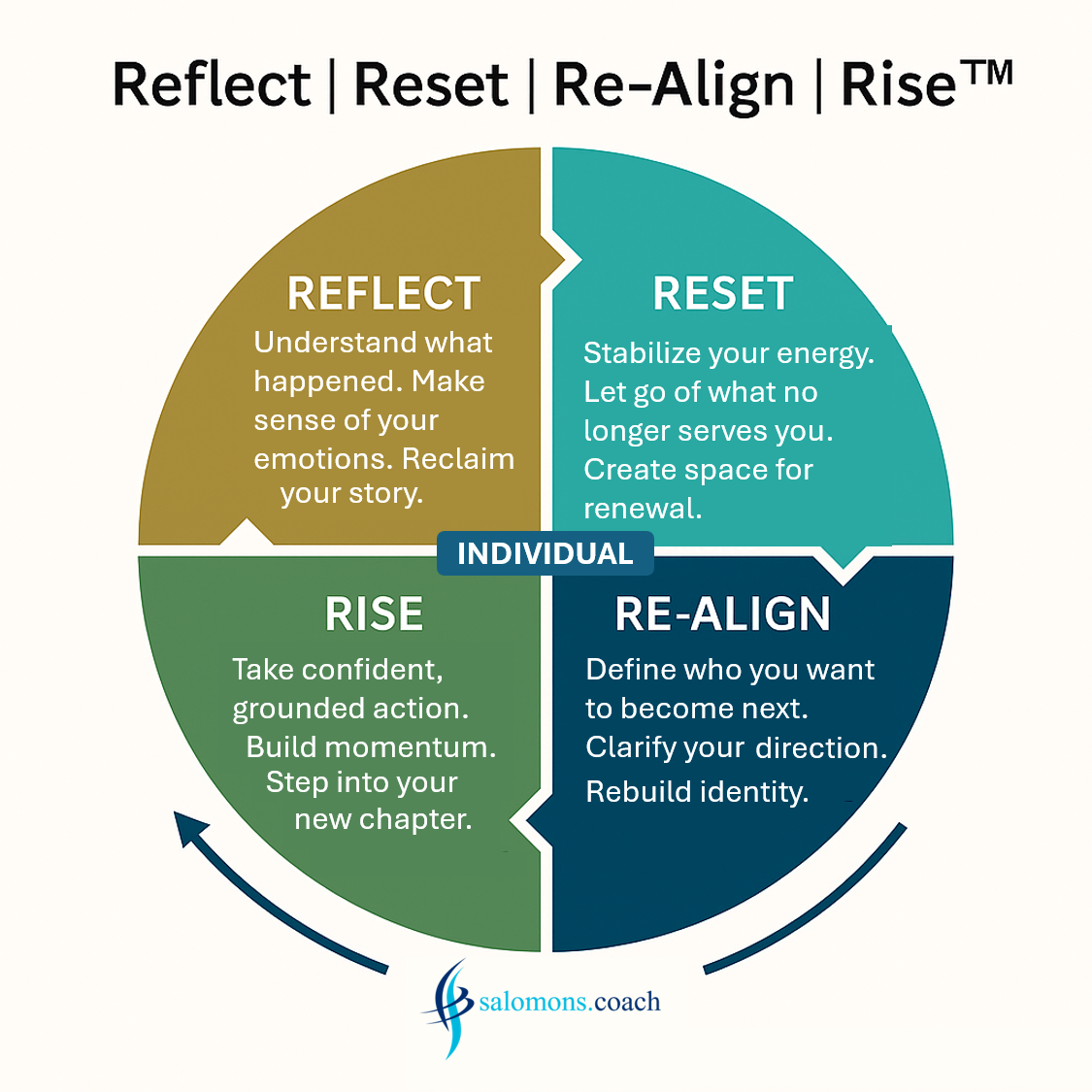
The 4R Model—Reflect, Reset, Re-Align, Rise™—emerged from more than 35 years of leading and coaching in complex, high-pressure environments, combined with solid foundations in transition theory, emotional intelligence, identity work, and psychological safety. Supported by globally respected research (including HBR), the model provides a clear, humane framework that helps people navigate redundancy, burnout, and major career shifts. Instead of treating change as a purely logistical process, 4R guides the deeper psychological journey: understanding what’s happening internally, letting go of old identities, rebuilding direction, and rising with confidence and sustainable momentum. It turns disruption into structured growth.
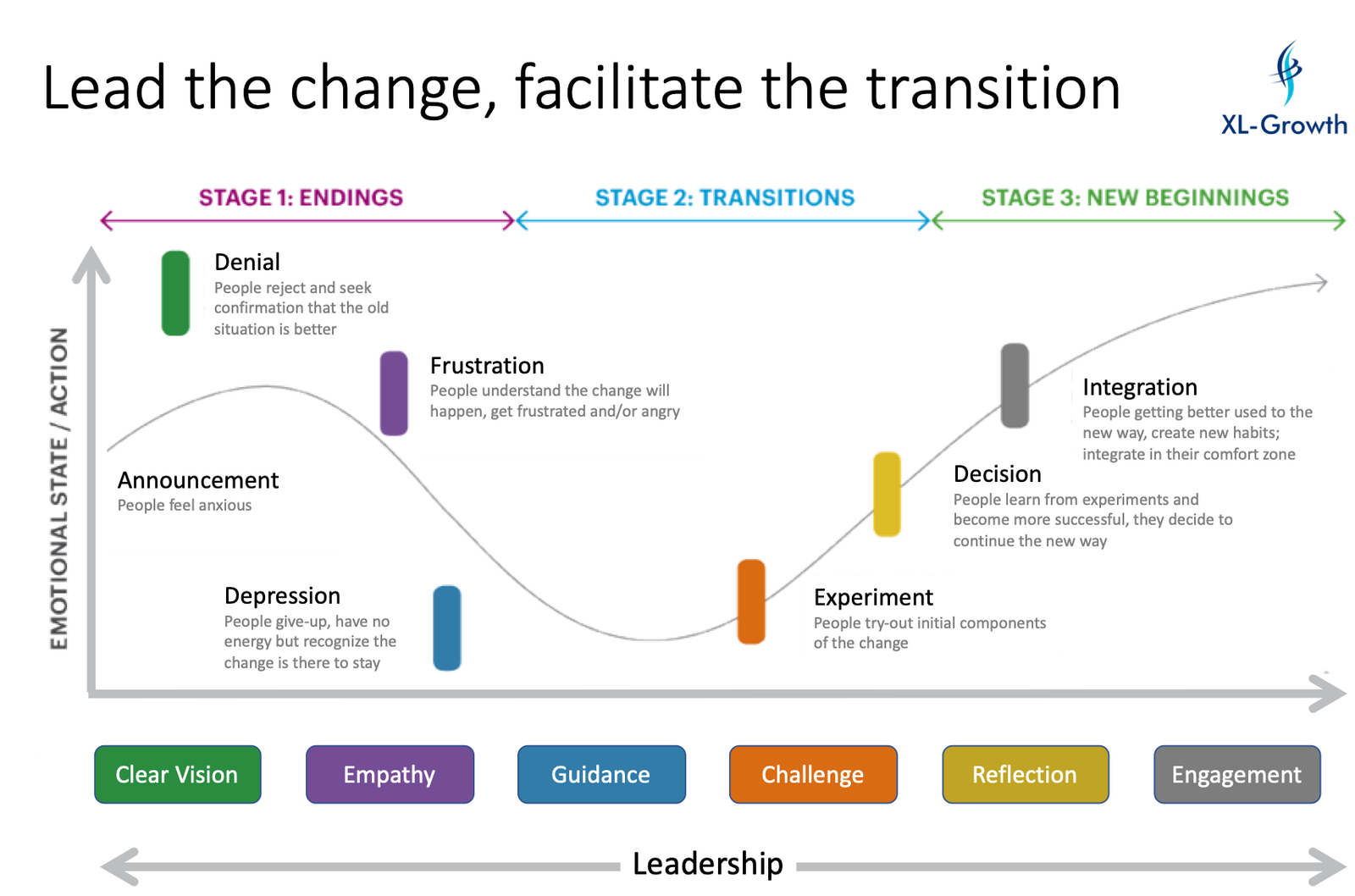
Change doesn’t fail because of poor plans — it fails because people haven’t made the psychological transition. In this article, Jan Salomons explores his formula for successful change, combining shared vision, urgency, leadership, learning, and capacity. Drawing on his decades of experience and his VUCA leadership approach, he explains how leaders can guide teams through endings, transitions, and new beginnings while maintaining trust and connection. Learn why managing change isn’t enough — leading transition is what truly drives sustainable transformation.
trong emotions aren’t the enemy — they’re leadership data. In today’s volatile and uncertain world, emotions like frustration or fear often mask deeper values and unmet needs. Reframing helps leaders decode those emotions, turning tension into insight and pressure into performance. In this post, Jan Salomons explores how emotional intelligence and reframing allow leaders to stay grounded in a VUCA world — transforming reaction into reflection, and reflection into purposeful action. Learn how to work with, not against, your emotions and use them as a catalyst for self-leadership and organizational growth.
Feedback is often misunderstood as something to endure rather than embrace. Yet in my years as an executive and leadership coach, I’ve learned that growth doesn’t come from giving the perfect feedback—it comes from receiving it well. When we move beyond defensiveness and see criticism as potential coaching, feedback turns from a threat into a tool for learning. The moment we shift our mindset from “What’s wrong with me?” to “What can I learn here?”, we unlock one of the most powerful levers of leadership growth: the ability to find the coaching in criticism.
The Core Quadrants by Daniel Ofman are an effective tool for team building, helping teams understand individual dynamics and how to collaborate better. By identifying core qualities, pitfalls, challenges, and allergies, teams gain insights into strengths and areas for growth. For example, one team member’s creativity (core quality) may lead to chaos (pitfall), while another’s structure (core quality) could result in rigidity (pitfall). By discussing complementarities and irritations (allergies), teams learn to value differences and work cohesively. Regular reflection and integration of core quadrants into daily collaboration foster a culture of feedback, problem-solving, and celebrating contributions, strengthening overall team performance.
Discover the true essence of Ikigai—far beyond the popular Venn diagram. Rooted in Japanese culture, Ikigai is about finding joy and purpose in the small, meaningful moments of everyday life. Learn how this concept has been misunderstood and how embracing its authentic meaning can lead to a more fulfilling existence.
Recently, Annette Magnusson, HR Director at Citymail Sweden, shared an inspiring reflection on LinkedIn about age and experience. Her words resonated with me, because they touch on a theme that often remains overlooked in organizations: the power of experience in
co-active coaching model & methodology
Over the past decade, Harvard Business Review has shown that coaching is not about fixing people—it's about helping leaders rise. HBR highlights coaching as a collaborative partnership that strengthens self-awareness, emotional intelligence, and the ability to navigate complexity. From executive development to performance and long-term growth, the research is clear: coaching improves leadership behavior, deepens team trust, and creates healthier, more resilient organizations. At its core, effective coaching is built on listening, reflective questioning, aligned goals, and honest accountability—exactly the foundations of modern leadership in a VUCA world.
Effectiveness of Coaching vs Leadership Development Programs. Organizations invest heavily in leadership development, spending up to 5% of annual revenue on training programs, yet only 11% of executives report these initiatives meet expectations. Research shows leadership training can boost job performance by 20%, but challenges remain in achieving sustained results.
Leadership coaching, on the other hand, offers a personalized approach, boasting a 96% satisfaction rate and an ROI six times its cost. It excels in fostering behavioral changes and leadership effectiveness.
Combining these approaches integrates cost-efficient group learning with high-ROI individual coaching, yielding powerful results. Let’s explore how this can work for your organization.