Inheriting an established team means inheriting its habits, unresolved tensions and operating assumptions. When is a reset necessary, and how can a leader avoid damaging performance while rebuilding trust and accountability?
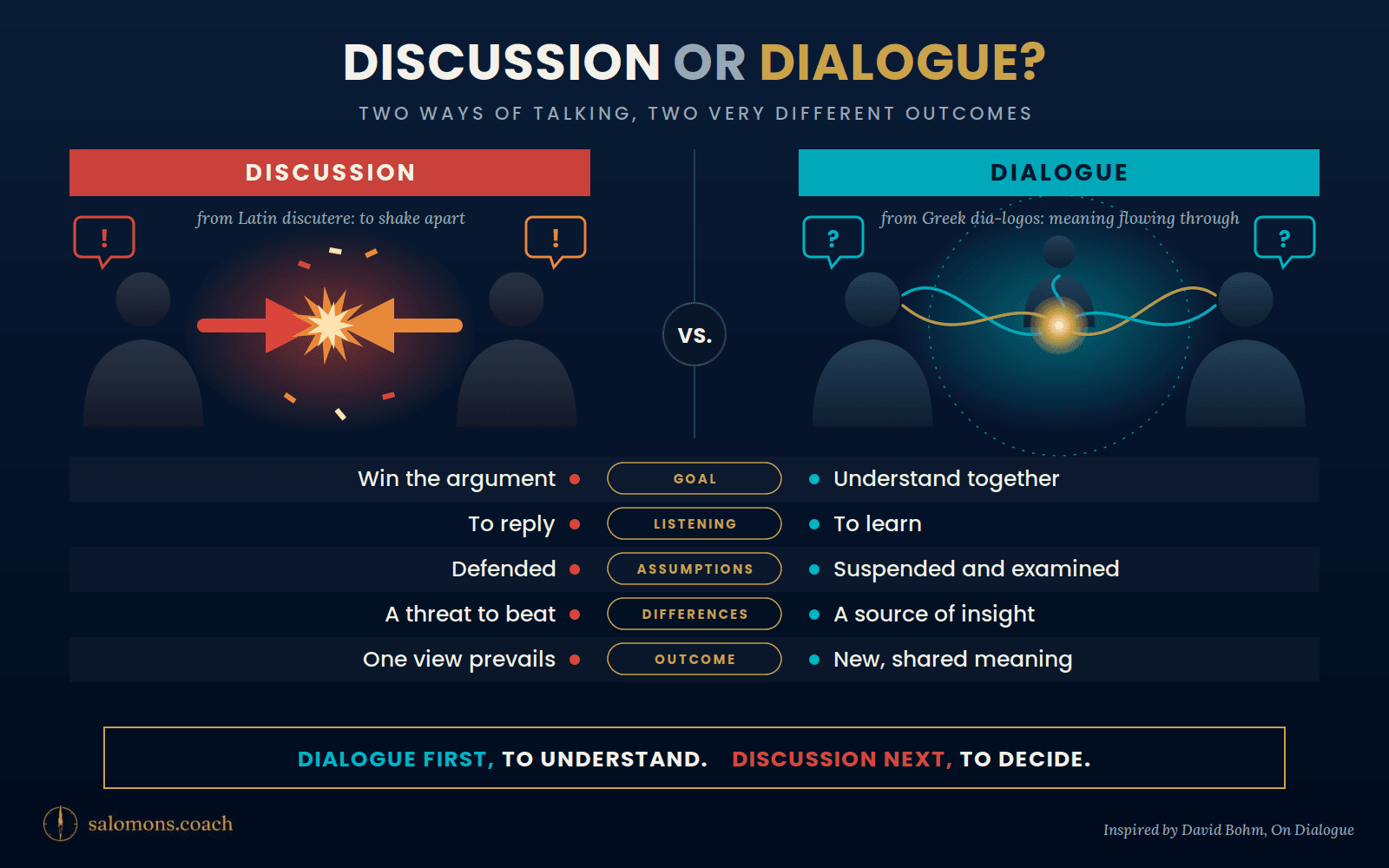
A leadership team that debates robustly can still keep reopening the same decisions. Drawing on a coaching case with a CEO, this post explains the difference between discussion and dialogue, what it costs a team to only discuss, and the practices that help senior leaders think together before they decide. It also shows how team coaching turns dialogue from a clumsy experiment into the way a team works.
When leadership conversations become repetitive or defensive, the real problem may not be the content. This post explores how relationship and structure shape communication—and how leaders can use the three-layer communication model to create greater clarity, trust and more productive dialogue.
Almost every manager has that one person — every molehill a mountain, every meeting hijacked. Labelling them a "drama queen" puts you in the passenger seat. This is the practical playbook I walk managers through: stop funding the drama, redirect to ownership, and lead with a steady hand.
Blame that circles the table, a colleague who "can't," a manager who fixes everything and resents it — the Drama Triangle rarely looks like a crisis, but it stalls decisions and drains your best people. Here's how leaders spot it, step into the Winner's Triangle, and take the wheel.
Why do some teams remain effective under sustained pressure while others gradually become overwhelmed? This article introduces six collective capabilities that help teams recognise pressure early, redistribute responsibility, adapt priorities and learn from demanding periods, without replacing individual accountability.
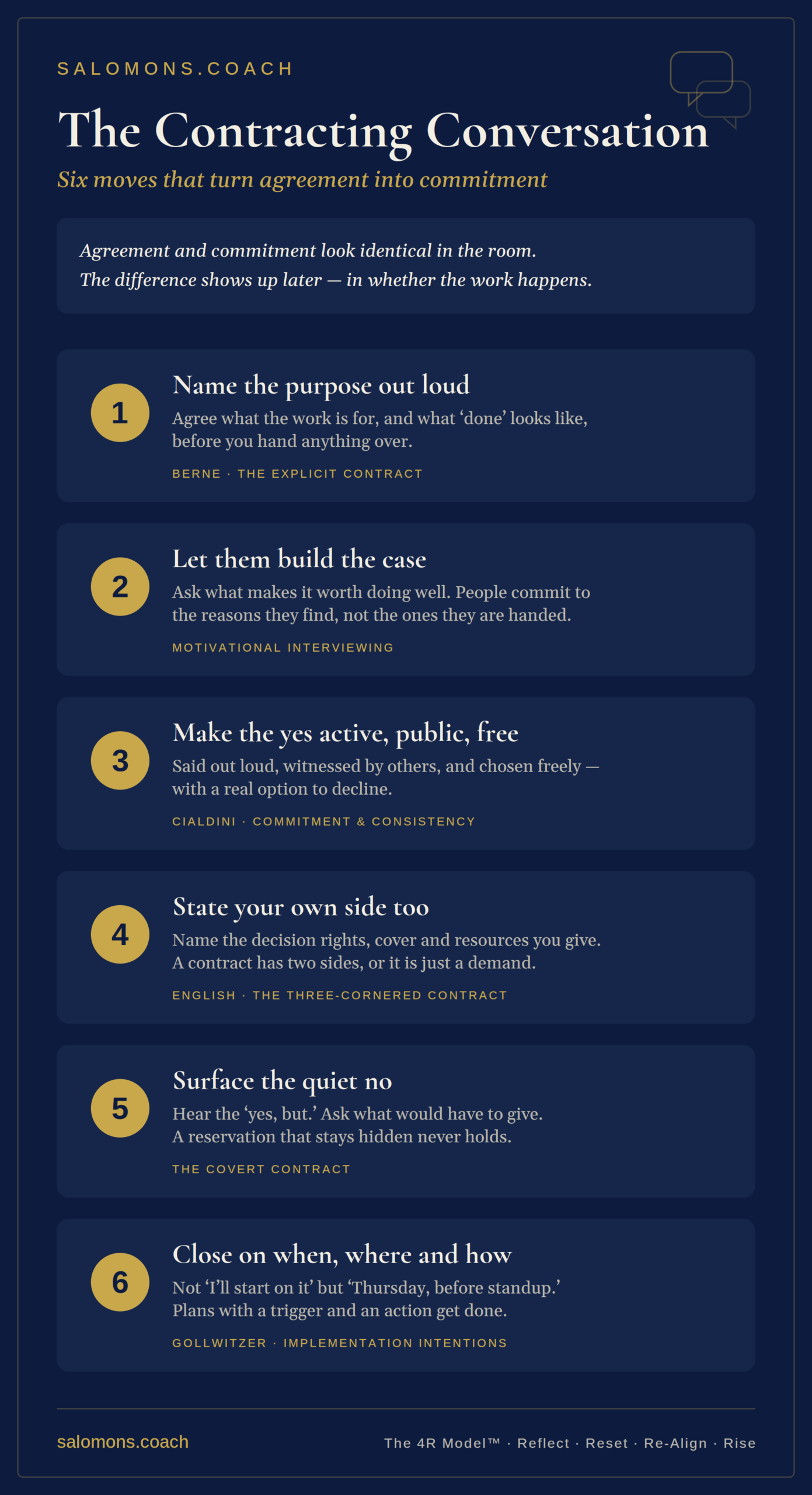
Getting someone to say yes is easy. Getting a yes that survives your absence is the real work of leadership. Six research-backed moves that turn polite agreement into commitment people genuinely own.
The EU Pay Transparency Directive shifts the burden of proof onto the employer. A pay difference will now require an objective, documented justification, or a correction. "She negotiated harder when she joined" is not a defence. "He's been here longer" might be — if your tenure logic is documented.
The leaders who navigate this well will be the ones who do the work before the questions arrive. Conversation by conversation, fairness becomes a leadership problem.
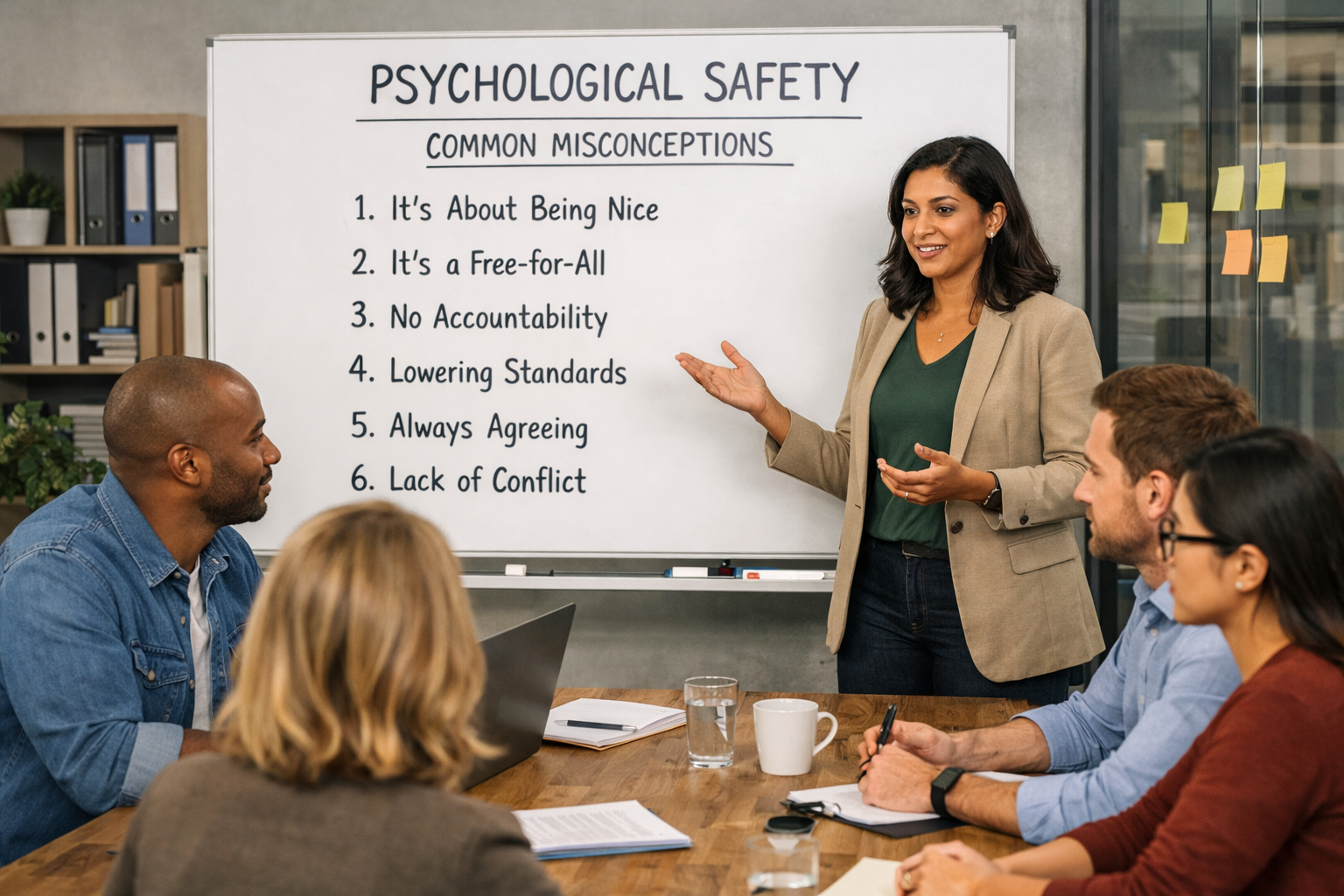
Psychological safety is one of the most used — and most misunderstood — concepts in modern leadership. Nice meetings, policies, and consensus are not safety. They are often the opposite. Six stubborn misconceptions, and what is actually at stake for leaders who want to get this right.
Ownership in organizations is often treated as a mindset problem. In reality, it is a design issue. When goals are unclear, authority and accountability are misaligned, and leadership behavior is inconsistent, ownership erodes. This article explains why ownership is not something you demand from people, but something you deliberately build through structure, behavior, and leadership discipline.