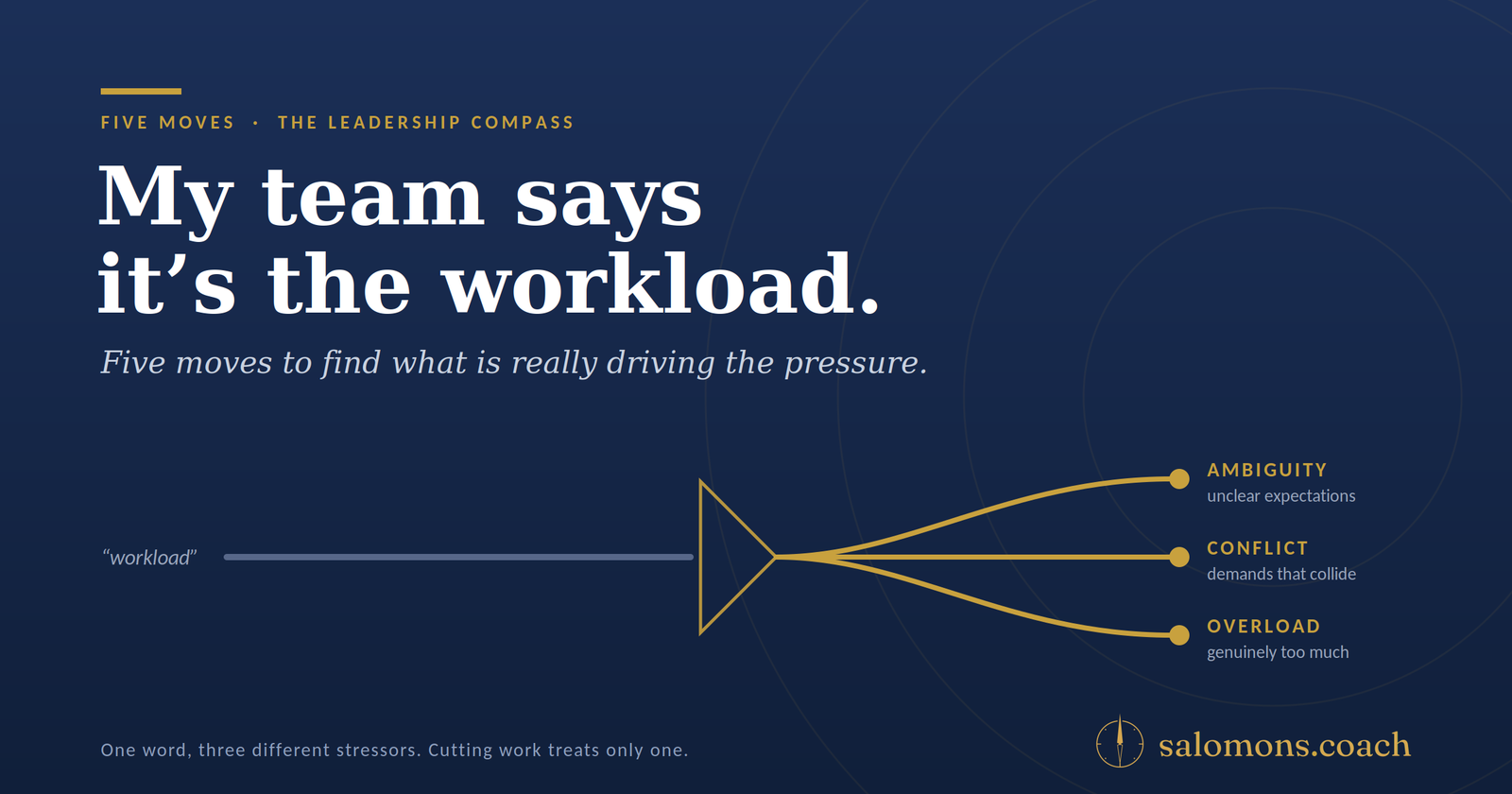
Ask a leader why the team is stressed and you will hear one word: workload. But research on 788,000 employees shows that unclear expectations and colliding demands often do more damage than volume. Five misreadings of workplace stress, the data behind them, and five better questions to ask your team.

High performers can continue delivering while their capacity quietly declines. Learn how leaders can recognise the early signals, ask better questions and act before overload affects performance, the team and business continuity.
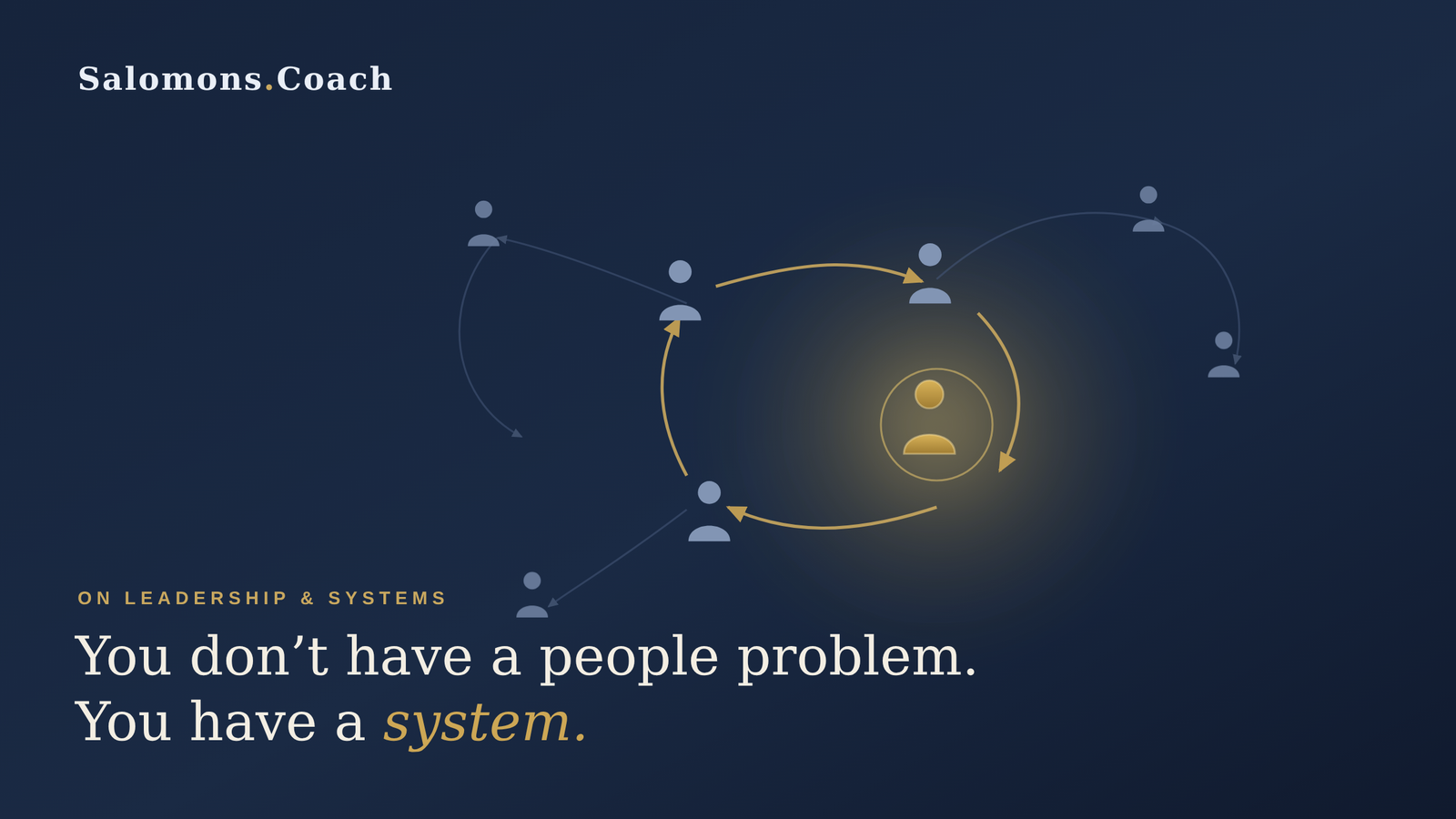
Your team won't take ownership. The same crisis keeps returning. You replaced the problem person and nothing changed. These aren't character flaws — they're the shape of the system you're standing inside. Drawing on three decades in the leadership chair, Jan Salomons on why so much competence produces so little change, and where the shift actually begins.
The EU Pay Transparency Directive shifts the burden of proof onto the employer. A pay difference will now require an objective, documented justification, or a correction. "She negotiated harder when she joined" is not a defence. "He's been here longer" might be — if your tenure logic is documented.
The leaders who navigate this well will be the ones who do the work before the questions arrive. Conversation by conversation, fairness becomes a leadership problem.
Ownership in organizations is often treated as a mindset problem. In reality, it is a design issue. When goals are unclear, authority and accountability are misaligned, and leadership behavior is inconsistent, ownership erodes. This article explains why ownership is not something you demand from people, but something you deliberately build through structure, behavior, and leadership discipline.
Struggling with a new boss? You’re not alone. This article explains the psychology behind leadership transitions, why your brain reacts the way it does, and what practical steps help you rebuild clarity and trust—especially in high-pressure operational environments.
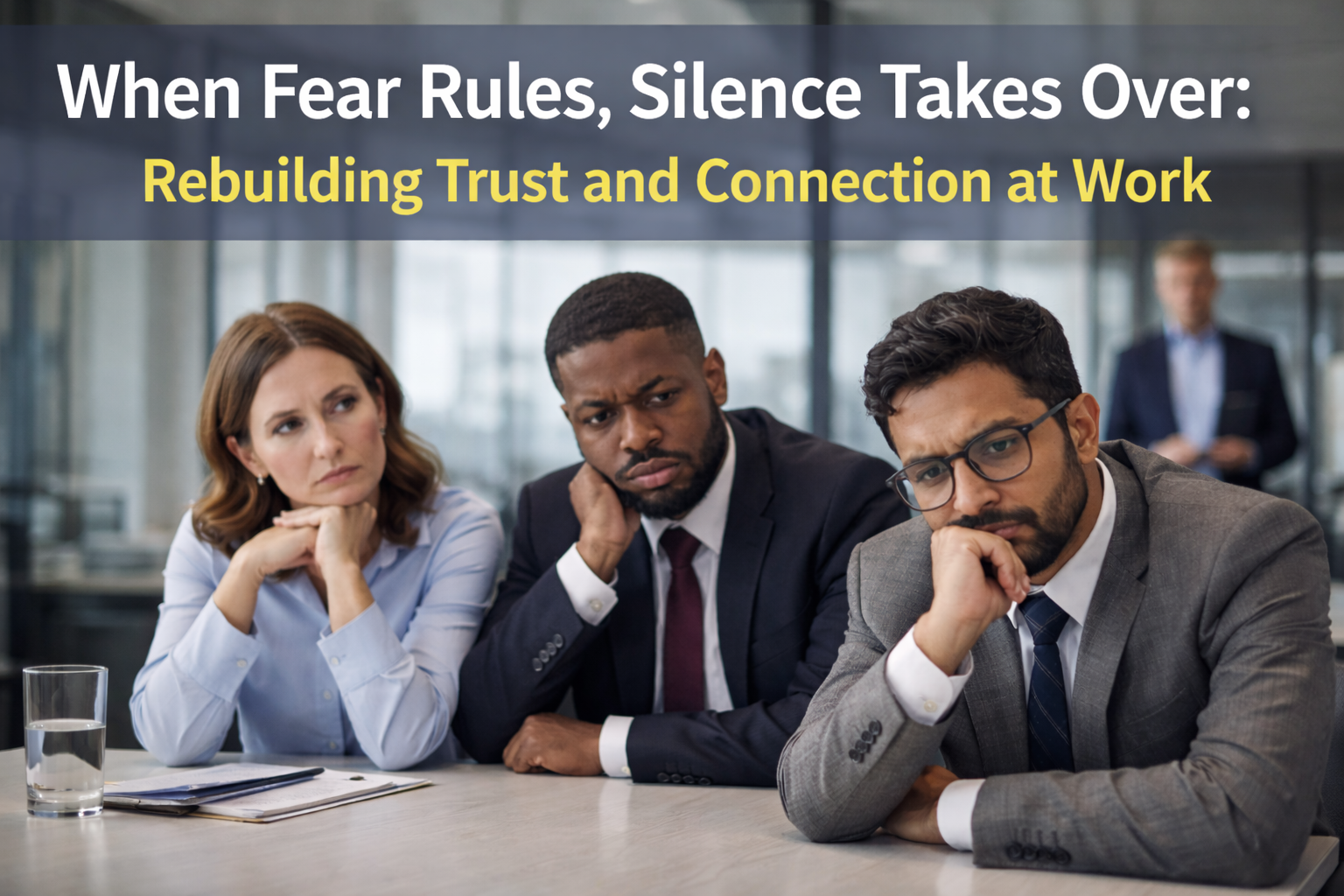
Fear can quietly take over organizations — through silence, control, and pressure — until trust disappears and performance collapses. In this article, Jan Salomons explores how fear-based leadership emerges and what leaders can do to reverse it. He shares five practical ways to rebuild trust, including how to reframe control, invite openness, and restore team rhythm. In a VUCA world, where change and uncertainty trigger anxiety, leaders who recognize and address fear become the real stabilizers of culture. Learn how awareness, consistency, and courage can turn fear into focus and connection.
The COVID years gave us flexibility — and many teams kept it. Yet what began as empowerment slowly turned into routine. Offices stay quiet midweek, but results don’t automatically follow. The issue isn’t hybrid work itself; it’s the gradual loss of ownership for outcomes. In this blog, Jan Salomons explores how leaders can rebuild clarity, accountability, and rhythm without dictating hours or presence. Using his iterative Way of Working — assignment > diagnostics > co-creation delivery evaluation > hyper care > handover > on-demand support — he shows how organizations can improve productivity, quality, and engagement by focusing on results, not routines.
Culture change is often misunderstood as mere slogans or posters, but true transformation begins with leadership behavior and systemic redesign. At TransLog, a European logistics organization, leaders discovered that their performance issues stemmed not from broken processes, but from a flawed behavioral system. By mapping leadership routines and co-creating a new behavior system, they shifted from siloed thinking to collaborative action. The results? Improved performance metrics and a culture that became integral to operations. Explore how intentional choices and structural changes can redefine your organization’s future and make culture a powerful business enabler.
Negativity can quietly erode team morale, productivity, and even a leader’s confidence. In this post, I share the story of Nathalie, an operations manager trapped in a cycle of workplace stress and unproductive venting—both in her team meetings and personal life. Together, we explored the psychological roots of negativity, its contagious effects, and strategies to break free. From reframing challenges to fostering constructive team dynamics, this journey reveals how leaders can transform negativity into solutions and growth. If workplace stress and team negativity feel overwhelming, this is your guide to leading with positivity and purpose.