Most managers have two default tools when they need something to happen: tell people what to do, or escalate to someone who can. Direct communication and the chain of command. Both have their place. But if they are your primary or only tools for getting things done across an organization, you have a problem. Not because they don't work, but because they work less and less the higher you climb and the more complex your environment becomes.
The managers and project managers who consistently get things done are not the ones with the biggest title or the loudest voice. They are the ones who understand that in most modern organisations, influence is the currency that actually moves things. Directives produce compliance. Influence produces commitment.
This article gives you a practical new toolbox, and more importantly, a new mindset.
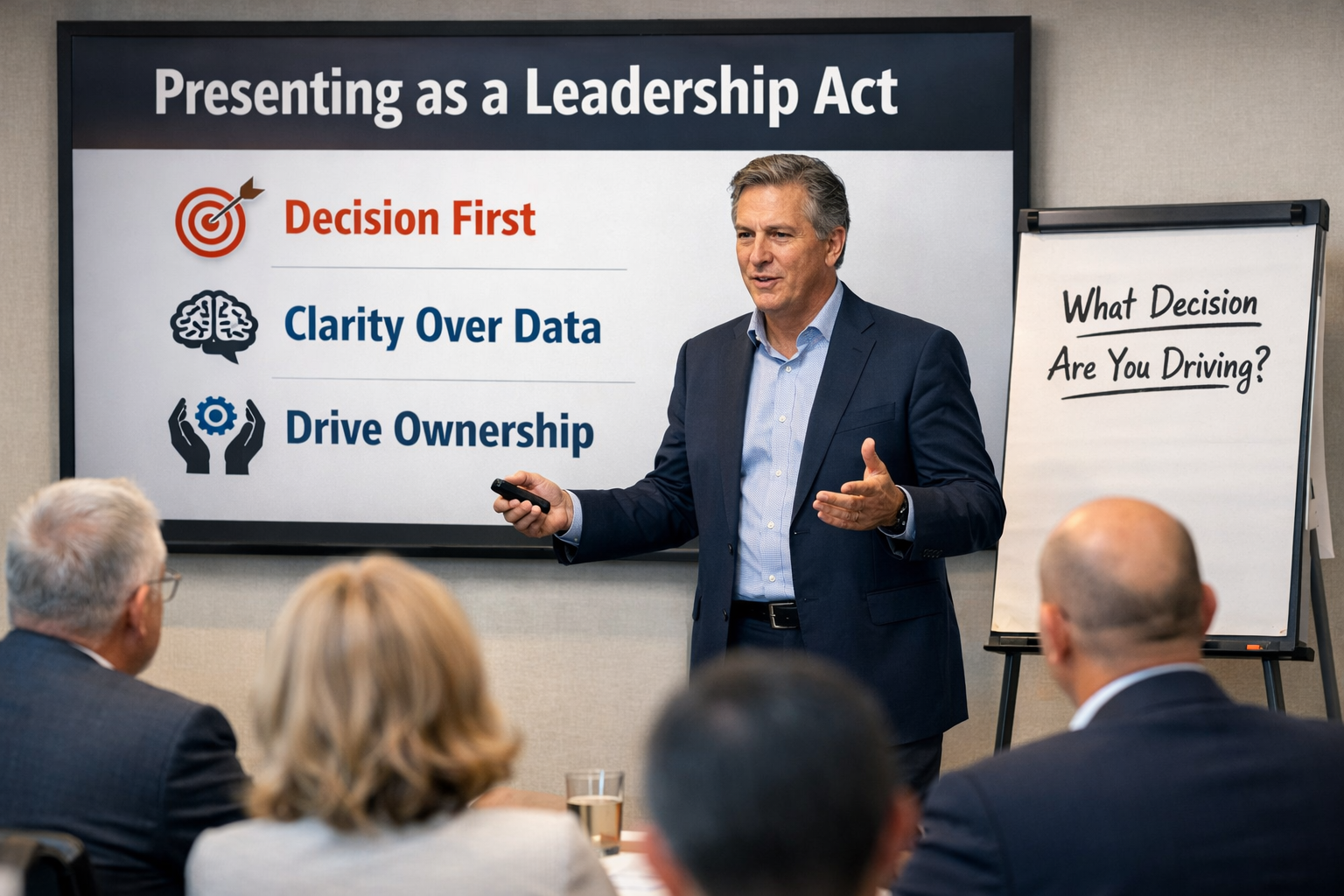
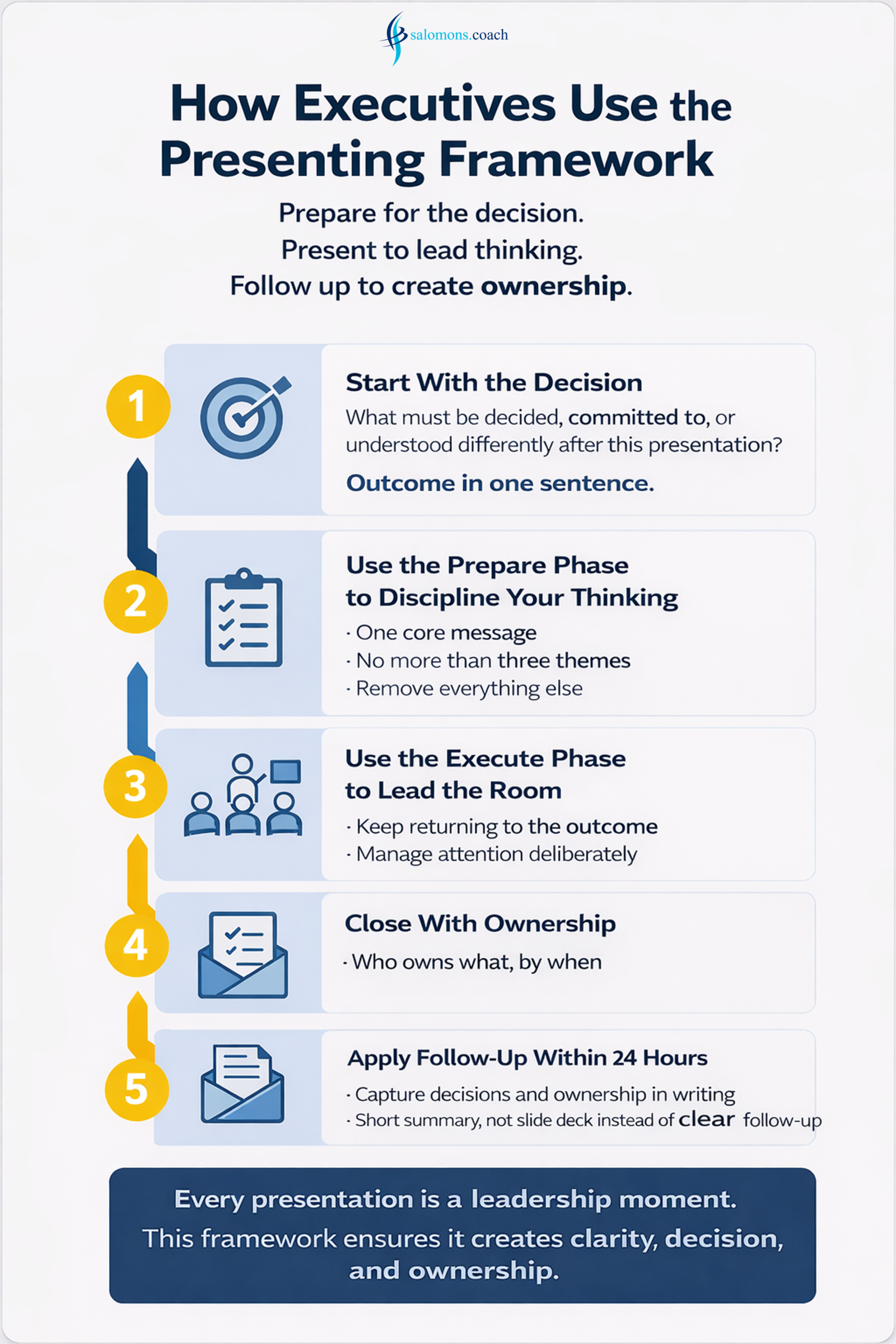
Most presentations fail not because the content is weak, but because leadership intent is unclear. Drawing on years of training and coaching senior leaders, this article reframes presentation skills as a leadership behavior under pressure, where decisions are enabled, complexity is reduced, and ownership becomes explicit. Presenting, done well, is not about slides. It is about leading thinking in the room.
Presenting at executive level is not a communication skill, it is leadership in public. The Executive Presenting Framework reframes presentations as leadership moments where judgment, clarity, and ownership are established under pressure. Built for VUCA environments, the framework helps senior leaders reduce cognitive overload, lead thinking in the room, and ensure that presentations result in decisions and execution.
Especially after redundancy, many professionals explain themselves too much — in interviews, CVs, and conversations. But interviews are not about telling your story. They are about positioning. This article shows why “tell me about yourself” is a strategic question — and how to answer it with relevance, not biography.
In a world full of noise and pressure, the most courageous leaders are not the loudest ones, but the ones who create space for stillness and honest self-reflection. Like a quiet bridge reflected in calm water, authentic leadership emerges when we stand steady in who we are and dare to look inward. Clarity, integrity, and presence begin not with action, but with awareness.
Brené Brown’s TED Talk, "The Power of Vulnerability," is a powerful exploration of human connection, courage, and the discomfort we feel when we open ourselves up to others. Brown, a research professor, is known for her work on shame, courage, and vulnerability, and this talk is perhaps her most famous. Here’s a breakdown of its key ideas and why embracing vulnerability is critical, not only in our personal lives but also in leadership.
Displaying warmth with strength is key to making us more influential. Most men have perceived strength, women warmth. But we need both for successful relationship in both business and in life. You can’t fake it. It must come from ‘inside-out’.