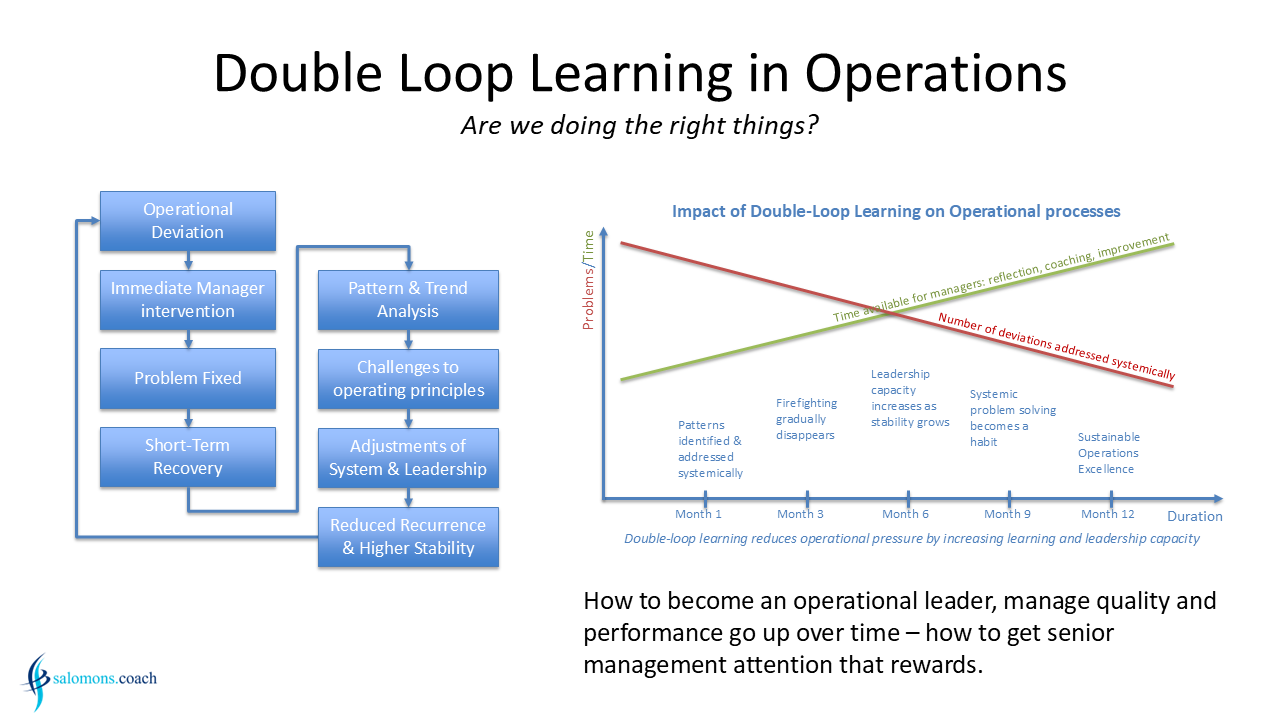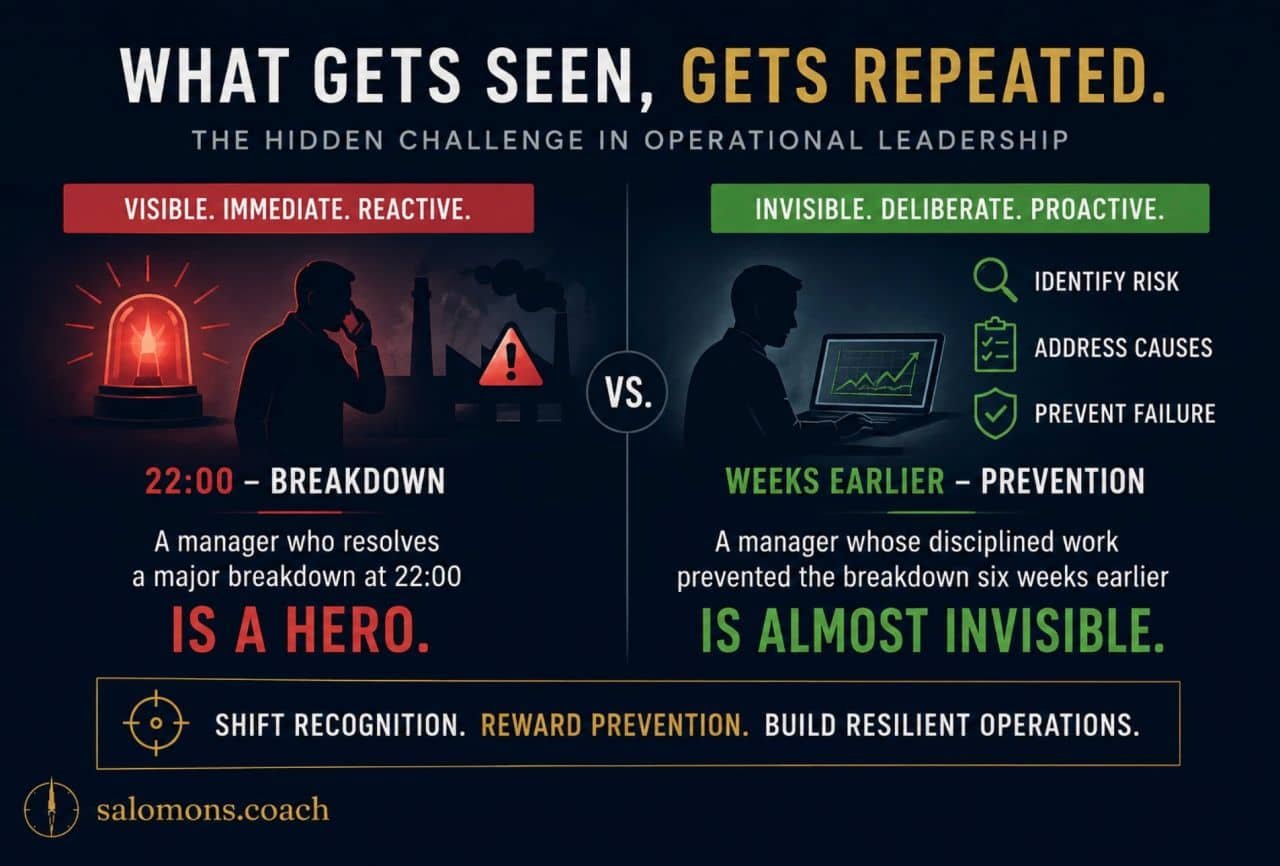
A manager who fixes a breakdown at 22:00 is a hero. The manager whose work prevented it six weeks earlier is almost invisible. Drawing on a coaching case with an Operations Director, this post shows what preventive leaders actually do, why organisations overlook them, and the routines a senior leader needs to put in place so prevention gets seen, rewarded and repeated.

Most senior leaders don't derail because they lack intelligence or drive. They derail because they stopped learning — and didn't notice until the damage was done. In this article, executive coach Jan Salomons explores the neuroscience behind why behavioral change is so hard, the five warning signs that a leader's learning agility is eroding, and what the research really says about what separates leaders who keep growing from those who quietly plateau. Drawing on decades of evidence from Korn Ferry, the Center for Creative Leadership, and the neuroscience of neuroplasticity, this is a practical, behavior-focused guide to one of the most critical — and most overlooked — leadership competencies of our time. If you have ever caught yourself relying on what worked before in a situation that is clearly different, this article is for you.
Firefighting is rational, but it traps organizations.
Under pressure, leaders act on what is visible and urgent, fixing problems to keep operations moving. Yet this behavior prevents learning, reinforces firefighting, and consumes leadership capacity. Sustainable performance requires shifting from solving today’s issues to redesigning the system that creates them.
In a VUCA world, the leaders and professionals who thrive are not the ones with the most experience — but the ones with the best learning habits. Inspired by Daniel H. Pink’s science-based insights, this article explores eight powerful habits that sharpen thinking, build resilience, and accelerate growth. Whether you’re leading in uncertainty or navigating a career transition after redundancy, these habits — combined with my 4R Model (Reflect > Reset > Re-Align > Rise™) — provide a practical roadmap to stay adaptive, confident, and future-ready.
Lara Boyd’s TEDx talk reveals one of the most empowering discoveries in neuroscience: you are constantly shaping your brain. Through your behavior, habits, and even your mistakes, your brain rewires itself. This phenomenon is called neuroplasticity—and it means that change is always possible.
Empowering experts to transfer their invaluable technical and tacit knowledge ensures organizational resilience and growth. A Train-the-Trainer program equips seasoned professionals to mentor successors, preserving expertise, accelerating skill development, and fostering a culture of learning. Future-proof your workforce by transforming knowledge into a living asset that drives innovation and long-term success.
On November 1, we hosted our first “VUCA@Work” web event, an engaging 90-minute session aimed at helping leaders navigate Volatility, Uncertainty, Complexity, and Ambiguity. The event featured real-world examples, interactive discussions, and essential coping strategies, such as scenario planning, data-driven decision-making, and fostering psychological safety. Attendees left with practical tools for emotional resilience, agile decision-making, and transparent communication. This successful session underscored the importance of preparation, interactivity, and feedback for future events, ensuring leaders are equipped to thrive in VUCA environments. Join our VUCA Leadership Community for more insights and upcoming events!
Being a leader requires a multi-dimensional approach to the many situations. Luckily we have a brain with many options we can use to manage people and complex situations. Often, we do not realize we have all these options available. To
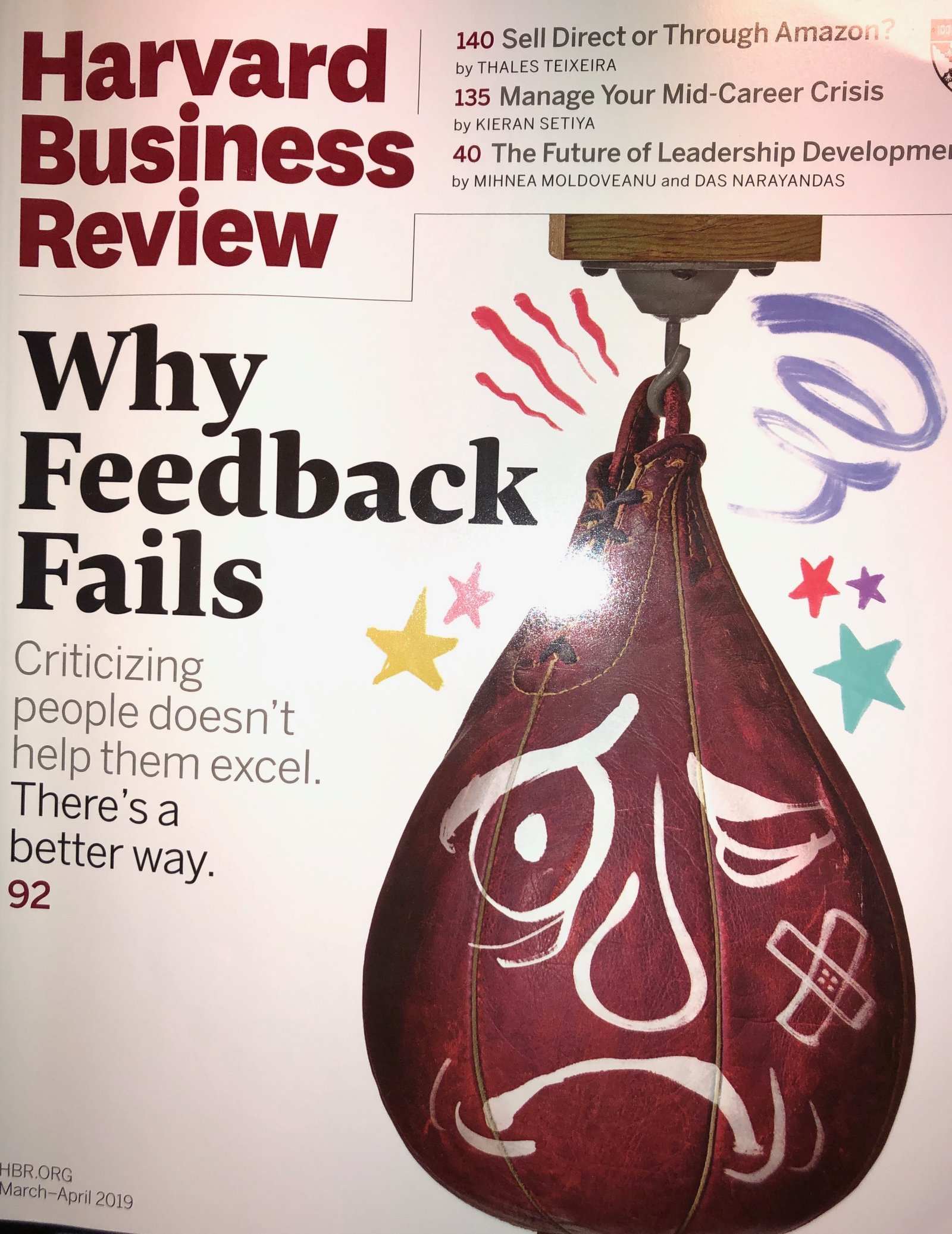
You can find feedback in any word or behaviour. However, providing intentional feedback requires using all your senses and understanding to ensure it is not considered criticism. Avoid these pitfalls and apply these "must-do's".