Does executive coaching work? The short answer is yes — with conditions. A growing body of peer-reviewed research confirms significant, measurable effects across performance, behavioral change, and leadership outcomes. The harder question is how you know when it is working in your organization. This article examines the evidence, exposes the limits of widely cited ROI claims, and outlines what a rigorous evaluation framework actually looks like.
In coaching supervision, I return to three questions that keep me sharp as a coach — and grounded as a leader. They are not about tools or techniques, but about self-awareness, restraint, and the courage to slow down when speed is expected. These reflections matter not only for coaches, but for every leader navigating complexity.
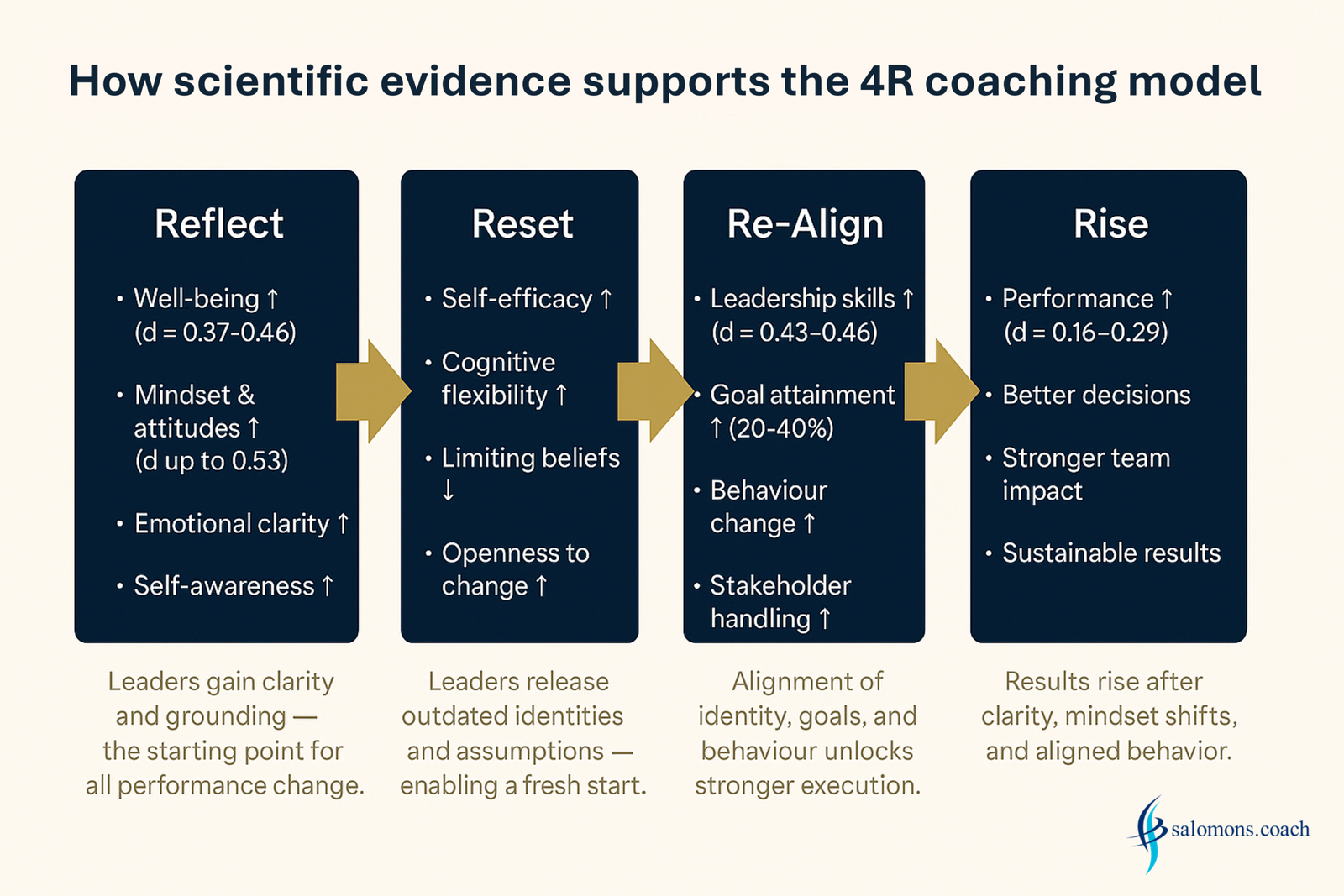
The latest scientific research on workplace coaching shows a clear, measurable pattern: meaningful change happens in four stages. Leaders first gain emotional clarity and self-awareness, then release limiting beliefs, realign their behaviour and skills with a stronger identity, and finally see measurable performance improvements. This progression mirrors the 4R Model (Reflect–Reset–Re-Align–Rise™). Backed by meta-analyses and randomized controlled trials, the evidence confirms that sustainable leadership performance begins with inner clarity—not with KPIs.
Ask “What’s the ROI of coaching?” and you’ll get metrics: performance KPIs, engagement scores, 360-feedback. Useful — yet incomplete. What often remains unseen is the inner transformation: increased self-awareness, emotional regulation, and deliberate leadership behavior. Real-world stories — a leader choosing to listen rather than control; a team feeling more trusted — reveal the essence of lasting change. This blend of data and narrative gives the truest picture of progress. Discover how embracing nuance, investing in reflection, and using stories can elevate your organization’s coaching journey from mere intervention to profound transformation. Curious how to start your own development journal?
Over the past decade, Harvard Business Review has shown that coaching is not about fixing people—it's about helping leaders rise. HBR highlights coaching as a collaborative partnership that strengthens self-awareness, emotional intelligence, and the ability to navigate complexity. From executive development to performance and long-term growth, the research is clear: coaching improves leadership behavior, deepens team trust, and creates healthier, more resilient organizations. At its core, effective coaching is built on listening, reflective questioning, aligned goals, and honest accountability—exactly the foundations of modern leadership in a VUCA world.
Effectiveness of Coaching vs Leadership Development Programs. Organizations invest heavily in leadership development, spending up to 5% of annual revenue on training programs, yet only 11% of executives report these initiatives meet expectations. Research shows leadership training can boost job performance by 20%, but challenges remain in achieving sustained results.
Leadership coaching, on the other hand, offers a personalized approach, boasting a 96% satisfaction rate and an ROI six times its cost. It excels in fostering behavioral changes and leadership effectiveness.
Combining these approaches integrates cost-efficient group learning with high-ROI individual coaching, yielding powerful results. Let’s explore how this can work for your organization.
Setting boundaries in coaching can be challenging because clients may expand the scope due to anxiety, a lack of clarity, or a fear of failure. They might avoid difficult goals or seek validation by discussing multiple topics. Addressing these underlying psychological factors helps maintain focus and ensure progress.
Co-Active Coaching is a transformative approach that focuses on the whole person, not just their goals. It balances structure and flexibility, fostering self-awareness, authenticity, and meaningful action. This method helps clients grow both personally and professionally by addressing their emotional, psychological, and spiritual needs, while empowering them to take concrete steps toward their goals.
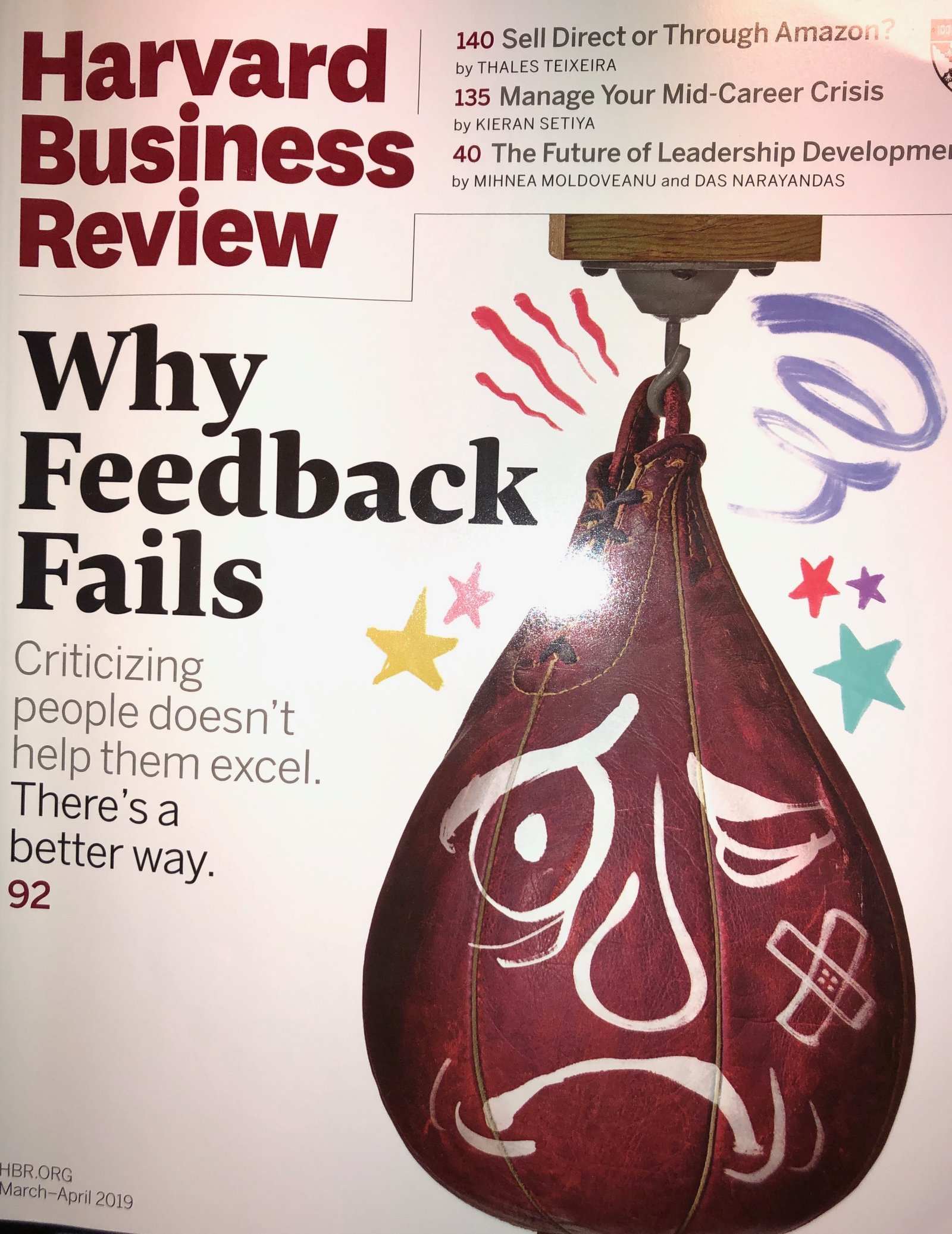
You can find feedback in any word or behaviour. However, providing intentional feedback requires using all your senses and understanding to ensure it is not considered criticism. Avoid these pitfalls and apply these "must-do's".