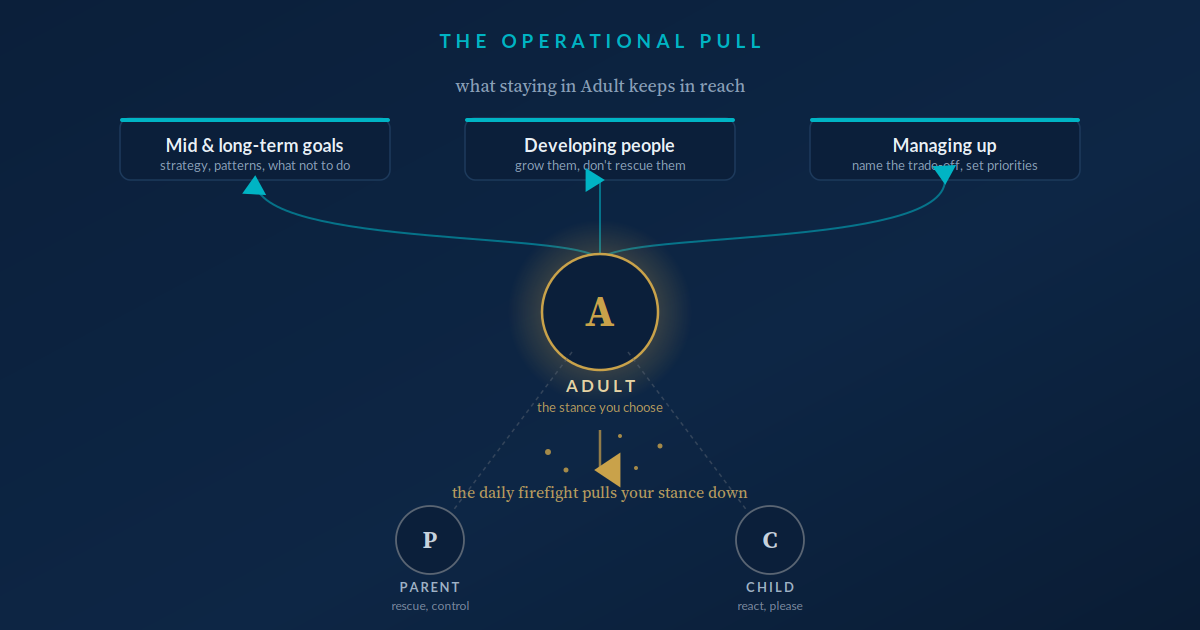
Every leader knows the day that vanishes into ad-hoc fires. The real cost isn't lost hours, it's a hijacked stance. A transactional analysis lens on staying strategic, developing people, and managing up when everything is urgent.
In high-pressure leadership environments, silence is often mistaken for indecision. Yet the most important insights rarely emerge in the middle of noise. They surface afterwards, when reaction stops and space is created to think.
Drawing from decades of leadership experience and supported by neuroscience, this article explores why silence is not the absence of leadership, but a condition for it. Silence reduces cognitive load, calms the nervous system, activates reflective brain networks, and supports clarity, creativity, and better decision-making.
You will learn what silence actually does to the brain, why different forms of silence serve different purposes, and how long silence needs to last to be effective, from brief pauses between meetings to deeper periods of reflection.
In a world of constant stimulation, silence has become a strategic capability. Not as withdrawal, but as a deliberate leadership discipline, especially when complexity and...
Busyness has become a badge of honor, but it rarely leads to impact or well-being. In this post, Jan Salomons explores why being busy is more often a habit than a necessity — and how leaders can shift from managing time to managing focus. In a VUCA world, where speed and complexity dominate, clarity and reflection become the real leadership differentiators. Learn how to move from motion to meaning through self-awareness, attention, and purpose, and discover why slowing down might be the smartest move you can make.
Procrastination is a common challenge many face, often leading to stress and decreased productivity. Despite knowing its negative effects, we frequently delay tasks. This behavior is linked to our brain's limbic system, which triggers a "fight, flight, or freeze" response when confronted with stressful tasks, prompting avoidance to alleviate discomfort. To break this cycle, it's essential to address the emotional triggers behind procrastination. Strategies include recognizing these emotional responses, breaking tasks into smaller, manageable steps, setting specific goals and deadlines, and practicing self-compassion. By understanding the emotional and neurological factors contributing to procrastination, we can develop effective strategies to manage it, leading to improved productivity and well-being.
Setting boundaries in coaching is essential for maintaining focus and ensuring progress. When clients consistently expand the coaching scope, it often stems from underlying emotions such as uncertainty or anxiety. To manage this, I set clear goals and revisit them regularly, framing the importance of staying aligned for effective results. If new topics arise, I acknowledge them while steering the conversation back to agreed priorities. Offering additional sessions or structured scope expansion options provides flexibility without losing sight of original objectives. This balance ensures productive and results-oriented coaching sessions while respecting the client's evolving needs. I always try to keep my coaching razor focused!
The Real Reason You Feel So Busy (And What to Do About It), In this TED talk, Dorie Clark explains that feeling perpetually busy is often a result of poor prioritization rather than a lack of time. She emphasizes the importance of setting boundaries and saying “no” to non-essential tasks to focus on meaningful work, ultimately leading to greater fulfillment and productivity.
Are you tired of feeling like there aren’t enough hours in the day, constantly chasing the clock, and yet still feeling unfulfilled? If so, you’re not alone. Most people believe the key to success is managing time. But here’s the truth: You can’t manage time. You can only manage yourself. And that’s exactly where I come in as a coach.
This is how a leader can go on a long summer holiday without concerns: it's essential to prepare the organization to operate smoothly in their absence. A structured approach to the activities leaders should undertake.