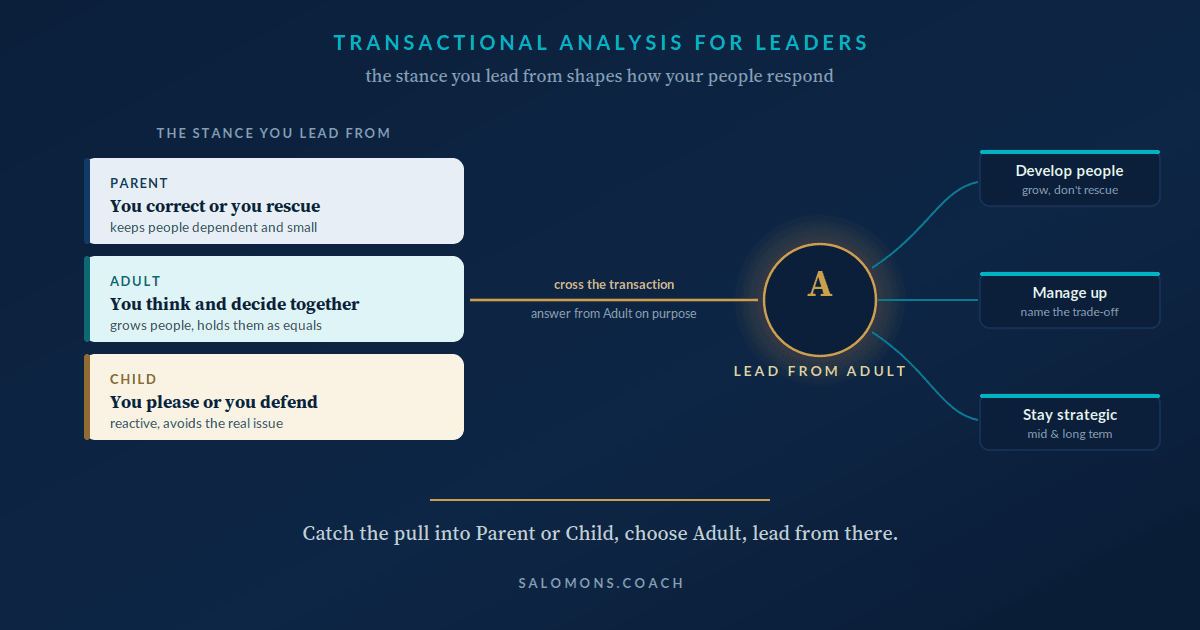
A clear, deeper introduction to transactional analysis: where Eric Berne's Parent, Adult, Child model comes from, the psychology of why we shift between stances, how it connects to Kahneman, Rogers, and psychological safety, and how to apply it in everyday leadership.
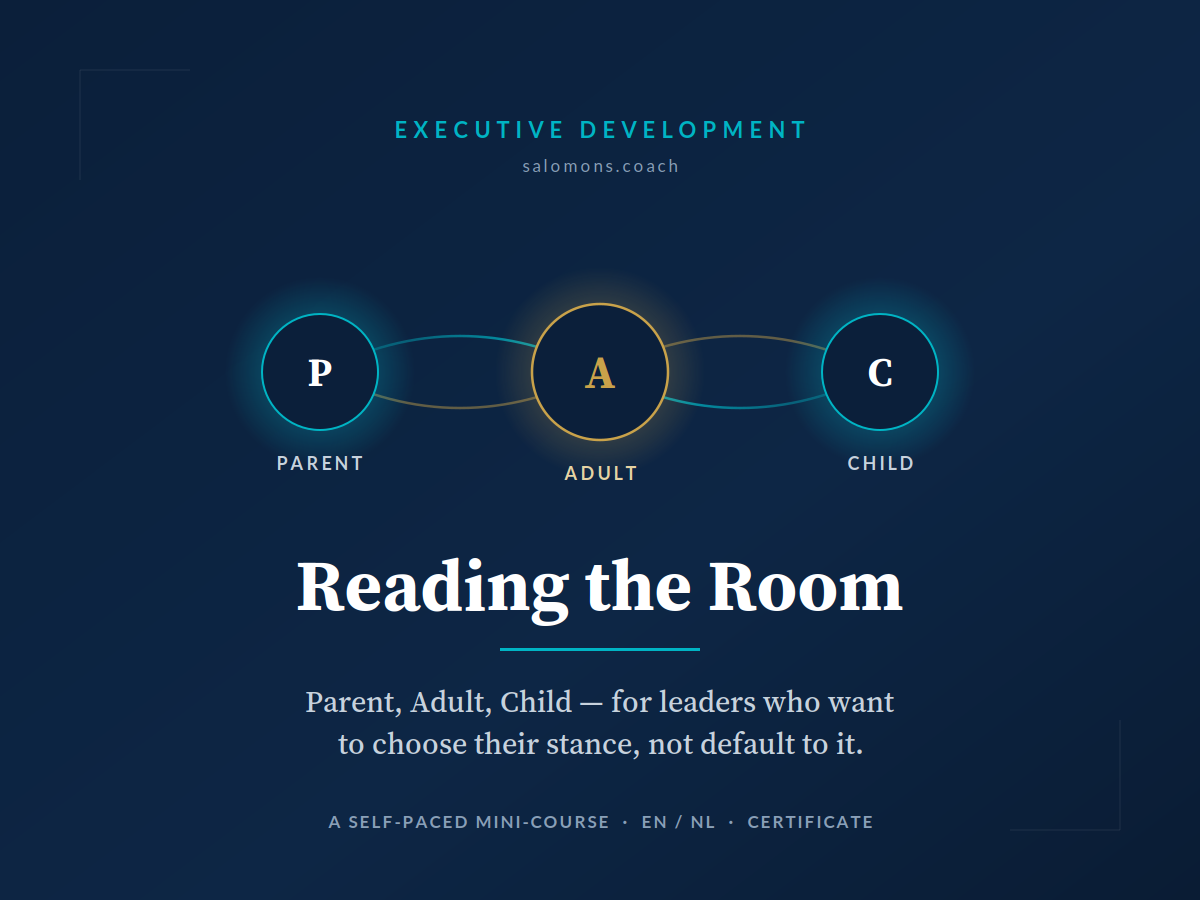
Parent Adult Child leadership explains why the mode you default to — Parent, Adult or Child — quietly shapes whether your people grow or stay dependent.
trong emotions aren’t the enemy — they’re leadership data. In today’s volatile and uncertain world, emotions like frustration or fear often mask deeper values and unmet needs. Reframing helps leaders decode those emotions, turning tension into insight and pressure into performance. In this post, Jan Salomons explores how emotional intelligence and reframing allow leaders to stay grounded in a VUCA world — transforming reaction into reflection, and reflection into purposeful action. Learn how to work with, not against, your emotions and use them as a catalyst for self-leadership and organizational growth.
Strong emotions aren’t the problem — how we frame them is. In today’s volatile and uncertain world, leaders face constant pressure that triggers frustration, fear, or doubt. Reframing helps transform those emotions into clarity, courage, and connection. Instead of reacting, leaders learn to pause, reflect, and uncover the message behind the feeling. In this post, Jan Salomons shares how reframing turns emotion into data, reaction into reflection, and pressure into leadership strength — a crucial skill for leading in a VUCA world. Learn how to make emotions your ally and navigate complexity with self-awareness and purpose.
Procrastination is a common challenge many face, often leading to stress and decreased productivity. Despite knowing its negative effects, we frequently delay tasks. This behavior is linked to our brain's limbic system, which triggers a "fight, flight, or freeze" response when confronted with stressful tasks, prompting avoidance to alleviate discomfort. To break this cycle, it's essential to address the emotional triggers behind procrastination. Strategies include recognizing these emotional responses, breaking tasks into smaller, manageable steps, setting specific goals and deadlines, and practicing self-compassion. By understanding the emotional and neurological factors contributing to procrastination, we can develop effective strategies to manage it, leading to improved productivity and well-being.
Setting boundaries in coaching can be challenging because clients may expand the scope due to anxiety, a lack of clarity, or a fear of failure. They might avoid difficult goals or seek validation by discussing multiple topics. Addressing these underlying psychological factors helps maintain focus and ensure progress.
Embracing the Upside of Strong Emotions: A Practical Guide to Reframe Your Perspective Introduction Emotions are an integral part of the human experience. They shape our interactions, decisions, and overall well-being. Often, we tend to associate strong emotions like anger,
Introduction In the fast-paced and demanding world of work, it’s not uncommon to experience strong emotions that can either propel us forward or hinder our progress. Emotions are an integral part of being human, and rather than viewing them as