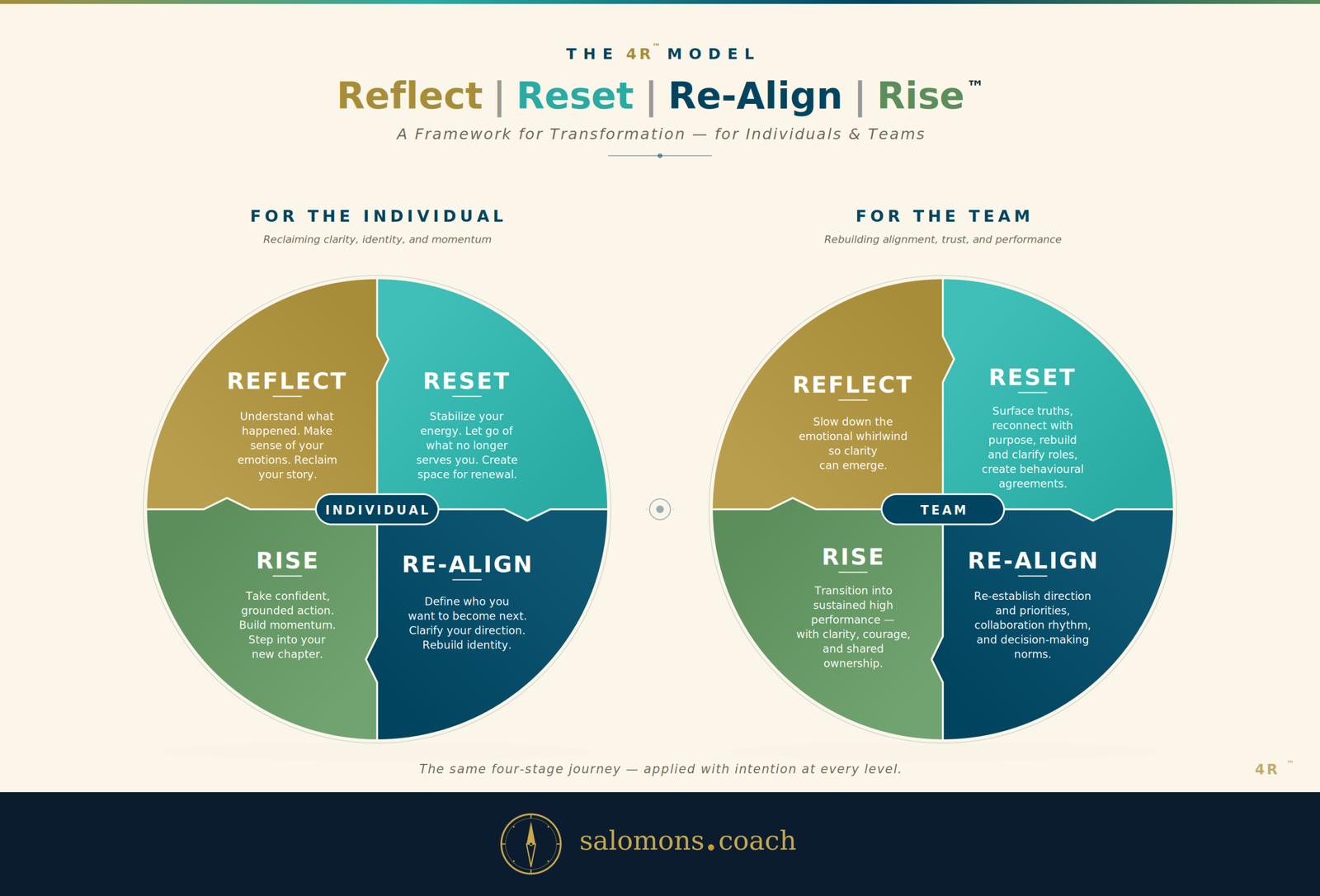
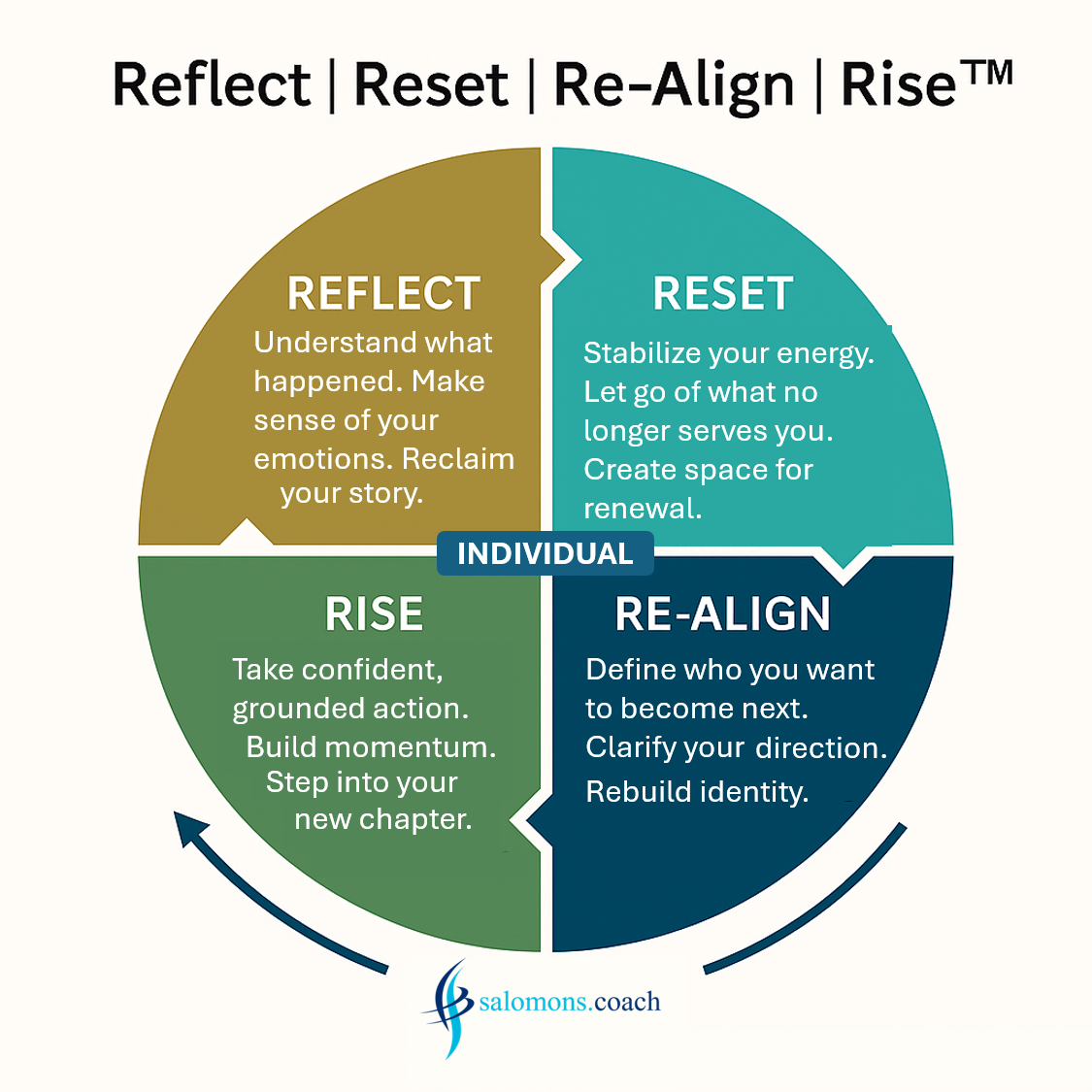
Setbacks demand action. Reflection demands stillness. The first stage of the 4R™ Model asks you to do the harder thing — stay with what happened long enough to make sense of it. Why Reflect is the foundation every transformation is built on.
How does one person actually change the world? Not through grand gestures, but through shifts in thinking and behavior that ripple outward. This article explores the science behind societal change, from evolutionary psychology to systems thinking. It shows how mental models shape behavior, how small choices scale into cultural shifts, and why institutions tend to follow rather than lead. For leaders, the implication is clear: real change starts with how individuals see their role in the system. When enough people act differently, culture moves—and with it, performance, policy, and outcomes.
Redundancy in the Netherlands is legally structured yet psychologically disruptive. Even with strong protections and the VSO process, employees experience identity loss, uncertainty and emotional turbulence. Leaders often underestimate this impact—and the effect on those who remain. Research shows that structured transition support significantly improves outcomes. The 4R Model—Reflect, Reset, Re-Align, Rise—helps individuals stabilize, rebuild identity and re-enter the labor market with clarity and confidence. Increasingly, Dutch organizations engage external coaches during the VSO period to support departing managers and sustain trust, well-being and business continuity. Redundancy is not an ending—it is an inflection point.
The 4R Model—Reflect, Reset, Re-Align, Rise™—emerged from more than 35 years of leading and coaching in complex, high-pressure environments, combined with solid foundations in transition theory, emotional intelligence, identity work, and psychological safety. Supported by globally respected research (including HBR), the model provides a clear, humane framework that helps people navigate redundancy, burnout, and major career shifts. Instead of treating change as a purely logistical process, 4R guides the deeper psychological journey: understanding what’s happening internally, letting go of old identities, rebuilding direction, and rising with confidence and sustainable momentum. It turns disruption into structured growth.
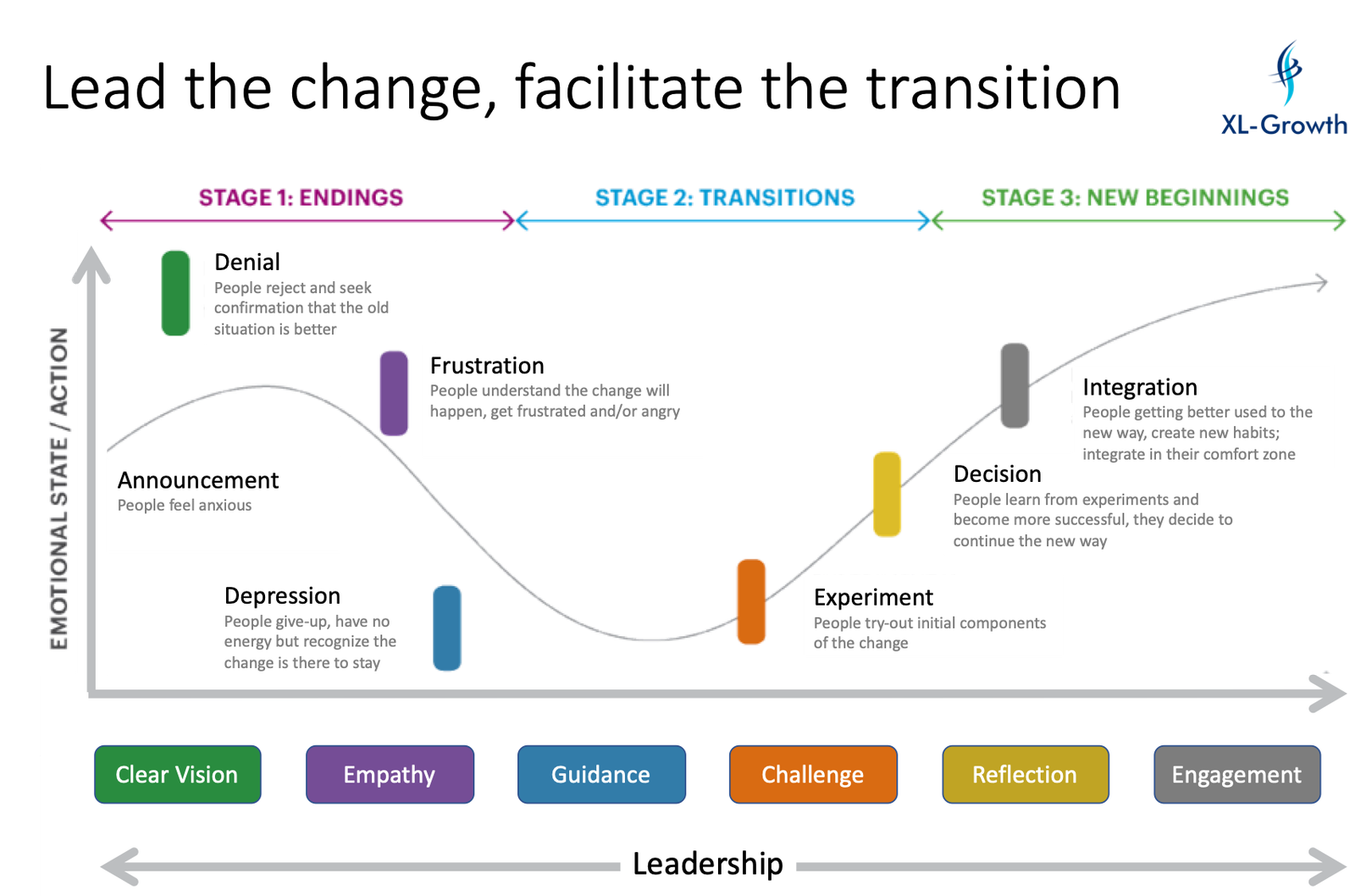
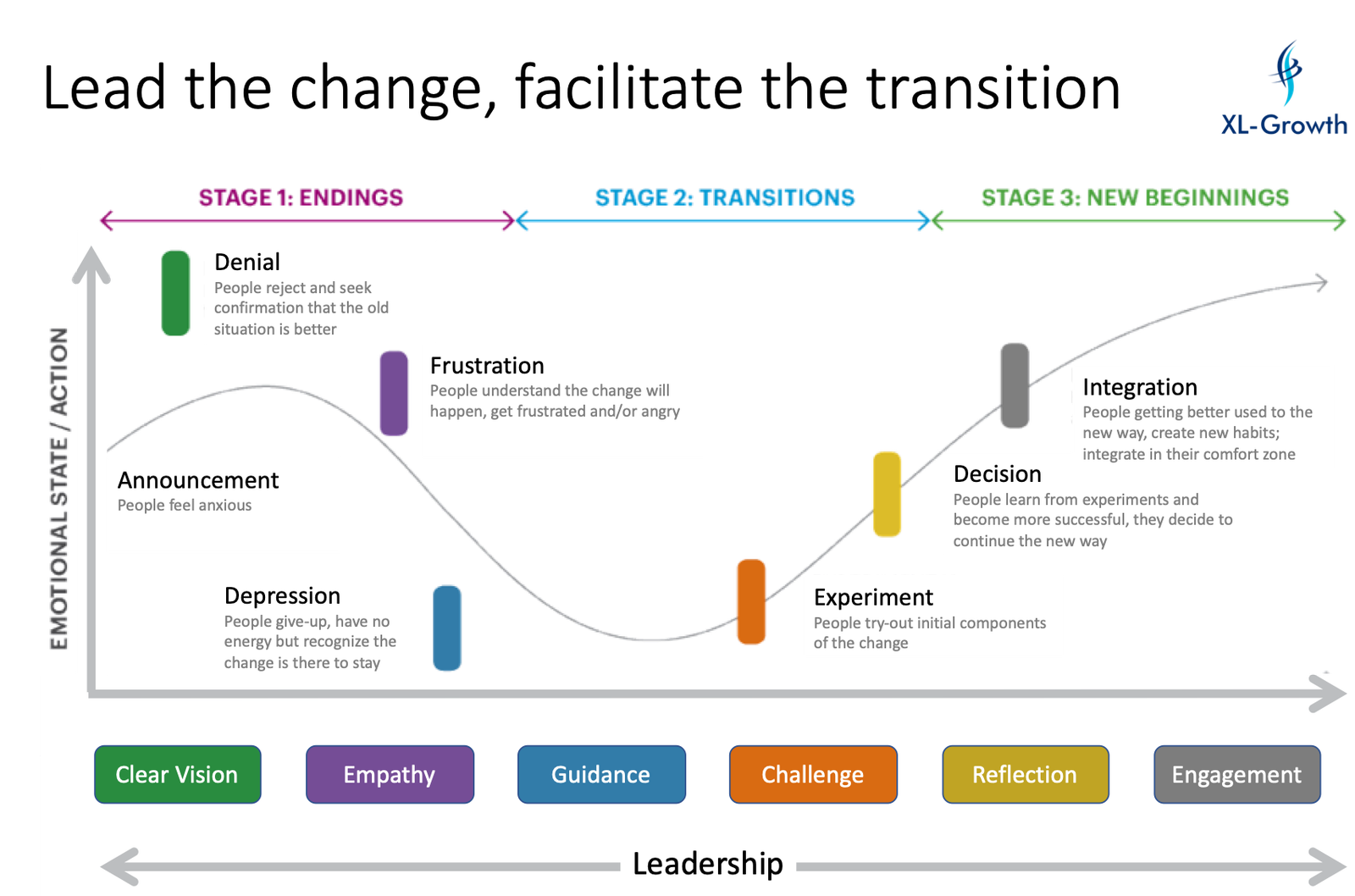
Change doesn’t fail because of poor plans — it fails because people haven’t made the psychological transition. In this article, Jan Salomons explores his formula for successful change, combining shared vision, urgency, leadership, learning, and capacity. Drawing on his decades of experience and his VUCA leadership approach, he explains how leaders can guide teams through endings, transitions, and new beginnings while maintaining trust and connection. Learn why managing change isn’t enough — leading transition is what truly drives sustainable transformation.
Culture change is often misunderstood as mere slogans or posters, but true transformation begins with leadership behavior and systemic redesign. At TransLog, a European logistics organization, leaders discovered that their performance issues stemmed not from broken processes, but from a flawed behavioral system. By mapping leadership routines and co-creating a new behavior system, they shifted from siloed thinking to collaborative action. The results? Improved performance metrics and a culture that became integral to operations. Explore how intentional choices and structural changes can redefine your organization’s future and make culture a powerful business enabler.
Leading change means facilitating transition. Learn how to meet people where they are, and how they can meet you where you are as leader. Combining existing models for change to one unique model. Proven in practice.
Undertaking the fundamental shift from a traditional organization designed for the industrial economy to an agile model designed for today’s digital economy. A new form of organization that enables innovation, collaboration, and value creation at incredible speed, scale, and impact.
Today we launched our newly developed leadership development programme, “making agile work”. Agile organisations struggle a lot, we have spoken to more than 20 large organisations in the Netherlands and can only conclude: we are not even half way there.
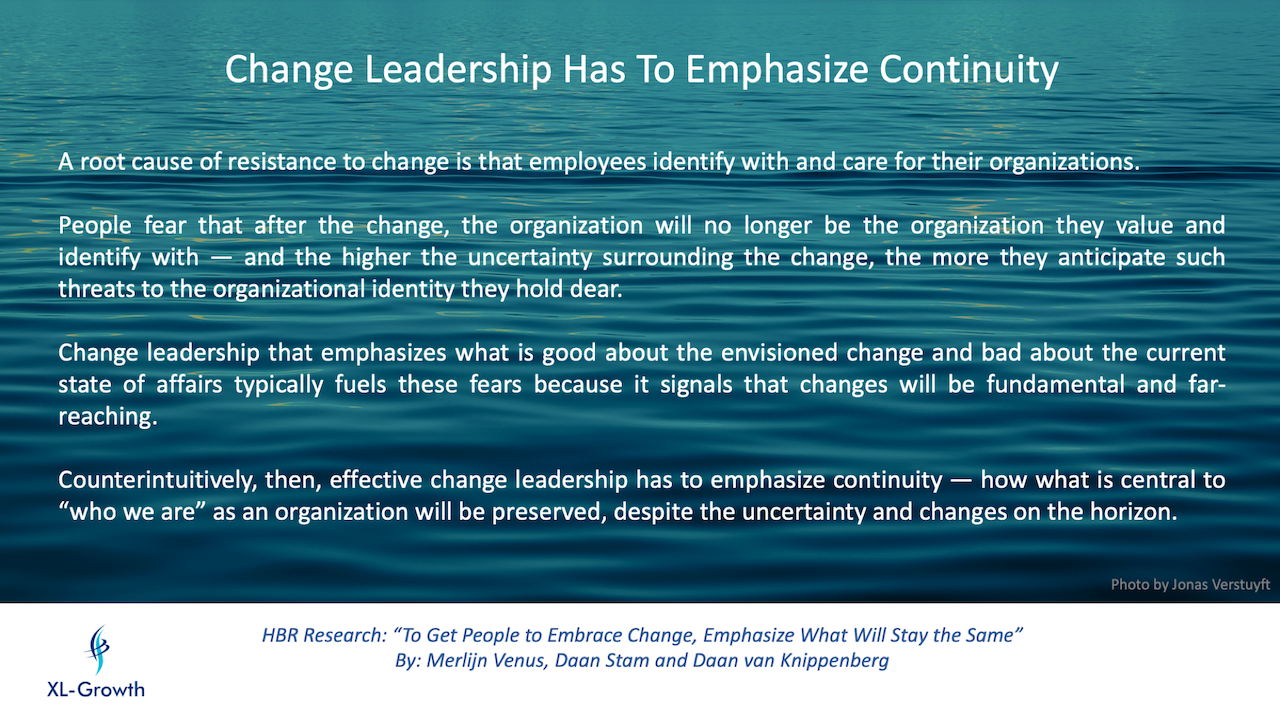
Change leadership is about understanding culture, so it’s really about understanding people and how they work together. Focusing on the change only is ignoring what people come to work for every day, what makes them stay in the organisation and