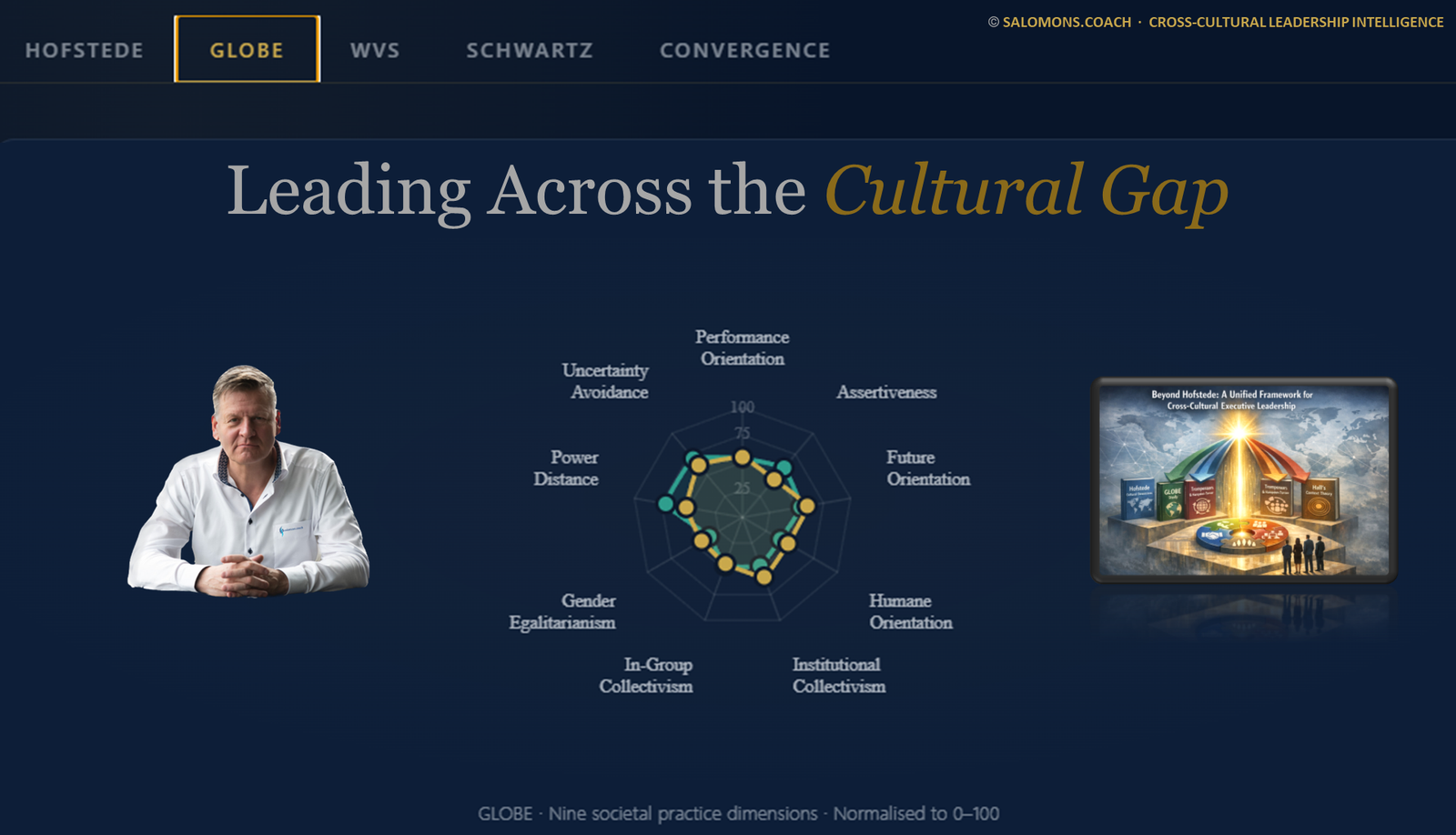
Most cross-cultural frameworks tell you how cultures differ. The GLOBE Study — 62 societies, 17,000 managers, two decades of research — tells you what kind of leader each culture is actually willing to follow. That is a different question, and for anyone in an executive role, a more useful one.
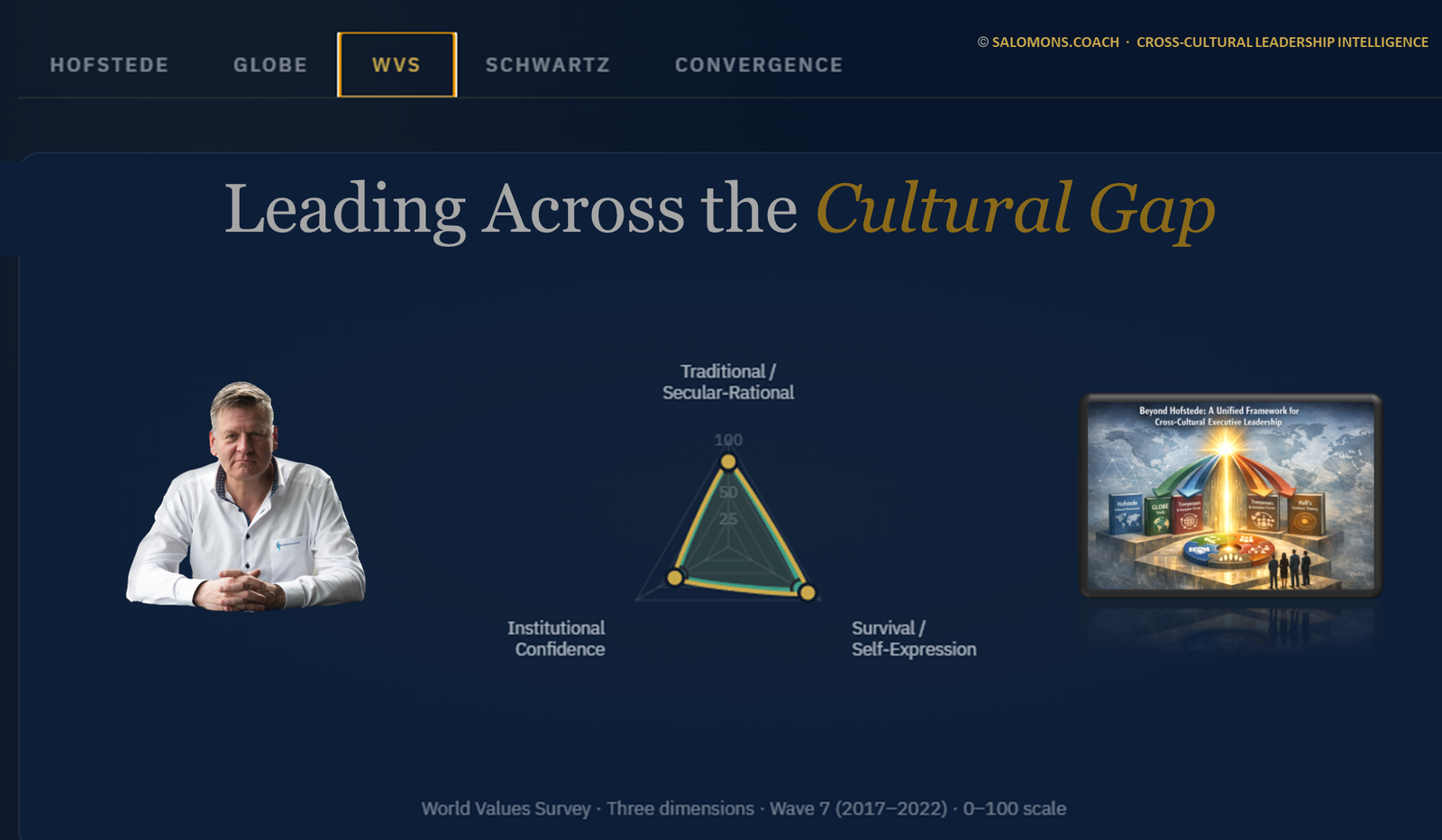
Most cross-cultural frameworks tell you how cultures differ at work. The World Values Survey reveals something deeper: what people fundamentally believe they are working for, whether they extend default trust to institutions or require it to be earned personally, and whether autonomy or security is their more basic professional motivation. These are the values that take generations to shift.
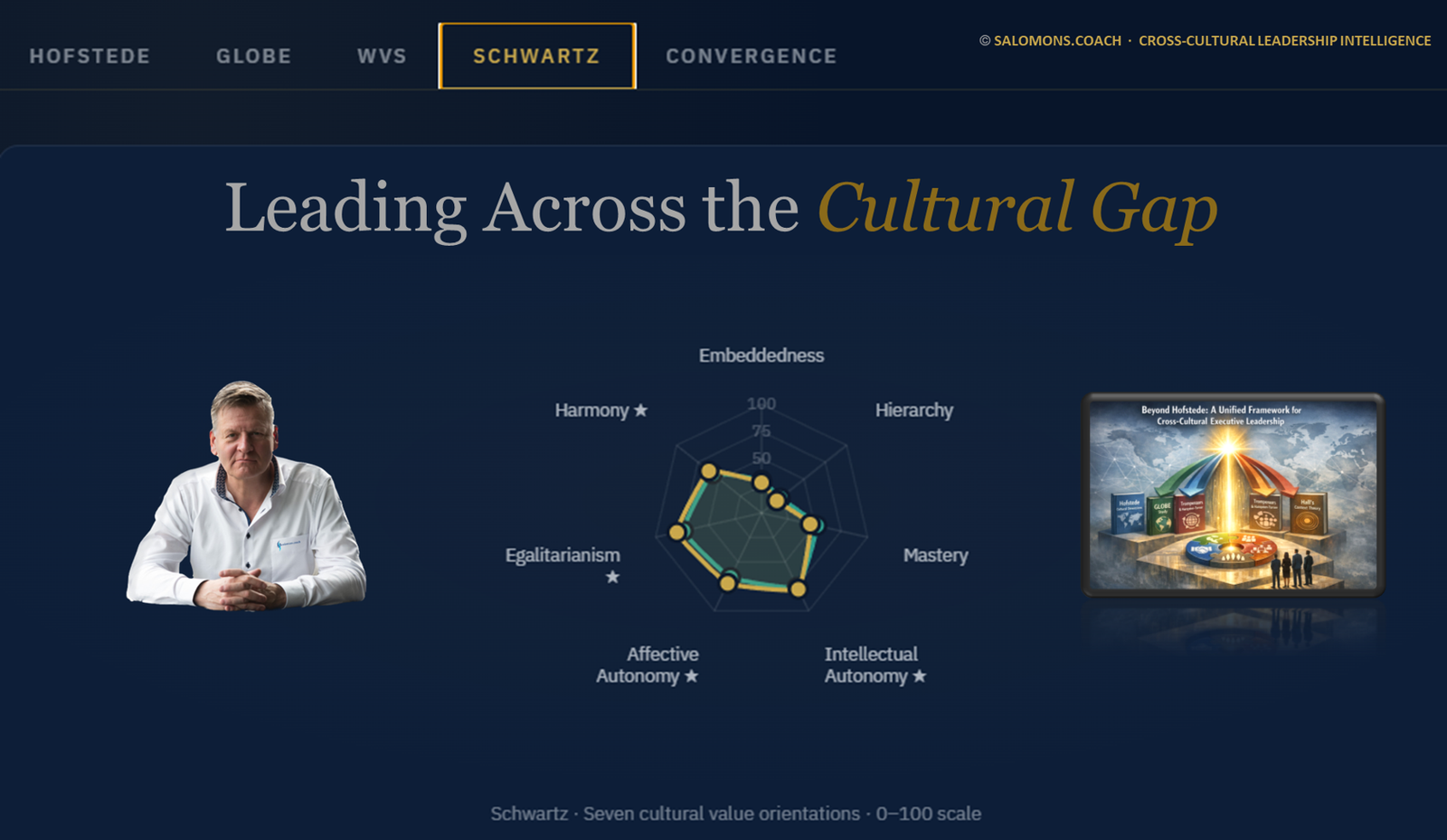
Every cross-cultural framework has blind spots. Schwartz measures four cultural dimensions — Embeddedness, Egalitarianism, Intellectual Autonomy, Affective Autonomy — that have no equivalent in Hofstede or GLOBE. If you work without them, you are missing a significant part of the cross-cultural picture. In some country pairings, the most operationally important gaps in the entire analysis.
Does executive coaching work? The short answer is yes — with conditions. A growing body of peer-reviewed research confirms significant, measurable effects across performance, behavioral change, and leadership outcomes. The harder question is how you know when it is working in your organization. This article examines the evidence, exposes the limits of widely cited ROI claims, and outlines what a rigorous evaluation framework actually looks like.
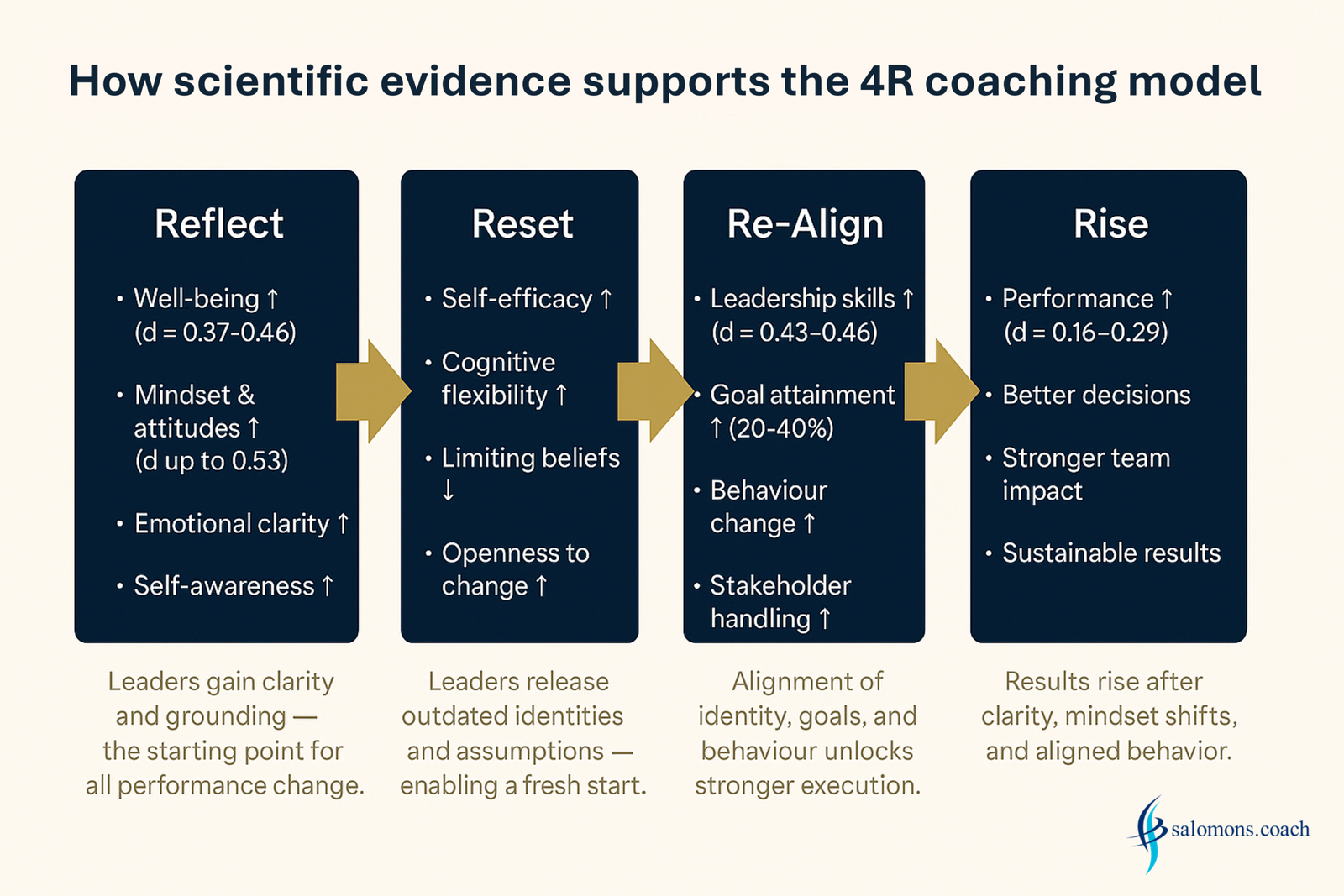
The latest scientific research on workplace coaching shows a clear, measurable pattern: meaningful change happens in four stages. Leaders first gain emotional clarity and self-awareness, then release limiting beliefs, realign their behaviour and skills with a stronger identity, and finally see measurable performance improvements. This progression mirrors the 4R Model (Reflect–Reset–Re-Align–Rise™). Backed by meta-analyses and randomized controlled trials, the evidence confirms that sustainable leadership performance begins with inner clarity—not with KPIs.
Discover the true essence of Ikigai—far beyond the popular Venn diagram. Rooted in Japanese culture, Ikigai is about finding joy and purpose in the small, meaningful moments of everyday life. Learn how this concept has been misunderstood and how embracing its authentic meaning can lead to a more fulfilling existence.
Ask “What’s the ROI of coaching?” and you’ll get metrics: performance KPIs, engagement scores, 360-feedback. Useful — yet incomplete. What often remains unseen is the inner transformation: increased self-awareness, emotional regulation, and deliberate leadership behavior. Real-world stories — a leader choosing to listen rather than control; a team feeling more trusted — reveal the essence of lasting change. This blend of data and narrative gives the truest picture of progress. Discover how embracing nuance, investing in reflection, and using stories can elevate your organization’s coaching journey from mere intervention to profound transformation. Curious how to start your own development journal?
Over the past decade, Harvard Business Review has shown that coaching is not about fixing people—it's about helping leaders rise. HBR highlights coaching as a collaborative partnership that strengthens self-awareness, emotional intelligence, and the ability to navigate complexity. From executive development to performance and long-term growth, the research is clear: coaching improves leadership behavior, deepens team trust, and creates healthier, more resilient organizations. At its core, effective coaching is built on listening, reflective questioning, aligned goals, and honest accountability—exactly the foundations of modern leadership in a VUCA world.