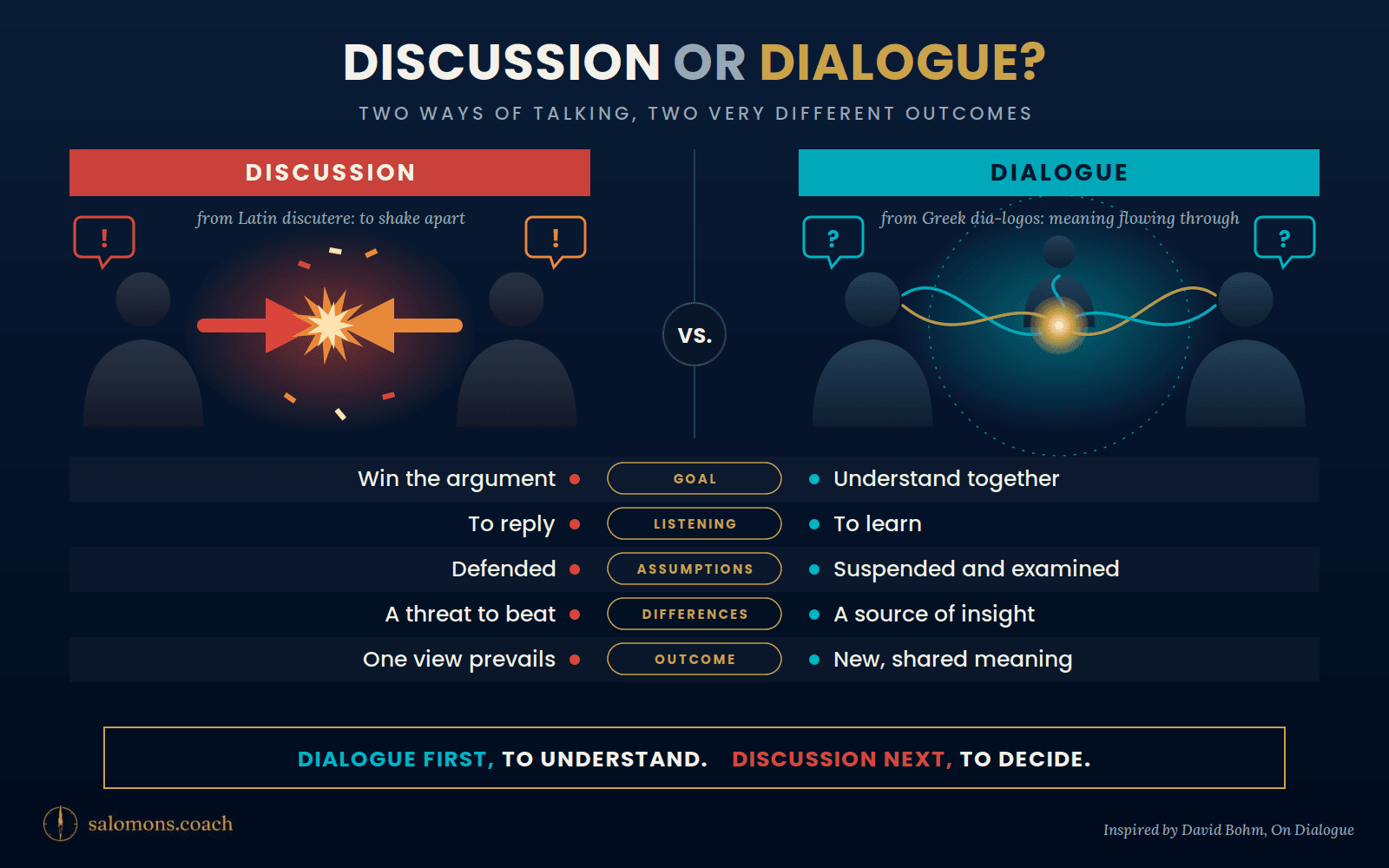
A leadership team that debates robustly can still keep reopening the same decisions. Drawing on a coaching case with a CEO, this post explains the difference between discussion and dialogue, what it costs a team to only discuss, and the practices that help senior leaders think together before they decide. It also shows how team coaching turns dialogue from a clumsy experiment into the way a team works.

When leadership conversations become repetitive or defensive, the real problem may not be the content. This post explores how relationship and structure shape communication—and how leaders can use the three-layer communication model to create greater clarity, trust and more productive dialogue.
Almost every manager has that one person — every molehill a mountain, every meeting hijacked. Labelling them a "drama queen" puts you in the passenger seat. This is the practical playbook I walk managers through: stop funding the drama, redirect to ownership, and lead with a steady hand.
Blame that circles the table, a colleague who "can't," a manager who fixes everything and resents it — the Drama Triangle rarely looks like a crisis, but it stalls decisions and drains your best people. Here's how leaders spot it, step into the Winner's Triangle, and take the wheel.
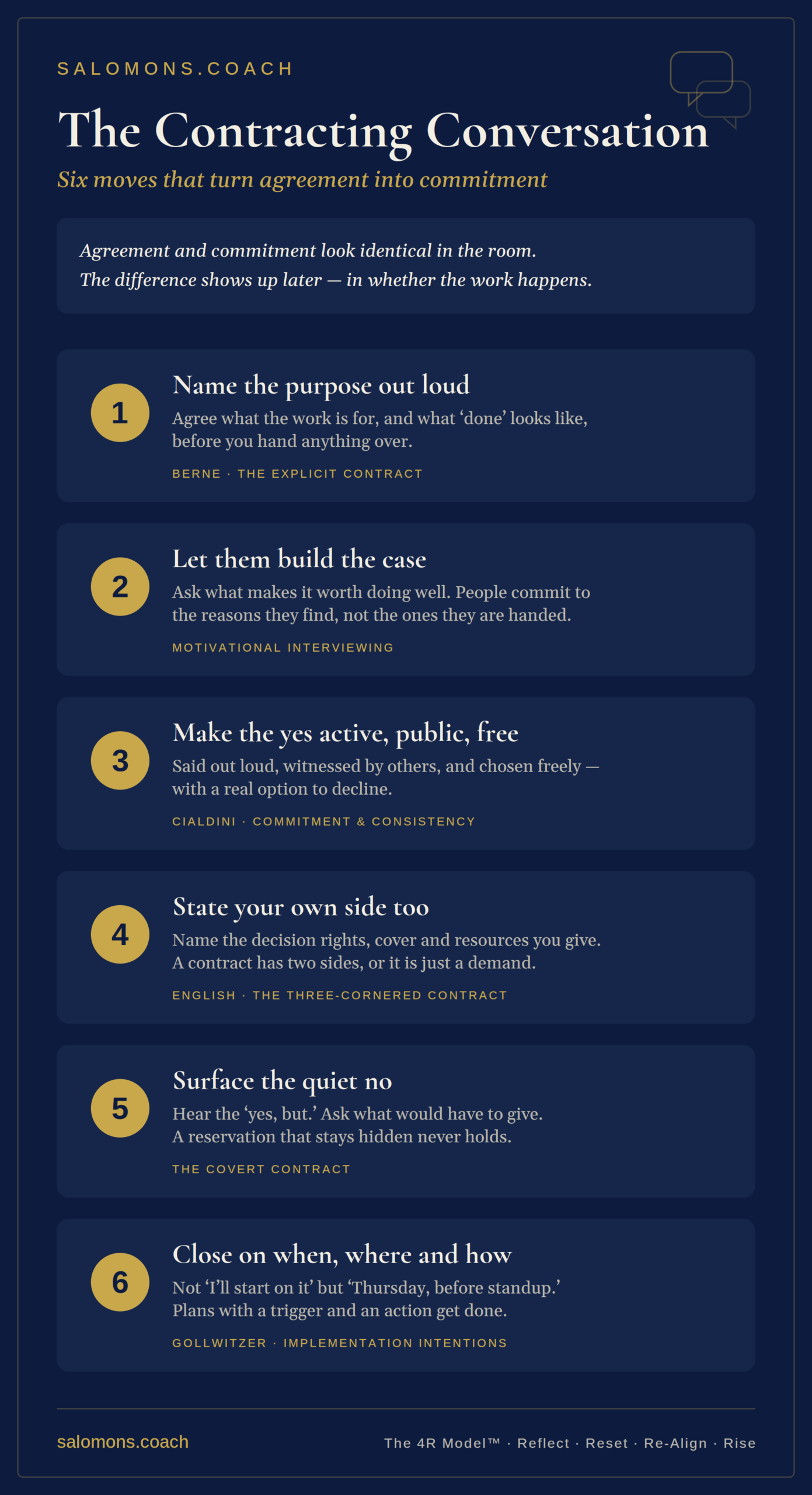
Getting someone to say yes is easy. Getting a yes that survives your absence is the real work of leadership. Six research-backed moves that turn polite agreement into commitment people genuinely own.
Excellent leadership dialogue is not about open discussion without boundaries. It is a disciplined practice that creates shared understanding, surfaces real differences, and leads to genuine commitment. When leaders avoid constructive conflict or rush to agreement, alignment becomes fragile and execution suffers. The strongest leadership teams invest in dialogue first, so commitment follows naturally, without the need to manage appearances.
Many leadership teams mistake agreement for commitment. When dialogue is rushed and constructive conflict is avoided, alignment becomes something that must be shown rather than earned. People comply, but they do not commit. Real alignment is built earlier, through disciplined dialogue, the courage to surface different perspectives, and the willingness to stay in the conversation until shared understanding emerges. When leaders invest in that process, commitment follows naturally. And when commitment is real, alignment no longer needs to be managed, it simply shows.