Redundancy in the Netherlands is legally structured yet psychologically disruptive. Even with strong protections and the VSO process, employees experience identity loss, uncertainty and emotional turbulence. Leaders often underestimate this impact—and the effect on those who remain. Research shows that structured transition support significantly improves outcomes. The 4R Model—Reflect, Reset, Re-Align, Rise—helps individuals stabilize, rebuild identity and re-enter the labor market with clarity and confidence. Increasingly, Dutch organizations engage external coaches during the VSO period to support departing managers and sustain trust, well-being and business continuity. Redundancy is not an ending—it is an inflection point.
Most teams don’t fail because they don’t work hard — they fail because they work too fast, too isolated, and without reflection.
When every team focuses on solving its own problems, sub-optimization becomes inevitable. Each quick fix triggers side effects elsewhere, creating a vicious cycle of ad-hoc problem-solving that drains energy and weakens performance.
Research on High-Performing Teams shows that real success depends on trust, shared purpose, and systemic alignment — not more speed.
Breaking that cycle starts when leaders and teams slow down long enough to Reflect, Reset, Re-Align, and Rise™ — together.
The Wheel of Work Life is a powerful framework that reveals what truly shapes your well-being at work. By exploring eight essential dimensions — from psychological safety and leadership to autonomy, workload, recognition, growth, collaboration, and recovery — you gain a holistic view of what energizes you and what drains you. This model helps individuals and teams understand their current reality and identify the small, meaningful steps that lead to healthier, more sustainable performance.
Struggling with a new boss? You’re not alone. This article explains the psychology behind leadership transitions, why your brain reacts the way it does, and what practical steps help you rebuild clarity and trust—especially in high-pressure operational environments.
Fear can quietly take over organizations — through silence, control, and pressure — until trust disappears and performance collapses. In this article, Jan Salomons explores how fear-based leadership emerges and what leaders can do to reverse it. He shares five practical ways to rebuild trust, including how to reframe control, invite openness, and restore team rhythm. In a VUCA world, where change and uncertainty trigger anxiety, leaders who recognize and address fear become the real stabilizers of culture. Learn how awareness, consistency, and courage can turn fear into focus and connection.
Cameras On or Off?
New research from Harvard, MIT, and Stanford reveals that virtual presence affects our energy, focus, and connection in complex ways. Cameras on foster trust, empathy, and visibility — ideal for one-on-one coaching and emotionally rich conversations. Cameras off reduce fatigue and sharpen deep listening, especially in large meetings where constant visibility causes cognitive overload. The key is not choosing one or the other, but using both intentionally. Co-create norms, use short “camera-off” reflection moments, and turn off self-view to protect attention and well-being. Presence isn’t about being seen — it’s about being fully engaged.
I still remember the moment I lost my cool. The frustration had been building for days, and during a routine meeting with one of my subordinates, I snapped. My words were sharp, my tone unkind, and the look on their face—shock and hurt—was a painful reminder that I’d crossed a line.
As leaders, we often pride ourselves on staying composed, but we’re human, too. That day, I learned the hard way that managing others starts with managing yourself. Emotional outbursts can damage trust and relationships, but they can also be a wake-up call for growth.
If you’ve faced similar challenges, it’s time to take charge of your emotions and lead with resilience. Let me guide you. Explore my coaching services or...
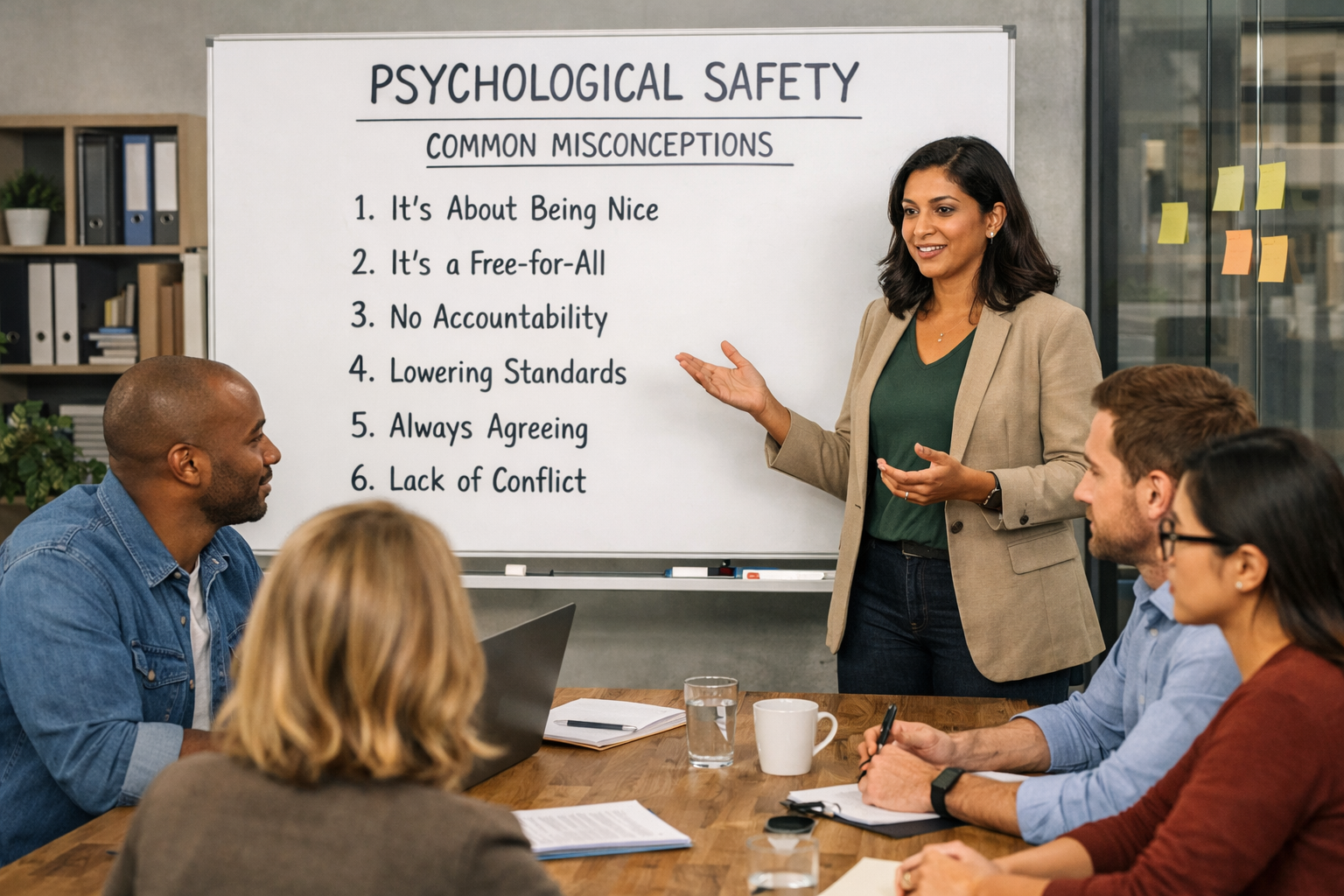
Creating an environment of psychological safety is vital for team trust and collaboration. Leaders can achieve this by modeling vulnerability, encouraging inclusive participation, establishing clear communication norms, implementing structured reflection, providing support, and monitoring team dynamics. Key strategies include sharing personal mistakes, seeking feedback, promoting open dialogue, valuing diverse perspectives, setting respectful interaction expectations, conducting regular debriefs, offering training, and assessing psychological safety. These practices empower team members to express ideas and take risks, fostering a culture of innovation and mutual respect, ultimately enhancing team performance.
Negativity can quietly erode team morale, productivity, and even a leader’s confidence. In this post, I share the story of Nathalie, an operations manager trapped in a cycle of workplace stress and unproductive venting—both in her team meetings and personal life. Together, we explored the psychological roots of negativity, its contagious effects, and strategies to break free. From reframing challenges to fostering constructive team dynamics, this journey reveals how leaders can transform negativity into solutions and growth. If workplace stress and team negativity feel overwhelming, this is your guide to leading with positivity and purpose.