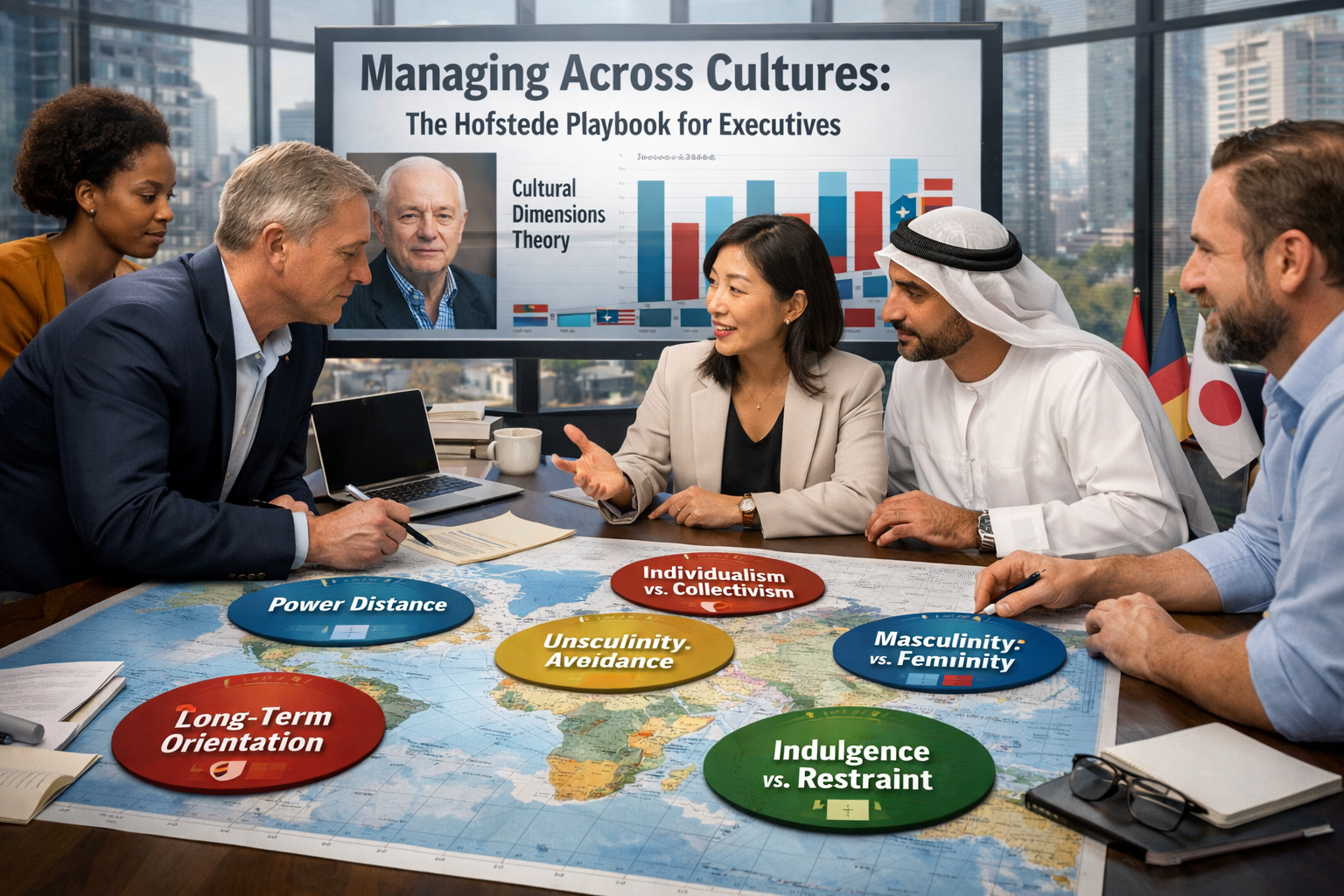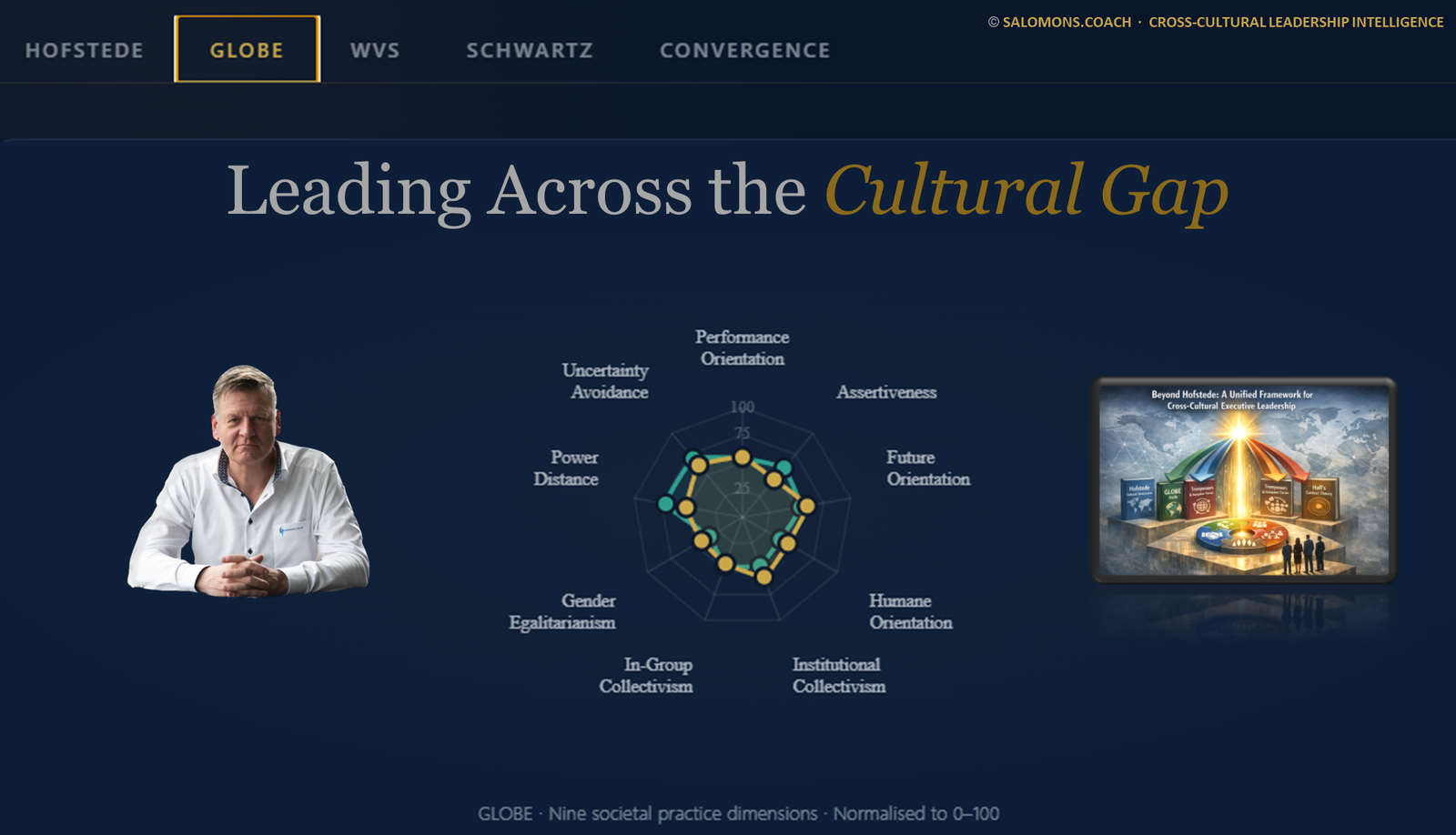
Managing across cultures is not about awareness, it is about precision.
This executive playbook translates Hofstede’s six cultural dimensions into concrete leadership actions, helping you anticipate friction, adapt your approach, and lead effectively across borders.
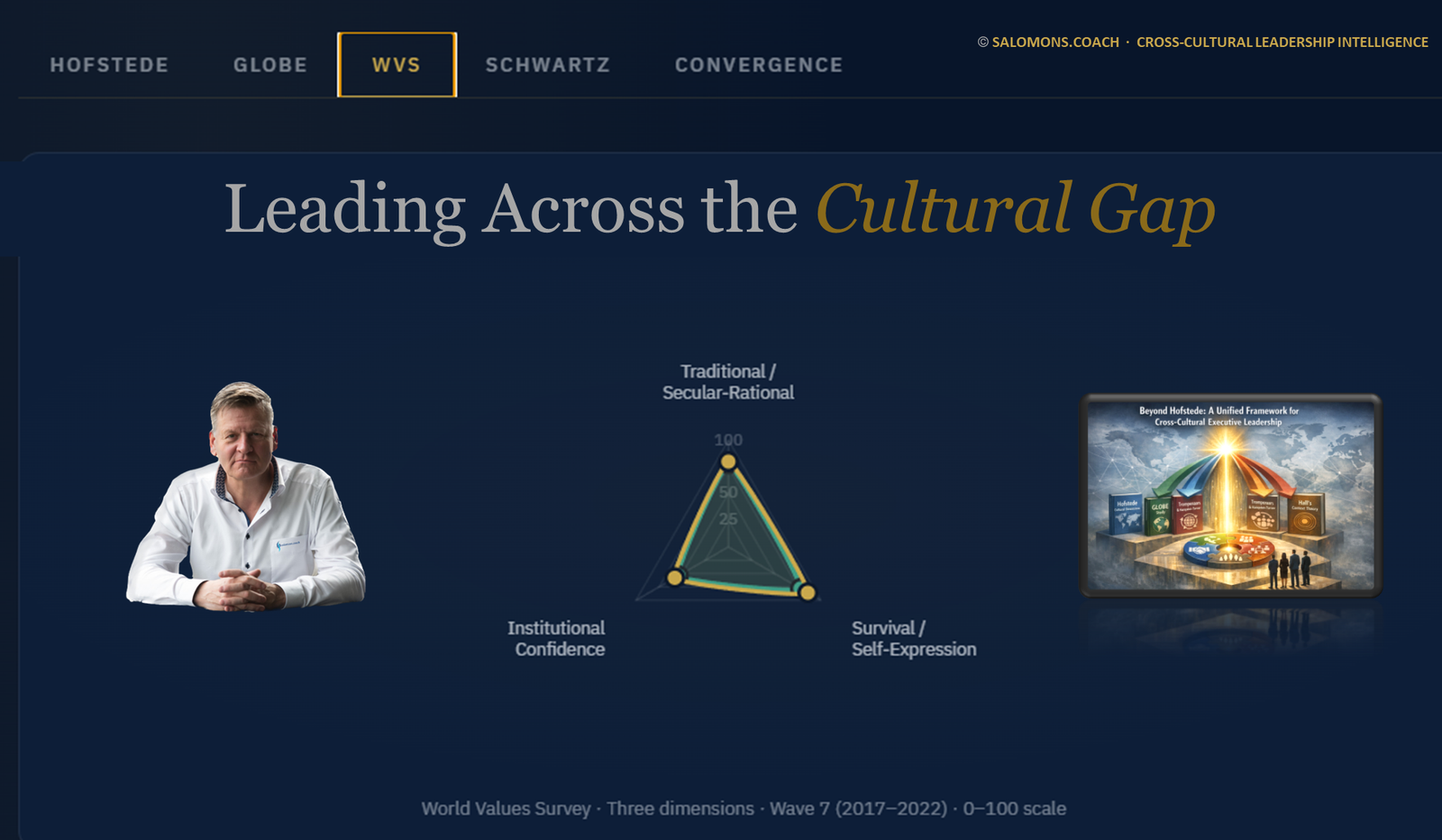
Most cross-cultural frameworks tell you how cultures differ at work. The World Values Survey reveals something deeper: what people fundamentally believe they are working for, whether they extend default trust to institutions or require it to be earned personally, and whether autonomy or security is their more basic professional motivation. These are the values that take generations to shift — and the ones that resurface under pressure even after a decade of adaptation.
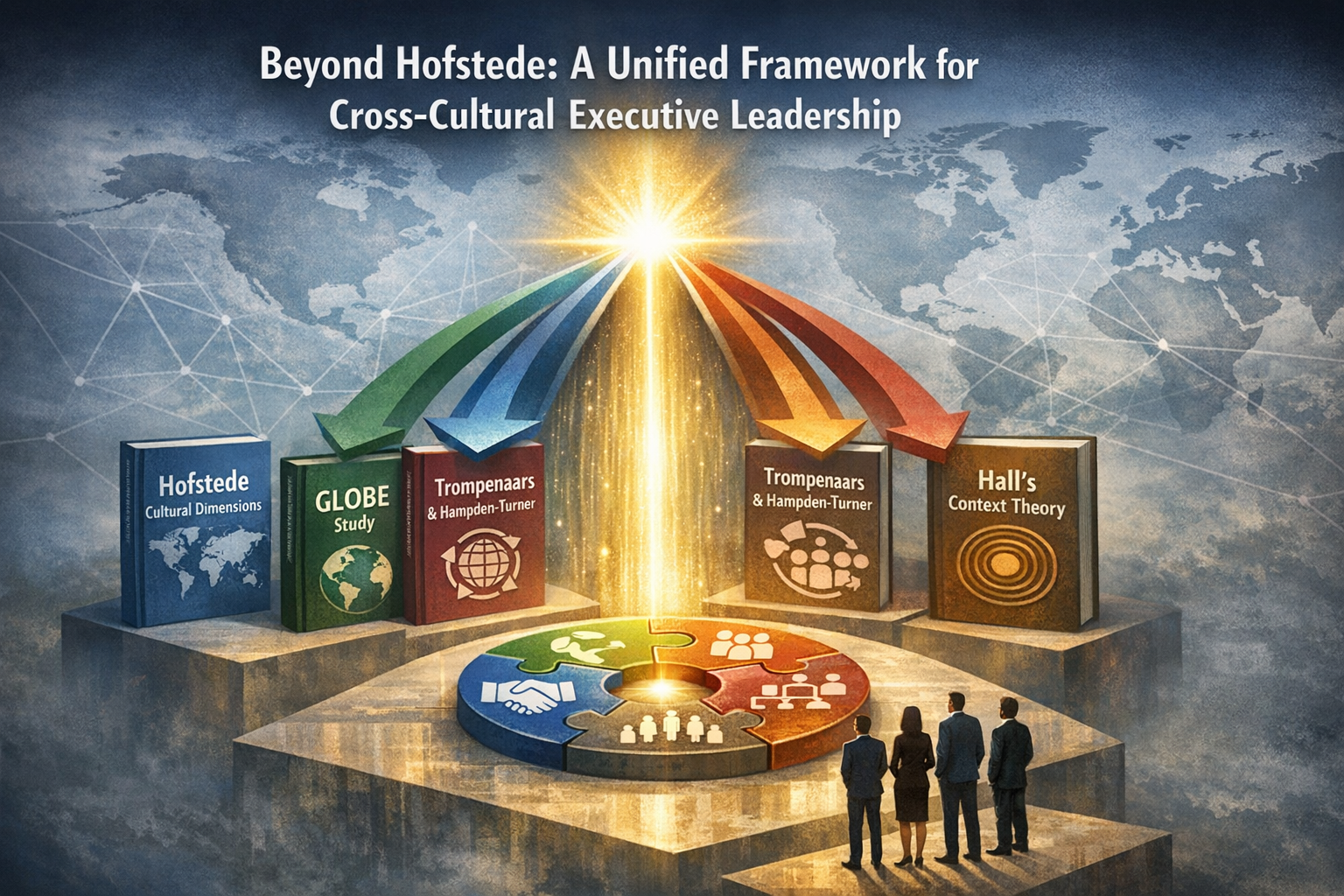
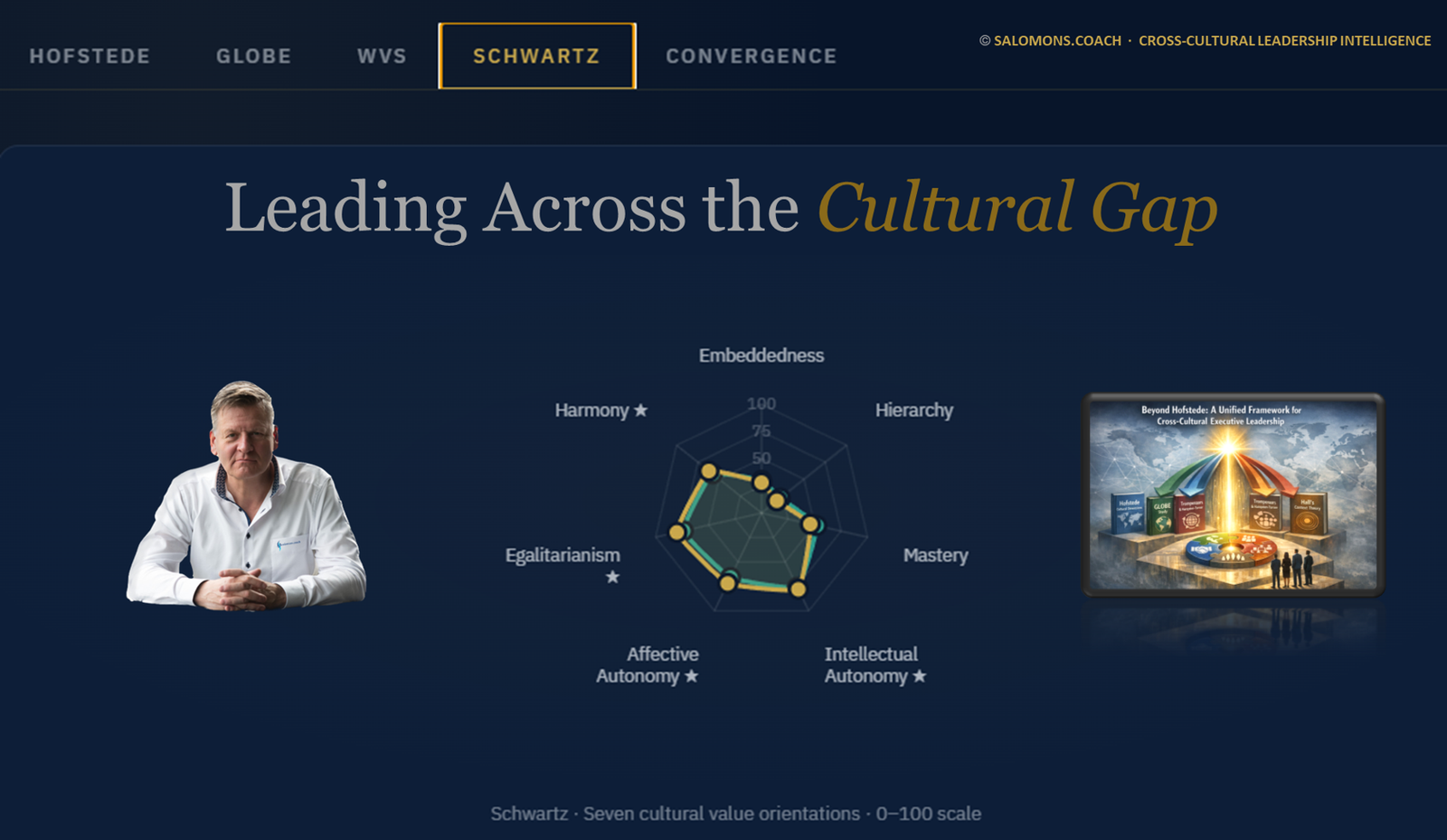
Every cross-cultural framework has blind spots. Schwartz measures four cultural dimensions that have no equivalent in Hofstede or GLOBE. If you are working without them, you are missing a significant portion of the cross-cultural picture — and in some pairings, the most operationally significant gaps in the entire analysis.
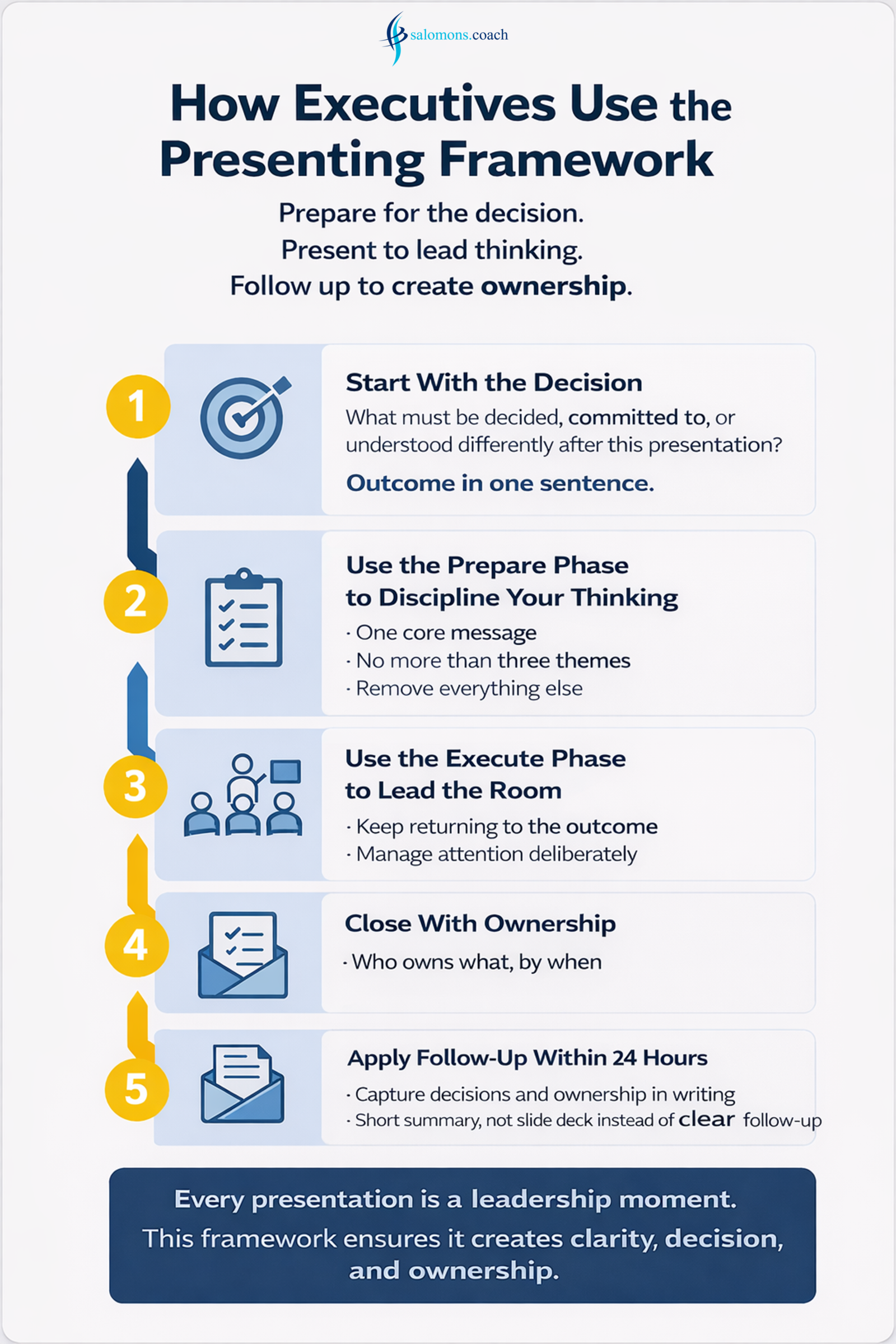
Presenting at executive level is not a communication skill, it is leadership in public. The Executive Presenting Framework reframes presentations as leadership moments where judgment, clarity, and ownership are established under pressure. Built for VUCA environments, the framework helps senior leaders reduce cognitive overload, lead thinking in the room, and ensure that presentations result in decisions and execution.
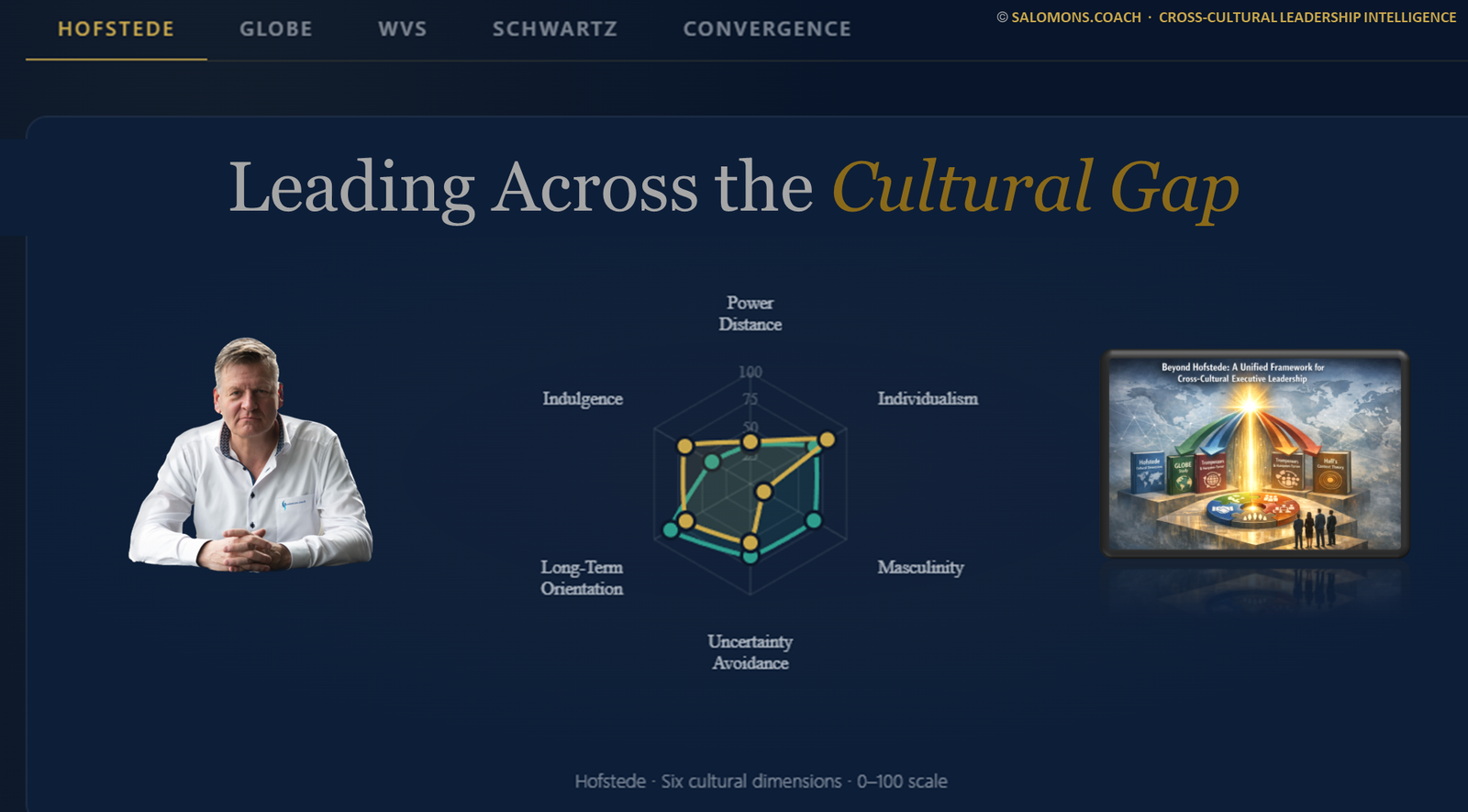
Geert Hofstede spent decades researching one question: do people from different countries think and behave differently in professional contexts in ways that are systematic, measurable, and predictable? His answer — developed through surveys of over 100,000 IBM employees across more than 50 countries — was an unambiguous yes.
The result is the most widely cited framework in cross-cultural management research. Six dimensions. Numerical scores for over 90 countries. But knowing the framework exists and knowing how to use it are different things. This post explains what Hofstede's six dimensions actually measure — and how the Cross-Cultural Leadership Compass translates them into specific, situational leadership guidance.
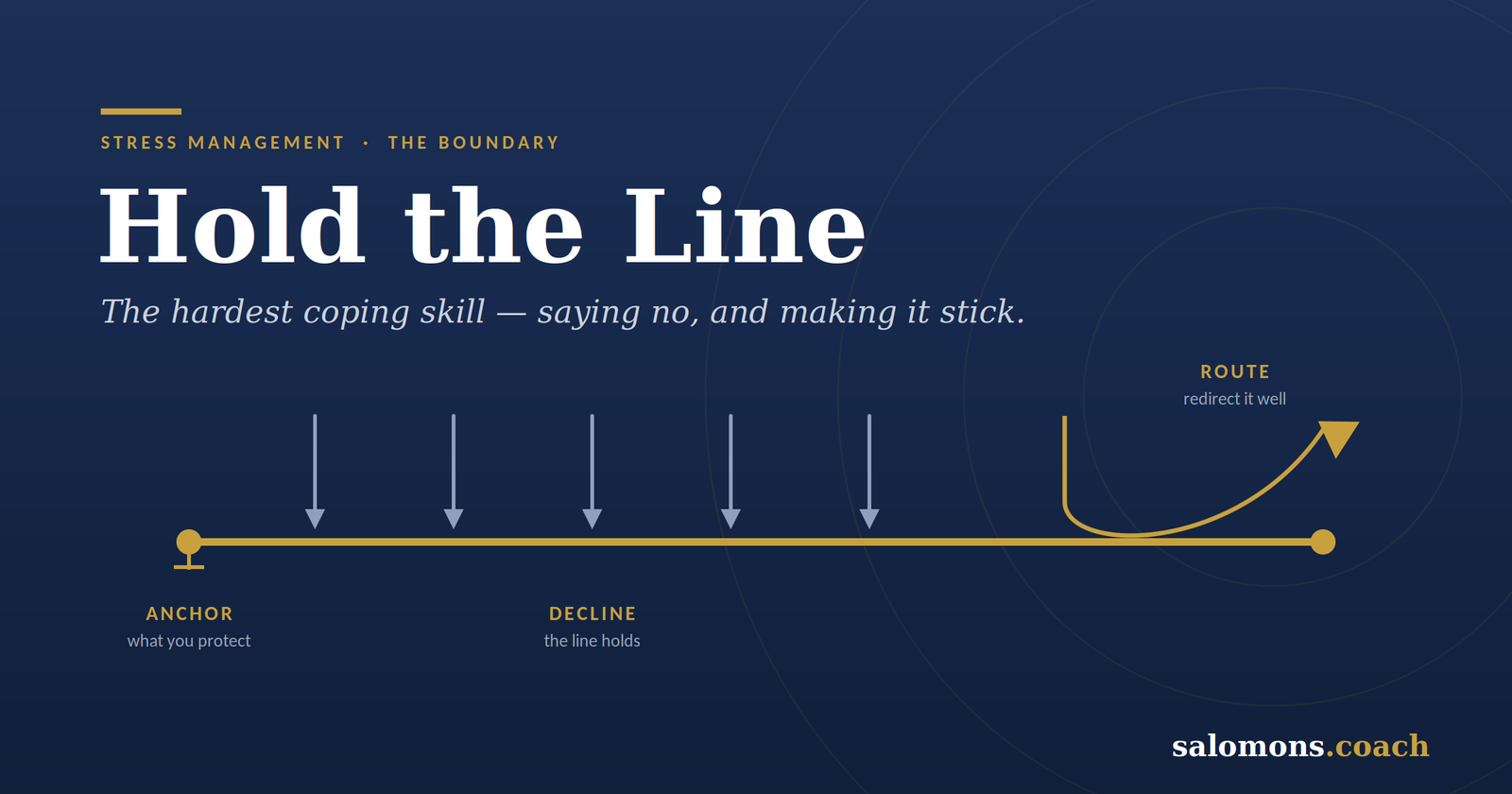
Most of the people I work with are good at handling things. That's exactly why their stress doesn't show up until it's expensive. Here's how I run a workshop that makes the hardest skill, saying no, something a team can actually get better at.
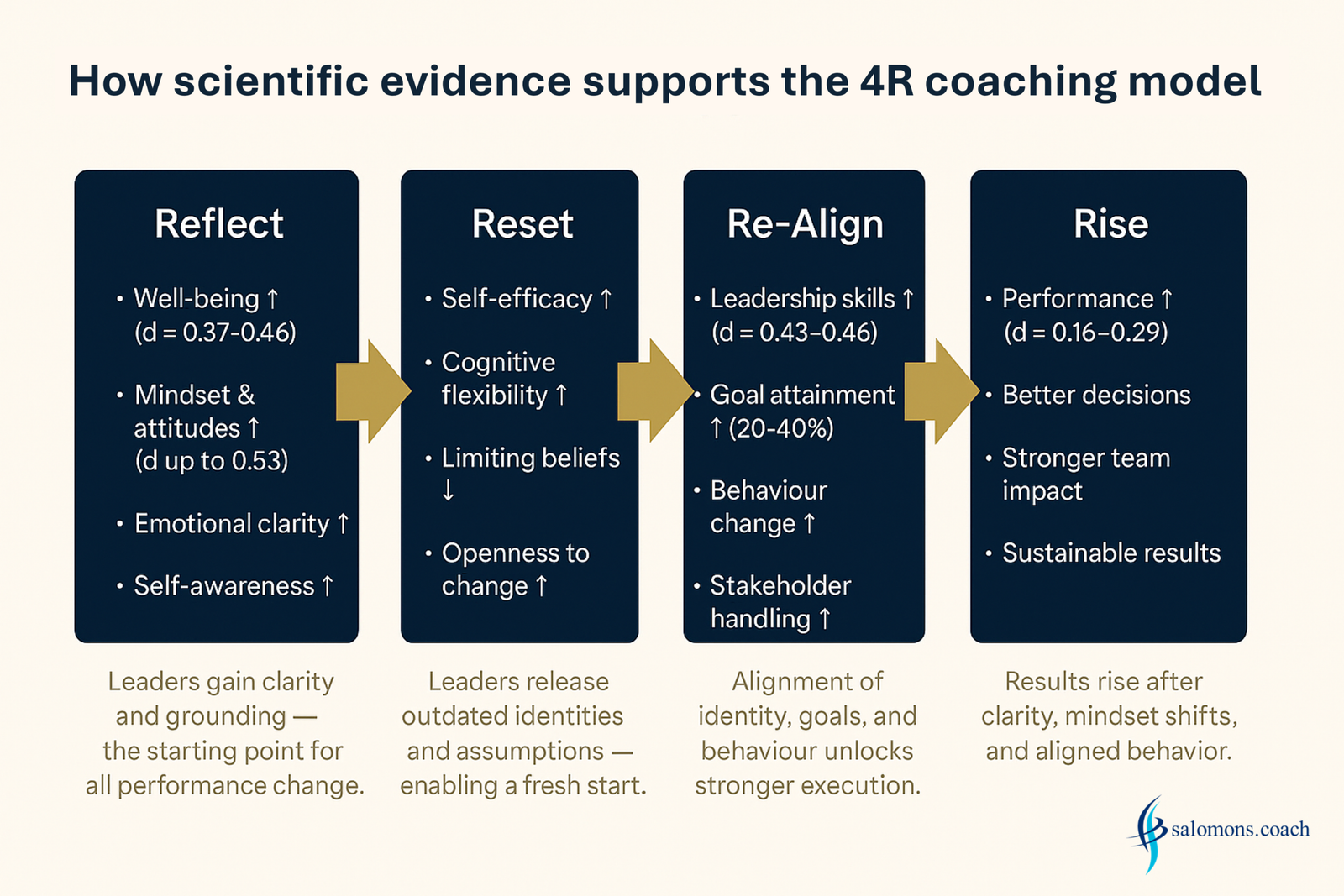
The latest scientific research on workplace coaching shows a clear, measurable pattern: meaningful change happens in four stages. Leaders first gain emotional clarity and self-awareness, then release limiting beliefs, realign their behaviour and skills with a stronger identity, and finally see measurable performance improvements. This progression mirrors the 4R Model (Reflect–Reset–Re-Align–Rise™). Backed by meta-analyses and randomized controlled trials, the evidence confirms that sustainable leadership performance begins with inner clarity—not with KPIs.
The Salomons.Coach Toolbox™ gives every client a structured, evidence-based set of tools to reflect deeply, act intentionally, and build lasting leadership behavior that strengthens business results.
In a world defined by volatility, uncertainty, complexity, and ambiguity, leaders can no longer rely on fixed plans or past experience. VUCA describes the challenge — but PDSA provides a practical way to respond through fast learning cycles. My early years as a teacher, working with Kolb’s experiential learning model, taught me that people grow through experimentation, reflection, and adaptation. Decades later, the same learning loop has become essential for leaders: the ability to test, adjust, and learn faster than the environment changes.
The Wheel of Work Life is a powerful framework that reveals what truly shapes your well-being at work. By exploring eight essential dimensions — from psychological safety and leadership to autonomy, workload, recognition, growth, collaboration, and recovery — you gain a holistic view of what energizes you and what drains you. This model helps individuals and teams understand their current reality and identify the small, meaningful steps that lead to healthier, more sustainable performance.