Van brandjes blussen naar leren: De leiderschapsverschuiving die operaties nodig hebben
1. Brandjes blussen als rationeel gedrag in een complex systeem
Een brandjes blussen cultuur is geen mislukking van mensen, maar een logisch antwoord van leiderschap in een complex, tijdkritisch systeem.
Volgens Karl Weick en zijn werk over zingeving, mensen onder druk hebben de neiging om:
- te reageren op wat het meest zichtbaar en dringend is,
- betekenis construeren uit wat we nu ervaren,
- handelen op basis van ervaring en waarschijnlijkheid, eerder dan volledigheid of analyse.
Bij nachtelijke operaties met hoge volumes betekent dit:
- een incident voelt reëler dan een trend,
- bevestiging voelt nuttiger dan analyseren,
- actie voelt veiliger dan uitstel.
Brandjes blussen is daarom functioneel gedrag in een omgeving waar een expliciete leerstructuur ontbreekt.
2. De actie-bias: waarom het oplossen van problemen wordt beloond
Operationele omgevingen worden sterk beïnvloed door wat in de literatuur de actie-bias:
de neiging om actie te verkiezen boven reflectie, zelfs wanneer reflectie effectiever zou zijn.
In de praktijk betekent dit:
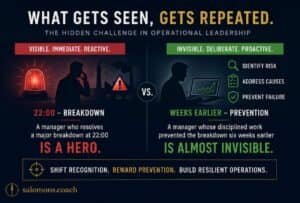
- managers worden zichtbaar en gewaardeerd als ze ingrijpen,
- Supervisors krijgen erkenning als ze “de dienst redden”.”
- De reflectie wordt uitgesteld omdat “de operatie door moet gaan”.”
Dit creëert een impliciet beloningssysteem:
Zij die problemen oplossen worden gezien als goede leiders.
Degenen die vragen stellen worden gezien als vertragers.
Dit is zelden een expliciet beleid, het is aangeleerd gedrag, dat elke dag versterkt wordt.
3. Single-Loop vs. Double-Loop Leren (Argyris & Schön)
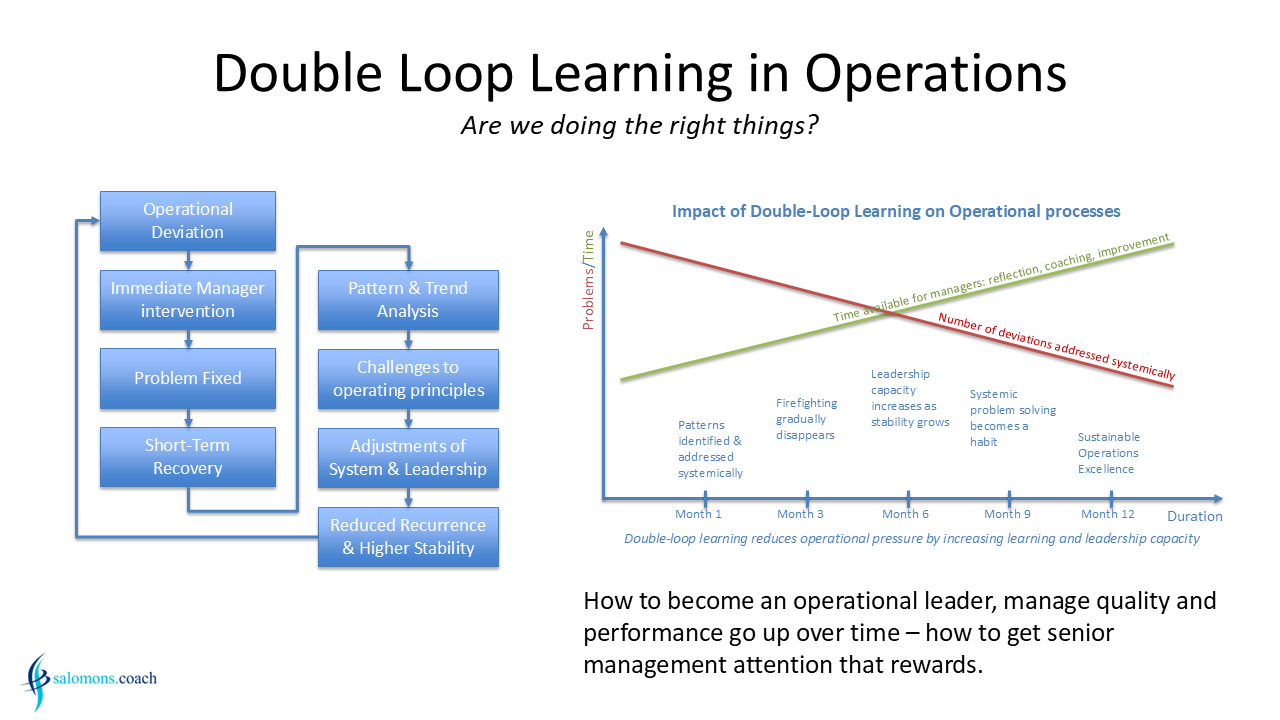
Brandjes bestrijden is bijna altijd een vorm van single-loop leren.
- Single-loop leren:
“Los het probleem op zodat we verder kunnen.” - Double-loop leren:
“Waarom blijft dit probleem zich voordoen?”
Zolang leiderschap:
- zich primair richt op de resultaten (service, volume, doorvoer),
- en niet expliciet stuurt op het leren van afwijkingen,
blijft de organisatie gevangen in single-loop gedrag.
Structurele verbetering vereist dat leiders ruimte creëren voor double-loop leren - en dit gebeurt niet automatisch.
4. Lean / PDCA: Incidenten van patronen onderscheiden
Binnen Lean en PDCA-denken (Plan-Do-Check-Act), is het van cruciaal belang om het type probleem te onderscheiden.
- Ad-hoc / eenmalige problemen
→ onmiddellijk repareren, de standaard herstellen. - Terugkerende / trendmatige problemen
→ Analyseer, identificeer de hoofdoorzaken, pas het systeem aan.
Wat er vaak misgaat is dat:
- organisaties over data/gegevens beschikken,
- maar missen ritme en discipline om die gegevens te gebruiken voor patroonherkenning.
Zoals W. Edwards Deming zijn beroemde uitspraak:
“Zonder theorie kun je niet leren.”
Zonder een expliciet leerproces worden gegevens bijzaak in plaats van richting.
5. Het culturele perspectief: Wat leiders “normaal” maken”
Volgens Edgar Schein, cultuur wordt gevormd door:
- waar leiders aandacht aan besteden,
- waar ze ingrijpen,
- wat ze verdragen onder druk.
In een brandjes blussen cultuur ervaren werknemers dat:
- escalaties aandacht krijgen,
- trends weinig zendtijd krijgen,
- reflectie optioneel is,
- en het oplossen van problemen verplicht is.
Als gevolg hiervan leren supervisors en teams wat normaal is, ongeacht wat er in beleidsregels of procedures staat.
6. Wat structurele probleemoplossing werkelijk vereist
Overschakelen van brandjes blussen naar structurele verbetering vereist geen 'betere' mensen, maar een ander leiderschapssysteem.
a. Zingeving organiseren
Managers helpen teams onderscheid te maken tussen:
- ruis en signaal,
- incidenten en patronen,
- toeval en systeemfalen.
Dit vereist gedeelde interpretatie, geen individuele ervaring.
b. Ritme vóór analyse
Zonder een vast ritme wint de operatie altijd.
Effectieve organisaties:
- Plannen expliciet momenten in voor trendoverzicht,
- Gebruiken dashboards als middel voor dialoog,
- en bespreken afwijkingen voor ze escaleren.
Ritme creëert ruimte voor leren.
c. Leiderschapsgedrag aanpassen
De kritische verschuiving is:
van “Ik los het probleem op”
naar “Ik zorg ervoor dat we ervan leren”
Dit betekent:
- vragen stellen in plaats van oplossingen geven,
- problemen laten wachten op het juiste leermoment,
- supervisors eigenaar maken van analyses.
Dit voelt in eerste instantie ongemakkelijk, maar het is essentieel.
7. Samenvatting: De onderliggende theoretische verschuiving
De overgang die je maakt kan als volgt worden samengevat:
| Brandweercultuur | Leersysteem |
|---|---|
| Urgentiegestuurd | Ritme-gedreven |
| Ervaring & intuïtie | Ervaring + gegevens |
| Focus op incidenten | Focus op patroon |
| Repareren = succes | Leren = succes |
| Individuele actie | Collectief leiderschap |
Conclusie en hoe nu verder
Organisaties leren niet automatisch onderscheid te maken tussen:
- een eenmalig probleem dat moet worden opgelost, en
- een structureel patroon dat aandacht van het leiderschap vereist.
Dat onderscheid wordt pas duidelijk wanneer:
- managers expliciet ruimte creëren om te leren,
- Supervisors maken deel uit van het leiderschapssysteem,
- leiderschapsgedrag consistenter is dan de druk van de dienst.
Dit is geen gereedschapskwestie.
Het is leiderschap in actie.