Most managers have two default tools when they need something to happen: tell people what to do, or escalate to someone who can. Direct communication and the chain of command. Both have their place. But if they are your primary or only tools for getting things done across an organization, you have a problem. Not because they don't work, but because they work less and less the higher you climb and the more complex your environment becomes.
The managers and project managers who consistently get things done are not the ones with the biggest title or the loudest voice. They are the ones who understand that in most modern organisations, influence is the currency that actually moves things. Directives produce compliance. Influence produces commitment.
This article gives you a practical new toolbox, and more importantly, a new mindset.

Most senior leaders don't derail because they lack intelligence or drive. They derail because they stopped learning — and didn't notice until the damage was done. In this article, executive coach Jan Salomons explores the neuroscience behind why behavioral change is so hard, the five warning signs that a leader's learning agility is eroding, and what the research really says about what separates leaders who keep growing from those who quietly plateau. Drawing on decades of evidence from Korn Ferry, the Center for Creative Leadership, and the neuroscience of neuroplasticity, this is a practical, behavior-focused guide to one of the most critical — and most overlooked — leadership competencies of our time. If you have ever caught yourself relying on what worked before in a situation that is clearly different, this article is for you.
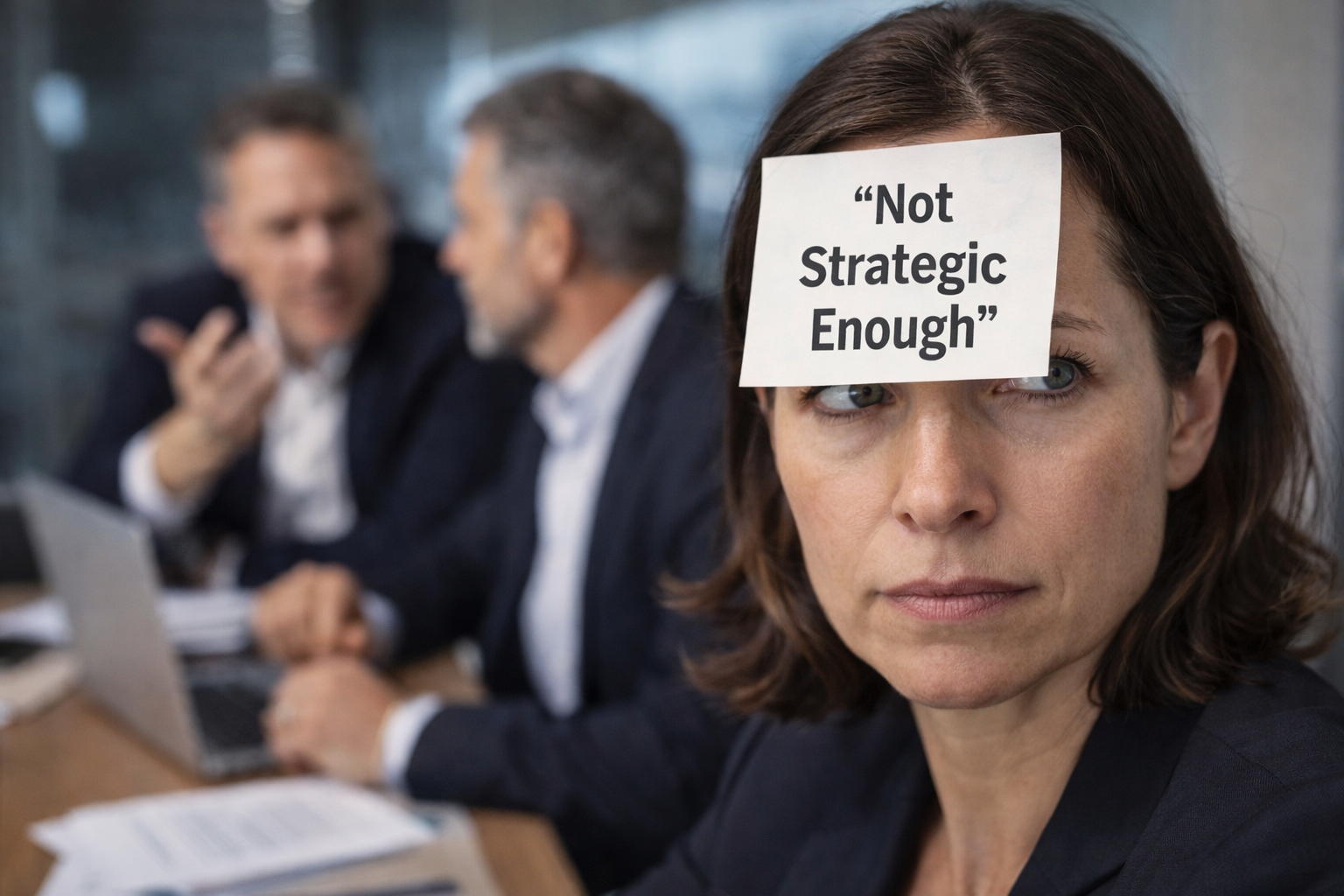
The phrase “not strategic enough” is one of the most common labels used when leaders hit an invisible career ceiling. But in executive teams it often hides a deeper problem — unclear expectations, power dynamics, or low psychological safety. Before developing the individual, leaders must first examine the system that produced the label.
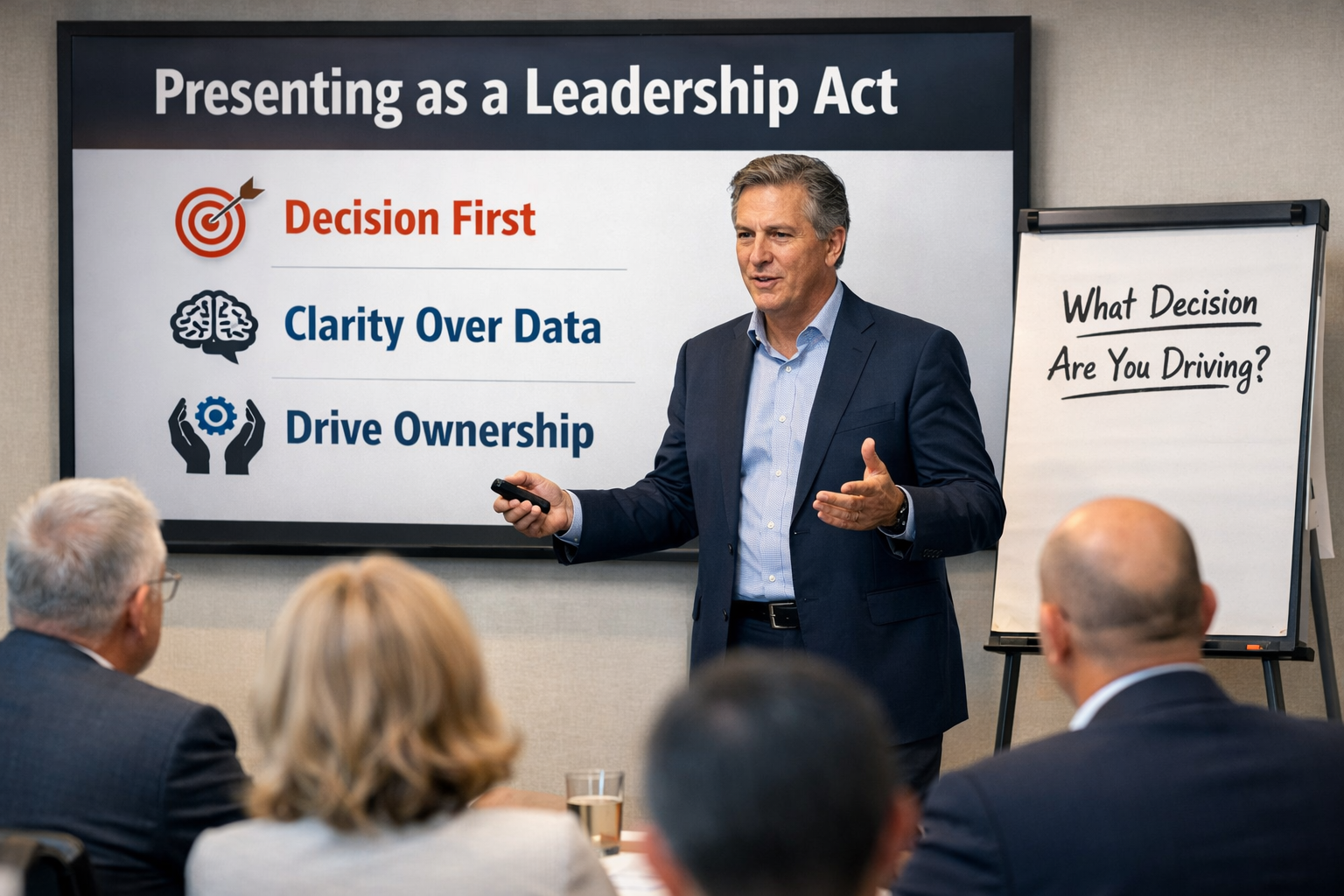
Most presentations fail not because the content is weak, but because leadership intent is unclear. Drawing on years of training and coaching senior leaders, this article reframes presentation skills as a leadership behavior under pressure, where decisions are enabled, complexity is reduced, and ownership becomes explicit. Presenting, done well, is not about slides. It is about leading thinking in the room.
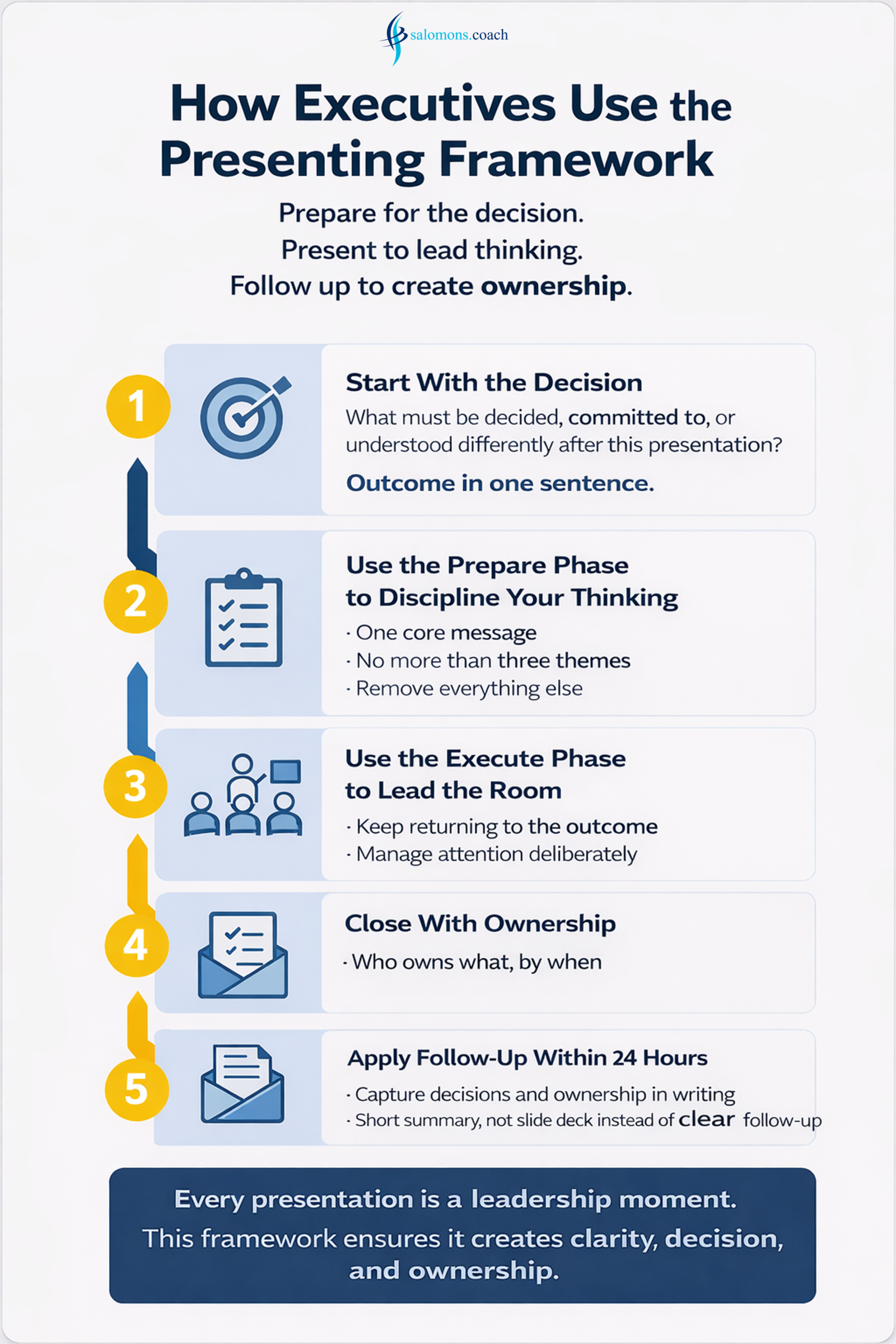
Presenting at executive level is not a communication skill, it is leadership in public. The Executive Presenting Framework reframes presentations as leadership moments where judgment, clarity, and ownership are established under pressure. Built for VUCA environments, the framework helps senior leaders reduce cognitive overload, lead thinking in the room, and ensure that presentations result in decisions and execution.
AI is often framed as a technology challenge. In reality, it is a leadership one. By accelerating speed, increasing transparency, and making decisions comparable, AI exposes how leaders decide, where judgment is avoided, and how accountability is handled. This article explores why AI does not replace leaders, but reveals leadership behaviors that were previously hidden—and why credibility in an AI-driven world depends less on technical expertise and more on explicit judgment and ownership.
At some point in every serious leadership journey, progress starts to feel hollow. You are delivering, trusted, and influential—yet a deeper question emerges: Is this the life I actually want to be building? This reflection explores leadership, integrity, and what truly endures over time.
In high-pressure leadership environments, silence is often mistaken for indecision. Yet the most important insights rarely emerge in the middle of noise. They surface afterwards, when reaction stops and space is created to think.
Drawing from decades of leadership experience and supported by neuroscience, this article explores why silence is not the absence of leadership, but a condition for it. Silence reduces cognitive load, calms the nervous system, activates reflective brain networks, and supports clarity, creativity, and better decision-making.
You will learn what silence actually does to the brain, why different forms of silence serve different purposes, and how long silence needs to last to be effective, from brief pauses between meetings to deeper periods of reflection.
In a world of constant stimulation, silence has become a strategic capability. Not as withdrawal, but as a deliberate leadership discipline, especially when complexity and...
In this personal leadership journey, Jan Salomons shares how he transitioned from an engineering teacher to a global executive and ultimately to a leadership and executive coach. Drawing on more than 35 years of international leadership experience across complex organisations, he reveals the pivotal insights that shaped his purpose: leadership is human work, not just technical or operational skill. His evolution into coaching grew from a belief that sustained behavioural change and self-awareness unlock real performance and resilient teams
In a world full of noise and pressure, the most courageous leaders are not the loudest ones, but the ones who create space for stillness and honest self-reflection. Like a quiet bridge reflected in calm water, authentic leadership emerges when we stand steady in who we are and dare to look inward. Clarity, integrity, and presence begin not with action, but with awareness.