salomons.coachsalomons.coach
  • Home
  • About Me
  • Blog
  • Shop
  • Downloads
    • Your Own Career Coach
    • Cross-Cultural Leadership Compass
    • Your stress Profile
    • Psychological Safety Field Guide
    • Energy Awareness Journal
    • The Executive Presenting Framework
    • The Executive Ownership Reinforcement Framework
    • The Evidence Base for Coaching Effectiveness
    • The Art of Time Boxing
    • VUCA Leadership WorkBook
    • VUCA Leadership Book
  • Services
  • Testimonials
  • Session Scheduler
  • Contact
  • Change language to Nederlands
Back
  • Home
  • About Me
  • Blog
  • Shop
  • Downloads
    • Your Own Career Coach
    • Cross-Cultural Leadership Compass
    • Your stress Profile
    • Psychological Safety Field Guide
    • Energy Awareness Journal
    • The Executive Presenting Framework
    • The Executive Ownership Reinforcement Framework
    • The Evidence Base for Coaching Effectiveness
    • The Art of Time Boxing
    • VUCA Leadership WorkBook
    • VUCA Leadership Book
  • Services
  • Testimonials
  • Session Scheduler
  • Contact
  • Change language to Nederlands
  • Home
  • Blog
  • Blog
  • ADHD Leadership Videos

Blog

14 Jul

ADHD Leadership Videos

  • By salomons.coach
  • In Blog, Self & Personal Growth, Video, VUCA & Leadership
The ADHD Leader in Five Videos — salomons.coach
Leadership · Neurodiversity · Video

The ADHD Leader in Five Videos

An executive summary of the five best videos on ADHD for leaders. Watched together, a hard-science lecture, a personal memoir, a reframe of the whole diagnosis, the coaching angle, and the popular superpower talk converge on a single conclusion.

I recently pulled together a short watch list of the best videos on ADHD for leaders, and having sat with all five again, I wanted to do more than list them. They approach the same subject from five very different directions and arrive at the same place. This is that conclusion, and how it maps onto what I wrote in The ADHD Leader. Watch each clip, then read the short synthesis beneath it.

The science: it is regulation, not attention

The mechanism · Dr. Russell Barkley

ADHD, Self-Regulation and Executive Functioning

Lecture

Russell Barkley is the researcher most responsible for how the field now understands ADHD, and his central argument reframes everything. ADHD is not, at root, a deficit of attention. It is a difficulty of self-regulation and executive function, the brain's system for managing itself toward a goal that sits in the future. Emotional regulation is part of that same system, not a separate quirk, which is why the feelings run hot.

The practical consequence is the one leaders most need to hear. This is a performance problem, not a knowledge problem. People with ADHD usually know exactly what they should do; the difficulty is doing it at the moment and place it actually matters. That single distinction dismantles the willpower story, and it is the evidence base under the argument that structure is the ADHD leader's discipline.

The lived experience: stop failing at normal

Lived experience · Jessica McCabe

Failing at Normal: An ADHD Success Story

TEDxBratislava · ~17 min

McCabe's talk, watched more than ten million times, supplies what a lecture cannot. She describes years of measuring herself against a neurotypical standard and falling short, and the turn came not when she finally tried hard enough, but when she stopped trying to be normal, built external systems that fit how her mind actually works, and found other people who understood it. The movement is from shame to strategy.

For a leader, that arc is the hidden half of the problem. The exhaustion, the self-doubt, the private conviction of being a fraud despite the results, these cost more than any missed deadline, and they lift the moment the standard changes from "become someone steadier" to "work with the mind you have."

The reframe: a difference, not a defect

A difference, not a defect · Stephen Tonti

ADHD as a Difference in Cognition, Not a Disorder

TEDxCMU

Tonti's contribution is conceptual. He argues that ADHD is better understood as a difference in cognition than as a disorder, and that the issue is rarely a lack of focus so much as difficulty directing it. Held well, a wide range of interests and a fast, associative mind are assets, not symptoms. This is the intellectual backing for the strengths, the creativity, the drive, the pioneering instinct to start things and move first, that belong beside the challenges rather than beneath them.

The leadership angle: why high performers get coaches

For executives

Why do executives have ADHD coaches?

Short explainer

The shortest of the five makes the most direct leadership point. Executives work with ADHD coaches not because they are broken, but because external accountability and structure are precisely what convert a strong, ideas-rich mind into delivered results. It normalises the thing leaders are often ashamed to admit they need, and it matches the development work: delegate the executive function, borrow structure from outside the head, and build the scaffolding deliberately rather than hoping to summon it.

The caveat: a superpower, with conditions

Hold the headline lightly · WIL Talk #203

Is Your ADHD Actually a Leadership Superpower?

Talk

The last video leans into the popular framing that ADHD is a leadership superpower. It is motivating, and the strengths it celebrates are real. But it deserves the caveat the research demands.

Watch critically

Those advantages are context-dependent, not guaranteed. The same wiring that shines in a launch or a crisis strains in routine, steady-state work. Watched critically, this is a useful corrective to the deficit-only story, provided you do not swallow the headline whole.

The key conclusion

Put the five side by side and the same conclusion emerges from every direction. The neuroscientist, the memoirist, the reframer, the coach, and even the optimist agree that ADHD is a difference in self-regulation carrying both genuine costs and genuine strengths, that effort aimed at the deficit reliably fails, and that what works is external structure at the point of performance, self-understanding that replaces shame with strategy, and roles designed to point the strengths where they pay.

The ADHD leader does not need to become a different person. They need to build the conditions in which the mind they already have does its best work.

Which is the argument of The ADHD Leader in a sentence. The science explains why, the stories show what it feels like, and the coaching shows how. The work is not to fix the instrument. It is to build the section around it.

Go deeper

Read the full article

The long form, with the seven challenges, the strengths hidden in the same wiring, and six concrete development steps.

Read The ADHD Leader → Explore coaching with Jan
Tags:ADHDcoachingleadershipleadership behaviorpsychological safetyreflectionresilienceself-awareness
  • Share:
salomons.coach
Jan Salomons is a seasoned leader/executive who shares his knowledge and experience as an executive mentor/coach/trainer as well as a transformation and operations excellence expert. He has over 35 years of experience working with senior leaders across more than 55 countries, and is an elected member of the Harvard Business Review Advisory Council.

You may also like

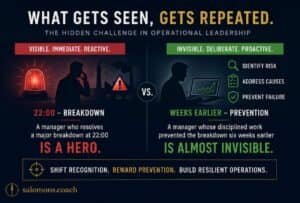
Infographic titled 'What gets seen, gets repeated' showing two columns: left red section 'Visible. Immediate. Reactive.' with a red alert siren, a worker on the phone, factory silhouettes, and a '22:00' breakdown; caption 'IS A HERO.' Right green section 'Invisible. Deliberate. Proactive.' with a worker at a laptop displaying a rising graph and icons labeled 'Identify risk', 'Address causes', 'Prevent failure'; caption 'WEEKS EARLIER – PREVENTION' and 'IS ALMOST INVISIBLE.' Bottom banner reads 'Shift recognition. Reward prevention. Build resilient operations.' and shows salomons.coach.

What Gets Seen, Gets Repeated – Firefighters vs Preventers

  • 26 September 2026
  • by salomons.coach
  • in Blog
A manager who fixes a breakdown at 22:00 is a hero. The manager whose work prevented it six weeks...
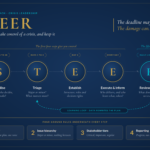
Infographic titled STEER showing five circular steps (S, T, E, E, R) for crisis leadership on a dark blue background. Steps: Stabilise, Triage, Establish, Execute & inform, Review & refine.
Five Steps to Take Immediate Control of a Crisis
24 September 2026
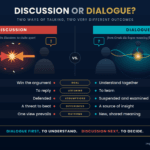
Infographic comparing Discussion (left) and Dialogue (right): clash graphic vs connected waves, with goal-focused comparisons and a shared outcomes section.
Most Leadership Teams Lack Dialogue
22 September 2026
Infographic poster with a dark blue background, large white headline reading “My team says it’s the workload,” and a diagram highlighting pressure factors (Ambiguity, Conflict, Overload) in orange.
It is not the workload. Stop calling it the workload.
18 September 2026

Leave A Reply Cancel reply

Your email address will not be published. Required fields are marked *

This site uses Akismet to reduce spam. Learn how your comment data is processed.

Categories

  • AI (3)
  • Blog (150)
  • Books & Publications (7)
  • Change & Transformation (30)
  • Download (2)
  • Innovation & Strategy (6)
  • Learning & Development (12)
  • Organizations & Culture (40)
  • Self & Personal Growth (74)
  • Teams & Collaboration (34)
  • Tools & Methods (38)
  • Video (16)
  • VUCA & Leadership (77)
  • Web Courses & Programs (4)
  • Workshops & Events (14)

Recent Posts

Infographic titled 'What gets seen, gets repeated' showing two columns: left red section 'Visible. Immediate. Reactive.' with a red alert siren, a worker on the phone, factory silhouettes, and a '22:00' breakdown; caption 'IS A HERO.' Right green section 'Invisible. Deliberate. Proactive.' with a worker at a laptop displaying a rising graph and icons labeled 'Identify risk', 'Address causes', 'Prevent failure'; caption 'WEEKS EARLIER – PREVENTION' and 'IS ALMOST INVISIBLE.' Bottom banner reads 'Shift recognition. Reward prevention. Build resilient operations.' and shows salomons.coach.
What Gets Seen, Gets Repeated – Firefighters vs Preventers
26Sep,2026
Infographic titled STEER showing five circular steps (S, T, E, E, R) for crisis leadership on a dark blue background. Steps: Stabilise, Triage, Establish, Execute & inform, Review & refine.
Five Steps to Take Immediate Control of a Crisis
24Sep,2026
Infographic comparing Discussion (left) and Dialogue (right): clash graphic vs connected waves, with goal-focused comparisons and a shared outcomes section.
Most Leadership Teams Lack Dialogue
22Sep,2026

Tags

4R model (6) accountability (7) authenticity (5) behavior (8) career (12) change (28) coaching (51) communication (8) cross-cultural leadership (8) culture (15) decision-making (9) dersonal-development (6) emotions (6) executive-coaching (8) executive coaching (6) feedback (4) focus (4) growth (6) leadership (66) leadership behavior (47) leadership coaching (8) leadership development (8) learning (9) mindset (5) psychological safety (29) redundancy (9) reflection (34) resilience (21) self-awareness (56) self-leadership (14) self-management (9) self-regulation (6) stress (10) team-dynamics (10) team alignment (5) team coaching (9) teams (7) TED (5) Time Management (5) tools (19) transformation (5) trust (7) VUCA (37) VUCA leadership (39) work-life balance (5)
All posts - searchable table
Recent videos
the-adhd-watch-list-hero

The Best ADHD Videos for Leaders: Science, Stories, Strategy

In 14 July 2026
No Comment
Female speaker on stage delivering a TEDx talk, with a headset mic and gesturing, while a lower-third bio identifies her as a professor of organizational behaviour.

The Authenticity Paradox | Professor Herminia Ibarra 

Brooks – Harvard – on Happiness

Happiness as a Leadership Strategy

L360 youyrownjourney landing page L360

Find your true purpose

GET IN TOUCH

Salomons.Coach
KvK: 72129131
+31 6 53 89 75 67

jan@salomons.coach

The Netherlands

USEFUL LINKS

  • About
  • Privacy policy
  • Term & Conditions
  • Refund & Returns
  • Payment policy
  • Digital Policy
  • Methodology & Sources

LinkedIn

  • Linkedin
Receive blog updates

salomons.coach by J.K. Salomons Holding B.V., 2018-2026

  • Home
  • About Me
  • Blog
  • Shop
  • Downloads
    • Your Own Career Coach
    • Cross-Cultural Leadership Compass
    • Your stress Profile
    • Psychological Safety Field Guide
    • Energy Awareness Journal
    • The Executive Presenting Framework
    • The Executive Ownership Reinforcement Framework
    • The Evidence Base for Coaching Effectiveness
    • The Art of Time Boxing
    • VUCA Leadership WorkBook
    • VUCA Leadership Book
  • Services
  • Testimonials
  • Session Scheduler
  • Contact
  • Change language to Nederlands
Change language to Nederlands