Reflecting on the first VUCA@Work event
Executive summary
The first VUCA@Work event brought leaders together to discuss how volatility, uncertainty, complexity and ambiguity affect everyday management. The session highlighted the value of translating a broad concept into practical decisions and conversations.
This reflection captures insights from the event and the challenges participants raised. Executives benefit most when they use VUCA to distinguish different problems rather than describe the business environment as generally unpredictable. Sharing operational examples can expose assumptions and build a common vocabulary for response. The value of a leadership event is demonstrated afterwards, when participants apply what they learned to real work.
- Recognizing VUCA and Its Implications Attendees gained insight into identifying and understanding VUCA forces. We discussed real-world examples, such as how market demands shift due to rapid technological advancements, compelling leaders to make quick decisions amidst unpredictable planning conditions. The ability to recognize these forces early is paramount for proactive leadership.
- Concrete Strategies for Coping with VUCA The event handout, shared post-event, encapsulated essential techniques for handling each aspect of VUCA:

- Volatility: We explored tools such as scenario planning and flexible strategy maps to build resilience in times of sudden change. For instance, incorporating “sun charts” to maintain a long-term strategic perspective while ensuring psychological safety through servant leadership was highlighted.
- Uncertainty: The emphasis here was on risk analysis and data-driven decision-making. Regularly assessing risks and empowering teams to act confidently, even when information is incomplete, proved to be a significant takeaway.
- Complexity: Techniques such as systems thinking and fostering cross-functional teamwork were shared. These approaches help leaders view interconnected challenges as part of a broader system, enabling more effective problem-solving.
- Ambiguity: Developing scenarios and maintaining flexible strategy maps were underscored as crucial for navigating situations where information is unclear or conflicting.
- Team and Workplace Dynamics We dived into how VUCA impacts workplace dynamics, from workforce stability and role expectations to cross-functional collaboration. Attendees appreciated the practical tools shared, such as:
- Agile Team Structures: Promoting adaptability by enabling teams to reassign tasks quickly and maintain focus amidst shifts.
- Transparent Communication: Building frameworks to support clear reporting and reduce ambiguity, fostering accountability and alignment.
- Continuous Skill Development: Implementing programs that prepare teams for changing market demands and emerging skills needs.
Lessons Learned from the Event Reflecting on the execution of our first major VUCA-focused event, several key learnings emerged:“The value of a leadership event is what participants rethink when the conversation ends.”
Jan Salomons
- Engagement through Interactivity: The Q&A portion revealed how much attendees value real-time feedback and the chance to ask questions. This reinforced the importance of incorporating interactive elements throughout the entire session.
- Preparation Is Key: Conducting a live web event requires robust preparation, especially when aiming to address complex topics like VUCA. Our meticulous content planning and use of practical case studies helped maintain audience engagement and reinforced the session’s credibility.
- Feedback Loops for Continuous Improvement: Post-event feedback indicated that while attendees found the content highly relevant, they wanted even more hands-on exercises or breakout discussions to apply the strategies in real time. This insight will inform future events to strike a balance between learning and interactive participation.
- Building Emotional Resilience: Implementing daily practices of self-awareness and mindfulness to remain calm under pressure was highlighted as a top strategy. The ability to maintain emotional stability helps leaders guide their teams with confidence during unpredictable times.
- Prioritizing Adaptability: Attendees were encouraged to embrace a culture of continuous learning and adaptability, which includes setting learning goals and regularly sharing insights across teams.
- Agile Decision-Making: Using frameworks such as the OODA loop (Observe, Orient, Decide, Act) allowed leaders to make quicker, informed decisions and course-correct as needed.
- Creating Psychological Safety: Recognizing the value of a safe space for open dialogue and the celebration of learning from mistakes was emphasized as foundational to fostering a resilient team culture.
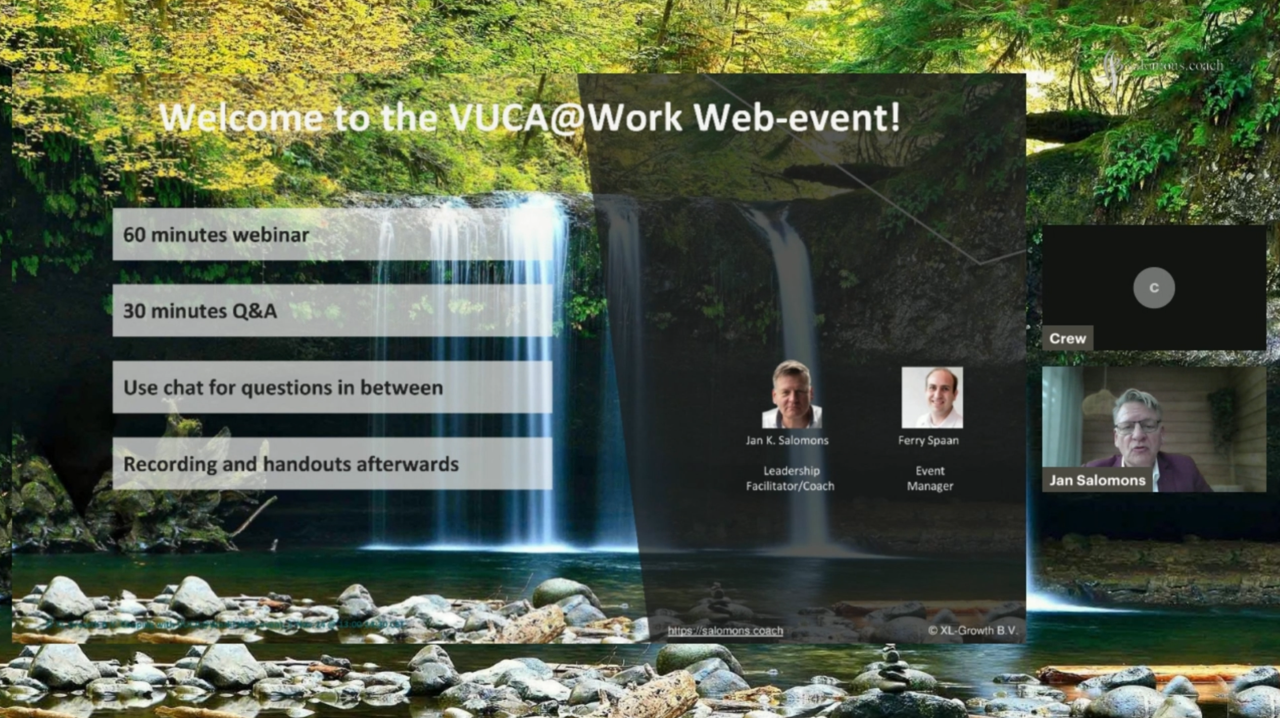
Watch the recording of Cooping with VUCA@Work
 Want to watch the web-event again?
click on the picture or here!
Book your free seat for the next web-events
 6-Dec-24:
VUCA Challenges
10-Jan-25: VUCA Leadership Principles
7-Feb-25: VUCA Leadership Skills
Read more VUCA articles
You also might want to read this article: VUCA is not just the new management jargon – salomons.coach Or this one: Understanding and navigating VUCA in the Business World – salomons.coach
Become the highly effective VUCA Leader
Interested in developing yourself and start mastering the skill-set to coop with the VUCA world and workplace in a highly effective way? Lets have a (free) chat about training in your organization or coaching for yourself or your leadership team. Book a free appointment here: Session Scheduler – salomons.coach
You may also like

The Ultimate Guide to the Impossible Operating Plan

New Leader, Existing Team, Team Reset