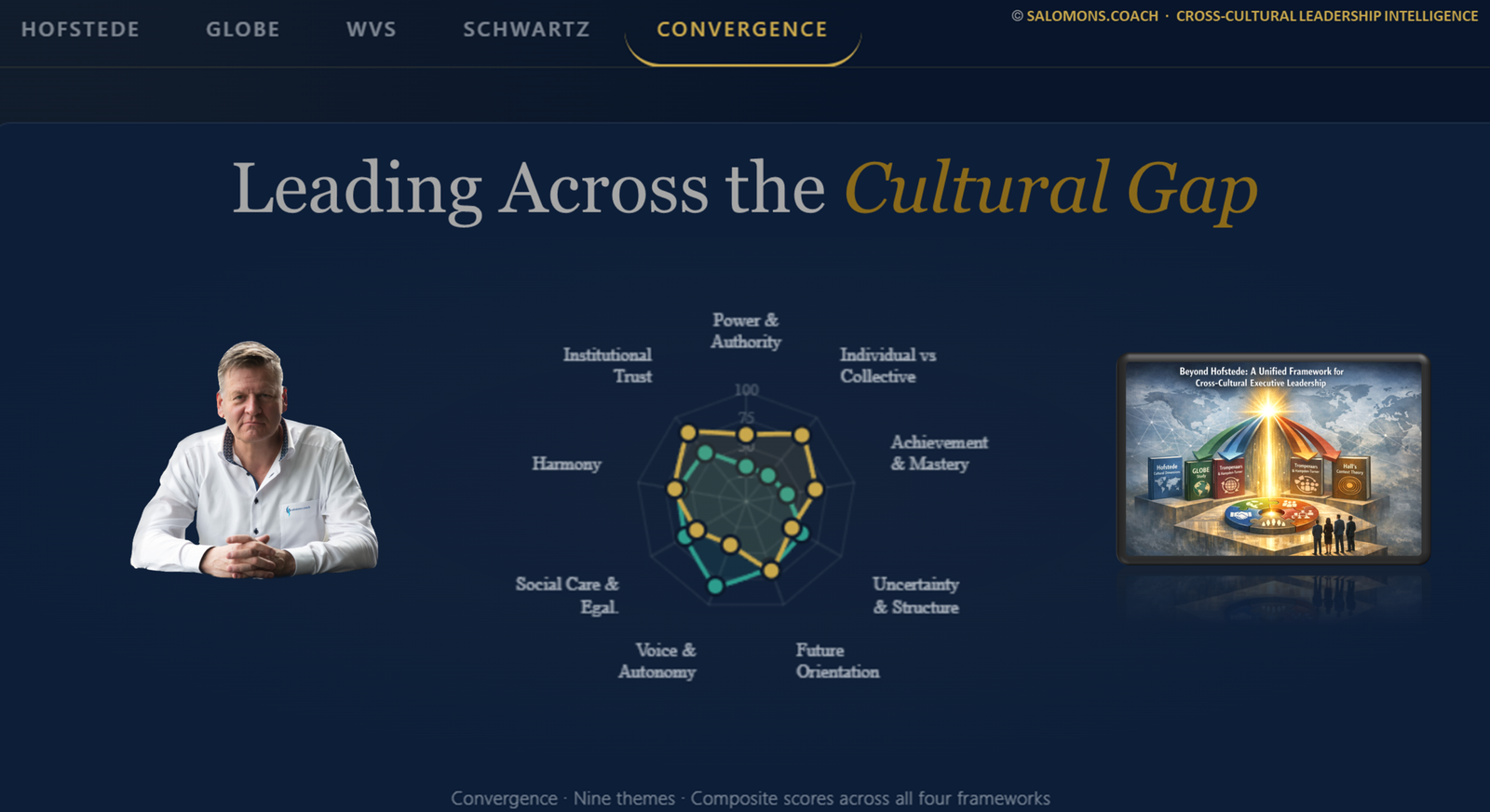
Most cross-cultural frameworks tell you how cultures differ at work. The World Values Survey reveals something deeper: what people fundamentally believe they are working for, whether they extend default trust to institutions or require it to be earned personally, and whether autonomy or security is their more basic professional motivation. These are the values that take generations to shift — and the ones that resurface under pressure even after a decade of adaptation.
Every cross-cultural framework has blind spots. Schwartz measures four cultural dimensions that have no equivalent in Hofstede or GLOBE. If you are working without them, you are missing a significant portion of the cross-cultural picture — and in some pairings, the most operationally significant gaps in the entire analysis.
AI is often framed as a technology challenge. In reality, it is a leadership one. By accelerating speed, increasing transparency, and making decisions comparable, AI exposes how leaders decide, where judgment is avoided, and how accountability is handled. This article explores why AI does not replace leaders, but reveals leadership behaviors that were previously hidden—and why credibility in an AI-driven world depends less on technical expertise and more on explicit judgment and ownership.
As AI becomes embedded in organizational decision-making, not all decisions should be automated. Some choices define values, require accountability, and demand human judgment under uncertainty. This article explores five leadership decisions AI should never make—not because AI is incapable, but because leadership legitimacy, responsibility, and trust cannot be delegated to technology.
Ownership in organizations is often treated as a mindset problem. In reality, it is a design issue. When goals are unclear, authority and accountability are misaligned, and leadership behavior is inconsistent, ownership erodes. This article explains why ownership is not something you demand from people, but something you deliberately build through structure, behavior, and leadership discipline.
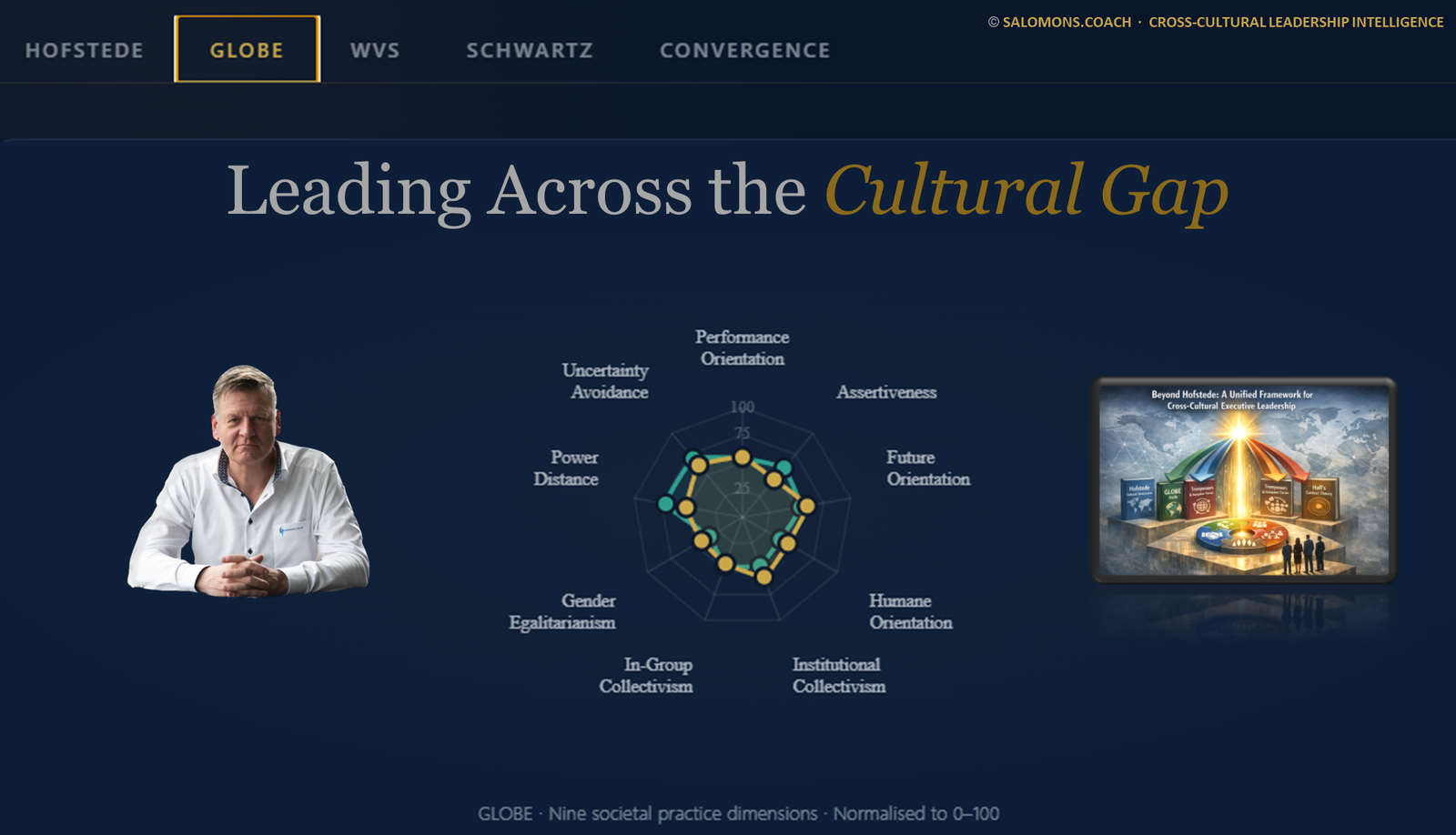
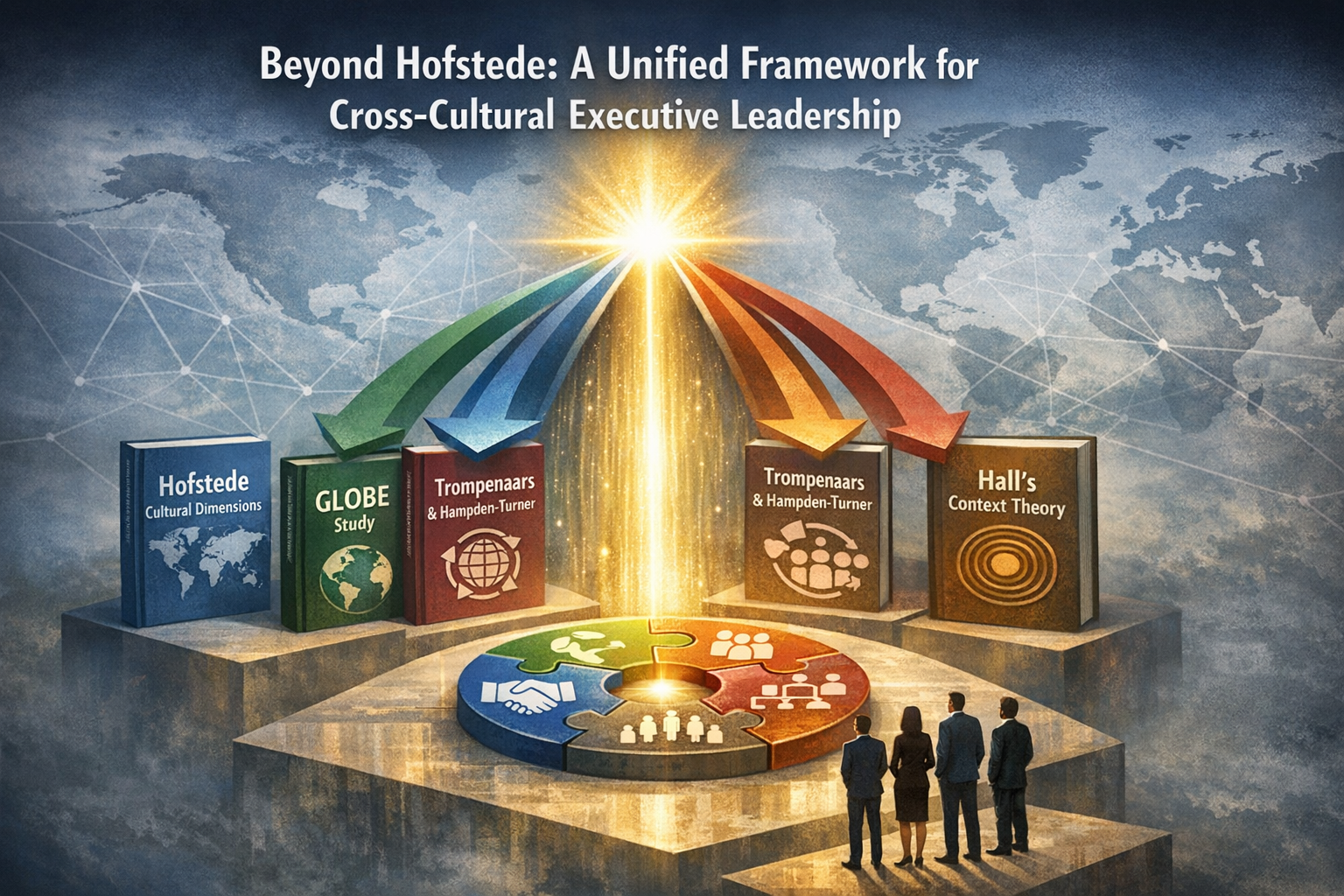
Geert Hofstede spent decades researching one question: do people from different countries think and behave differently in professional contexts in ways that are systematic, measurable, and predictable? His answer — developed through surveys of over 100,000 IBM employees across more than 50 countries — was an unambiguous yes.
The result is the most widely cited framework in cross-cultural management research. Six dimensions. Numerical scores for over 90 countries. But knowing the framework exists and knowing how to use it are different things. This post explains what Hofstede's six dimensions actually measure — and how the Cross-Cultural Leadership Compass translates them into specific, situational leadership guidance.
At some point in every serious leadership journey, progress starts to feel hollow. You are delivering, trusted, and influential—yet a deeper question emerges: Is this the life I actually want to be building? This reflection explores leadership, integrity, and what truly endures over time.
Leadership is not revealed in intentions, values, or language. It is revealed in results.
In my work with leaders and teams, I always start with outcomes — and then work backwards to what leadership truly demands under pressure. Not to judge, but to understand which patterns, decisions, and behaviors are quietly shaping performance.
Results are never the problem. They are the mirror.
One-on-one meetings are one of the most powerful leadership tools — and one of the most frequently misused. Drawing from personal leadership experience and evidence-based research, this article explores how leaders can design and execute one-on-ones that go beyond status updates and become conversations that build clarity, trust, and sustainable performance.
In high-pressure leadership environments, silence is often mistaken for indecision. Yet the most important insights rarely emerge in the middle of noise. They surface afterwards, when reaction stops and space is created to think.
Drawing from decades of leadership experience and supported by neuroscience, this article explores why silence is not the absence of leadership, but a condition for it. Silence reduces cognitive load, calms the nervous system, activates reflective brain networks, and supports clarity, creativity, and better decision-making.
You will learn what silence actually does to the brain, why different forms of silence serve different purposes, and how long silence needs to last to be effective, from brief pauses between meetings to deeper periods of reflection.
In a world of constant...