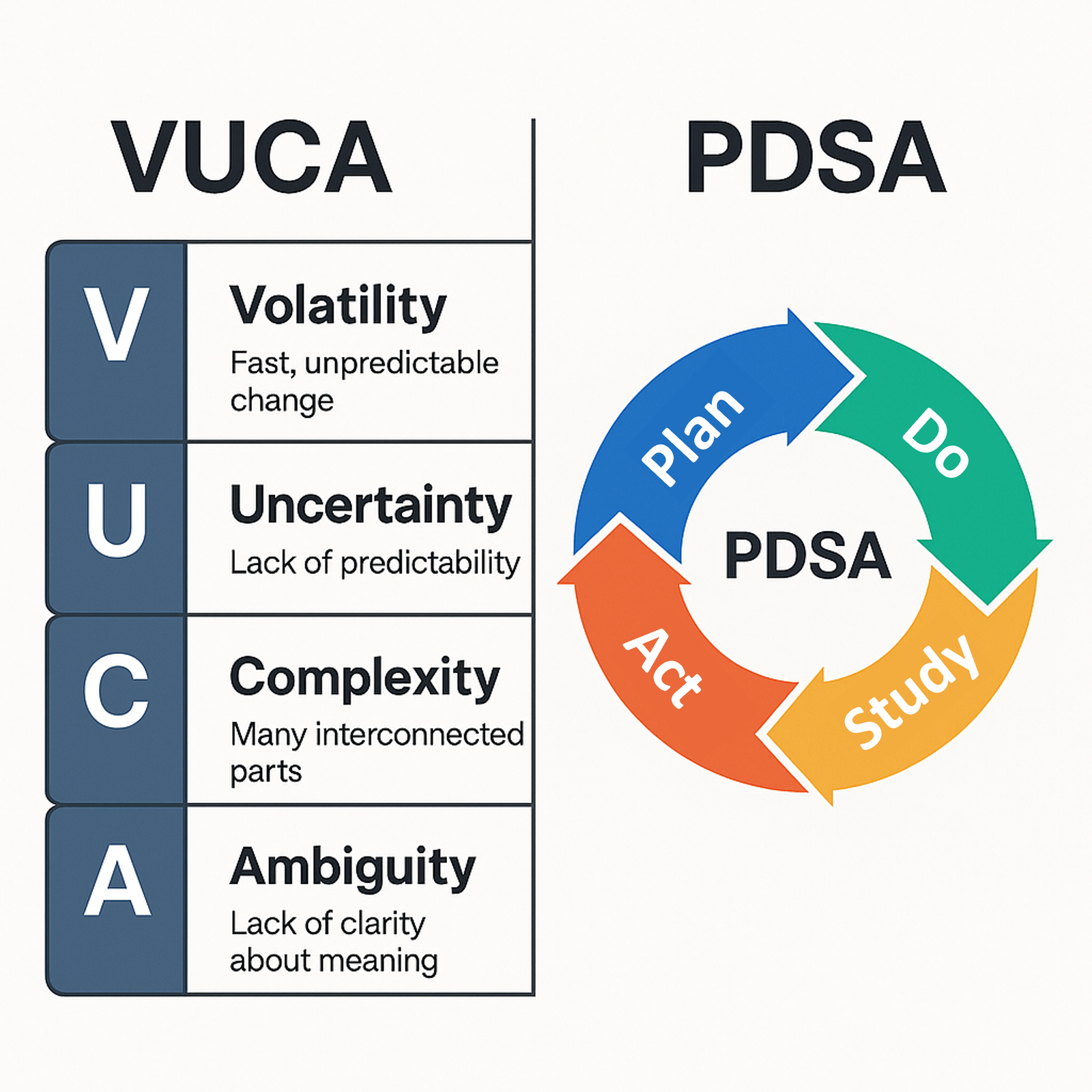
In a world defined by volatility, uncertainty, complexity, and ambiguity, leaders can no longer rely on fixed plans or past experience. VUCA describes the challenge — but PDSA provides a practical way to respond through fast learning cycles. My early years as a teacher, working with Kolb’s experiential learning model, taught me that people grow through experimentation, reflection, and adaptation. Decades later, the same learning loop has become essential for leaders: the ability to test, adjust, and learn faster...
Leadership is not defined by role or hierarchy, it is defined by behavior. After 35 years in global executive roles, I’ve seen the same truth everywhere: when leaders listen, decide, align, and act consistently, organizations perform. When they don’t, culture weakens, collaboration breaks, and operational results decline. Leadership is a daily behavioral practice, and the strongest organizations are led by those who understand this.
---
If you want a shorter or more SEO-focused version, I can create that too.
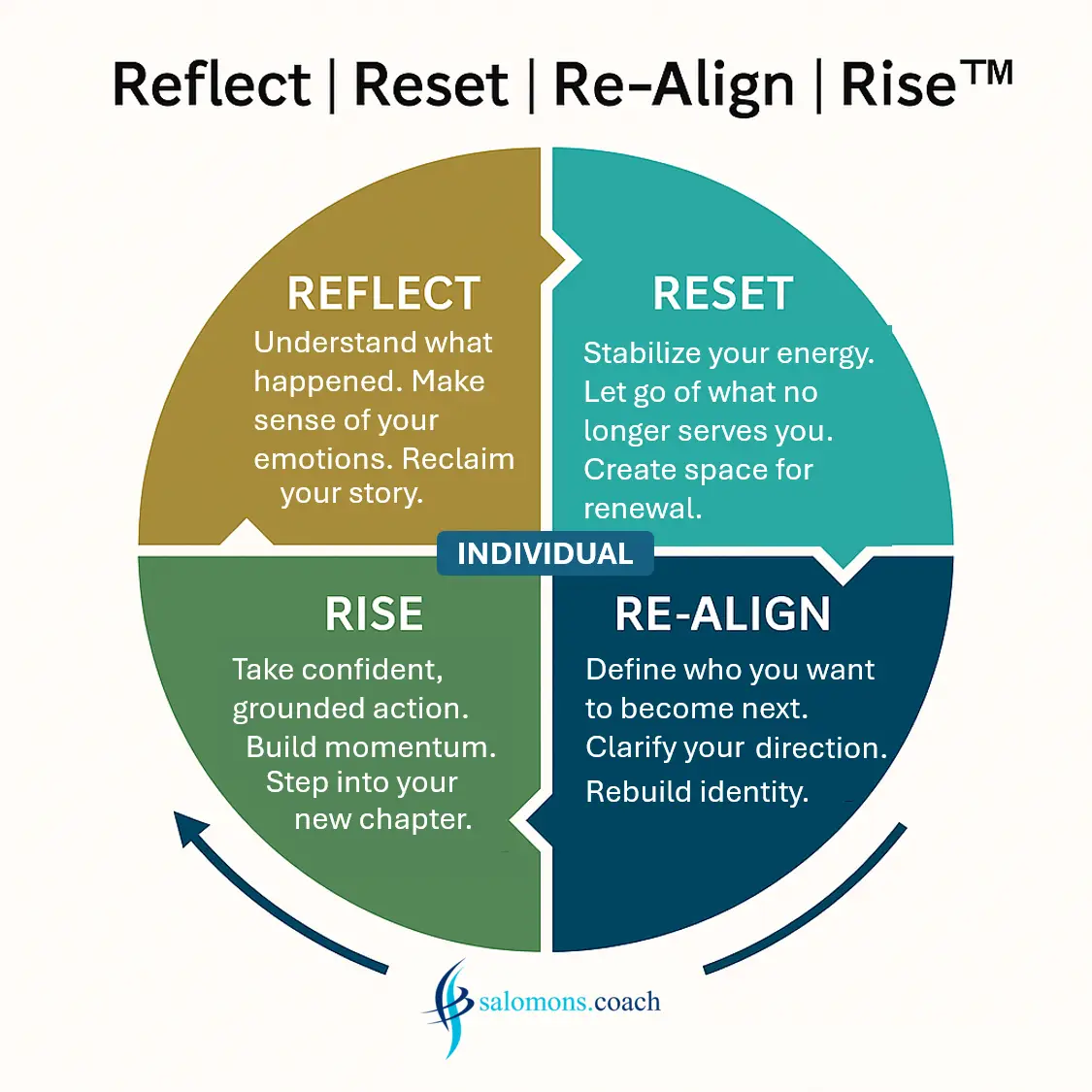
In a VUCA world, the leaders and professionals who thrive are not the ones with the most experience — but the ones with the best learning habits. Inspired by Daniel H. Pink’s science-based insights, this article explores eight powerful habits that sharpen thinking, build resilience, and accelerate growth. Whether you’re leading in uncertainty or navigating a career transition after redundancy, these habits — combined with my 4R Model (Reflect > Reset > Re-Align > Rise™) — provide a practical...
The 4R Model—Reflect, Reset, Re-Align, Rise™—emerged from more than 35 years of leading and coaching in complex, high-pressure environments, combined with solid foundations in transition theory, emotional intelligence, identity work, and psychological safety. Supported by globally respected research (including HBR), the model provides a clear, humane framework that helps people navigate redundancy, burnout, and major career shifts. Instead of treating change as a purely logistical process, 4R guides the deeper psychological journey: understanding what’s happening internally, letting go of...
Struggling with a new boss? You’re not alone. This article explains the psychology behind leadership transitions, why your brain reacts the way it does, and what practical steps help you rebuild clarity and trust—especially in high-pressure operational environments.
When TNT’s global network went dark during the NotPetya cyberattack, every system failed — but people didn’t. In this story, Jan Salomons shares how leadership, trust, and adaptability kept Europe’s largest logistics network running manually for days. It’s a story of crisis leadership in a VUCA world — where volatility, uncertainty, complexity, and ambiguity tested every level of society, organization, and individual behavior. As old hierarchies crumbled, new leaders emerged, purpose became crystal clear, and collaboration turned chaos into...
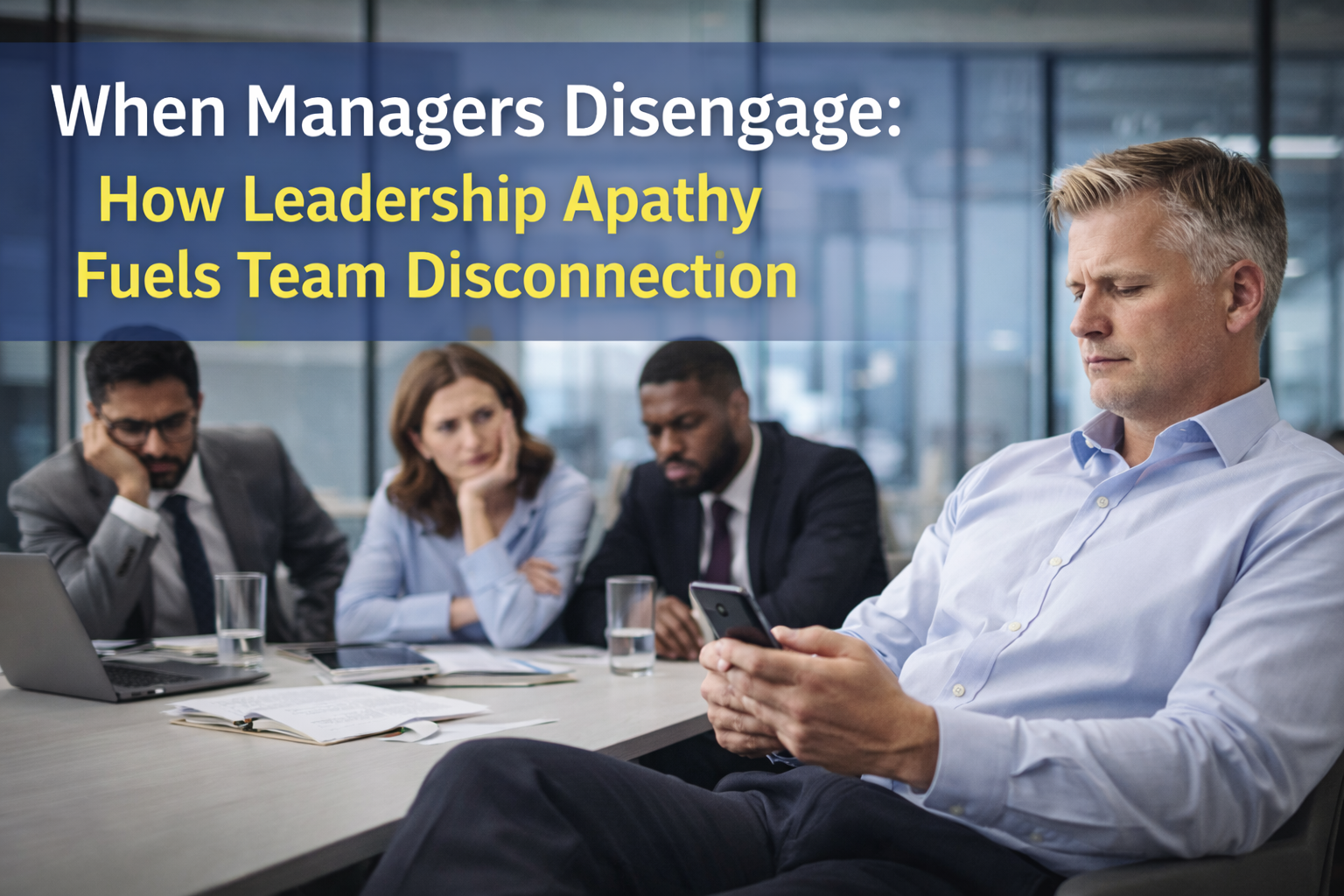
After my last post — “Is it time to stay or move on?” — someone asked, “What about disengaged managers?” It’s a fair question — and maybe the real one. Research shows only one in four managers is engaged, and when leaders disconnect, their teams follow. Disengagement often starts when managers stop reflecting on why they lead. Regular reflection isn’t self-indulgent — it’s leadership maintenance. Before judging a team’s motivation, every leader should pause and ask: Am I still...
trong emotions aren’t the enemy — they’re leadership data. In today’s volatile and uncertain world, emotions like frustration or fear often mask deeper values and unmet needs. Reframing helps leaders decode those emotions, turning tension into insight and pressure into performance. In this post, Jan Salomons explores how emotional intelligence and reframing allow leaders to stay grounded in a VUCA world — transforming reaction into reflection, and reflection into purposeful action. Learn how to work with, not against, your...
Strong emotions aren’t the problem — how we frame them is. In today’s volatile and uncertain world, leaders face constant pressure that triggers frustration, fear, or doubt. Reframing helps transform those emotions into clarity, courage, and connection. Instead of reacting, leaders learn to pause, reflect, and uncover the message behind the feeling. In this post, Jan Salomons shares how reframing turns emotion into data, reaction into reflection, and pressure into leadership strength — a crucial skill for leading in...
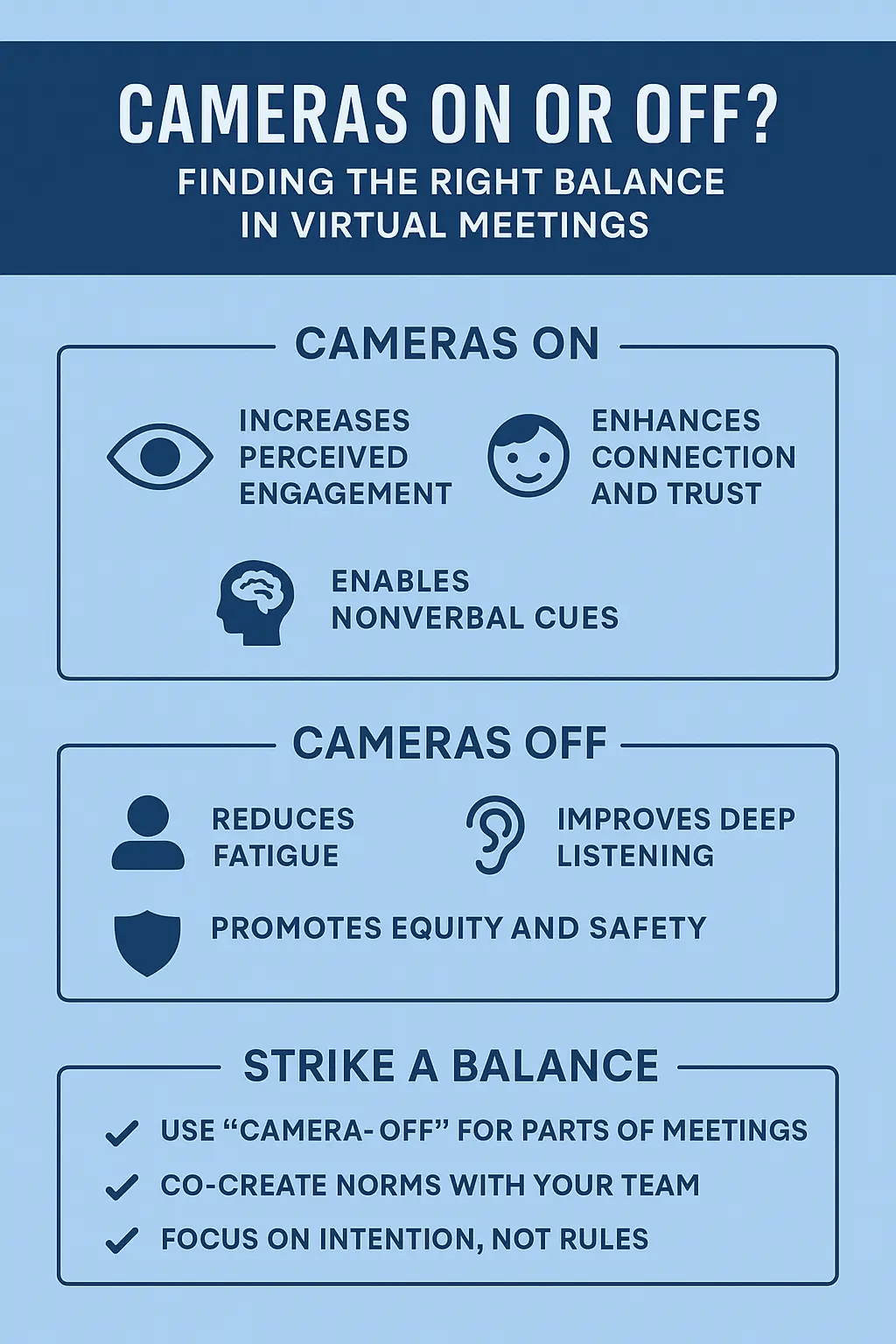
Cameras On or Off?
New research from Harvard, MIT, and Stanford reveals that virtual presence affects our energy, focus, and connection in complex ways. Cameras on foster trust, empathy, and visibility — ideal for one-on-one coaching and emotionally rich conversations. Cameras off reduce fatigue and sharpen deep listening, especially in large meetings where constant visibility causes cognitive overload. The key is not choosing one or the other, but using both intentionally. Co-create norms, use short “camera-off” reflection moments, and turn...