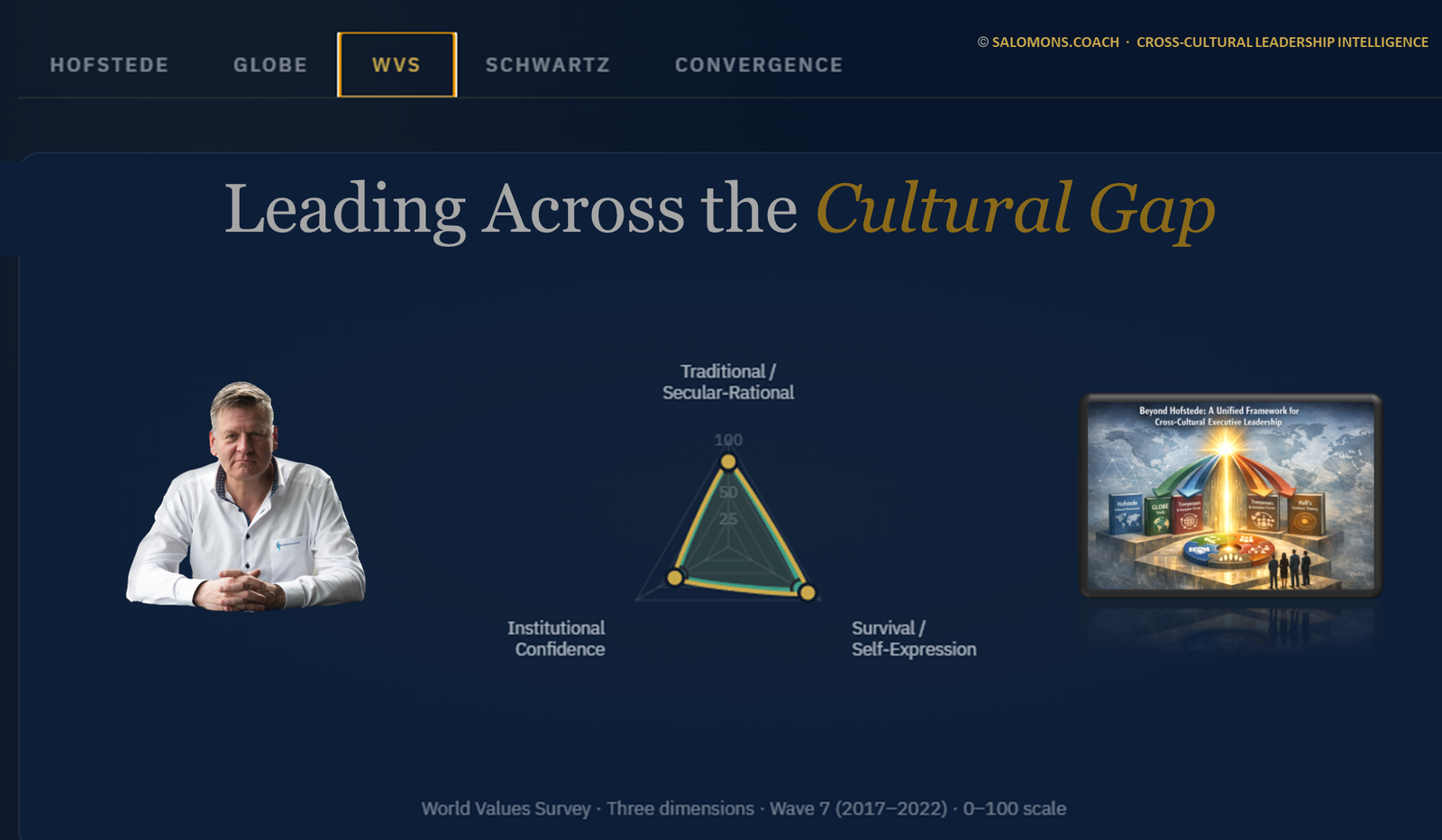
Most cross-cultural frameworks tell you how cultures differ at work. The World Values Survey reveals something deeper: what people fundamentally believe they are working for, whether they extend default trust to institutions or require it to be earned personally, and whether autonomy or security is their more basic professional motivation. These are the values that take generations to shift — and the ones that resurface under pressure even after a decade of adaptation.
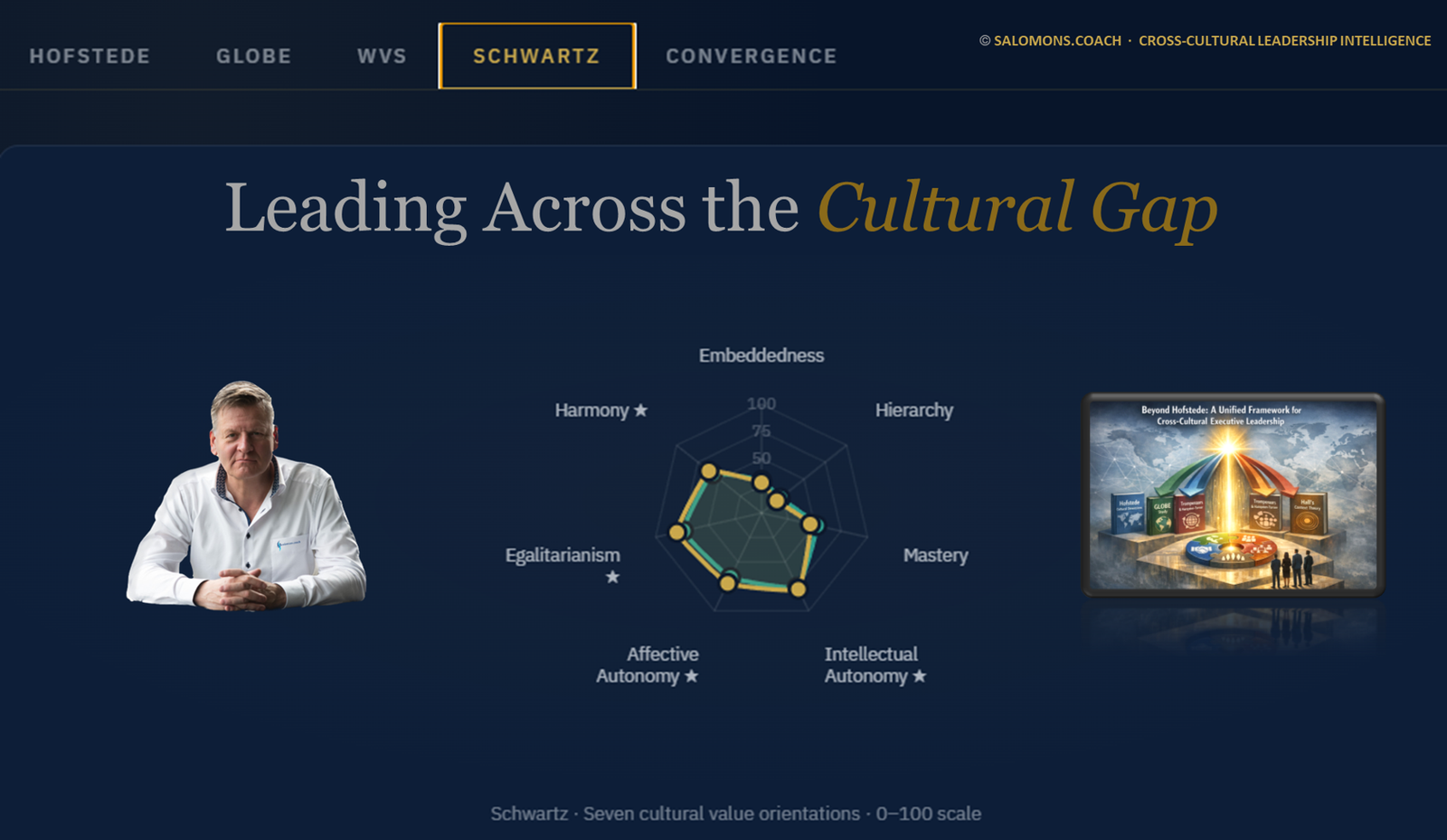
Every cross-cultural framework has blind spots. Schwartz measures four cultural dimensions that have no equivalent in Hofstede or GLOBE. If you are working without them, you are missing a significant portion of the cross-cultural picture — and in some pairings, the most operationally significant gaps in the entire analysis.
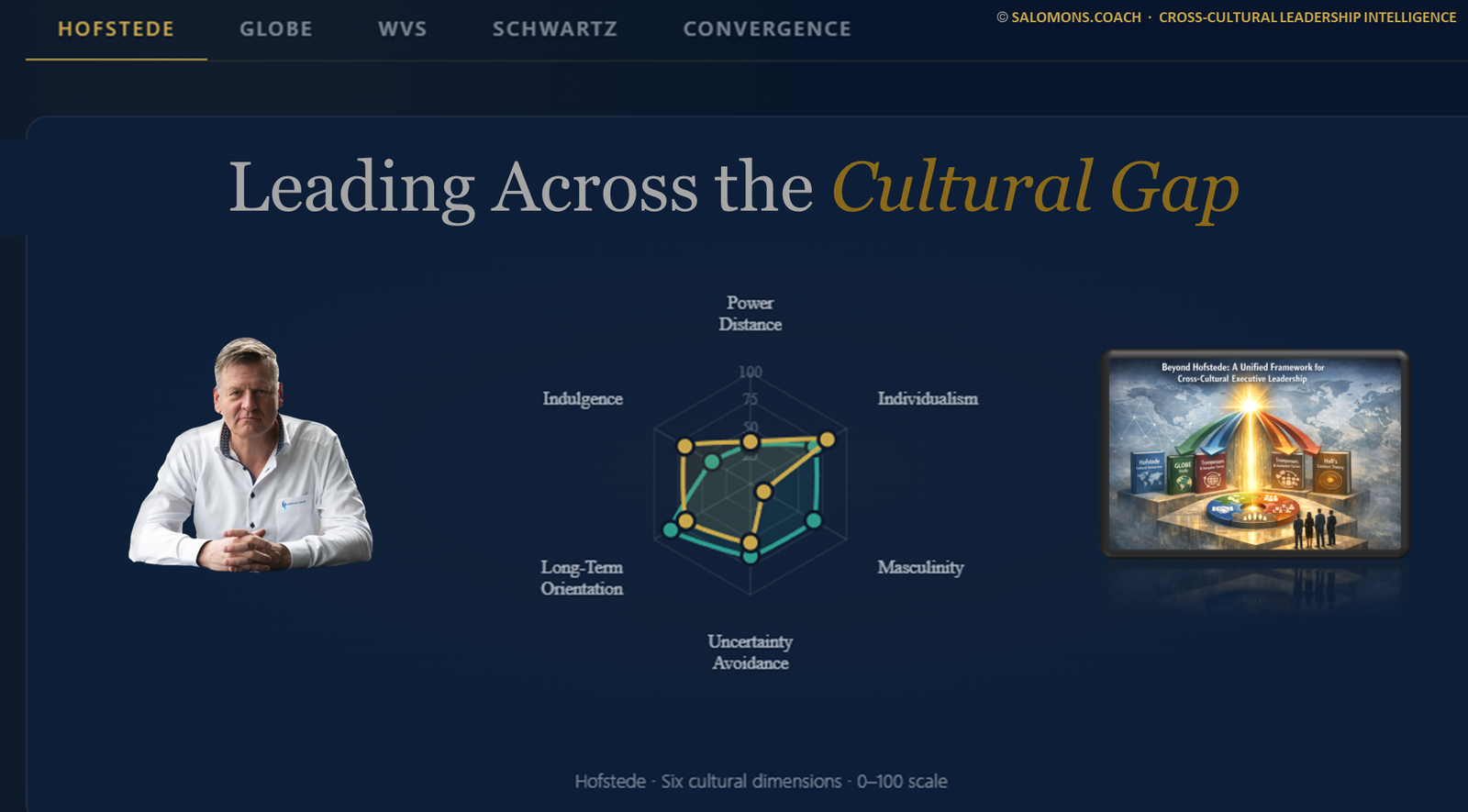
Geert Hofstede spent decades researching one question: do people from different countries think and behave differently in professional contexts in ways that are systematic, measurable, and predictable? His answer — developed through surveys of over 100,000 IBM employees across more than 50 countries — was an unambiguous yes.
The result is the most widely cited framework in cross-cultural management research. Six dimensions. Numerical scores for over 90 countries. But knowing the framework exists and knowing how to use it are different things. This post explains what Hofstede's six dimensions actually measure — and how the Cross-Cultural Leadership Compass translates them into specific, situational leadership guidance.
"Leading Diversity, Inclusion, and Belonging (DI&B) effectively requires balancing empathy with strategy. In today’s VUCA (Volatility, Uncertainty, Complexity, Ambiguity) world, DI&B leadership isn’t just ethical—it’s essential for team resilience and innovation. This article explores my experiences and the top challenges leaders face: unconscious bias, resistance to change, and measuring impact. Offering practical guidelines, do’s and don’ts, and the role of coaching, I aim to help leaders cultivate genuine inclusivity. The payoff is significant: enhanced decision-making, innovation, talent retention, and business success. Learn how to lead with heart and mind for meaningful, lasting workplace change."
In today’s globalized world, effective leadership goes beyond national identity. Taiye Selasi’s concept of asking "Where are you a local?" helps leaders connect deeply with their teams by focusing on lived experiences. Understanding rituals, relationships, and restrictions fosters empathy, inclusivity, and drives stronger collaboration in diverse environments.