salomons.coachsalomons.coach
  • Home
  • About Me
  • Blog
  • Shop
  • Services
  • Testimonials
  • Session Scheduler
  • Contact
  • Change language to Nederlands
Back
  • Home
  • About Me
  • Blog
  • Shop
  • Services
  • Testimonials
  • Session Scheduler
  • Contact
  • Change language to Nederlands
  • Home
  • Blog
  • Blog
  • Power Deafens: Here is How to Avoid it

Blog

08 Aug 2026

Power Deafens: Here is How to Avoid it

  • By salomons.coach
  • In Blog, Improving personal leadership effectiveness
Dark blue stage scene showing a gold executive chair on a circular pedestal, facing gold-framed panels and glowing circuit lines, with the headline “Power Deafens: Why Leaders Stop Hearing the Truth.”
Power Deafens — The Leadership Compass
The Leadership Compass Salomons.Coach
REFLECT RESET RE-ALIGN RISE

The Paradox of Power

Power Deafens

Why the higher you climb, the less you hear. And what to do about it.

The short version

  • The more authority you gain, the more information reaches you and the less of it is true. People do not lie to power. They edit.
  • This is structural, not personal. Every layer is a filter, and your own reactions quietly train people to hide the bad news.
  • Comfort at the top is a warning light, not a reward.
  • The fix is habits, not mindset. Thank the messenger, ask questions you cannot answer, skip the layer, appoint a dissenter, run a pre-mortem.
  • Performed openness is not real openness. A quiet room is not an aligned one.
  • Power does not lie to you. It flatters you into lying to yourself.

The last time someone told you that you were wrong, to your face, unprompted. When was it?

If you have to think hard, that is the whole problem in one question.

Here is the paradox nobody warns you about on the way up. The more authority you gain, the more information flows toward you, and the less of it is true. Not false exactly. Softened. Rounded up. Timed for your mood. People do not lie to power. They edit. And they call it a briefing.

Manfred Kets de Vries, the INSEAD professor who has spent a career inside the psychology of leaders, put it plainly. Unless you consciously invite dissent, reward candor, and tolerate uncomfortable feedback, you risk becoming a prisoner of your own importance.

I have watched it happen to good people. Smart, decent, well intentioned leaders who slowly stopped hearing anything they did not already believe. It rarely looks like arrogance. It looks like comfort.

This is physics, not character

You will not fix this by being a nicer person.

Distance distorts. Every layer between you and the front line is also a filter, and every filter has a career to protect. By the time news reaches the top, it has been through six people who each had a reason to trim the edges.

Then there is the part you do yourself. You smile at good news and frown at problems, and within a month everyone has learned to bring you the first and hide the second. You did not ask for that. You trained it, one facial expression at a time.

The trap is structural. So the way out is structural too. You do not feel your way to the truth. You build the machine that delivers it.

◆

The tell

Want to know if you are already inside the trap? Sit with these.

  • What percentage of the news you receive is good news? If it is most of it, someone is managing you.
  • When bad news finally reaches you, how old is it?
  • When did you last reverse a decision because of something you heard from below?
  • Who in your organisation is actually allowed to interrupt you?

None of these are comfortable. That is the signal. Comfort at the top is not a reward. It is a warning light.

What to do on Monday

The fix is not a mindset. It is a set of habits, run on a rhythm until they become the culture.

  • Thank the messenger firstSomeone brings you a problem, your first job is to reward the person, not react to the news. Do this once in public and the whole room recalibrates.
  • Ask questions you cannot answerIf you already know the answer, you are testing loyalty, not seeking truth. Walk in with a real question and let the silence sit until someone fills it with something you did not want to hear.
  • Skip the layerTalk to people two levels down without their managers in the room. Not to bypass anyone. To calibrate what the chain is telling you against what is actually happening.
  • Appoint a dissenterGive one person the explicit job of arguing against the decision. Rotate it. When disagreement is a role, it stops being a risk, and people stop paying for honesty with their standing.
  • Run the pre-mortemBefore the big call, declare it failed and ask the room why. You will hear every objection that politeness was busy hiding. Failure is always easier to discuss in the hypothetical.

The part most leaders get wrong

They perform openness instead of practising it.

"My door is always open" is not an invitation. It is a test most people quietly decline. Openness is a behaviour, not a slogan, and your people are watching what you do the day after someone was honest with you. Reward candor in the meeting, then go cold for a week, and they will believe the second signal every time.

And do not mistake a quiet room for an aligned one. A team that nods is not agreeing. It is waiting for you to leave. Alignment survives disagreement. Silence only hides it.

Power does not lie to you. It flatters you into lying to yourself.

The leaders who keep hearing the truth are not the humble ones. They are the deliberate ones. They built the machine that brings them bad news, and they refuse to switch it off just because it happens to be working.

Invite the dissent. Reward the candor. Tolerate the discomfort.

Or stay comfortable, well informed, and wrong.

A question to sit with this week: who has stopped disagreeing with you, and are you sure it is because you are right?

Coaching with Jan Salomons

Hard truths are easier with a coach in the room.

I work with C-suite and senior operations leaders who want candor they can trust and decisions they can defend. If this post named something you recognise, let us talk.

Start a conversation

Jan Salomons

Executive Coach · The 4R Model

Leadership development for C-suite and senior operations leaders. Reflect. Reset. Re-Align. Rise.

salomons.coach
Tags:Power & authoritypsychological safetyself-awareness
  • Share:
salomons.coach
Jan Salomons is a seasoned leader/executive who shares his knowledge and experience as an executive mentor/coach/trainer as well as a transformation and operations excellence expert. He has over 35 years of experience working with senior leaders across more than 55 countries, and is an elected member of the Harvard Business Review Advisory Council.

You may also like

The Ultimate Guide to the Impossible Operating Plan

  • 9 November 2026
  • by salomons.coach
  • in Blog
When an operating plan depends on overtime or deferred work, leaders need to check workload, capacity and who can...
Businesswoman standing and presenting to colleagues around a glass-walled conference room table.
New Leader, Existing Team, Team Reset
16 October 2026
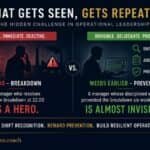
Infographic titled 'What gets seen, gets repeated' showing two columns: left red section 'Visible. Immediate. Reactive.' with a red alert siren, a worker on the phone, factory silhouettes, and a '22:00' breakdown; caption 'IS A HERO.' Right green section 'Invisible. Deliberate. Proactive.' with a worker at a laptop displaying a rising graph and icons labeled 'Identify risk', 'Address causes', 'Prevent failure'; caption 'WEEKS EARLIER – PREVENTION' and 'IS ALMOST INVISIBLE.' Bottom banner reads 'Shift recognition. Reward prevention. Build resilient operations.' and shows salomons.coach.
What Gets Seen, Gets Repeated – Firefighters vs Preventers
26 September 2026
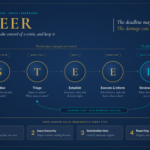
Infographic titled STEER showing five circular steps (S, T, E, E, R) for crisis leadership on a dark blue background. Steps: Stabilise, Triage, Establish, Execute & inform, Review & refine.
Five Steps to Take Immediate Control of a Crisis
24 September 2026

Leave A Reply Cancel reply

Your email address will not be published. Required fields are marked *

This site uses Akismet to reduce spam. Learn how your comment data is processed.

Categories

  • Blog (175)
  • Building high-performing leadership teams (25)
  • Closing leadership capability gaps (24)
  • Improving personal leadership effectiveness (46)
  • Leading across cultures and boundaries (15)
  • Leading through uncertainty and crisis (11)
  • Making better leadership decisions (4)
  • Making change stick (12)
  • Navigating leadership and career transitions (13)
  • Sustaining performance under pressure (15)
  • Turning strategy into operational results (10)
  • Video (16)

Recent Posts

The Ultimate Guide to the Impossible Operating Plan
09Nov,2026
Businesswoman standing and presenting to colleagues around a glass-walled conference room table.
New Leader, Existing Team, Team Reset
16Oct,2026
Infographic titled 'What gets seen, gets repeated' showing two columns: left red section 'Visible. Immediate. Reactive.' with a red alert siren, a worker on the phone, factory silhouettes, and a '22:00' breakdown; caption 'IS A HERO.' Right green section 'Invisible. Deliberate. Proactive.' with a worker at a laptop displaying a rising graph and icons labeled 'Identify risk', 'Address causes', 'Prevent failure'; caption 'WEEKS EARLIER – PREVENTION' and 'IS ALMOST INVISIBLE.' Bottom banner reads 'Shift recognition. Reward prevention. Build resilient operations.' and shows salomons.coach.
What Gets Seen, Gets Repeated – Firefighters vs Preventers
26Sep,2026

Tags

accountability (10) adaptability (5) AI & leadership (5) authenticity (10) Career transitions (11) Change execution (13) Coaching effectiveness (9) Coaching tools (18) communication (17) cross-cultural leadership (15) Cultural frameworks (12) decision making (6) Dialogue & conflict (7) emotional-intelligence (8) executive-coaching (15) Executive judgment (5) Executive presence (7) feedback (6) Focus & priorities (11) Global teams (5) Leadership behaviour (21) leadership development (16) Leadership transitions (5) learning culture (9) Neuroscience & learning (7) Operational excellence (7) Operational governance (5) Organisational culture (15) Organisational transformation (7) Ownership & delegation (6) Performance measurement (7) Personal resilience (10) psychological safety (14) Purpose & values (8) Recovery & wellbeing (7) Redundancy & outplacement (6) Research & evidence (8) self-awareness (43) Stress & coping (10) systems thinking (8) team alignment (6) Team effectiveness (15) trust (7) VUCA & uncertainty (9) Work-life boundaries (4)
All posts - searchable table
Recent videos
the-adhd-watch-list-hero

The Best ADHD Videos for Leaders: Science, Stories, Strategy

In 14 July 2026
No Comment
Female speaker on stage delivering a TEDx talk, with a headset mic and gesturing, while a lower-third bio identifies her as a professor of organizational behaviour.

The Authenticity Paradox | Professor Herminia Ibarra 

Brooks – Harvard – on Happiness

Happiness as a Leadership Strategy

L360 youyrownjourney landing page L360

Find your true purpose

Leadership thinking you can use

The Leadership Compass

For the decisions, conversations and changes you need to lead.

Receive articles grounded in executive experience, coaching and the realities of running an operation.

Read an example article ↗

Newsletter Form

Two short welcome emails in the first week, then articles about every two weeks. Unsubscribe at any time.

Privacy policy

GET IN TOUCH

Salomons.Coach
KvK: 72129131
+31 6 53 89 75 67

jan@salomons.coach

The Netherlands

USEFUL LINKS

  • About
  • Privacy policy
  • Term & Conditions
  • Refund & Returns
  • Payment policy
  • Digital Policy
  • Methodology & Sources

LinkedIn

  • Linkedin

salomons.coach by J.K. Salomons Holding B.V., 2018-2027

Change language to Nederlands