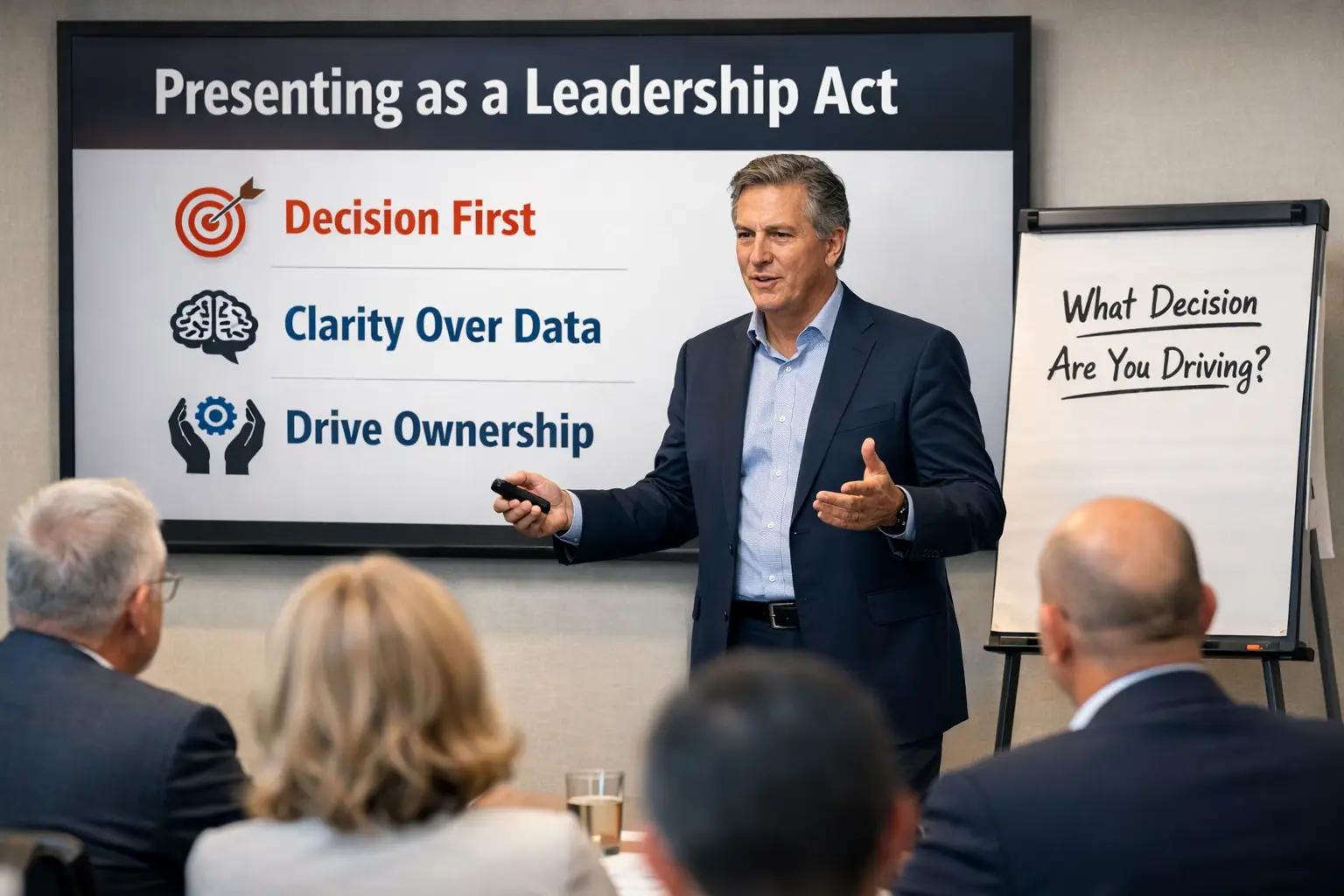
Most presentations fail not because the content is weak, but because leadership intent is unclear. Drawing on years of training and coaching senior leaders, this article reframes presentation skills as a leadership behavior under pressure, where decisions are enabled, complexity is reduced, and ownership becomes explicit. Presenting, done well, is not about slides. It is about leading thinking in the room.
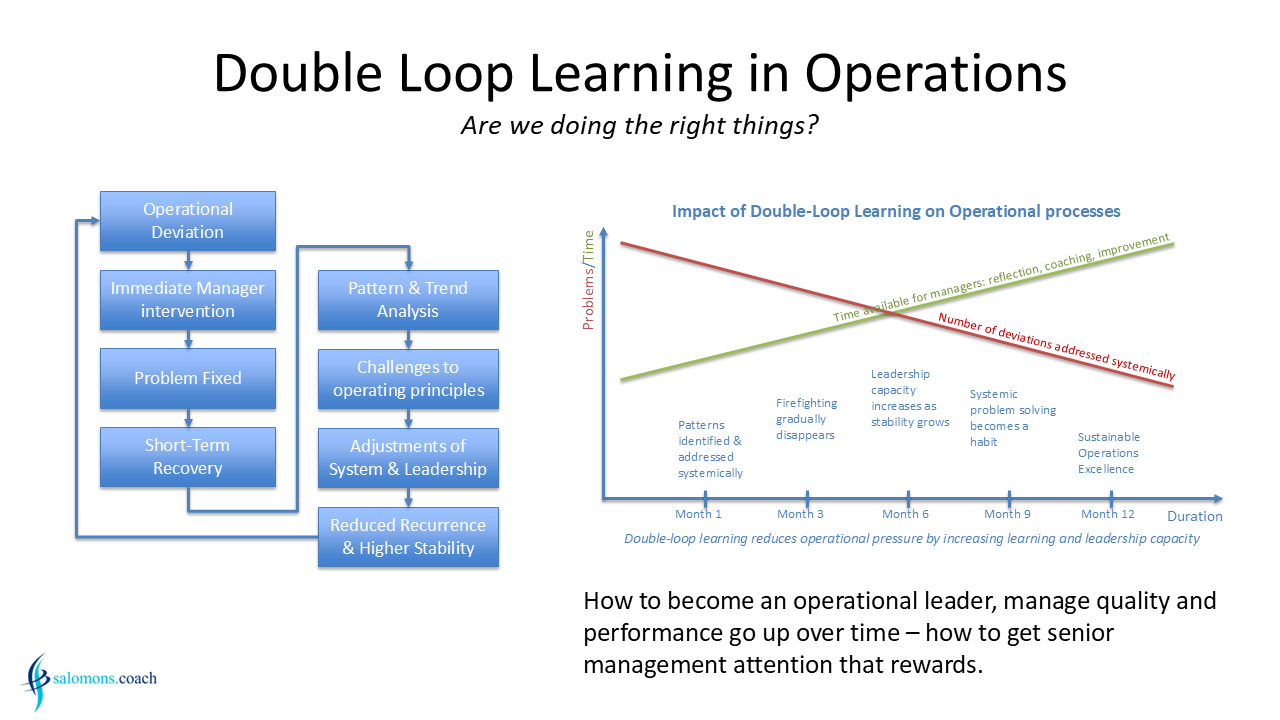
Firefighting is rational, but it traps organizations.
Under pressure, leaders act on what is visible and urgent, fixing problems to keep operations moving. Yet this behavior prevents learning, reinforces firefighting, and consumes leadership capacity. Sustainable performance requires shifting from solving today’s issues to redesigning the system that creates them.
Leadership is not revealed in intentions, values, or language. It is revealed in results.
In my work with leaders and teams, I always start with outcomes — and then work backwards to what leadership truly demands under pressure. Not to judge, but to understand which patterns, decisions, and behaviors are quietly shaping performance.
Results are never the problem. They are the mirror.
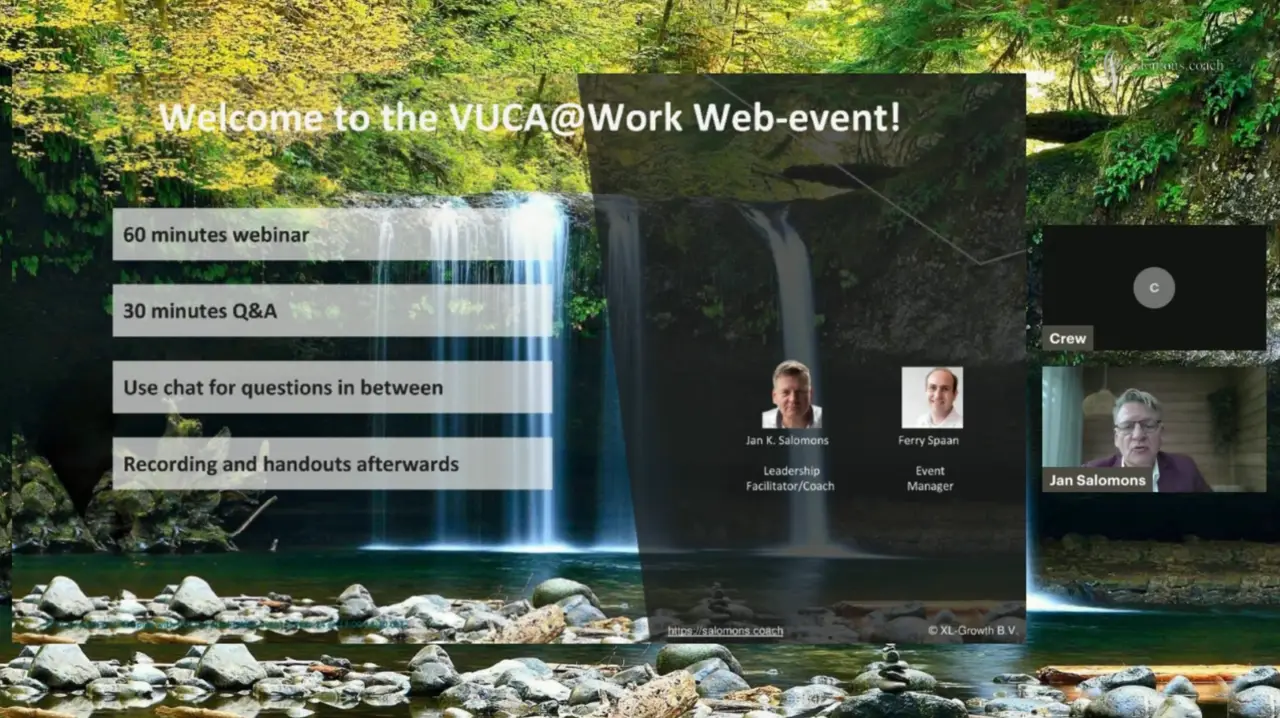
On November 1, we hosted our first “VUCA@Work” web event, an engaging 90-minute session aimed at helping leaders navigate Volatility, Uncertainty, Complexity, and Ambiguity. The event featured real-world examples, interactive discussions, and essential coping strategies, such as scenario planning, data-driven decision-making, and fostering psychological safety. Attendees left with practical tools for emotional resilience, agile decision-making, and transparent communication. This successful session underscored the importance of preparation, interactivity, and feedback for future events, ensuring leaders are equipped to thrive in...
It’s become a trendy managerial acronym: VUCA, short for volatility, uncertainty, complexity, and ambiguity, and a catchall for “Hey, it’s crazy out there!” (HBR). It’s also misleading: VUCA conflates four distinct types of challenges that demand four distinct types of responses. That makes it difficult to know how to approach a challenging situation and easy to use VUCA as a crutch, a way to throw off the hard work of strategy and planning—after all, you can’t prepare for a...