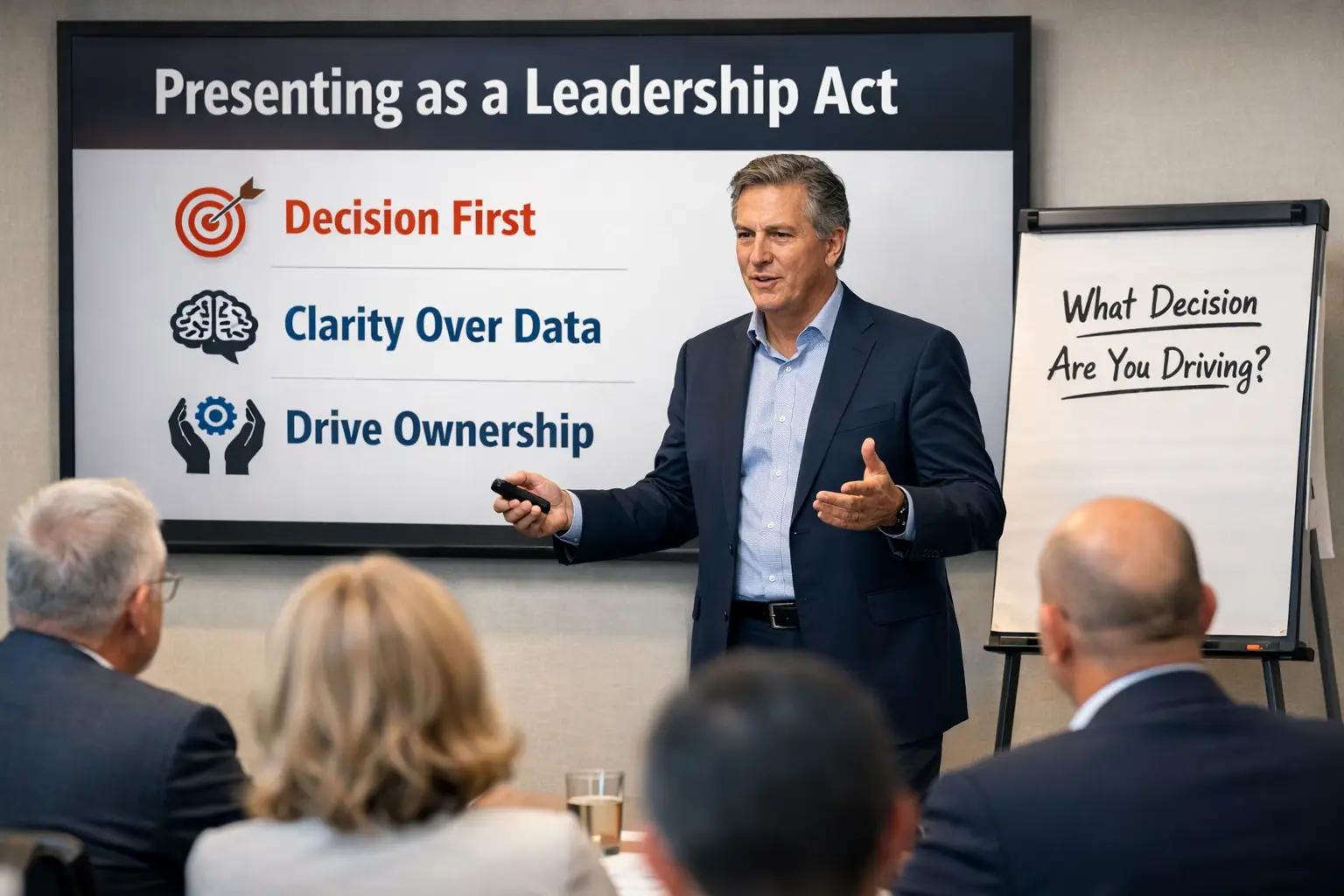
Most presentations fail not because the content is weak, but because leadership intent is unclear. Drawing on years of training and coaching senior leaders, this article reframes presentation skills as a leadership behavior under pressure, where decisions are enabled, complexity is reduced, and ownership becomes explicit. Presenting, done well, is not about slides. It is about leading thinking in the room.
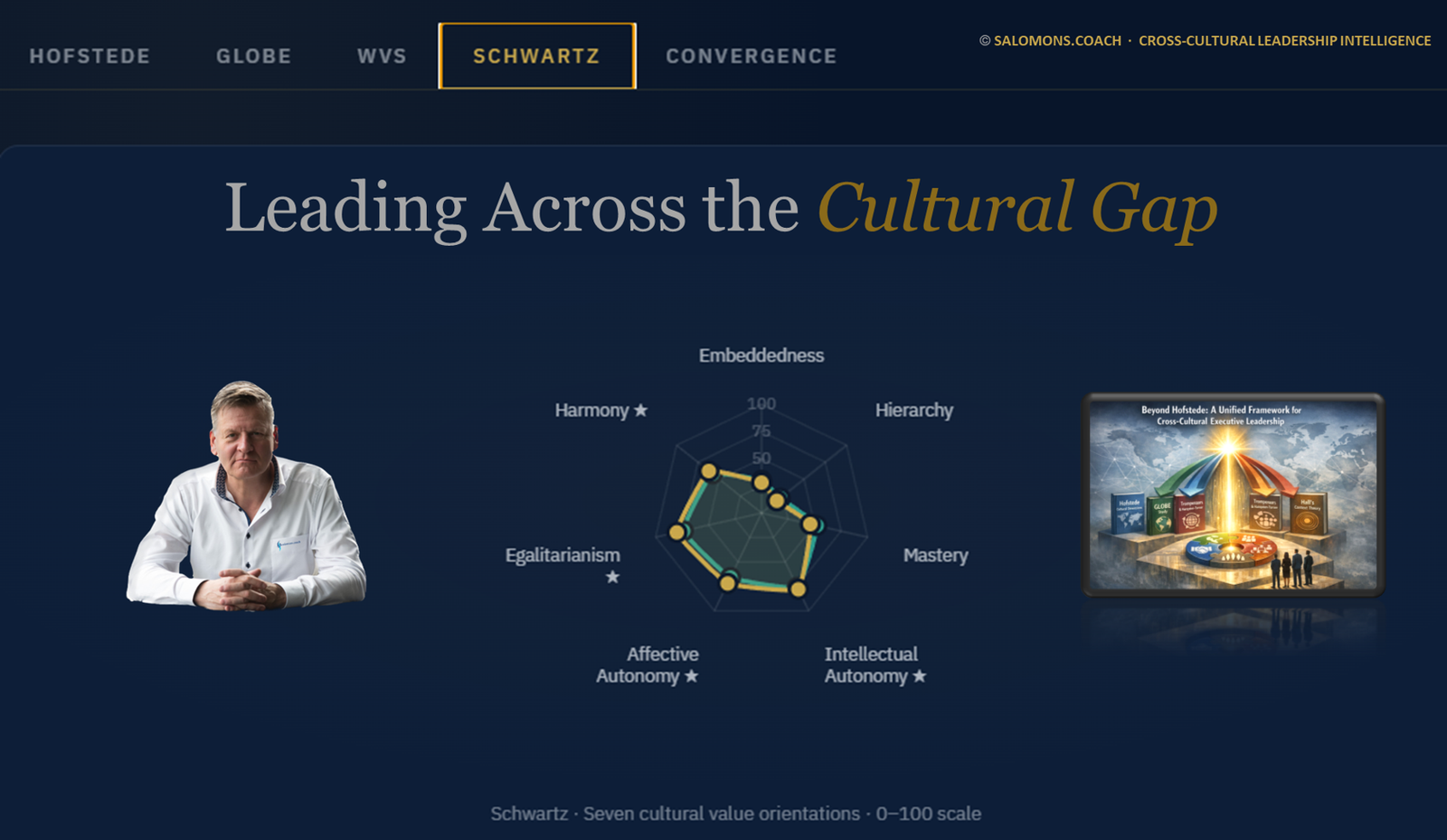
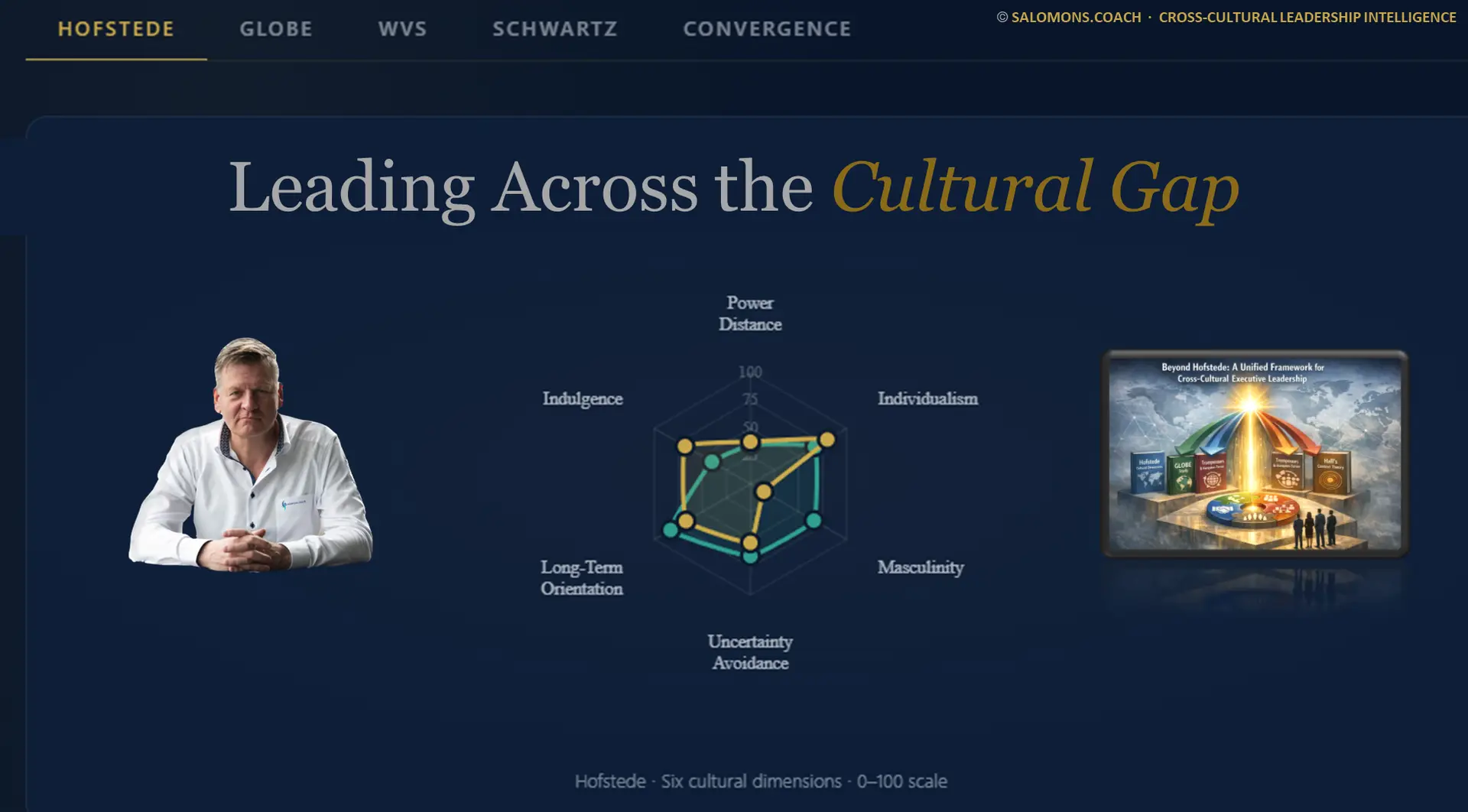
Every cross-cultural framework has blind spots. Schwartz measures four cultural dimensions that have no equivalent in Hofstede or GLOBE. If you are working without them, you are missing a significant portion of the cross-cultural picture — and in some pairings, the most operationally significant gaps in the entire analysis.
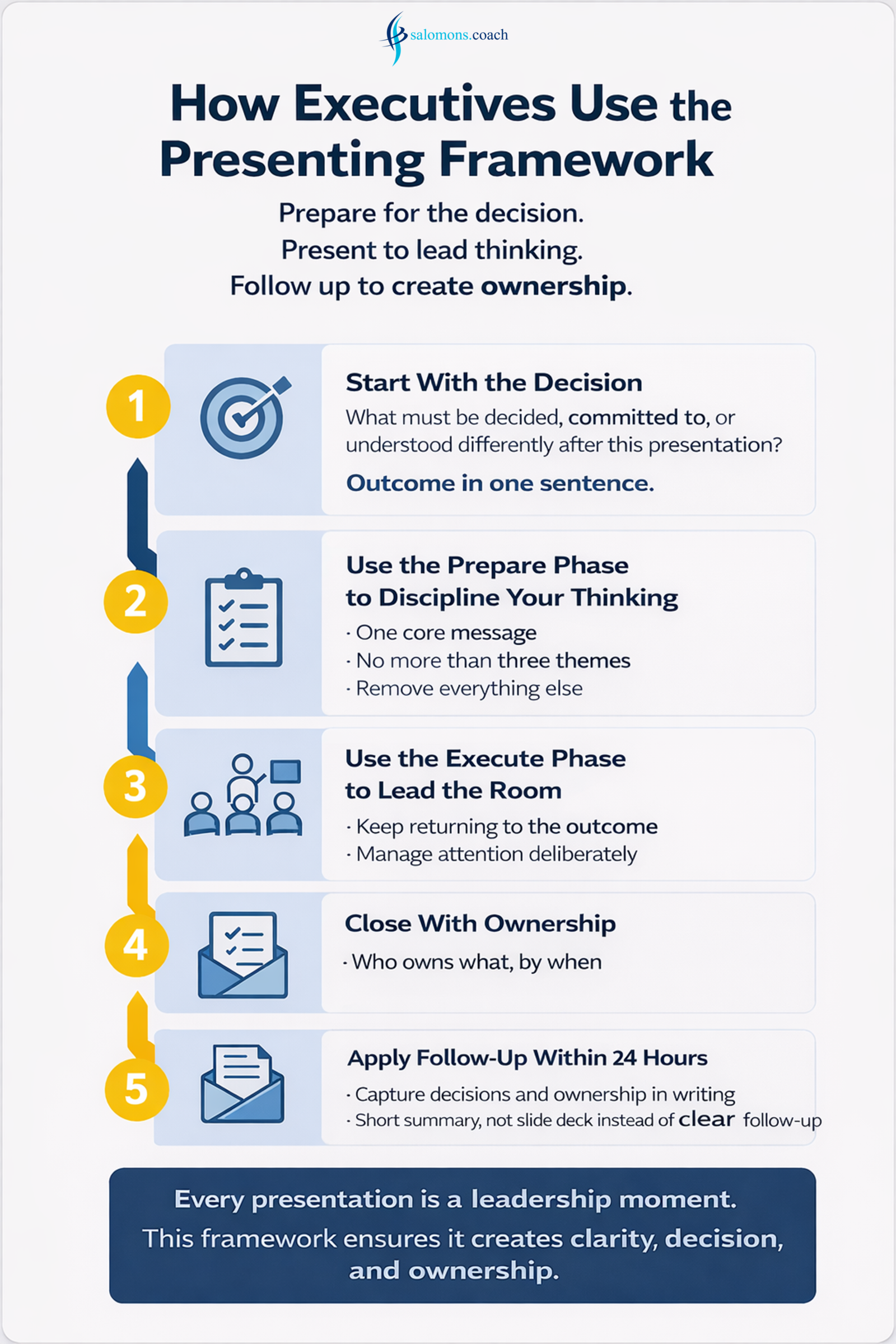
Presenting at executive level is not a communication skill, it is leadership in public. The Executive Presenting Framework reframes presentations as leadership moments where judgment, clarity, and ownership are established under pressure. Built for VUCA environments, the framework helps senior leaders reduce cognitive overload, lead thinking in the room, and ensure that presentations result in decisions and execution.
AI is often framed as a technology challenge. In reality, it is a leadership one. By accelerating speed, increasing transparency, and making decisions comparable, AI exposes how leaders decide, where judgment is avoided, and how accountability is handled. This article explores why AI does not replace leaders, but reveals leadership behaviors that were previously hidden—and why credibility in an AI-driven world depends less on technical expertise and more on explicit judgment and ownership.
As AI becomes embedded in organizational decision-making, not all decisions should be automated. Some choices define values, require accountability, and demand human judgment under uncertainty. This article explores five leadership decisions AI should never make—not because AI is incapable, but because leadership legitimacy, responsibility, and trust cannot be delegated to technology.
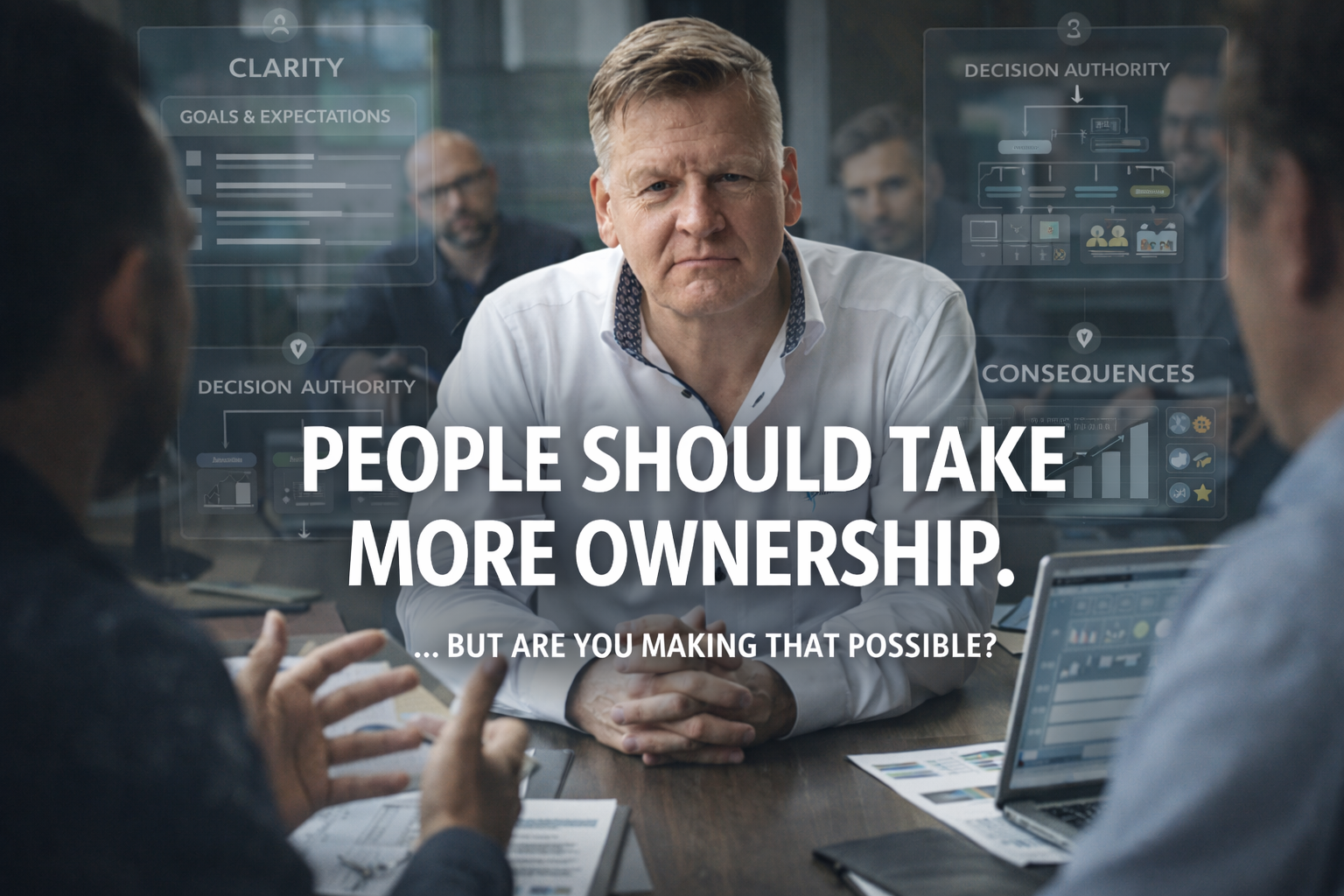
Ownership in organizations is often treated as a mindset problem. In reality, it is a design issue. When goals are unclear, authority and accountability are misaligned, and leadership behavior is inconsistent, ownership erodes. This article explains why ownership is not something you demand from people, but something you deliberately build through structure, behavior, and leadership discipline.
Geert Hofstede spent decades researching one question: do people from different countries think and behave differently in professional contexts in ways that are systematic, measurable, and predictable? His answer — developed through surveys of over 100,000 IBM employees across more than 50 countries — was an unambiguous yes.
The result is the most widely cited framework in cross-cultural management research. Six dimensions. Numerical scores for over 90 countries. But knowing the framework exists and knowing how to use it are...
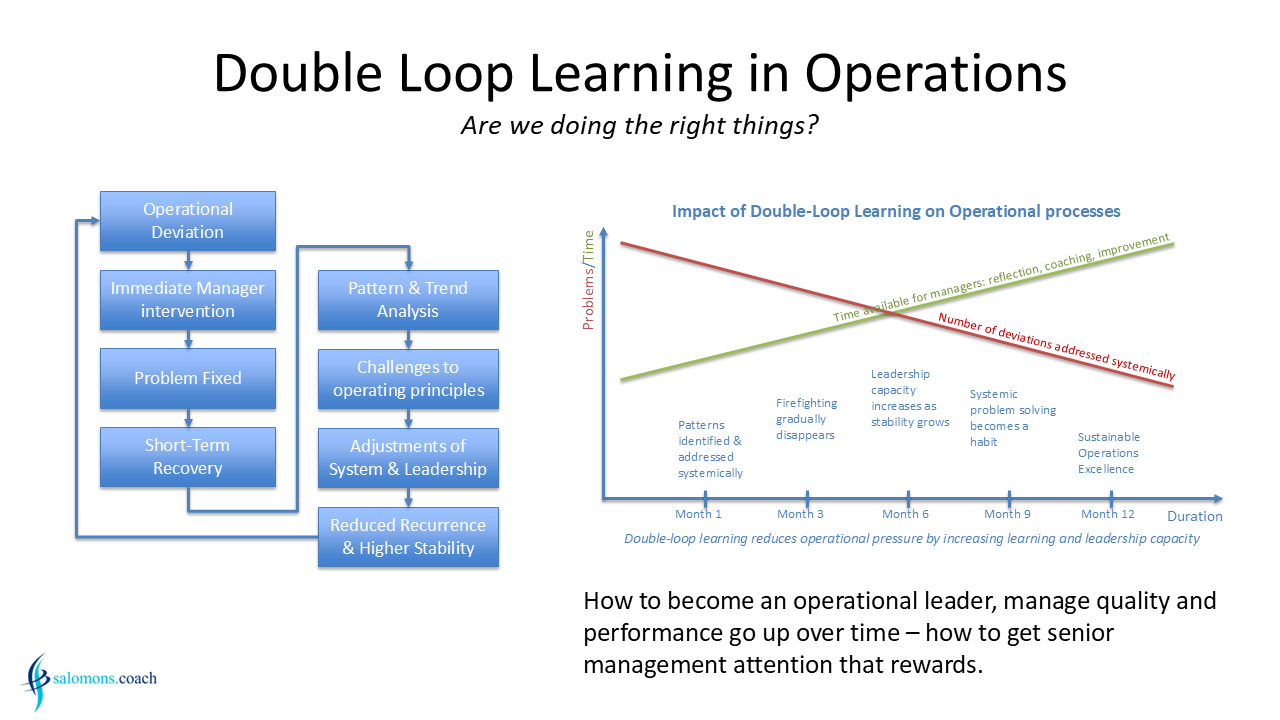
Firefighting is rational, but it traps organizations.
Under pressure, leaders act on what is visible and urgent, fixing problems to keep operations moving. Yet this behavior prevents learning, reinforces firefighting, and consumes leadership capacity. Sustainable performance requires shifting from solving today’s issues to redesigning the system that creates them.
Excellent leadership dialogue is not about open discussion without boundaries. It is a disciplined practice that creates shared understanding, surfaces real differences, and leads to genuine commitment. When leaders avoid constructive conflict or rush to agreement, alignment becomes fragile and execution suffers. The strongest leadership teams invest in dialogue first, so commitment follows naturally, without the need to manage appearances.
Many leadership teams mistake agreement for commitment. When dialogue is rushed and constructive conflict is avoided, alignment becomes something that must be shown rather than earned. People comply, but they do not commit. Real alignment is built earlier, through disciplined dialogue, the courage to surface different perspectives, and the willingness to stay in the conversation until shared understanding emerges. When leaders invest in that process, commitment follows naturally. And when commitment is real, alignment no longer needs to be...