As AI becomes embedded in organizational decision-making, not all decisions should be automated. Some choices define values, require accountability, and demand human judgment under uncertainty. This article explores five leadership decisions AI should never make—not because AI is incapable, but because leadership legitimacy, responsibility, and trust cannot be delegated to technology.
AI is often framed as a technology challenge. In reality, it is a leadership one. By accelerating speed, increasing transparency, and making decisions comparable, AI exposes how leaders decide, where judgment is avoided, and how accountability is handled. This article explores why AI does not replace leaders, but reveals leadership behaviors that were previously hidden—and why credibility in an AI-driven world depends less on technical expertise and more on explicit judgment and ownership.

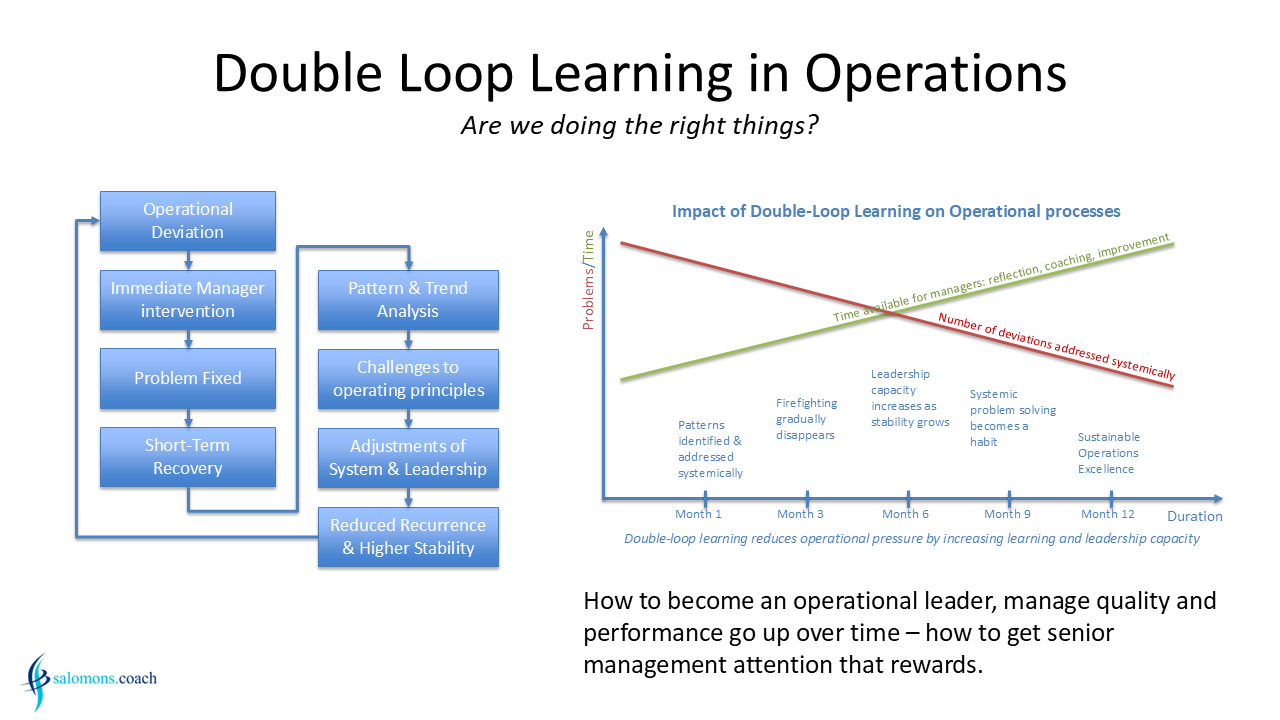
Firefighting is rational, but it traps organizations.
Under pressure, leaders act on what is visible and urgent, fixing problems to keep operations moving. Yet this behavior prevents learning, reinforces firefighting, and consumes leadership capacity. Sustainable performance requires shifting from solving today’s issues to redesigning the system that creates them.
Between 2010 and 2013, I worked with TU Delft and PhD researcher Gandert van Raemsdonck on pioneering aerodynamic innovations for TNT’s European Road Network. As head of business, process, fleet, and environmental development, I joined a unique coalition of engineers, researchers, and industry partners exploring how airflow, drag, and turbulence could be reduced to make transport cleaner and more efficient. Our side-wings and rear-flow experiments were ahead of their time, and even featured on RTL Nieuws. It was an...