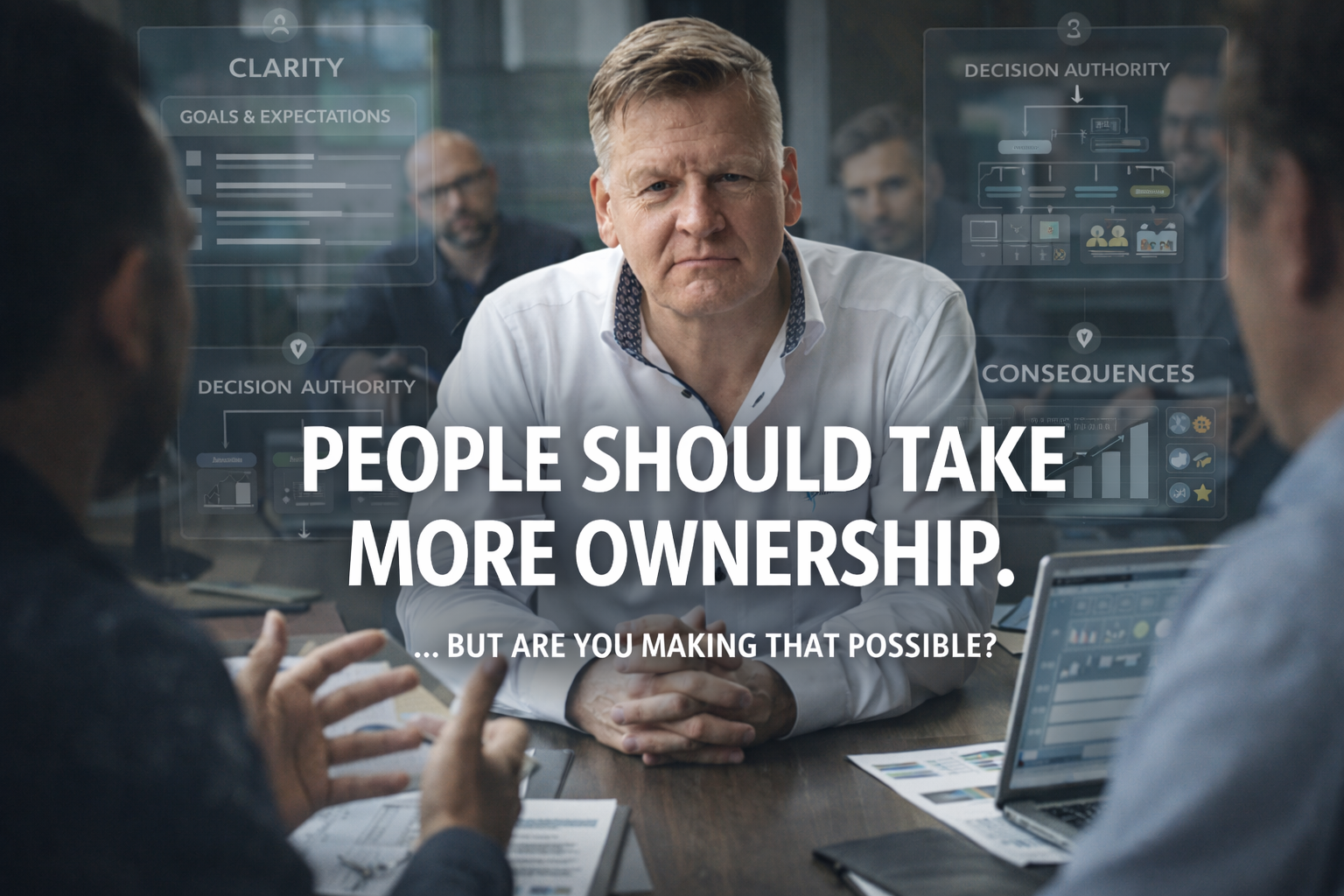
Ownership in organizations is often treated as a mindset problem. In reality, it is a design issue. When goals are unclear, authority and accountability are misaligned, and leadership behavior is inconsistent, ownership erodes. This article explains why ownership is not something you demand from people, but something you deliberately build through structure, behavior, and leadership discipline.
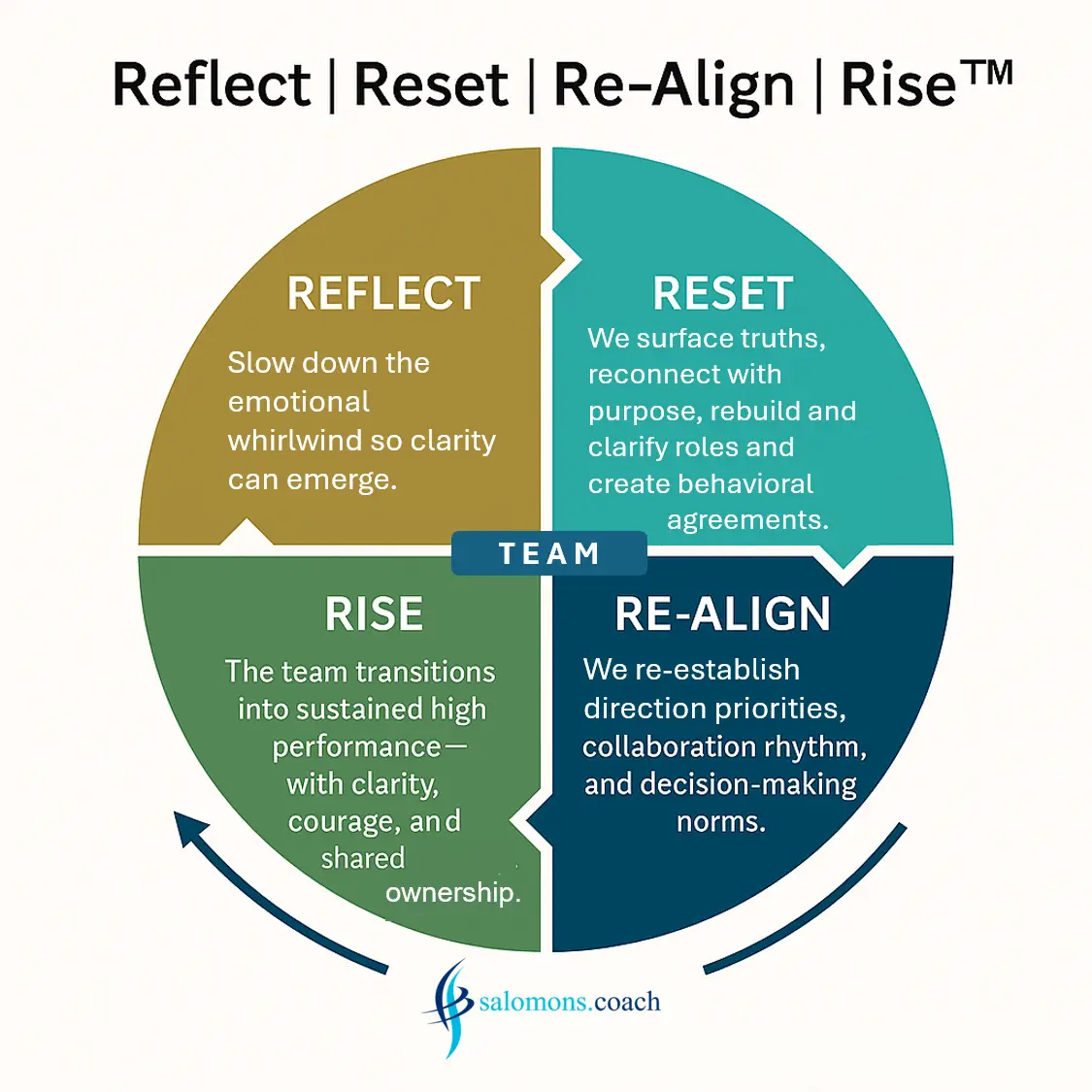
Most teams don’t fail because they don’t work hard — they fail because they work too fast, too isolated, and without reflection.
When every team focuses on solving its own problems, sub-optimization becomes inevitable. Each quick fix triggers side effects elsewhere, creating a vicious cycle of ad-hoc problem-solving that drains energy and weakens performance.
Research on High-Performing Teams shows that real success depends on trust, shared purpose, and systemic alignment — not more speed.
Breaking that cycle starts when leaders and teams...
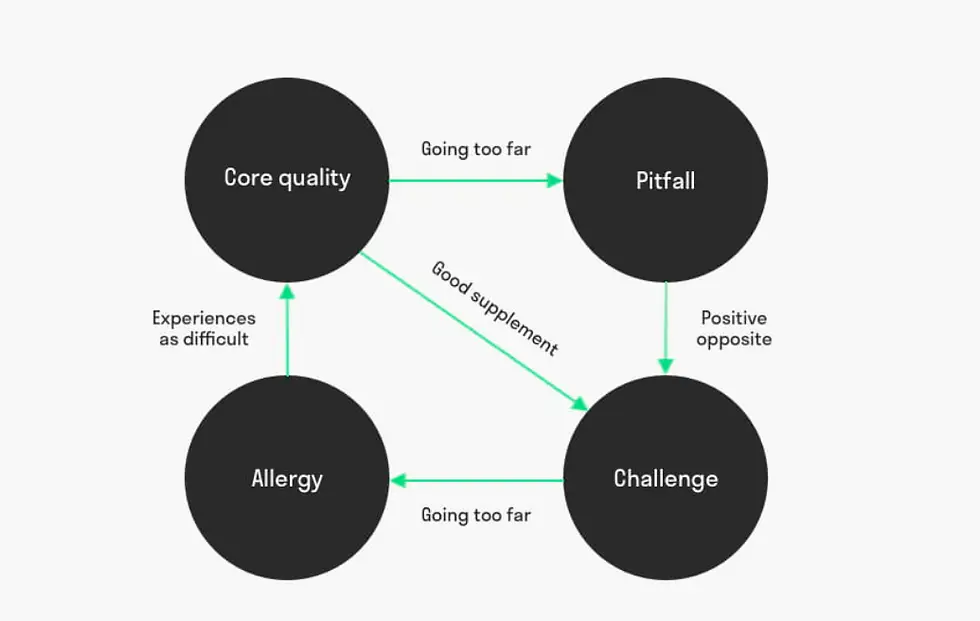
The Core Quadrants by Daniel Ofman are an effective tool for team building, helping teams understand individual dynamics and how to collaborate better. By identifying core qualities, pitfalls, challenges, and allergies, teams gain insights into strengths and areas for growth. For example, one team member’s creativity (core quality) may lead to chaos (pitfall), while another’s structure (core quality) could result in rigidity (pitfall). By discussing complementarities and irritations (allergies), teams learn to value differences and work cohesively. Regular reflection...
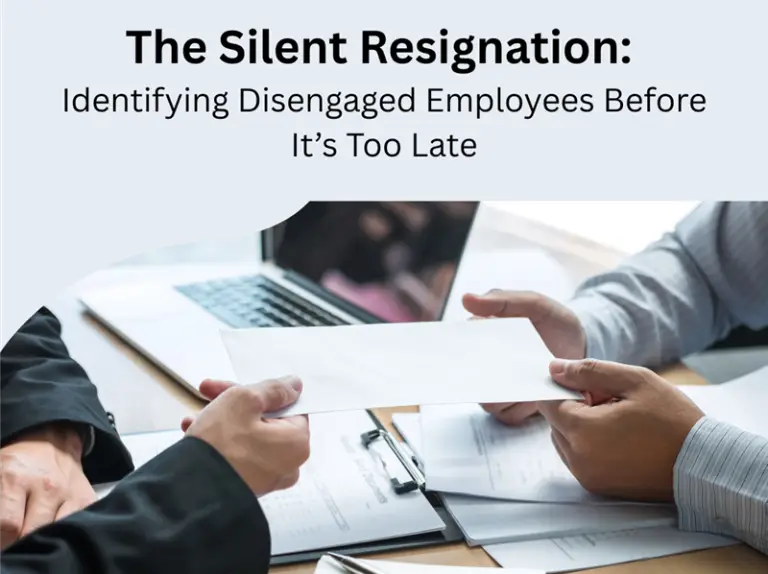
In today’s fast-changing workplace, leaders and teams benefit from regularly reflecting on whether their current environment still supports their energy, growth, and purpose. Using a structured reflection questionnaire, I help leaders gain clarity on what strengthens or drains them — and whether they should stay, adjust, or move on. The same process transforms teams by uncovering hidden dynamics, restoring passion, and realigning people with the mission and vision. This reflective approach boosts engagement, performance, and retention, while preventing silent...
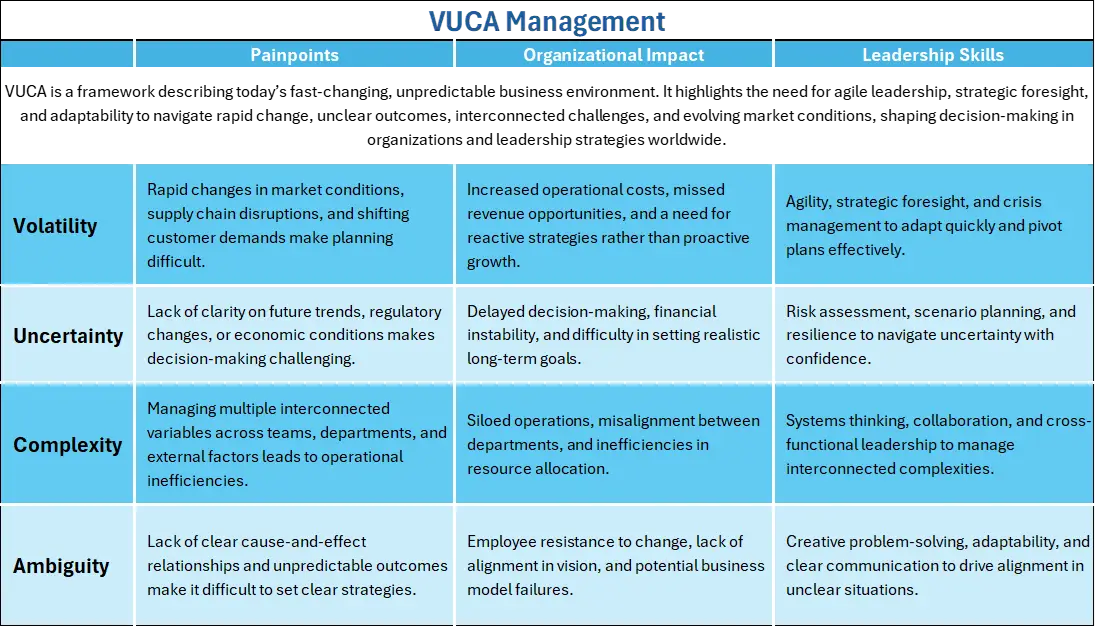
In today’s fast-changing world, leaders must navigate Volatility, Uncertainty, Complexity, and Ambiguity (VUCA) with confidence. As a leadership coach, trainer, and keynote speaker, I help organizations and leaders master VUCA leadership by developing agility, resilience, and strategic foresight. Through coaching, interactive training, and inspiring keynotes, I equip leaders with practical strategies to turn uncertainty into opportunity. Whether you're leading change, managing complexity, or preparing for the future, I provide real-world insights to help you succeed. Let’s build VUCA-ready leaders...
It’s become a trendy managerial acronym: VUCA, short for volatility, uncertainty, complexity, and ambiguity, and a catchall for “Hey, it’s crazy out there!” (HBR). It’s also misleading: VUCA conflates four distinct types of challenges that demand four distinct types of responses. That makes it difficult to know how to approach a challenging situation and easy to use VUCA as a crutch, a way to throw off the hard work of strategy and planning—after all, you can’t prepare for a...