Redundancy in the Netherlands is often misunderstood as a personal failure, while in reality it is a legally structured process with strong employee protections. This article explains your rights, the procedures employers must follow, and the timeframes involved — from UWV approval and notice periods to reassignment obligations, dismissal bans, transition payments and WW benefits. With clarity and compassion, it guides you through what the law requires, what you can expect, and how to move forward confidently in your...
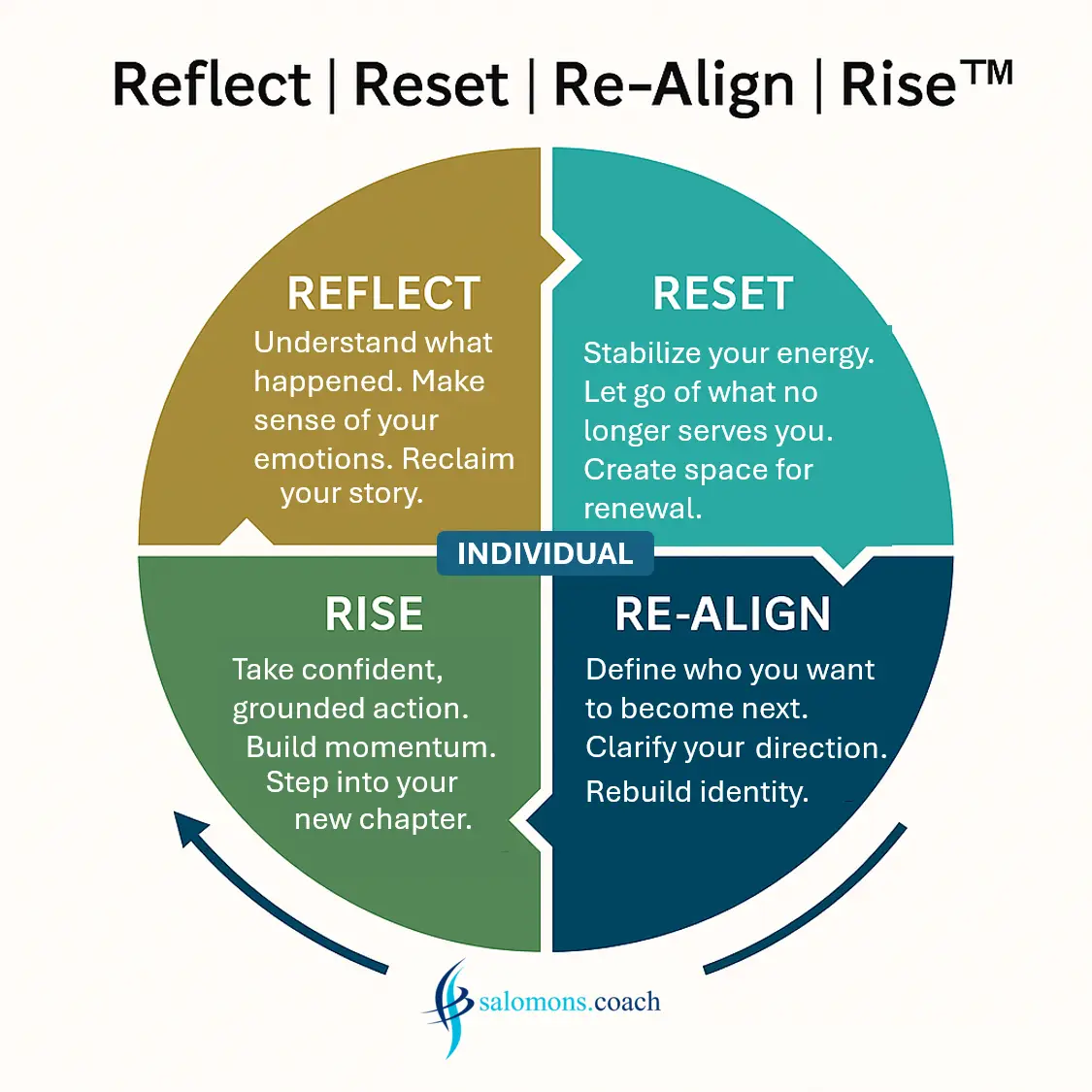
The 4R Model—Reflect, Reset, Re-Align, Rise™—emerged from more than 35 years of leading and coaching in complex, high-pressure environments, combined with solid foundations in transition theory, emotional intelligence, identity work, and psychological safety. Supported by globally respected research (including HBR), the model provides a clear, humane framework that helps people navigate redundancy, burnout, and major career shifts. Instead of treating change as a purely logistical process, 4R guides the deeper psychological journey: understanding what’s happening internally, letting go of...
Purpose isn’t a slogan or a statement — it’s a force that moves you. In this post, Jan Salomons explores the difference between intellectual purpose and deep purpose: the kind that calls you into action even when it’s uncomfortable. Drawing on insights from Frederic Laloux, his coaching practice, and his experience in VUCA leadership, he explains how purpose guides choices, builds trust, and creates focus amid uncertainty. Discover how to sense your true purpose — not from your mind,...
Busyness has become a badge of honor, but it rarely leads to impact or well-being. In this post, Jan Salomons explores why being busy is more often a habit than a necessity — and how leaders can shift from managing time to managing focus. In a VUCA world, where speed and complexity dominate, clarity and reflection become the real leadership differentiators. Learn how to move from motion to meaning through self-awareness, attention, and purpose, and discover why slowing down...
Feedback is often misunderstood as something to endure rather than embrace. Yet in my years as an executive and leadership coach, I’ve learned that growth doesn’t come from giving the perfect feedback—it comes from receiving it well. When we move beyond defensiveness and see criticism as potential coaching, feedback turns from a threat into a tool for learning. The moment we shift our mindset from “What’s wrong with me?” to “What can I learn here?”, we unlock one of...
Discover the true essence of Ikigai—far beyond the popular Venn diagram. Rooted in Japanese culture, Ikigai is about finding joy and purpose in the small, meaningful moments of everyday life. Learn how this concept has been misunderstood and how embracing its authentic meaning can lead to a more fulfilling existence.
In today’s fast-changing workplace, leaders and teams benefit from regularly reflecting on whether their current environment still supports their energy, growth, and purpose. Using a structured reflection questionnaire, I help leaders gain clarity on what strengthens or drains them — and whether they should stay, adjust, or move on. The same process transforms teams by uncovering hidden dynamics, restoring passion, and realigning people with the mission and vision. This reflective approach boosts engagement, performance, and retention, while preventing silent...
In today’s fast-paced world, work easily takes center stage in our identity. Inspired by Simone Stolzoff’s “How to Reclaim Your Life from Work,” this reflection exercise helps you rebalance what truly matters. The Circle of You invites you to visualize how your time and energy are divided — and what your ideal balance would look like. By comparing the two, you’ll see where small, meaningful shifts can begin. Your job should support your life, not define it. This exercise...
Leadership isn’t about power, it’s about influence. Discover what *You’re the Boss* by Sabina Nawaz teaches leaders about clarity, feedback, and trust – including a real-life case from the boardroom.
I still remember the moment I lost my cool. The frustration had been building for days, and during a routine meeting with one of my subordinates, I snapped. My words were sharp, my tone unkind, and the look on their face—shock and hurt—was a painful reminder that I’d crossed a line.
As leaders, we often pride ourselves on staying composed, but we’re human, too. That day, I learned the hard way that managing others starts with managing yourself. Emotional outbursts...