One-on-one meetings are one of the most powerful leadership tools — and one of the most frequently misused. Drawing from personal leadership experience and evidence-based research, this article explores how leaders can design and execute one-on-ones that go beyond status updates and become conversations that build clarity, trust, and sustainable performance.

In high-pressure leadership environments, silence is often mistaken for indecision. Yet the most important insights rarely emerge in the middle of noise. They surface afterwards, when reaction stops and space is created to think.
Drawing from decades of leadership experience and supported by neuroscience, this article explores why silence is not the absence of leadership, but a condition for it. Silence reduces cognitive load, calms the nervous system, activates reflective brain networks, and supports clarity, creativity, and better decision-making.
You will...
In this personal leadership journey, Jan Salomons shares how he transitioned from an engineering teacher to a global executive and ultimately to a leadership and executive coach. Drawing on more than 35 years of international leadership experience across complex organisations, he reveals the pivotal insights that shaped his purpose: leadership is human work, not just technical or operational skill. His evolution into coaching grew from a belief that sustained behavioural change and self-awareness unlock real performance and resilient teams
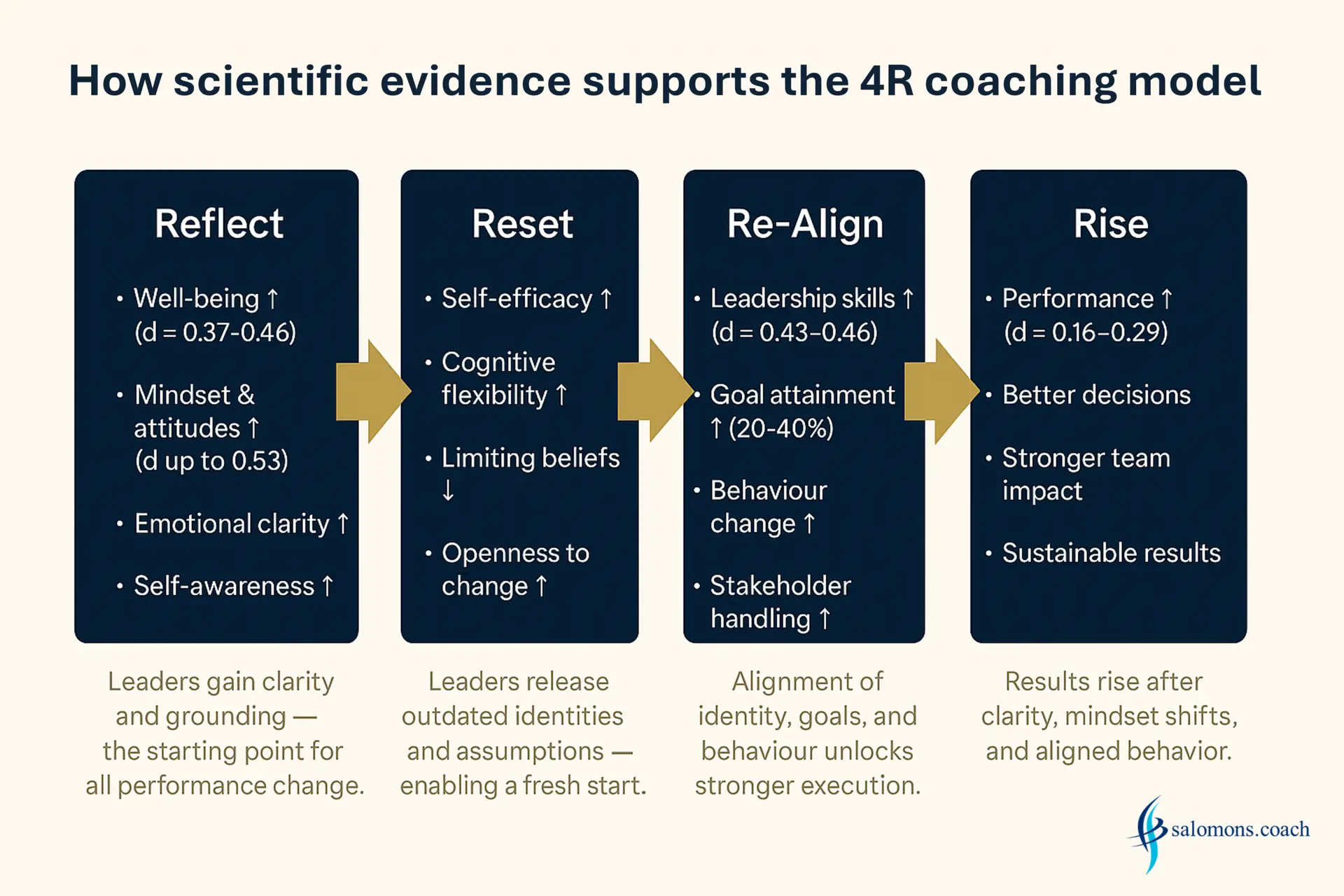
The latest scientific research on workplace coaching shows a clear, measurable pattern: meaningful change happens in four stages. Leaders first gain emotional clarity and self-awareness, then release limiting beliefs, realign their behaviour and skills with a stronger identity, and finally see measurable performance improvements. This progression mirrors the 4R Model (Reflect–Reset–Re-Align–Rise™). Backed by meta-analyses and randomized controlled trials, the evidence confirms that sustainable leadership performance begins with inner clarity—not with KPIs.
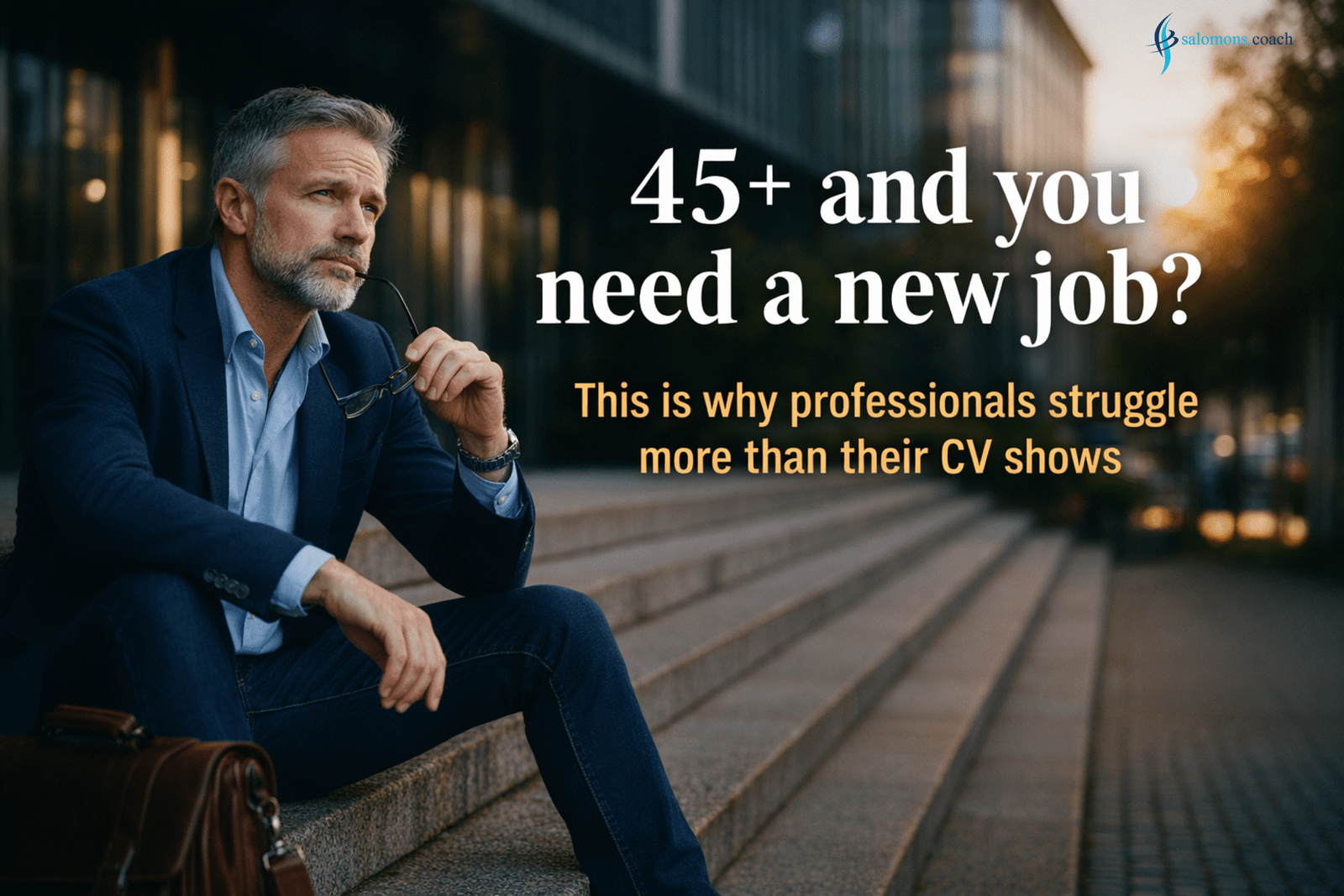
Many professionals over 45 hear the same reassuring phrases when they lose their job—yet the reality they face in the Dutch labour market is far more complex. This article explores why experienced mid-career professionals struggle not because of capability, but because the hiring system interprets their broad value too narrowly. Based on the 4R Model (Reflect–Reset–Re-Align–Rise™) and real client insights, it reveals the hidden dynamics that shape career transitions and what truly helps professionals rise stronger.
In a world full of noise and pressure, the most courageous leaders are not the loudest ones, but the ones who create space for stillness and honest self-reflection. Like a quiet bridge reflected in calm water, authentic leadership emerges when we stand steady in who we are and dare to look inward. Clarity, integrity, and presence begin not with action, but with awareness.
Watching Arthur Brooks’ talk on the science of happiness offers a powerful insight for leaders: happiness isn’t a mood — it’s a disciplined practice that shapes how you lead. Brooks reveals that enjoyment, satisfaction, and meaning form the foundation of true well-being, and only a small part of it depends on circumstances. The rest comes from daily habits rooted in relationships, purpose, and service. For leaders, this is transformative: it shifts happiness from a personal luxury to a strategic...
It’s not mindset. Not your CV. Not networking. It’s time.
We talk about layoffs as if they are linear: job ends > new job starts.
But real life doesn’t work that way.
What determines whether someone recovers well or gets stuck is the amount of time they have to move through the inner journey: Reflect > Reset > Re-Align > Rise™
Most executive teams don’t fail because of strategy — they fail because of what they avoid. These 10 provoking questions cut through noise, expose blind spots, and accelerate real transformation. They challenge leaders to face the hard truths about their behavior, decisions, and impact. If you want to grow as a leader, start by answering these questions honestly.
Redundancy is often treated as a quick transition, but the real determining factor in someone’s recovery is time. The pace at which a person can move through the inner journey of Reflect–Reset–Re-Align–Rise™ depends on financial pressure, VSO terms, WW timelines, emotional impact, and life circumstances. When the process is rushed, unresolved phases return later as stress, confusion, or poor career choices. When people are given time, clarity grows, confidence returns, and their next step becomes intentional rather than reactive....