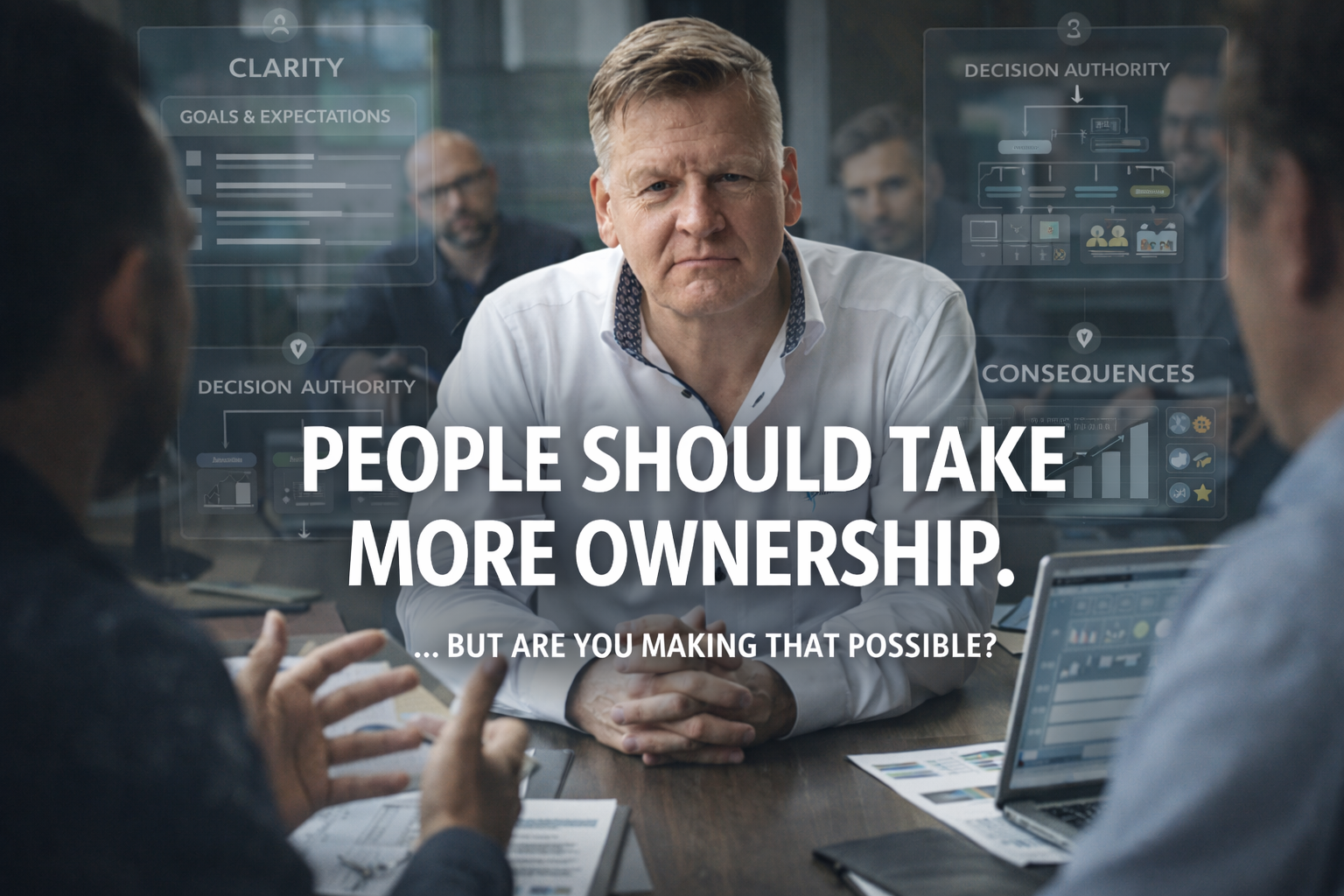
Ownership in organizations is often treated as a mindset problem. In reality, it is a design issue. When goals are unclear, authority and accountability are misaligned, and leadership behavior is inconsistent, ownership erodes. This article explains why ownership is not something you demand from people, but something you deliberately build through structure, behavior, and leadership discipline.

Excellent leadership dialogue is not about open discussion without boundaries. It is a disciplined practice that creates shared understanding, surfaces real differences, and leads to genuine commitment. When leaders avoid constructive conflict or rush to agreement, alignment becomes fragile and execution suffers. The strongest leadership teams invest in dialogue first, so commitment follows naturally, without the need to manage appearances.
Many leadership teams mistake agreement for commitment. When dialogue is rushed and constructive conflict is avoided, alignment becomes something that must be shown rather than earned. People comply, but they do not commit. Real alignment is built earlier, through disciplined dialogue, the courage to surface different perspectives, and the willingness to stay in the conversation until shared understanding emerges. When leaders invest in that process, commitment follows naturally. And when commitment is real, alignment no longer needs to be...
Setting boundaries in coaching is essential for maintaining focus and ensuring progress. When clients consistently expand the coaching scope, it often stems from underlying emotions such as uncertainty or anxiety. To manage this, I set clear goals and revisit them regularly, framing the importance of staying aligned for effective results. If new topics arise, I acknowledge them while steering the conversation back to agreed priorities. Offering additional sessions or structured scope expansion options provides flexibility without losing sight of...